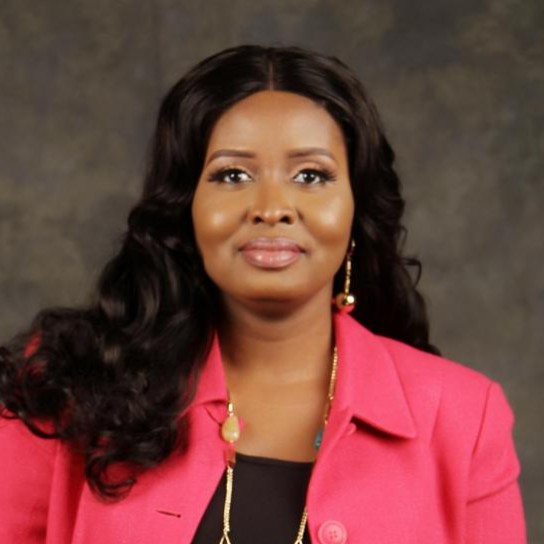
 Dr. Asmau Benzies Leo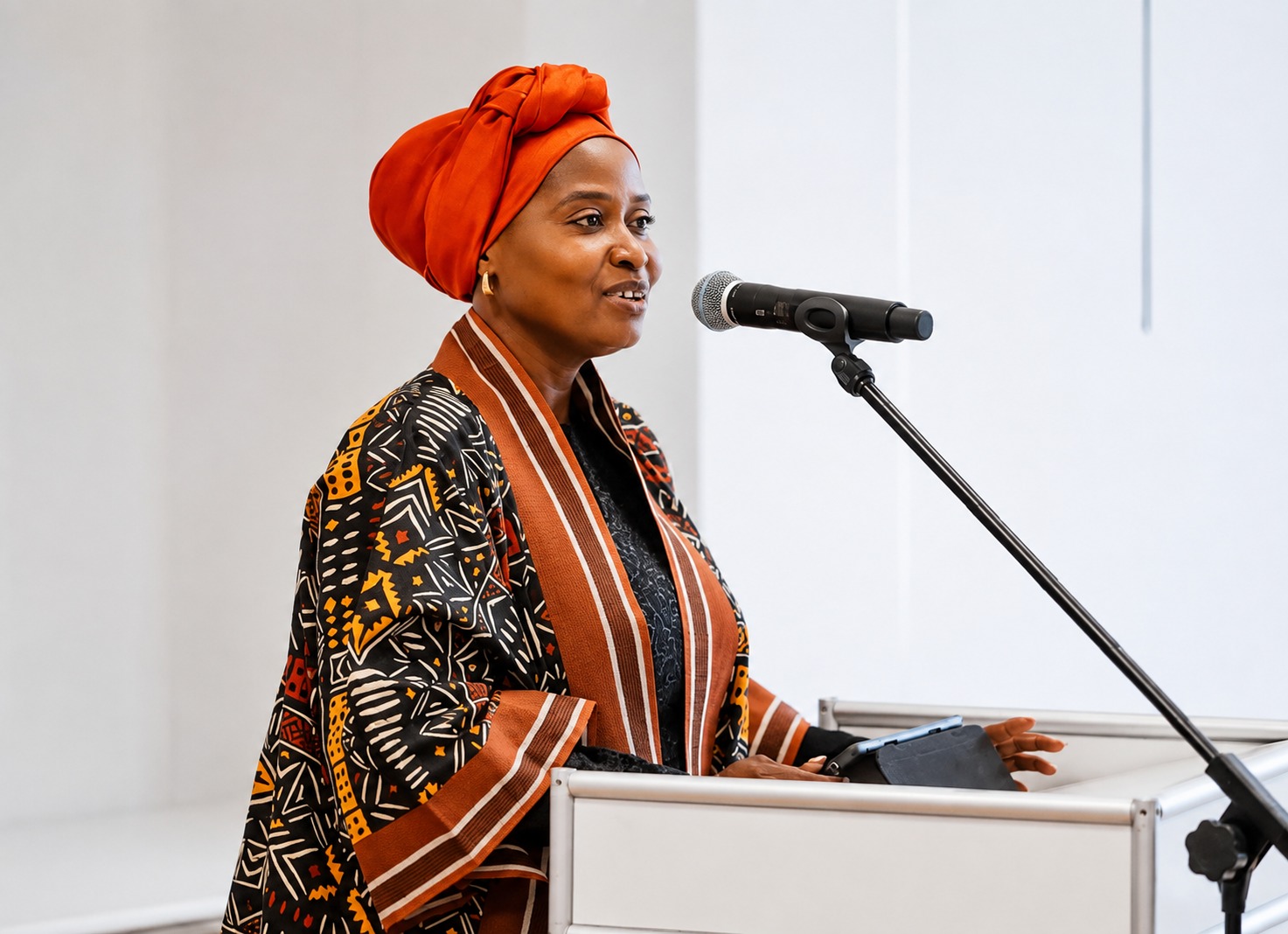
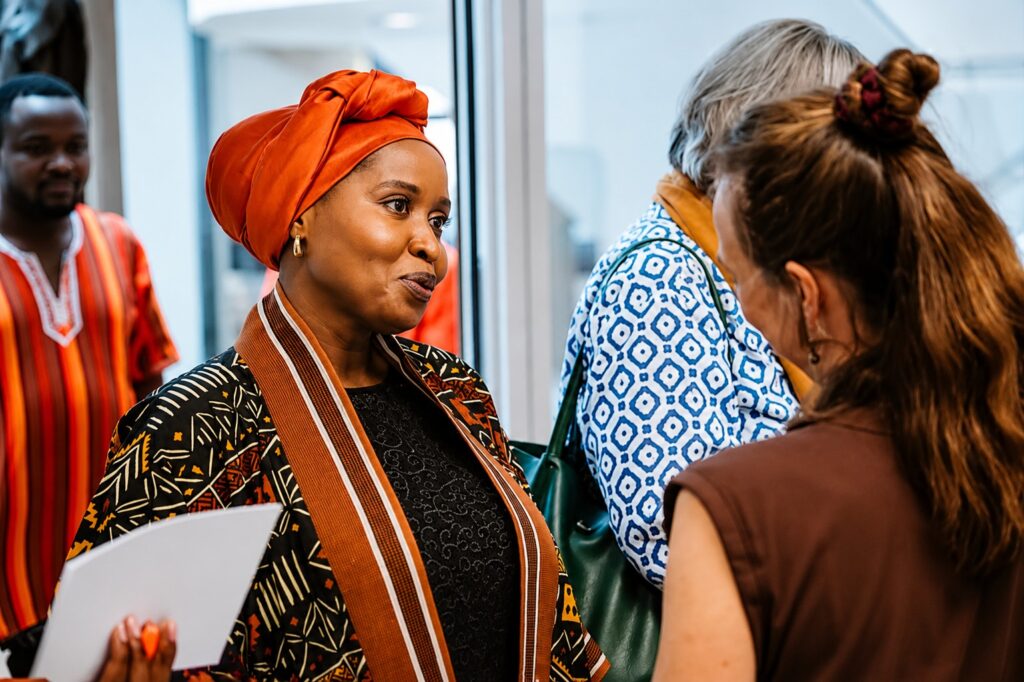
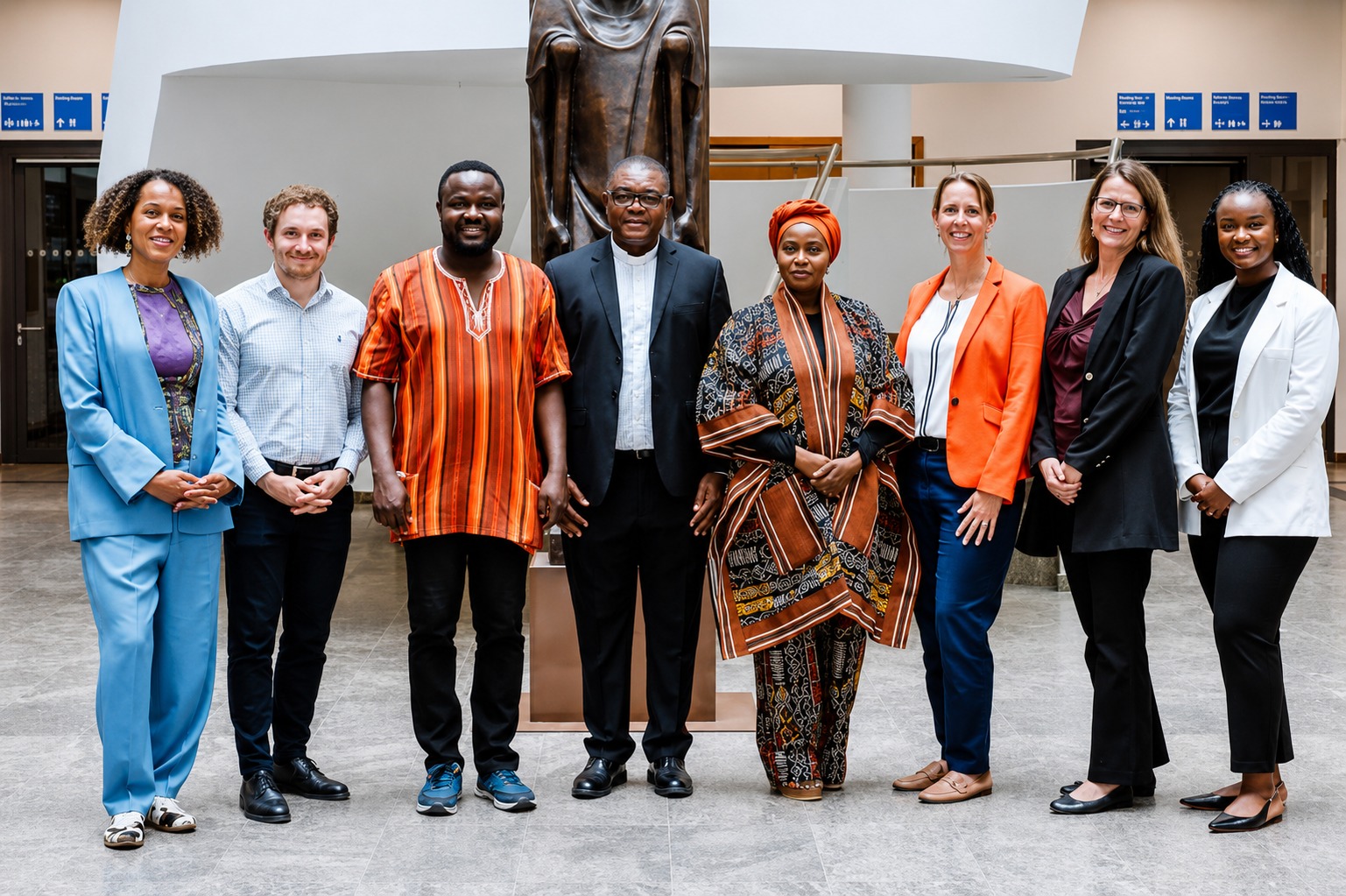
On 26 August 2026, I had the privilege of participating as a speaker at the international forum “Forgotten Conflicts: Rethinking Violence and Peacebuilding in Nigeria,” held in Berlin, Germany. Organised by the Working Group on Peace and Development (FriEnt), and supported by the German Development Cooperation (GIZ) and German Foreign Affairs Office. The forum provided an important platform for bringing together perspectives on peace, development and Nigeria’s evolving security challenges. My participation offered an opportunity to draw international attention to a crisis that has persisted for years but remains insufficiently understood and inadequately prioritised within global peace and security conversations.
My intervention was delivered under the theme “Rethinking Violence and Restoring Human Security: A Call from Nigeria’s Middle Belt.” It was a call to rethink not only how violence in Nigeria’s Middle Belt is understood, but also how peacebuilding responses are designed, financed and implemented.
The conference theme, Forgotten Conflicts: Rethinking Violence and Peacebuilding in Nigeria’s Middle Belt, raises a fundamental question: Why is the conflict in Nigeria’s Middle Belt described as forgotten?
It is certainly not forgotten by the millions of Nigerians who live with its consequences. It is not forgotten by families who have lost loved ones, farmers who can no longer safely access their fields, communities forced from their ancestral homes, or women and children whose lives have been profoundly disrupted by violence. The conflict is “forgotten” largely because of how international policy, media and security frameworks have historically defined and prioritised crises.
For more than a decade, international geopolitical attention and the funding that follows it has focused heavily on ideological counter-terrorism, particularly in Nigeria’s North-East. The Middle Belt crisis, however, may not fit neatly into a conventional counter-terrorism framework. Its drivers include climate stress, competition over land, weapons proliferation, criminal governance and gaps in state protection. This has contributed to a dangerous simplification of the crisis. Violence across the Middle Belt is too often reduced to “seasonal farmer-herder clashes” or described as the continuation of ancient ethnic and religious disputes. Such reductionist framing obscures the reality of an organised and widespread human security catastrophe, a slow burning crisis unfolding largely within rural and agrarian communities, far from international cameras and global headlines.
Rethinking What Violence Means
At the heart of my intervention was a call to change how we define violence.
From policy desks in Berlin, Abuja or elsewhere, violence can appear as statistics: an attack, a kidnapping figure, a death toll or a displacement map. But for a woman living in a community in especially in Benue, Plateau or Kaduna state, violence is cumulative and deeply personal.
To her, violence is losing the freedom to walk to the farm at dawn. It is the fear of sending a daughter to school. It is the collapse of local markets, the loss of family income, the destruction of livelihoods and the psychological trauma of displacement. Violence is therefore not simply the loss of life; it is the systematic shrinking of human freedom, dignity and choice.
These consequences are particularly severe for women. When displacement occurs, women often carry disproportionate caregiving responsibilities while simultaneously losing the social and protection networks that previously supported them. This can expose them to sexual exploitation, forced marriage or human trafficking.
Yet women must not be defined only by the vulnerabilities they face. They are also among the most important actors sustaining peace and resilience in their communities. Women serve as informal mediators, caregivers, food producers and community organisers. They often possess deep knowledge of local tensions and relationships and are able to identify early signs of conflict escalation.
We must therefore move beyond viewing women merely as recipients of humanitarian assistance. Their knowledge, leadership and agency should be recognised as critical resources for conflict prevention, mediation, recovery and peacebuilding.
The Middle Belt Is More Than a Local Conflict
The crisis must also be understood as a human security, development and regional stability challenge, because the region is central to Nigeria’s agricultural production and is widely regarded as part of the nation’s food basket. When insecurity destabilises communities in this region, the consequences do not remain within individual communities or states. Agricultural disruption can contribute to food insecurity, displacement and economic shocks, with implications extending beyond Nigeria into wider West African and Sahelian dynamics.
This makes peace in the Middle Belt not simply a Nigerian domestic concern, but an issue with broader implications for regional stability, food security and human development.
Young People as Peacebuilders
Young people are equally central to the peacebuilding equation. Too often, security discussions portray young people primarily as vulnerable to recruitment into violent groups. While such risks are real, this perspective overlooks their enormous potential as early warning actors, first responders and peacebuilders.
Across communities affected by violence, young people are uniquely positioned to mobilise peers, communicate emerging tensions, support vulnerable populations and contribute to community dialogue. Their networks, energy and familiarity with local realities can make them powerful agents of prevention and social cohesion.
Investing in youth therefore cannot be limited to employment programmes or preventing radicalisation. Young people must be deliberately included in peacebuilding structures, local decision making, early warning mechanisms and community recovery initiatives. Sustainable peace requires giving them meaningful opportunities to exercise agency rather than treating them simply as beneficiaries or potential security threats.
From Military Containment to Human Security
If we want sustainable peace, our response must move beyond military containment towards a broader human security approach incorporating land justice, locally led peacebuilding and long term economic recovery.
Security operations remain important where communities face immediate threats, but military responses alone cannot resolve the underlying conditions that sustain conflict. Peace requires addressing insecurity alongside livelihoods, access to land, displacement, social cohesion and the ability of communities to rebuild their lives.
Most importantly, affected communities must be recognised as partners rather than passive recipients of interventions.
We must stop asking women in conflict affected communities only how they survived violence. We must also ask how their knowledge, leadership and power can help prevent the next conflict. The same principle applies to young people and local community leaders whose experiences and knowledge are indispensable to designing effective peacebuilding responses.
A Call for a New Peacebuilding Partnership
My participation in Berlin was therefore more than a speaking engagement. It was an opportunity to amplify local realities within an international conversation and to advocate for a more nuanced understanding of Nigeria’s Middle Belt crisis.
For our European and international partners, the message is clear: Nigeria needs partnerships that go beyond responding to violence after it occurs. We need sustained investments in prevention, community resilience, women’s leadership, youth agency, local peace infrastructures and economic recovery.
The international community must also reconsider what constitutes a crisis worthy of sustained attention. A conflict does not become less devastating because it lacks a single terrorist organisation, does not dominate international headlines or does not fit conventional geopolitical categories.
Ultimately, a conflict is not forgotten because headlines move on. It is forgotten when the people living with its consequences are excluded from decisions shaping their future.
The Berlin forum offered an important opportunity to begin changing that narrative. For Nigeria’s Middle Belt, the path towards lasting peace must begin with listening to local voices, recognising local agency and building genuine partnerships that place affected communities at the centre of peacebuilding.
The Middle Belt must not remain a forgotten conflict. Its women and young people must not remain merely survivors of violence; they must be recognised, supported and empowered as architects of peace, resilience and Nigeria’s future.
About Author
Asmau Benzies Leo
Dr. Asmau Benzies Leo is a development practitioner with extensive national and international expertise in gender equality, peace-building, governance, and humanitarian action. She holds a PhD in Public Governance and Leadership, a Master’s degree in Conflict Management and Peace Studies, and executive certifications from leading institutions including Howard University, Harvard University and Glasgow Caledonian University. As Executive Director of the Centre for Non-violence and Gender Advocacy in Nigeria (CENGAIN), she has led ground-breaking advocacy initiatives on women’s political participation, gender-based violence prevention, and security sector reform across multiple World Bank, UN and EU-supported projects.
Latest Edition of IWA Magazine
October 14, 2026
TIWLC 2026: Ibukun Awosika Led Women To Lose Fear
Latest Posts
-
 Oct 14, 2026 PARTICIPANTS AT TIWLC 2026 DAY 1
 -
 Oct 14, 2026 The Four Numbers That Define Your Financial Life