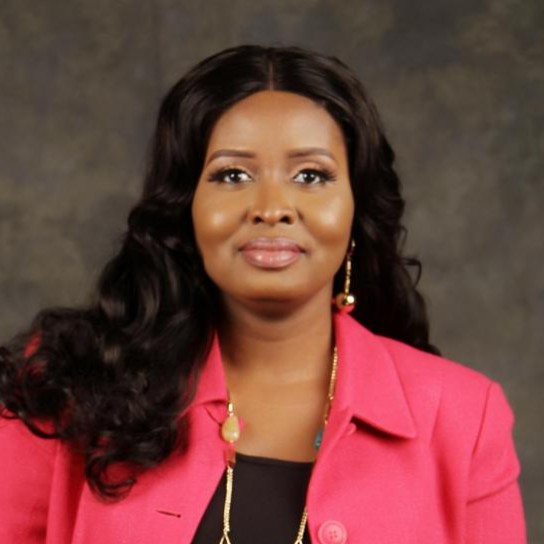
 Dr. Asmau Benzies Leo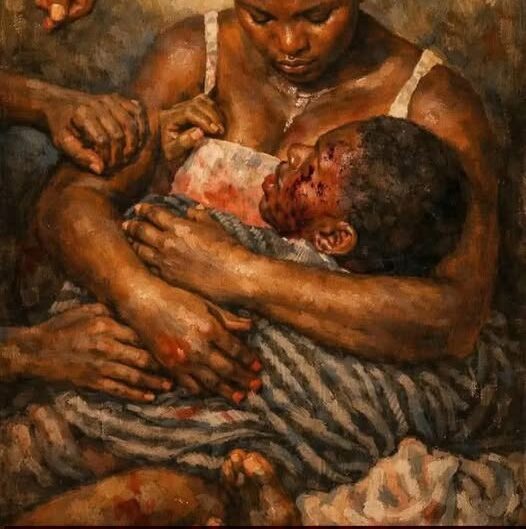
The tragedy unfolding in Plateau State, particularly in the recent attacks in a Angwan Rukuba, cannot be understood as a sudden eruption of violence. It is the latest expression of a deeply rooted, protracted crisis shaped by decades of historical grievances, political contestation, and identity tensions. Plateau, often described as Nigeria’s “Home of Peace and Tourism,” has paradoxically become one of the country’s most fragile conflict zones.
It was Palm Sunday, one of those evenings that carried a quiet, almost sacred calm. The air in Jos was gentle, the kind that settles over a city after a long day. Families were returning from church services, still clothed in the soft glow of worship. Children laughed in courtyards, women prepared meals, and men gathered in small clusters, exchanging stories as the sun dipped slowly behind the hills.
There was no warning.
In Angwan Rukuba, as in many other communities across Plateau, the evening felt ordinary almost hopeful. For a brief moment, it seemed as though the fragile peace the city had learned to live with might hold.
Then the silence broke.
From the edges of the community, masked men emerged swift, deliberate, and unprovoked. Their movement was not chaotic; it was calculated. What followed unfolded too quickly for anyone to make sense of. The calm was replaced by confusion, then fear. People ran, calling out to loved ones, trying to gather children, trying to understand what was happening.
In the midst of it all were mothers, holding onto hope, then a dead child, like the one captured in the viral image. Women who had, just moments before, been tending to their homes, now found themselves holding onto what they could not protect. The weight of that moment, the disbelief, the helplessness, the rupture of everything familiar, cannot be easily described. It is the kind of pain that silences even the strongest voices.
That night did not end with the attack.
As has happened too many times in Plateau’s history, the violence triggered a chain reaction. Grief turned into anger. Fear hardened into suspicion. In the absence of immediate clarity or protection, reprisals followed. And in those reprisals, more innocent lives were lost, people who had no hand in the original violence, yet became part of its expanding circle.
By morning, the community was no longer the same.
The images and videos that emerged shook the nation. Not because violence was new, but because of how deeply personal it felt, how it forced people to confront the human cost beyond statistics. Faces, names, families. A mother’s grief. A community’s collective trauma.
But for those within Angwan Rukuba and surrounding areas, the impact did not fade with the news cycle.
It lingered.
It lived in the quiet fear that followed, in the way children clung closer to their parents, in the sleepless nights, in the sudden silence of homes that once held laughter. It settled into the minds of survivors, manifesting as anxiety, as grief that had no clear outlet, as memories that refused to loosen their grip.
For many, the trauma became part of daily life. And for some of us, this was not new.
Since 2001, I have walked through these communities, the conflict flashpoints as a young peace worker, just starting an NGO; from Angwan Rogo to Congo Russia, Rikkos, Jenta Adamu, Bukuru, Gangare, Bauchi Road, Gyel, Tudunwada, Hwolshe, Kabon, Gada Biyu, Farin Gada, Zaria Road and many communities listening, mediating, sitting with women and young people caught in cycles they did not create. I have seen what happens when violence repeats itself without resolution.
There have been seasons where calm returned. But too often, it was not true peace, only a quiet that covered unresolved wounds where justice was lacking. And as I have reflected over the years in my work in Plateau State, peace has repeatedly refused to remain.
What happened on that Palm Sunday is part of a larger story, one shaped by history, identity, politics, and the persistent failure to address root causes. But beyond all analysis, it is, first and foremost, a human story.
A story of loss.
A story of families who must now rebuild from fragments.
A story of a nation that must decide whether these moments will continue to repeat itself in an unending cycle of violence?
There is a responsibility that rests on all of us, but especially on those with the power to act.
Government must move beyond temporary responses and confront the structural drivers of these conflicts which are governance gaps, and the deep divisions that have been left to fester. Security agencies must not only respond, but anticipate and protect citizens by building trust with the communities they serve.
Civil society and faith-based organizations must deepen their work, not only in advocacy, but in post-conflict healing and provision of psychosocial support services. Trauma does not resolve on its own but through collective action from within and outside the Communities. The survivors and their families need spaces to grieve, to process, and to rebuild relationships that violence has broken.
And perhaps most importantly, there must be a collective refusal to normalise this cycle. Because what happened in Angwan Rukuba should not become just another story we move past, but it should remain with us as a reminder, as a warning, and as a call that violence is never the solution to any grievances but peace through dialogue and peace by peaceful means.
Enough is Enough.
Dr. Asmau Benzies Leo is a development practitioner with extensive national and international expertise in gender equality, peace-building, governance, and humanitarian action. She holds a PhD in Public Governance and Leadership, a Master’s degree in Conflict Management and Peace Studies, and executive certifications from leading institutions including Howard University, Harvard University and Glasgow Caledonian University. As Executive Director of the Centre for Non-violence and Gender Advocacy in Nigeria (CENGAIN), she has led ground-breaking advocacy initiatives on women’s political participation, gender-based violence prevention, and security sector reform across multiple World Bank, UN and EU-supported projects.
Latest Posts
-
 Apr 7, 2026 The Hidden Cost of Sitting Too Much