 Wola Joseph-Condotti
We often celebrate beginnings in leadership. New appointments, new roles, new vision statements. But we rarely talk about endings. And yet, how we leave matters just as much as how we lead.
The truth is, leadership is not a lifetime sentence. Roles are assignments. Seasons change. People evolve. And wise leaders must learn not just when to start, but when to release. To release the seat. To release the title. To release the need to always be the one in control.
Because leadership is not just about building. Sometimes, it is about blessing and bowing out.
When Comfort Becomes a Cage
One of the subtle dangers of success is that it can become addictive. When you have led well, built credibility, and achieved results, it is easy to stay put. Not out of purpose, but out of comfort.
But purpose-driven leadership is not static. It is dynamic. And sometimes, the greatest expression of wisdom is to know that your season is complete.
I have seen too many leaders stay too long, out of fear of irrelevance, loyalty to familiarity, or the belief that no one else can do it like them. And in doing so, they end up stifling the very legacy they once built.
The Biblical Model: Samuel and the Transition of Power
When God sent Samuel to anoint David as king while Saul was still on the throne, Samuel struggled. He had mentored Saul. He had invested in him. It was painful to watch the decline and prepare for the next chapter. But God said to him in 1Samuel 16:1.
“How long will you mourn for Saul, since I have rejected him as king over Israel? Fill your horn with oil and be on your way.”
That one verse carries the weight of many executive transitions. You have done your part. You have wept. You have served. Now it is time to move forward.
Sometimes, letting go is not a demotion. It is divine redirection.
Legacy Is Not Presence. It Is Planting
Many leaders confuse legacy with visibility. But legacy is not about how long you remain. It is about what remains because you were there.
Did you build systems that outlast you? Did you mentor successors who are empowered, not intimidated, by your legacy? Did you share knowledge or hoard it in a vault of pride?
Good leaders lead for the now. Great leaders lead for after.
Practical Signs It Is Time to Let Go
You are holding on out of habit, not vision: When you no longer feel stretched, inspired, or useful but stay because “you have always been here”, It is time to evaluate.
You are blocking succession: If no one else can rise because you will not shift, you may be the lid, not the ladder.
You are more reactive than reflective: When your leadership becomes about defending turf rather than discerning impact, a pause is needed.
Letting Go With Grace
Stepping away is not weakness. It is strength. It is clarity. It is trust, in God, in others, and in the seeds you have sown. Here is how to exit well:
Prepare a succession plan. Do not leave your departure to chance. Raise others deliberately.
Speak blessings, not bitterness. Do not tear down what you built just because the season ended.
Define your new rhythm. Letting go of a role does not mean letting go of purpose. It just means purpose will now take a new shape.
Final Thoughts
There is a sacred strength in knowing when your time is up. Jesus Himself walked away from towns when His assignment there was complete. He did not cling to applause. He moved on with purpose.
Dear executive woman,
Your identity is not in a title. Your power is not in proximity. Your purpose is not confined to a boardroom. Letting go is not losing. It is leaving room for others to rise, for structures to grow, and for your next assignment to begin.
And that, too, is leadership.
Wola Joseph-Condotti is the Group Managing Director/CEO of West Power & Gas Limited. A Harvard-trained lawyer and passionate advocate for faith-driven leadership, gender equity, and energy transition in Africa, she writes from the intersection of power, purpose, and personal growth.
Latest Edition of IWA Magazine
March 17, 2026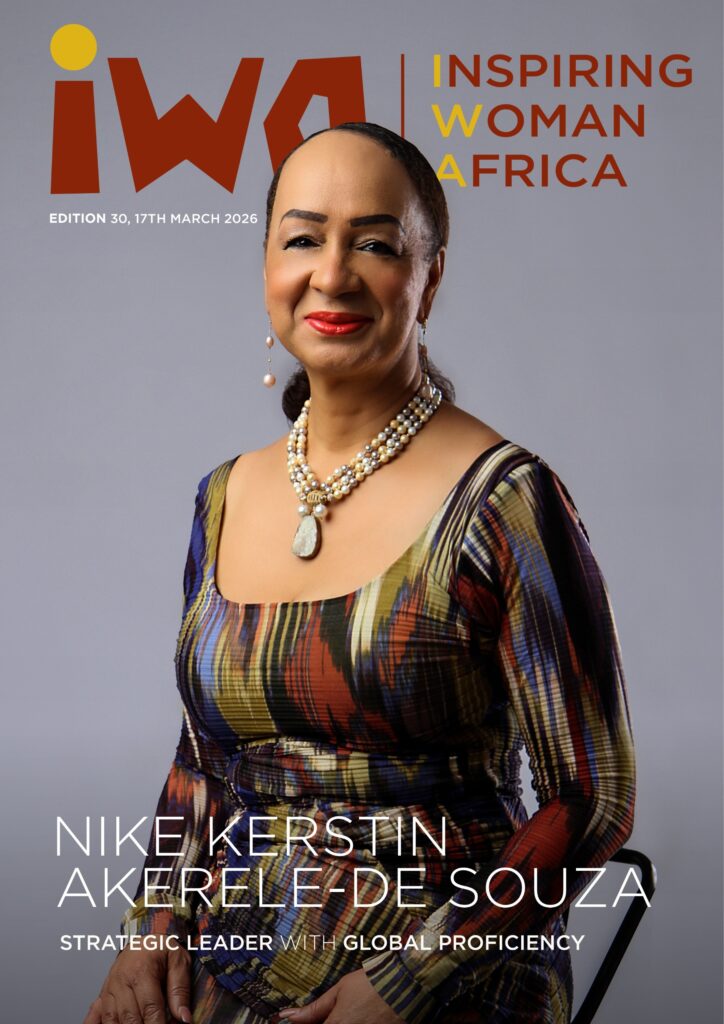
NIKE KERSTIN AKERELE-DE SOUZA, Strategic Leader With Global Proficiency
Latest Posts
-
 Mar 17, 2026 Purpose Is Not a Lost Gem
 -
 Mar 17, 2026 The Hidden ROI: Investing in People Before Platforms
 -
 Mar 17, 2026 If You’re New to Investing, Start With Sense