 Kemi Ajumobi
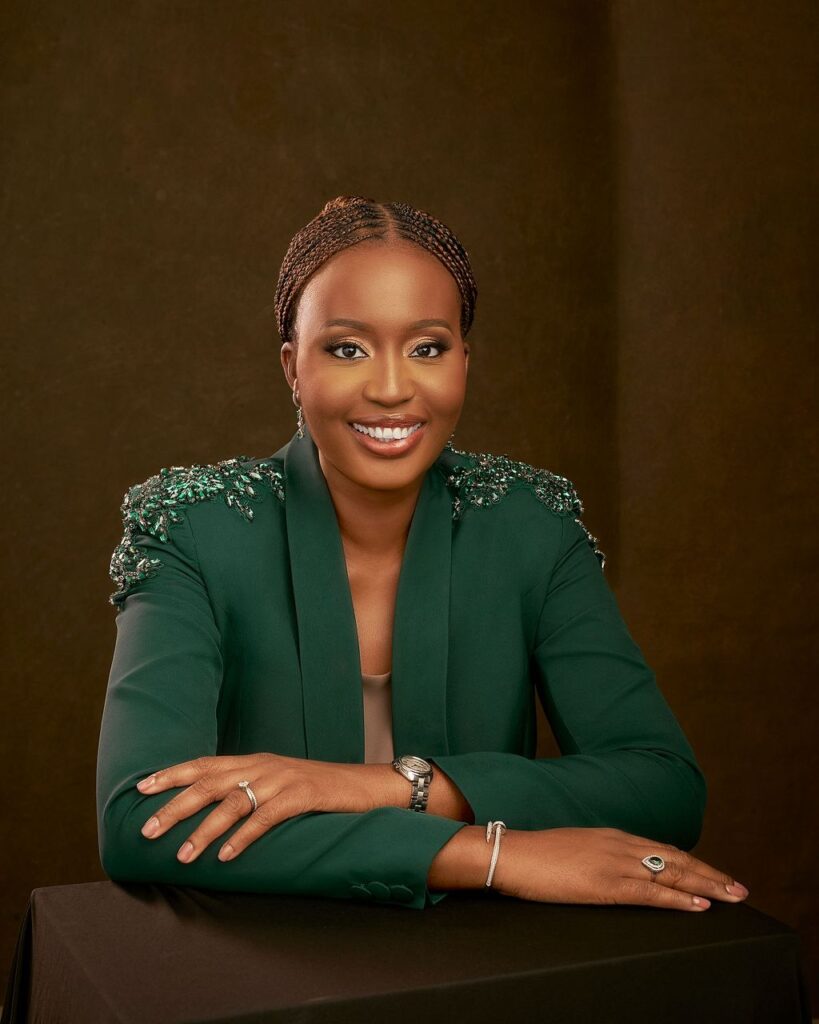
Adesuwa Okunbo Rhodes ($55m)
Founding Partner & CEO, Aruwa Capital Management
Adesuwa Okubo Rhodes is an experienced finance professional with a demonstrated track record over the last 15 years in investment banking and private equity from global institutions such as J.P Morgan. She is the Founder of Aruwa Capital Management, one of the few women owned and managed early stage growth equity funds in Africa investing into untapped investment opportunities in West Africa in the small to lower mid-market.
Adesuwa is an entrepreneur, CEO, mother, investor and women’s empowerment advocate. She founded Aruwa Capital in order to make an impact in society with her skills and track record and change the narrative for women and small businesses across Africa. She is one of the youngest female private equity fund managers in Africa having launched Aruwa Capital at 29 years old. Adesuwa is the first female solo GP to raise more than $10 million in an institutional first fund in Nigeria.
Adesuwa is a big believer that investing in women is not only the moral thing to do given the role women play in society and the multiplier it can have in terms of poverty alleviation for families, but also because investing in women and for women, has been proven to deliver outsized and superior returns.
Adesuwa is focused on using Aruwa Capital Management’s investments as a case study to illustrate the business case to invest in women as fund managers, entrepreneurs, consumers and stakeholders in society. She is a recipient of several outstanding awards.
What is the fund for?
Aruwa Capital Management is designed to provide access to growth capital to high-potential small and medium-sized businesses across Africa, that otherwise won’t have access from other sources, particularly in sectors that drive economic development and job creation.
What differentiates our approach is that we invest with a gender lens. This means we intentionally back businesses that either have women in leadership, serve women as a core customer base, or create significant employment opportunities for women.
The goal is not only to deliver strong financial returns, but also to demonstrate that investing in inclusive businesses can generate meaningful economic and social outcomes across the continent.
How tedious was the process and what do you think they always look out for?
Fundraising is rarely straightforward, particularly for emerging fund managers. It is a rigorous and often lengthy process that requires persistence, credibility, and a very clear investment strategy.
In my case, it took nearly eight years to close my first fund. I began this journey in 2014 with an earlier fund platform before ultimately rebranding and launching Aruwa Capital Management in 2019. The process involved engaging with a wide range of institutional investors, each with their own investment criteria, diligence frameworks, and timelines. While the journey can be demanding, it ultimately strengthens the fund because it forces you to continuously refine your strategy, governance structures, and reporting frameworks.
There are also structural realities that make the process particularly challenging. As a young Black woman raising what would be considered a “small” fund by global industry standards, accessing institutional capital was not straightforward. When I launched Aruwa in 2019, only 10 female-led funds had reached a final close globally since 2008, which highlights how limited representation has been within the asset management ecosystem.
When evaluating a fund, investors typically focus on several key factors: the strength and experience of the investment team, the clarity and credibility of the investment thesis, the ability to consistently source high-quality deals, and the robustness of governance and risk management systems. They also look for strong alignment between the fund manager and investors, alongside a clear pathway to delivering both strong financial performance and measurable outcomes.
Who can have access to the funds and how?
At Aruwa Capital Management, the fund is designed to support high-growth businesses operating in sectors that address essential needs within the economy. We typically focus on areas such as essential consumer goods, healthcare, clean energy access, Agro-processing and fintech, particularly businesses providing defensible, mass-market products and services with resilient demand characteristics.
In line with our investment mandate, we review and invest in companies with a strong operational presence in Nigeria or Ghana that have demonstrated traction and a clear pathway to scale.
Entrepreneurs can access the fund through several channels. Some companies reach out directly to our investment team, while others come through referrals from our network of partners, investors, and ecosystem stakeholders. We also proactively source opportunities through sector research and market engagement.
Once a potential opportunity is identified, it goes through a structured evaluation and due diligence process where we assess the strength of the business model, governance structures, market opportunity, and long-term growth potential before making an investment decision.
Compared to before, would you say the numbers of women closing in on fund sourcing has improved?
Yes, the numbers have improved, though progress is gradual. When we first started tracking in 2019, only 10 female-led funds in Africa had successfully reached final close since 2008. By 2026, that number has grown to 45, reflecting steady year-on-year growth.
This improvement is driven by deliberate actions: women fund managers building credibility and track records, leveraging networks, seeking mentorship, and clearly articulating their investment theses. Investors are also becoming more intentional about backing female-led funds, recognising both the financial and societal benefits.
Each fund that reaches final close is more than a milestone, it represents capital mobilised for African businesses, institutions being strengthened, and women stepping into roles as capital allocators. At Aruwa, we are committed to continuing to amplify our success stories and track record to ensure the next female fund manager does not take eight years to raise her first fund like I did. To accelerate progress further, we need continued ecosystem support: access to capital, and structures that remove systemic barriers. Representation alone is not enough; measurable opportunities and support are what drive tangible results.
5. What’s next?
At Aruwa Capital Management, Fund I has now been fully deployed across 11 companies, demonstrating the strength and resilience of our investment strategy. Fund II is already in active deployment, with investments across 4 companies that align with our focus on high-growth, essential sectors and inclusive business models.
Looking ahead, we will continue partnering with great founders to help them institutionalise and scale their businesses, while also identifying new opportunities to deploy Fund II. Beyond investing, we remain committed to strengthening the ecosystem, mentoring emerging fund managers, and ensuring capital reaches businesses that create both financial and social value.
What does this year’s International Women’s Month theme mean to you?
This year’s ‘United Nations theme- Rights. Justice. Action. For ALL Women and Girls’ speaks to the fundamental work that still must be done to ensure women everywhere can fully exercise their rights, access justice, and participate equally in economic life. It’s a reminder that equality isn’t automatic; it’s something we must build through deliberate systems, policies, and actions.
Alongside that, the concept of ‘Give to Gain’ reinforces that real progress comes when we intentionally invest- not only funds, but time, networks, mentorship, and leadership opportunities – into women. And the returns from that investment aren’t just financial; they ripple outward into stronger, more inclusive economies and societies.
At Aruwa Capital Management, both ideas are central to how we operate. When women have access to capital and decision-making power, we see not only better financial outcomes, but also more resilient value chains, stronger institutions, and broader impact across communities.
So, this theme is both a call to secure rights and justice, and a reminder that investing in women is not a cost but a catalyst for collective gain.
Advice to all women struggling to achieve any goal in life
My advice is simple: stay deliberate, persistent, and intentional. Every meaningful goal comes with challenges, doubts, and moments where progress seems slow, that’s normal. What matters is continuing to take action, refine your approach, and seek the right support.
Surround yourself with mentors, allies, and peers who challenge and inspire you. Build networks, ask for guidance, and don’t wait for permission to step forward. Remember that measurable progress requires measurable action, whether it’s learning new skills, taking calculated risks, or creating opportunities where none exist.
Most importantly, stay the course. Persistence ultimately determines your outcomes. In my own fundraising journey, I met 85 institutional investors before securing the first close of Aruwa Capital Fund II. Many of those conversations came with some version of “not yet.” Success often comes from showing up to meeting number 85 with the same conviction, preparation, and belief in the opportunity.
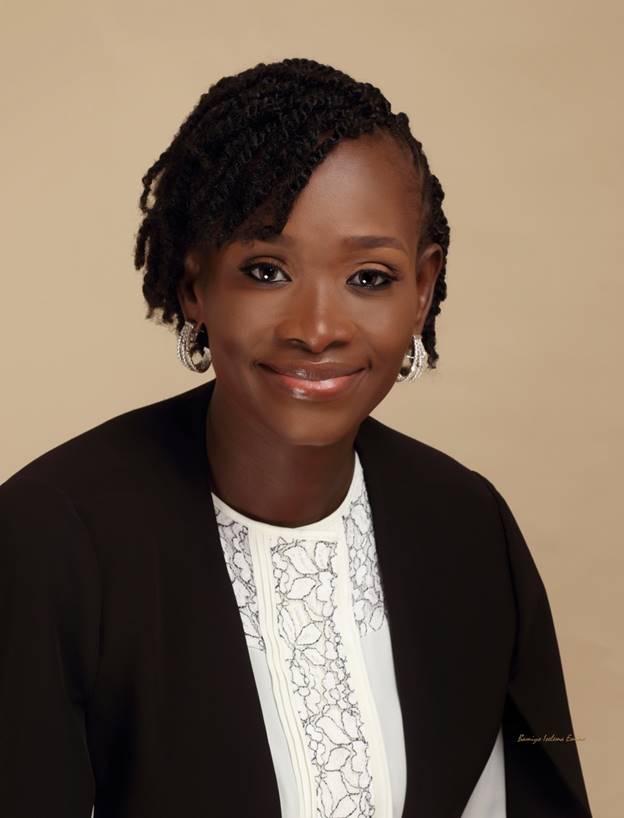
Abiola Ojo-Osagie ($2.3bn)
Senior Partner & Managing Director, Anglophone West Africa,
AfricInvest Capital Partners
With over 28 years in financial and business advisory services, Abiola Ojo-Osagie is a trusted leader in business and investment across Africa.
In her current role, she is responsible for deal origination, market and deal analysis, investment structuring, negotiation, investment decisions, active portfolio management, value creation and investment exits. She performs board and committee functions, participates alongside senior management teams in developing strategies for profitable growth, and leads stakeholder engagements for positive policy impact.
Before AfricInvest (joined 2009), she was an Associate Partner at Phillips Consulting Limited (11+ years), external consultant on the World Bank-funded Federal Government MSME Project, and Business Support Officer at Mobil Producing (now ExxonMobil).
A natural leader with a positive attitude, Abiola has a passion for creating wealth in Africa by providing support to businesses seeking opportunities for profitable engagement of ideas and capital. She is a First Class graduate of Computer Science & Accounting and a Fellow of the Institute of Chartered Accountants of Nigeria, and has attended several executive management courses including the Corporate Restructuring, Mergers & Acquisitions Executive Programme (Harvard Business School) and the LBS Chief Executive Programme amongst others.
Based in Lagos, Nigeria, Abiola is married and blessed with two adult daughters. A lover of God and children, she has spent over 20 years teaching in the children’s ministry of her church.
What is the fund for?
The fund is designed to channel capital into businesses that create sustainable economic impact while delivering strong financial returns. For our company specifically, the focus is on supporting growth-stage businesses that can scale, create jobs, and strengthen local value chains. We are particularly interested in sectors that drive long-term development such as retail, consumer goods, agriculture, and services, where investment can catalyse productivity, improve market access, and build resilient enterprises. Beyond capital, we also see the fund as a platform for governance improvement, strategic support, and long-term value creation.
How tedious was the process and what do you think they always look out for?
Raising capital is naturally a rigorous and detailed process, because investors are ultimately committing resources for the long term. The process typically involves multiple stages of diligence — on the strategy, the track record of the team, governance structures, pipeline quality, and risk management.
From experience, investors tend to look closely at three key things:
• Credibility of the team – experience, integrity, and execution capability.
• Clarity of strategy – a well-defined investment thesis and disciplined approach
• Governance and transparency – strong processes that ensure accountability
Ultimately, investors want to see alignment, competence, and a clear pathway to impact and returns.
Who can have access to the funds and how?
Access to funds like this is typically through structured investment channels, rather than individuals applying directly.
Eligible participants usually include:
• Institutional investors such as development finance institutions, pension funds, and family offices.
• Qualified investment partners aligned with the strategy of the fund.
For businesses seeking investment, access usually comes through demonstrating strong fundamentals — a scalable model, good governance, credible management, and the ability to deliver sustainable growth.
In many cases, engagement starts through networks, professional introductions, and formal investment evaluation processes.
Compared to before, would you say the numbers of women closing in on fund sourcing has improved?
There has certainly been progress, but the pace still needs to accelerate.
We are seeing more women stepping forward as fund managers, entrepreneurs, and investment leaders, and this is encouraging. What has helped is:
• Greater access to networks and mentorship.
• More intentional focus on diversity from investors.
• Women building stronger professional visibility and track records.
However, structural barriers remain — including limited access to networks, capital, and sponsorship.
To improve participation, we need:
• More mentorship and sponsorship from experienced leaders.
• Deliberate allocation of capital to women-led funds and businesses.
• Stronger ecosystems that support women entrepreneurs and investors.
When women are given equal access to opportunity and capital, the results are often transformative.
What’s next?
What’s next is continuing to create wealth the way we know how!
For us, the focus is on:
• Identifying high-quality investment opportunities.
• Strengthening governance and operational excellence.
• Supporting businesses to grow sustainably and create long-term value.
At a broader level, the goal is to contribute to building stronger institutions and more resilient economies across Africa.
What does this year’s International Women’s Month theme mean to you?
International Women’s Month is a powerful reminder that progress requires intentional action. To me, the theme represents empowerment through opportunity — ensuring that women have the tools, platforms, and confidence to lead, innovate, and shape the future. It is also about recognition and responsibility — celebrating achievements while committing to creating pathways for the next generation of women leaders.
Advice to all women struggling to achieve any goal in life
My advice would be three things:
• Believe in your capacity — sometimes the greatest limitation is self-doubt.
• Be consistent and resilient — meaningful achievements rarely happen overnight.
• Surround yourself with the right people — mentors, supporters, and collaborators who uplift you.
Most importantly, is the Favour of God when you stay faithful to your purpose and values.
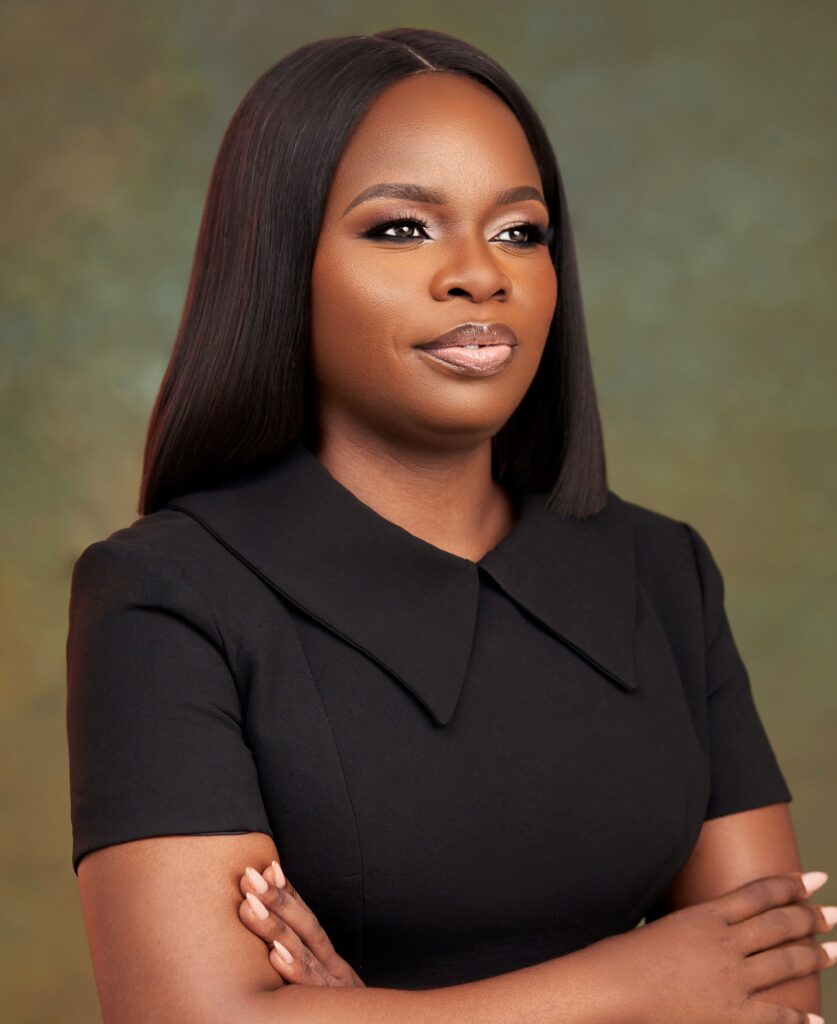
Tosin Ojo ($129m)
Partner, Sahel Capital
Tosin Ojo heads the private equity team, at Sahel Capital. She has 18+ years, multi-sector experience in investment management, financial advisory, and impact investing across Africa. She has spent the last 5+ years focusing on the agribusiness sector at Sahel Capital, overseeing fund raising and launch of Sahel Capital’s successor $75m growth equity fund – Sahel Capital Agribusiness Fund II (SCAF II), deal origination and execution (with $50+ million in active deal pipeline) and has led the deployment of ~$20m in investments in the food and agribusiness sector in Nigeria. She’s also overseeing exits from the portfolio companies of Sahel Capital’s maiden private equity fund – Fund for Agricultural Finance in Nigeria (FAFIN) and serves on the board of Dayntee Farms Limited. Tosin has also led the incubation, registration and launch of Sahel Agribusiness Private Debt Fund – a dedicated local currency debt fund investing in agribusiness SMEs in Nigeria. Prior to Sahel Capital, she worked at CardinalStone, Chapel Hill Denham, Vetiva and Stanbic IBTC Bank.
Tosin is board director at Private Equity and Venture Capital Association of Nigeria (PEVCA), independent chair of the Mutual Funds Investment Commitee (MFIC) of ARM Investment managers overseeing ~$200m in publicly listed assets and the independent investment committee member of PV Capital – the investment arm of Piggytech Global, Nigeria’s leading savings and investment platform.
She is a Chartered Financial Analyst (CFA®) charter-holder, holds a first-class bachelors’ degree from Obafemi Awolowo University, Nigeria and an MBA from Said Business School – University of Oxford, UK.
What is the fund for?
We have three funds at Sahel Capital – Fund for Agricultural Finance in Nigeria (FAFIN) – an agribusiness private equity fund which reached second close of $65.9m in 2017, Social Enterprise Fund for Agriculture in Africa (SEFAA) – an evergreen private credit fund which has raised a total of $34m ($24m in 2022 and $10m in 2025) and Sahel Capital Agribusiness Fund II (SCAF II) – the successor private equity fund to FAFIN which reached a first close in December 2025 with commitments of $29m.
We focus exclusively on the food and agribusiness sector and invest in companies in this sector – through debt and equity like instruments primarily in West and East Africa.
How tedious was the process and what do you think they always look out for?
Fund raising is a very tedious process, it requires significant endurance – usually over 3-4 years to reach a final close, sometimes even longer. The institutional pool of capital that invest in private equity funds in Africa come from foreign development finance institutions, sovereign wealth funds, foundations and pension funds. Investors always look for track record – usually in the form of capital deployment traction, fund performance and exit. Sometimes, certain investors also have specific impact or ESG mandates that they have to balance alongside financial performance.
Who can have access to it and how?
Our funds are accessible to entrepreneurs and companies in the food and agribusiness sector in 13 African countries either through SEFAA, our credit fund or SCAF II – our equity fund. We back agribusiness entities and entrepreneurs across the food value chain to improve value chain efficiency, drive import substitution, provide affordable healthy packaged foods to Africa’s fast urbanising population while driving climate resilience. More information can be obtained from our website: www.sahelcapital.com
Compared to before, would you say the numbers of women closing in on fund sourcing has improved?
There has definitely been an increase in the number of female GPs (general partners) raising and closing funds in the last 10 years. Despite the improvement, it’s a long road ahead, as only 12% of senior partners in Sub-Saharan Africa Private Equity firms are women (according AVCA). More support is needed to back female GPs and fund managers. To increase access to capital for women, we need more female capital allocators at the most senior level. For those who have closed or have been able to successfully raise funds, tenacity has been critical. They also focused on demonstrating track record quickly on a small scale with a small amount of capital before raising a bigger fund. Collaborations are also critical.
What’s next?
We are still focusing on reaching final close for our newest fund – SCAF II. We have also recently launched a new fund – which is a local currency fund solely dedicated to Nigeria – Sahel Agribusiness Private Debt Fund. The medium term plan for us is to have final close on SCAF II, successfully raise the target set for Sahel Agribusiness Private Debt Fund from domestic pension funds and continue to deploy capital to high potential, high impact opportunities in our target sector and markets.
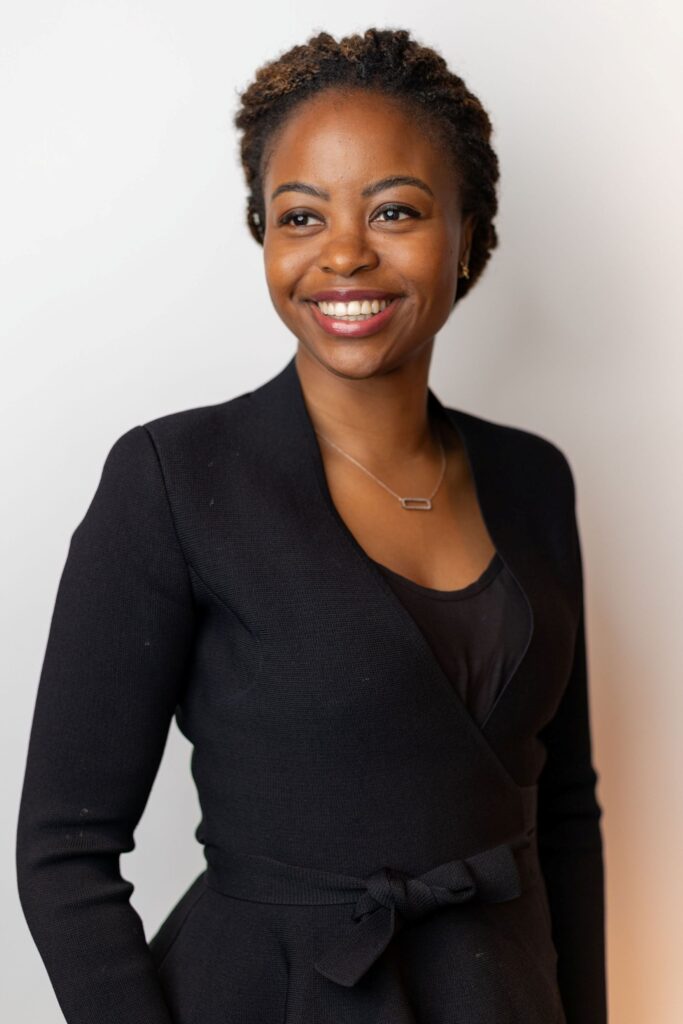
Ogugua Osakwe-Adegbite ($443m)
Head of M&A, Exits & Strategic Partnerships, Partech Africa
Ogugua Osakwe-Adegbite is a member of the Partech Africa leadership team and serves as Head of M&A, Exits & Strategic Partnerships, leading exit processes, secondaries, M&A and strategic partnerships across some of Africa’s leading technology companies. She also represents Partech on the boards of a number of portfolio businesses.
Previously, she held senior roles at M-PESA Africa, Vodafone Group and Bain & Company. At M-PESA, she led international expansion for the Africa franchise, including the launch of M-PESA in Ethiopia. At Vodafone, she drove digital transformation across the Group’s $10 billion Africa, Middle East and Asia Pacific portfolio, with responsibility for strategy execution on opco divestments and post-merger integrations.
She also serves as a Board member of Food for the Hungry, an international non-profit organisation. Her experience across investing, operating leadership and governance gives her a distinctive perspective on what it takes to build, scale and back high-growth businesses
What is the fund for?
Partech Africa exists to back ambitious African technology founders building businesses with the potential to become global category leaders. The fund is not just there to provide capital, but to help companies scale with the right strategic support, networks, and long-term perspective. At its best, venture capital should accelerate the growth of businesses that expand access, improve productivity, create jobs, and generate meaningful economic value across the continent.
How tedious was the process and what do you think they always look out for?
I should say upfront that I was not directly involved in fundraising for Partech Africa Fund II, which was the last Partech Africa fund, so I would not want to overstate my role in that process. That said, fund sourcing is always demanding. It requires a clear strategy, strong internal alignment, a credible track record, and the ability to explain why your team is well positioned to win in a competitive market. Investors are ultimately looking for conviction. They want to know whether you have a differentiated strategy, the discipline to execute it well, and the judgment to deploy capital responsibly and generate strong outcomes over time.
Who can have access to the fund and how?
From Partech Africa’s perspective, the fund is accessible to founders building scalable technology or tech-enabled businesses across Africa. In practice, that usually means companies operating in large or fast-growing markets, led by strong founders, with a compelling product or service and clear evidence of traction. Access can come through direct outreach, warm introductions, ecosystem relationships, or referrals from other investors and operators. But ultimately, access is driven by the quality of the company. Strong businesses tend to find their way into the conversation.
Compared to before, would you say the numbers of women closing in on fund sourcing has improved?
I do think there has been progress, and one of the most encouraging shifts has been the fact that many more women are now in senior positions across African funds. That increased representation matters because it helps broaden access, expand perspective, and improve decision-making within investment teams. Part of this shift is likely linked to the growing number of women graduating with STEM degrees, which has strengthened the pipeline of analytically rigorous female talent entering the ecosystem. There is also a greater appreciation today for the value of experiential diversity within investment teams. Different lived experiences often lead to better judgment, stronger pattern recognition, and a more rounded view of both risk and opportunity.
That said, there is still a long way to go. Progress at the senior level has not fully translated into a deep enough pipeline at the junior and mid-career levels. Better mentorship for early-career investors will be critical to bridging that gap. We need to be much more intentional about supporting women earlier, giving them access to the right training, networks, sponsorship, and stretch opportunities so that more of them can progress into leadership over time.
What’s next?
I look forward to seeing more female representation within the startup founder pool. In the latest Partech Africa venture Capital report, we show that in 2025, female-founded startups captured 10% of total equity funding in 2025; an increase from 2024 when this figure was 7% however no clear long term trend as it was 17% in 2023. There is still significant work to do in order to improve female participation in VC.
On the theme of participation, I am excited about the current trend in African LP participation in venture capital fundraising. According to the African Venture Capital Association, African investors accounted for 45% of total venture fund commitments in 2025. That is the highest share on record and up from an average of 23% between 2022 and 2024.
What does this year’s International Women’s Month theme mean to you?
To me, the theme is a reminder that progress does not happen through sentiment alone. It requires intention, structure, and action. Celebrating women is important, but the more important question is whether women are actually gaining greater access to capital, leadership, influence, and opportunity. In that sense, the theme is a call to move beyond visibility and focus on outcomes: who is being backed, who is being trusted with responsibility, and who is being given the platform to lead.
Advice to all women struggling to achieve any goal in life
Be clear about what you want and honest about what it will require. Ambition matters, but discipline is what moves things forward. Keep building capability, keep improving your judgment, and do not allow temporary setbacks to define your long-term trajectory. Not every closed door is a rejection of your potential. Sometimes it is simply a test of whether you have the resilience to keep going. Above all, do not adjust your ambition to fit other people’s expectations of what is realistic for you.
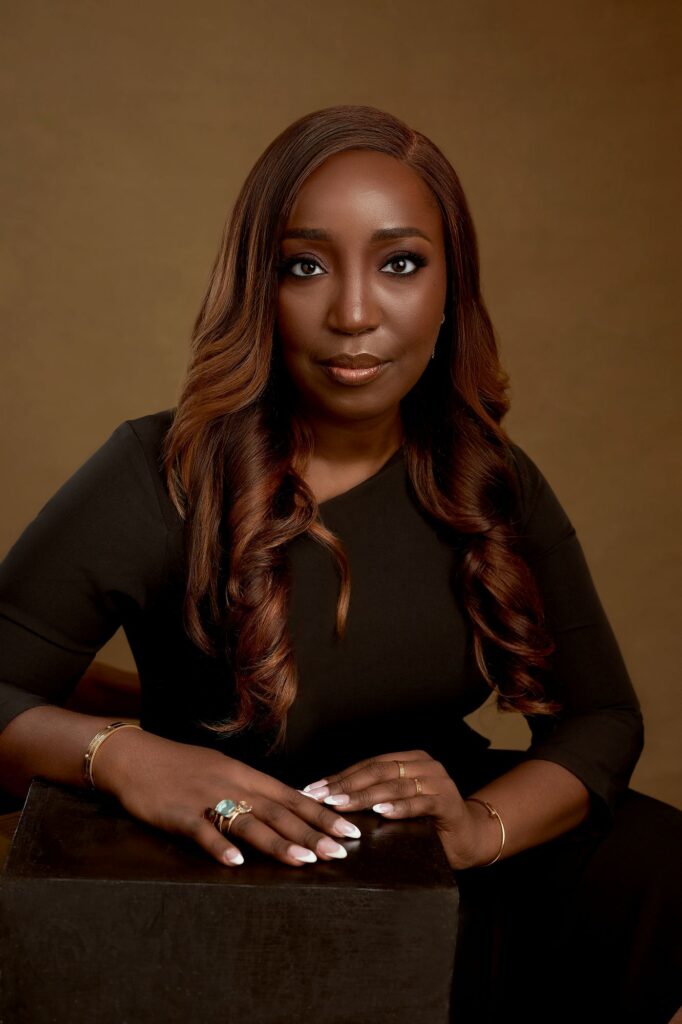
Eloho Omame ($300m+)
Partner, TLcom Capital & Co-Founder, FirstCheck Africa
Eloho Omame is an Africa-focused technology venture capital investor. A Partner at TLcom Capital, a seed-to-early growth-stage firm, and co-founder of FirstCheck Africa, a female-focused pre-seed firm, she advocates for diversity, equity, and inclusion in Africa’s technology ecosystem.
TLcom Capital invests in Africa’s best entrepreneurs tackling the continent’s biggest challenges. Across two funds with approximately $250 million in capital under management, the firm’s investment portfolio includes high-growth companies in Nigeria, Kenya, and Egypt. Eloho represents TLcom Capital on the boards of companies in Nigeria, Egypt and Côte d’Ivoire.
In 2021, she co-founded FirstCheck Africa, one of only a few female-led and female-focused technology venture capital firms operating on the continent. FirstCheck Africa’s investment portfolio includes early-stage startups with category-defining potential in Nigeria, Kenya, Egypt and South Africa. Through FirstCheck Africa, she is committed to helping Africa’s exceptional female entrepreneurial talent build great companies.
Eloho has helped shape Nigeria and Africa’s technology ecosystem for many years. From 2018 to 2021, she worked as launch Managing Director & CEO of Endeavor in Nigeria, creating the most sought-after community for technology entrepreneurs in West Africa. Endeavor is the world’s largest support organisation for high-growth technology companies at the scale-up stage.
In 2017, she delivered “Lagos Innovates”, a first-of-its-kind portfolio of support programs for early-stage innovation-driven enterprises (IDEs) in Africa, on behalf of the Lagos State Employment Trust Fund (LSETF). Lagos State is one of Africa’s largest subnational governments. She conceptualised, designed, and implemented Lagos Innovates, which has supported hundreds of entrepreneurs and created thousands of jobs.
An inaugural member of Nigeria’s National Council for Digital Innovation and Entrepreneurship, established under the Nigeria Startup Act, Eloho represented the interests of the technology and innovation ecosystem in matters of public policy at the national level. She’s a member of the Steering Committee of the Digital Economy Policy Commission of the Nigerian Economic Summit Group (NESG). In 2018, Eloho also served as a member of the Presidential Advisory Group on Technology & Creativity.
Deeply committed to Africa’s technology and venture capital ecosystem, Her views have been featured numerous times in regional and global publications with respect to Africa’s entrepreneurship, technology and VC ecosystem, including TechCrunch, the Financial Times, the Economist, Quartz Africa and Tech Cabal.
Eloho began her investing career in the U.K. as a Vice President at General Atlantic, a global growth equity firm. Before that, she was Head of Corporate Development at First Bank of Nigeria, leading the bank’s first cross-border M&A and executing inorganic growth projects across multiple financial services verticals. She started her professional career as a London-based investment banker, supporting corporate finance and M&A advisory mandates at Credit Suisse and Renaissance Capital, focused on TMT and FMCG.
Eloho holds an MBA from the London Business School and a BSc. in Economics from the London School of Economics and Political Science.
What is the fund for?
TLcom Capital backs early-stage technology companies across Africa, primarily at seed and Series A. The core thesis is that Africa’s structural gaps create real technology opportunities, and our job is to find the founders building into those gaps before the market fully prices them in.
Alongside that, I’ve spent a meaningful part of my career working to ensure that female-led companies get access to early capital on the same terms as everyone else. That work includes co-founding FirstCheck Africa with Odunayo Eweniyi, one of the most respected female founders in the African technology ecosystem. For me, that sits at the intersection of good investing and fixing something that has been structurally broken for too long.
How tedious was the process and what do you think they always look out for?
Fundraising is a test of conviction before it becomes a reward for it, and that is as true as raising a fund from LPs as it is raising a round from investors. In that sense, investors who have been through their own fundraising process know exactly what it feels like to sit on the other side of the table from where they usually operate.
The process is rigorous by design. What separates successful fundraises isn’t polish. It’s specificity. Whether you are a fund manager or a founder, the people writing the cheque are looking for evidence that you understand your market better than anyone else, that your team can execute under pressure, and that the numbers are honest. Vague answers to hard questions are a red flag at any table.
Who can access the funds and how?
We back early-stage technology startups operating across Africa. Founders can reach us through our website, through the ecosystem, or through direct introductions, but we also source proactively. We are not sitting back and waiting to be found.
The bar is high and the criteria are consistent: a large addressable market, a credible and committed team, and a technology edge that makes the business genuinely harder to replicate over time.
Compared to before, would you say the numbers of women closing in on fund sourcing has improved?
Yes, meaningfully, but the baseline was low enough that the improvement has to be kept in perspective. The founders breaking through now are doing so partly because the information environment has changed. More visible role models, more investors who have made public commitments, more data making the business case impossible to ignore.
What still needs to catch up is the composition of decision-making tables across the industry globally. That is a slow shift. The progress is real but it is not yet self-sustaining.
What’s next?
The focus remains the same: backing companies that matter and being the kind of investor founders want on their cap table when conditions get difficult.
The opportunity in Africa is still significantly underwritten by global capital relative to the fundamentals. Closing that gap requires consistent proof of returns. That is what we are working toward.
What does this year’s IWD theme mean to you?
There are actually two themes this year. The IWD campaign theme is “Give To Gain,” which speaks to reciprocity and what happens when you invest in women. The UN official theme is “Rights. Justice. Action. For ALL Women and Girls.” That one speaks to me more directly.
What I find compelling about it is the sequencing. Rights without justice are theoretical. Justice without action is just language. In the context of what I do, access to capital is a rights question. The fact that female-led businesses have historically received a fraction of available venture funding is a justice question. Action is the part most people skip. It is easier to talk about the gap than to do the unglamorous work of closing it. That is what I show up for.
Advice to women struggling to achieve any goal in life
It is a lesson that took me far too long to learn: in every room, choose yourself. Get specific about what you actually want. Not a version of it that feels safer to say out loud. The real thing. Once you are clear on that, everything else becomes a navigation problem rather than a self-worth problem. And navigation is solvable.