 Kemi Ajumobi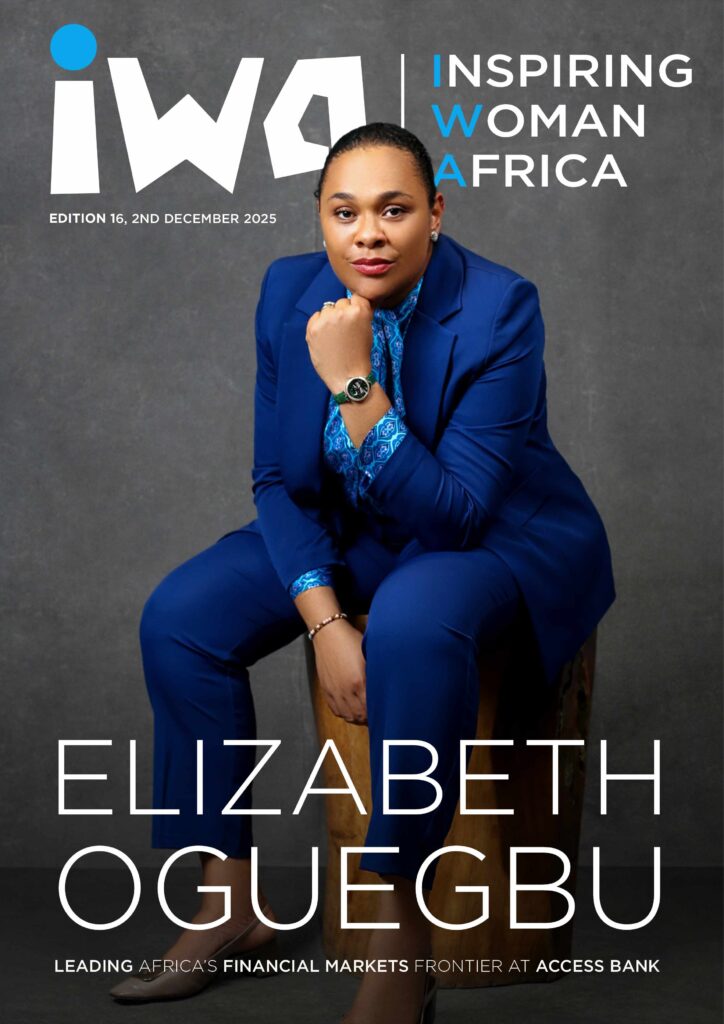
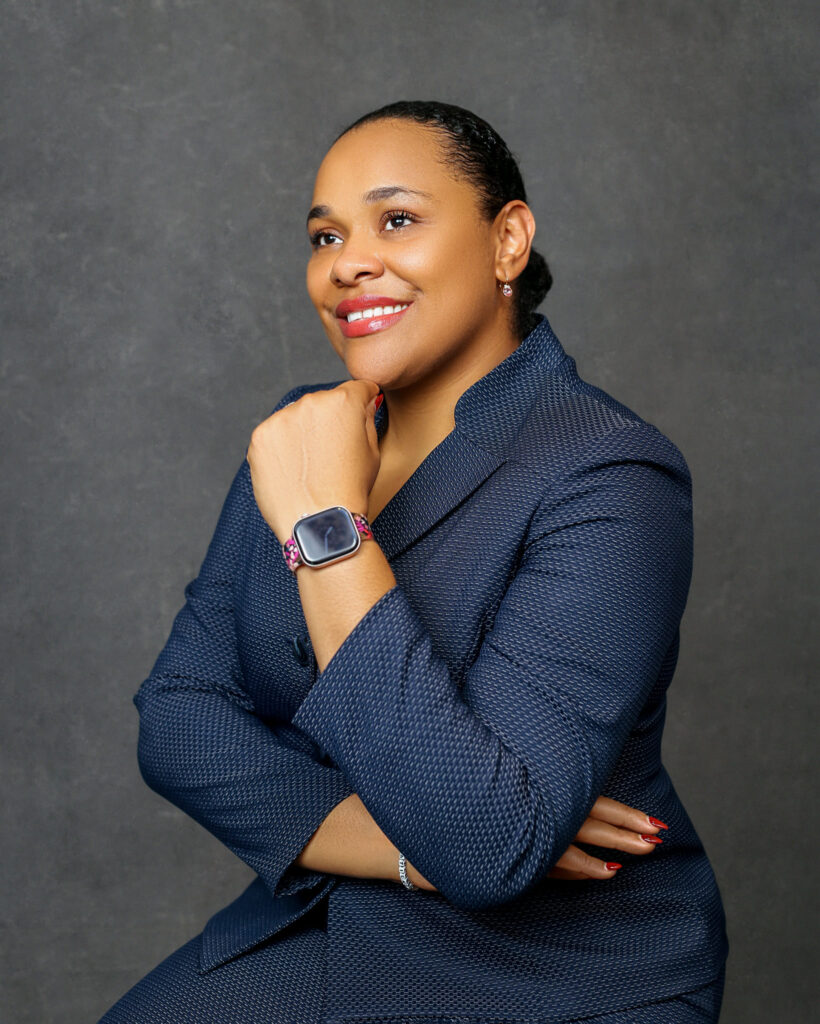
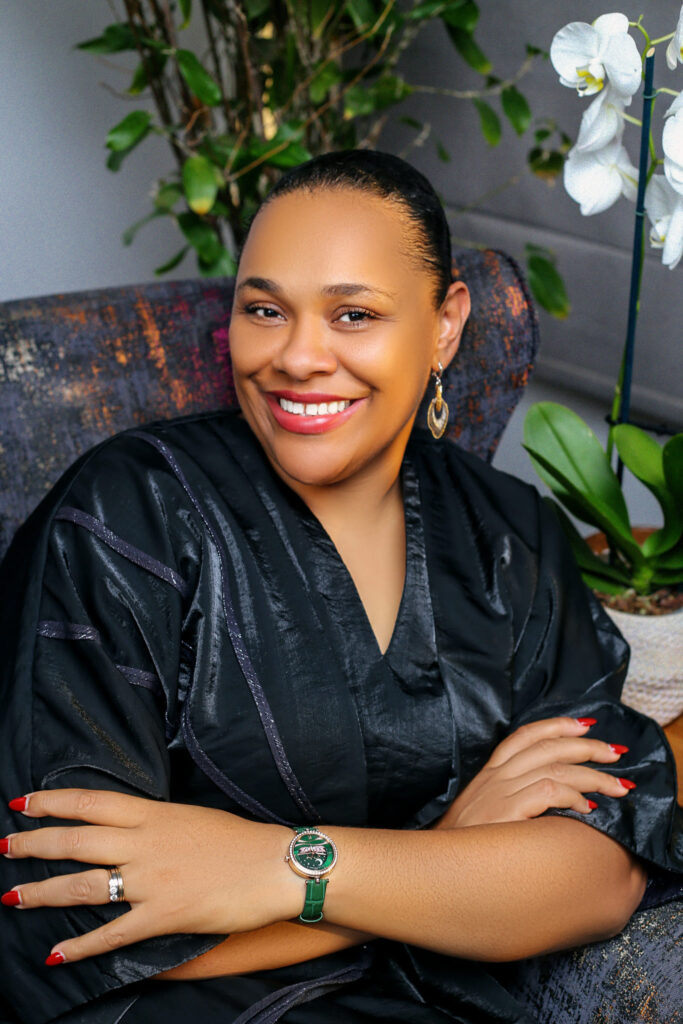
Elizabeth Oguegbu is a distinguished financial markets executive and one of Africa’s most influential voices across the full spectrum of financial markets asset classes, including FX, rates, commodities, liquidity solutions, and institutional funding. With nearly two decades of global experience spanning Africa, Europe, Asia, and the United States, she is widely recognized for her strategic depth, commercial excellence, and ability to engineer innovative market solutions for corporates, multinationals, and financial institutions.
Beginning her career in 2006, Elizabeth spent 18 years at Standard Chartered Bank, rising to Executive Principal, Financial Markets Sales for Sub-Saharan Africa. During her secondment in New York, she deepened U.S. corporate engagement with African financial markets and championed cross-border hedging, liquidity management, and structured market solutions for global institutions. Over the course of her career, she has originated and executed multi-billion-dollar transactions across financial markets, delivering impactful results for clients and contributing to the development of Africa’s financial ecosystem.
In December 2023, she joined Access Bank Plc, Nigeria’s largest bank and a continental industry leader, where she currently serves as Group Head, Financial Markets & Funding. She leads the Group’s financial markets and funding agenda across more than 15 African markets, driving liquidity optimisation, market development, structured solutions, and institutional investor engagement. Her leadership continues to shape Access Bank’s market positioning and strengthen its role as a regional powerhouse in financial markets.
Elizabeth holds an INSEAD Global Executive MBA and graduated with First Class Honors in Computer Information Systems from Babcock University. She is a CFA Level II candidate, an Honorary Member of the Chartered Institute of Bankers of Nigeria (HCIB), and holds the ACI Dealing Certificate. Highly respected for her influence and thought leadership, she is a sought-after speaker on African financial markets, emerging-market dynamics, and leadership excellence.
She is happily married and a devoted mother to two wonderful children, drawing inspiration from family, faith, and her passion for advancing Africa’s financial and economic transformation.
Career journey moments that shaped your leadership philosophy
From an early age, I’ve always believed that purpose has a way of finding you. Graduating from Babcock University at 18 with First Class Honours gave me an early start, but it was joining Standard Chartered Bank that truly set my path. I began in the Service Quality team under the remarkable leadership of Sunny Enebi, whose discipline, integrity, and unwavering commitment to excellence shaped the foundational values that still guide me today.
Six months later, Rahil Taneja opened a defining door by trusting me with a trainee role in the Global Markets team. That moment changed the course of my life. It ignited a deep passion for financial markets and set me on a trajectory of growth, mastery, and leadership. I rose from trainee to Executive Principal, developing broad and deep expertise across all asset classes, FX, Rates, Commodities while serving both corporate and institutional clients across Sub-Saharan Africa. I was privileged to be part of a young, vibrant, and exceptionally talented team that consistently dominated the region and demonstrated what excellence in African markets truly looks like.
Standard Chartered’s extensive footprint across Africa, the Middle East, and Asia complemented by its presence in Europe and the Americas, provided me with a global platform that shaped my worldview. I thank God for that exposure daily. It sharpened my technical abilities, expanded my cultural intelligence, and taught me how to lead across borders, time zones, and perspectives.
A pivotal chapter came with my secondment to the United States just before COVID. It tested my expertise on a global stage, as I represented Africa, told its investment story with conviction, and engaged directly with America’s institutional investors and corporates. It remains one of the most enriching and affirming experiences of my career.
In December 2023, I joined Access Bank Plc, Nigeria’s largest bank and one of Africa’s most international financial institutions often described as Africa’s gateway to the world. With operations across the continent and a growing presence in global financial centers, it offered the perfect platform to scale impact and deepen my footprint in African market development.
I joined initially to lead Strategic Projects & Funding, and shortly after was appointed Group Head, Financial Markets & Funding, where I oversee the Group’s financial markets franchise, market development, funding initiatives, and investor engagement across our African footprint.
My leadership philosophy has been shaped by every stage of this journey and rests on four anchors: Humility, competence, courage, and integrity.
Humility keeps me grounded, competence earns trust, courage inspires transformation, and integrity ensures that everything is built on a foundation that lasts.
My journey has taught me one enduring truth: That when purpose aligns with preparation, and when grace meets discipline, extraordinary doors open.
Personal values or experiences that most influenced your approach to financial markets and leadership
My approach to financial markets and leadership has been shaped by a combination of personal conviction, unconventional beginnings, and the grace that has guided every step of my journey.
I did not come from a finance or economics background; I studied Computer Information Systems. Entering Global Markets so early in my career meant I had to learn fast, work hard, and build credibility from the ground up. That experience instilled in me a deep commitment to competence, preparedness, and continuous learning, because I understood quickly that excellence is what earns you a seat at the table.
Integrity is another anchor. Markets move on trust, judgment, and consistency, and your reputation becomes your most valuable asset. I have always believed that your work, your word, and your standards must align. It guides how I negotiate, how I build relationships, and how I lead teams.
I am also profoundly shaped by purpose and grace. My career has been marked by moments that were clearly divinely orchestrated, and that bring a sense of responsibility to every role I take on. It influences the way I lead: with humility, gratitude, and a firm commitment to delivering results that matter. I set high standards—not to intimidate, but to inspire discipline, consistency, and excellence. My team knows I am firm, but fair, and that my expectations come from a place of wanting each person to grow and succeed.
Finally, working across Africa, the Middle East, Asia, Europe, and the U.S has made me a leader who values cultural intelligence, clarity, and empathy. Exposure to diverse markets and teams taught me that great leadership is not about hierarchy; it is about alignment, communication, and creating environments where people can perform at their best.
Together, these influences, integrity, competence, purpose, firmness, and global perspective, shape how I navigate financial markets and how I lead: with clarity, discipline, and a commitment to building systems and people that endure.
Africa’s financial markets have evolved rapidly. What cut-through changes have surprised you the most in the last decade?
One of the most transformative shifts in the past decade has been the rise of intra-Africa trade and cross-border financial flows. The continent has moved from fragmented, country-by-country economic activity toward a more integrated regional dynamic driven by the AfCFTA, Pan-African payment systems, and the expansion of cross-border banks. This has fundamentally changed the way liquidity moves, how markets price risk, and how businesses scale across borders.
We are seeing the early formation of a continental economic corridor, where goods, services, people, and capital flow with increasing freedom. This shift has profound implications for financial markets: it demands harmonised regulations, deeper FX and payments infrastructure, competitive funding across multiple currencies, and banks that can operate seamlessly across jurisdictions.
Another significant change is the institutionalisation of domestic liquidity, with pension funds and sovereign investors now serving as long-term anchors across several markets. Alongside improvements in market infrastructure, centralised auctions, real-time settlement, electronic FX platforms, African markets have become more coordinated, more transparent, and more resilient.
Corporate behaviour has also evolved. African corporates are now more strategic in their use of risk management tools, structured funding, and cross-border treasury management. They are engaging with markets with a sophistication that has pushed banks to deepen their capabilities and innovate at scale.
Technology has accelerated all of this. The transition to digital platforms, electronic price discovery, and integrated payment systems has allowed markets to leapfrog legacy inefficiencies and reduce friction in cross-border transactions.
In this landscape, Access Bank is uniquely positioned. With the largest African footprint of any commercial bank, a growing presence in global financial centers, and a deliberate strategy to build a borderless African banking network, Access is aligning itself to become the financial backbone of intra-Africa trade. Our ability to facilitate payments, mobilise liquidity, structure funding in multiple currencies, and connect businesses across 15+ African markets gives us a competitive advantage that very few institutions possess.
In simple terms:
As Africa integrates, Access Bank’s network, capabilities, and scale position is not just to participate, but to lead.
Taken together, these changes demonstrate that Africa is not only evolving; it is converging. The coming decade will belong to institutions that understand regional integration, cross-border markets, and the power of a truly Pan-African ecosystem. Access Bank is intentionally building for that future.
As Group Head, Financial Markets & Funding, what are your top three priorities?
My priorities are shaped by the diversity of our markets and the Bank’s ambition to build a truly Pan-African financial ecosystem. At a high level, three things guide my work across the continent:
1. Strengthening our financial markets franchise across all countries: Ensuring that each of our markets operates with strong capabilities, consistent standards, and the right level of market engagement is fundamental. My focus is on ensuring our teams are empowered, aligned, and positioned to serve clients effectively across different operating environments.
2. Supporting the Group’s funding objectives across the footprint: A key priority is ensuring the Bank is well-positioned to access funding pools across our markets and that we maintain strong relationships with key partners, including global and regional institutions. It’s about ensuring Access Bank remains well-supported as it executes its growth agenda.
3. Enhancing cross-border collaboration to reflect our growing Pan-African presence: With our expanding footprint, it’s important that our teams across all markets work in a coordinated, connected manner. My focus is on fostering integration, shared learning, and a cohesive approach that reflects the Bank’s vision of enabling seamless financial connectivity across Africa.
What do you see as the challenge women executives face and how can they navigate it?
One of the most painful and persistent challenges women executives face is the assumption that our success is anything other than merit. Too often, when a woman reaches senior leadership, people look for an explanation other than competence, as though skill, discipline, and performance could not possibly be enough. It is a bias many women confront silently, and it can be both discouraging and disrespectful.
Another real challenge is that women are frequently judged more harshly for the same behaviours celebrated in men. A man who is firm is seen as decisive; a woman who is firm is labelled difficult. A man who sets high standards is praised; a woman who does the same is questioned. This double standard means women often work under a different level of scrutiny, where they must constantly prove what others are freely given the benefit of the doubt for.
There is also the issue of visibility and sponsorship. Many women deliver exceptional results but are not always included in the rooms where opportunities are discussed. Without intentional sponsorship, their contributions remain undervalued or unnoticed, and their career progression becomes slower despite outstanding performance.
To navigate these challenges, I believe women should anchor themselves in four principles:
1. Master your craft: Competence is a powerful equaliser. When you know your work deeply, you silence doubt before it even forms.
2. Own your presence: Don’t shrink. Don’t apologise for standards. It is possible to be warm and still be firm, to be graceful and still be clear.
3. Challenge bias with confidence, not confrontation
4. Build the right allies and sponsors: The rooms you are not in often matter as much as the rooms you sit in. Women need advocates who speak for them when opportunities are being allocated.
At the end of the day, women don’t need special treatment; we simply need fair ground. And when that ground exists, when respect, opportunity, and standards are applied evenly, women excel, deliver results, and reshape leadership in transformative ways.
Which African markets do you see as the most compelling for investment in the next five years, and why?
Africa’s investment landscape is evolving, and the most compelling opportunities over the next five years will sit at the intersection of reforms, demographics, technology, and regional integration. Several markets stand out for different reasons.
1. Kenya: Innovation, resilience, and financial sector depth
Kenya continues to demonstrate strong fundamentals: a diversified economy, a sophisticated financial services sector, and a technology ecosystem that drives productivity. Its regulatory environment is relatively mature, and investor appetite remains resilient. Kenya will remain a key hub for East Africa.
2. Nigeria – Transformational upside anchored on reforms
Nigeria’s long-term potential is unmatched. With an enormous domestic market, significant energy resources, and improving policy momentum, the upside is substantial. The current reform cycle, though challenging, is repositioning the country for stronger macro stability, improved FX liquidity, and deeper investor confidence over time.
3. Ghana: A turnaround story backed by structural reforms
Ghana is emerging from a difficult macro cycle, but the depth of political stability, strong institutions, and ongoing fiscal reforms make it a compelling rebound market. As restructuring progresses, we expect enhanced liquidity, improved ratings trajectory, and better investor entry points.
4. Rwanda: Stability, efficiency, and policy clarity
Rwanda offers one of Africa’s most predictable business environments. Its policy consistency, governance quality, and investment in services and technology position it as a stable, long-term play for institutional investors and corporates.
5. Egypt and Morocco: Industrial capacity and global linkages
North Africa offers scale, industrial depth, and global connectivity. Egypt’s large population and ongoing structural reforms create opportunity, while Morocco’s stability, export orientation, and infrastructure make it attractive for manufacturing and renewables.
6. Côte d’Ivoire: High growth supported by strong infrastructure investment
Côte d’Ivoire continues to deliver robust GDP growth, supported by infrastructure spending, agricultural exports, and a stable political environment. It is becoming a major hub in Francophone West Africa.
In summary, Markets that position themselves as regional connectors, whether in payments, logistics, manufacturing, or services, will outperform over the next decade.
As AfCFTA gains momentum, economies that facilitate cross-border flows will become increasingly competitive.
This is where Access Bank’s growing footprint gives us a strategic advantage. Our presence across key trade corridors positions us to support clients, connect markets, and deepen financial integration across the continent.
What structural changes are most needed to deepen liquidity and reduce funding costs for African corporates?
Deepening liquidity and reducing funding costs in Africa requires structural reforms that go beyond short-term interventions. From my experience across multiple markets, several areas stand out as transformational.
1, Strengthening FX and monetary policy frameworks
Predictable, transparent FX regimes are fundamental. When currency markets are orderly and policy direction is clear, risk premiums fall automatically. Certainty reduces the cost of capital more than any incentive can. Corporates thrive when they can plan, hedge, and price with confidence.
2, Broadening the domestic investor base
Pension funds and insurance companies have become important anchors of liquidity, but the continent needs deeper participation from asset managers, collective investment schemes, and sovereign funds. A more diverse investor base absorbs duration risk, strengthens yield curves, and lowers borrowing costs for corporates.
3. Modernising market infrastructure across the continent
Electronic trading platforms, efficient settlement systems, centralised depositories, transparent auction mechanisms, and stronger data ecosystems all contribute to improved price discovery. Markets with reliable infrastructure naturally attract liquidity and reduce execution costs.
4. Expanding availability of risk-management tools
Corporates need access to hedging instruments across FX, rates, and commodities. When pricing volatility can be managed, companies borrow more confidently, and lenders price risk more efficiently. A lack of hedging tools inflates risk premiums unnecessarily.
5. Harmonising regulations to enable cross-border capital flows
Africa is becoming more integrated, but regulatory fragmentation still raises borrowing costs. Harmonised rules, regional settlement systems, and simplified capital-flow procedures would allow liquidity to move more freely, deepen secondary markets, and support larger, more efficient funding pools.
6. Strengthening credit enhancement and guarantee structures
For many African corporates, fundamentals are strong, but perceived risk is high. Expanded use of guarantees, blended finance, risk-sharing facilities, and DFI-supported enhancements can bring down spreads, extend tenors, and unlock new investor classes. Africa does not lack opportunity; it lacks scale, predictability, and integration.
When FX regimes are stable, when investors are diverse, when infrastructure is modern, and when regulations enable cross-border flow, liquidity deepens, confidence grows, and funding costs decline naturally. These reforms are not theoretical.They are practical steps that would reshape how African corporates access capital and how African economies grow over the next decade.
How can banks better support SMEs and mid-cap companies with hedging, risk management, and capital access?
Supporting SMEs and mid-cap companies requires banks to rethink how we design, price, and deliver financial solutions. These businesses are the backbone of African economies, yet they often face the highest cost of capital and the least access to risk-management tools. There are four key areas where banks can make a meaningful difference:
1. Simplifying risk-management products
Many SMEs avoid hedging because products are perceived as complex, expensive, or difficult to understand. Banks need to demystify FX and interest-rate risk management through simple, transparent structures that match cashflows and operating cycles. When clients understand the tools, adoption increases naturally.
2. Building capacity, not just selling products
Risk management is as much about education as execution. Banks should invest in building financial literacy for SMEs, webinars, sector clinics, market updates, and scenario workshops. When SMEs understand volatility and its impact on profitability, they make better decisions and engage more actively with risk solutions.
3. Creating blended financing and guarantee partnerships
DFIs, guarantee institutions, and multilateral agencies play an essential role in expanding access to capital. Banks can structure programmes that combine our balance sheets with risk-sharing facilities, credit enhancements, and concessional capital. This lowers risk premiums, extends tenors, and brings SMEs into formal financing channels.
4. Designing holistic solutions, not transactional ones
SMEs need more than loans. They need integrated solutions:
Working-capital optimisation, commodity and FX hedging, cashflow matching, supply-chain financing, trade support, advisory on pricing and expansion.
Banks that take a long-term view and create ecosystems, rather than isolated products, significantly strengthen SME resilience and competitiveness.
5. What programmes or practices have you found most effective in widening participation and leadership opportunities for women in finance?
In my experience, the most effective practices for widening opportunities for women in finance are the ones that deal with reality, not rhetoric. I’ve worked across continents, in teams where women were the minority, and I’ve seen firsthand what actually moves the needle for women and what does not.

For women to rise, the first thing they need is sponsorship. Not mentorship, not occasional advice, but real sponsorship. The kind where a senior leader says, “She is ready,” and puts your name forward when you are not in the room. I’ve watched careers accelerate simply because someone influential chose to advocate for a woman’s competence, not out of charity, but because she deserved the opportunity. Without sponsorship, even the most talented women remain invisible.
Another thing I’ve seen is the importance of giving women real responsibility early. Too often, women are placed in programmes or initiatives that look good on paper but offer no genuine exposure. Women don’t grow through symbolic opportunities; they grow through meaningful work, real deals, real clients, real targets. It is only when women are given substantive challenges that their leadership potential becomes undeniable. The women who succeed are the ones who were trusted to deliver before they were “perfectly ready,” just as men often are.
I’ve also learnt that organisations must stop shifting the goalpost for women. I’ve watched situations where a man is promoted on potential, but a woman with equal or greater performance is told she needs more experience. This double standard is one of the quietest barriers to female leadership. The environments that truly support women are the ones where excellence is measured consistently, regardless of gender.
Another thing that makes a difference is the willingness of organisations to address toxic behaviours rather than expecting women to endure them. Many talented women leave not because they lack capability, but because they are tired of being dismissed, spoken over, undermined, or held to different emotional expectations. Progress happens when companies stop protecting bad behaviour simply because it comes from someone senior, and instead create spaces where women can speak up without fear of backlash.
And finally, one of the most powerful tools is community. Women grow stronger when they see other women succeeding, sharing openly, and supporting one another. In every market I’ve worked in, I’ve seen how women flourish when they have a network that affirms their experiences and reminds them that they are not alone. These communities build confidence, resilience, and a sense of belonging, which matters more than most people realise.
So for me, widening participation for women is not about grand gestures. It is about creating an environment where women are seen, supported, sponsored, and taken seriously. When that happens, when women are given real chances, held to fair standards, and protected from bias, they don’t just participate. They excel. They lead. They transform the culture. And the entire institution becomes stronger because of it.
Advice for the youths of today?
I think one of the most important lessons any young person can learn is that nothing meaningful in life comes without discipline, sacrifice, and consistency. We live in a world where visibility can be mistaken for success and where timelines are distorted by social media. Many young people see the outcome but not the process. They see the position but not the years of quiet preparation, the late nights, the failures, the self-doubt, and the persistence behind every accomplishment.
Hard work may sound old-fashioned, but it remains the most reliable path to anything that lasts. Talent can give you a head start, and connections can open a door, but it is discipline that keeps you there. I know this from experience, I didn’t study finance or economics, but I worked relentlessly to earn credibility in financial markets. Nothing was handed to me; it was built step by step. Young people need to understand that there is dignity in effort and that real confidence comes from competence, not entitlement. I also believe that appreciating one’s parents or guardians is fundamental. Many of us stand where we stand because someone sacrificed for us, financially, emotionally, or in ways we may never fully know. Gratitude grounds you. It reminds you that success is not solely yours; it is a continuation of someone else’s investment in your life.
Entitlement, on the other hand, is dangerous because it convinces you that you deserve outcomes you haven’t earned. It blinds you to growth opportunities and breeds frustration when success doesn’t come instantly. Entitlement weakens character; hard work strengthens it.
So, my message to young people is simple: value the process as much as the outcome. Honour the people who helped you get here. Build your competence. Work with intention, and understand that the things that come easily rarely last, but the things you build with your own hands and your whole heart stay with you forever.
What is the greatest lesson life has taught you?
Life has taught me that the journey will never be perfect, and it was never meant to be. Let no one ever tell you the road will be smooth. Mine certainly wasn’t. Behind every milestone and every chapter of my career, there have been moments that tested me deeply.
I’ve had seasons of triumph, and I’ve had seasons that forced me to rebuild from the ground up. I’ve experienced overwhelming joy, and I’ve endured heartbreaks that left scars. The hardest of them was losing my beloved mother in the middle of what looked like the most promising phase of my life. Her loss broke something in me that can never fully heal, she was irreplaceable. Leading, delivering, and showing up with excellence while grieving in silence was one of the most difficult things I’ve ever done. And yet, through it all, the grace of God carried me.
That is the greatest lesson life has taught me, that you can hurt and still rise. You can break and still become. You can lose what you love the most and still fulfill the assignment God placed over your life.
I am also deeply aware that I did not walk this path alone. I have been blessed, all through my journey, with excellent bosses, leaders who believed in me, opened doors for me, challenged me, and made space for my growth. Their support shaped my confidence. Their trust shaped my leadership. And their example shaped my standards.
Add to that the unwavering love of my wonderful family. Their prayers, encouragement, and grounding presence have been my anchor. They held me through the storms, celebrated me in the victories, and reminded me who I am whenever life tried to dim my light. So the greatest lesson life has taught me is this: Grace is real. Purpose is powerful, and love, from God, from family, from those He places in your path, makes the journey possible. Life will stretch you, refine you, and sometimes break your heart. But every setback becomes a setup for something greater when your foundation is grace and your response is resilience. I stand today not because the road was easy, but because God walked it with me, and because I was surrounded by people who lifted me when I could not lift myself. I am, truly and completely, a product of grace.