 Kemi Ajumobi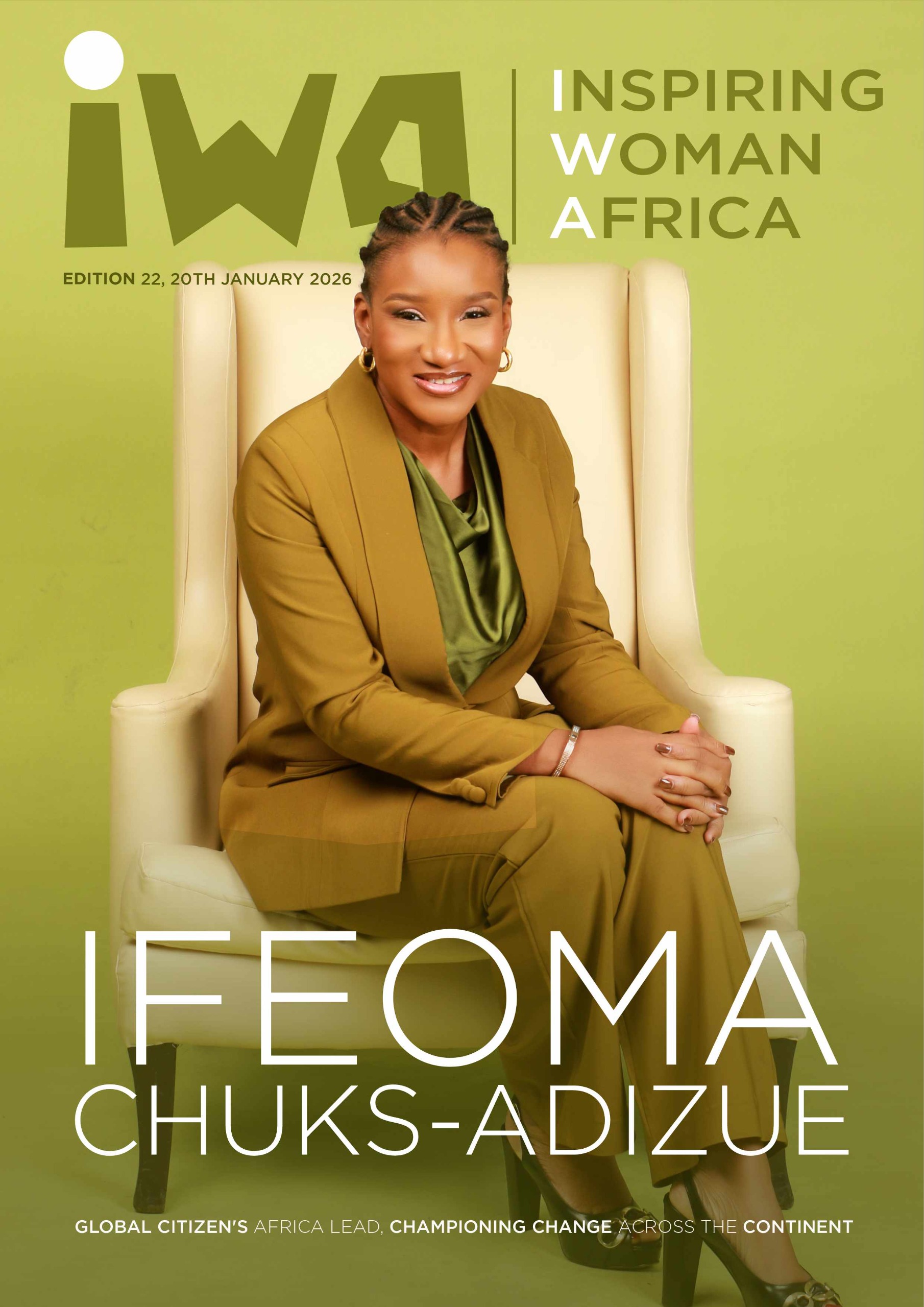
Ifeoma Chuks-Adizue is a purpose-driven leader with 21+ years of experience building and scaling global brands across Africa to drive profitable growth, job creation and long-term economic value. Everything she does is anchored in a simple purpose: to eradicate poverty by building systems, businesses and leaders that create millions of well-paying, dignified jobs.
Her passion sits at the intersection of purpose-driven leadership and commercial growth in Africa because she strongly believes that strong companies led by leaders anchored in purpose do more than generate profits.
Across her career in FMCG, Services and now non-profit, she has led diverse teams to deliver growth in complex climes.
CAP PLC (makers of Dulux Nigeria) – She quadrupled revenue and tripled profits in four years while creating 300+ jobs. Historic results indicate these results would have taken the business 30years to achieve.
Cadbury NG (Mondelez International) – Reversed a three-year decline and delivered record double-digit growth in Nigeria and Ghana.
Procter & Gamble – Led Central Nigeria to become the fastest-growing region in West Africa, doubling distributor revenue in three years. Also delivered double-digit growth in Nigeria during a recession while meeting Kenya’s full-year target in half the time.
Today, Ifeoma serves as Managing Director, Africa at Global Citizen where she leads Move Afrika, a pan-African live-music touring circuit that catalyses jobs, skills, tourism, SMEs and investment in a bid to grow Africa’s creative economy.
Outside her corporate role, she is an Author, Speaker and Trainer.
Through Uncommon Woman Int’l, she trains and guidescareer women to identify, birth and scale the God-given ideas and impact projects within them while excelling in their careers and nurturing strong homes.
Through PrimaWorks, she works with organisations and emerging leaders to build the leadership depth, execution discipline and purpose-driven culture required to scale sustainably.
Career inspiration and evolving over 21+ years in the industry
I started my career at Procter & Gamble straight out of school. It was a great environment and I learned excellence and what it is your work in a purpose-driven organisation.
In 2017, after 12 years at P&G, I lost my job – not because of performance, but because the business had not been profitable for three years and had to downsize during the recession happening at that time. That experience marked a real turning point for me as I saw over a hundred of my colleagues lose their jobs overnight.
The next year, I moved into a new role at Mondelez (Cadbury) as a Senior Marketing Manager, where I was responsible for about 70% of the company’s business – the cocoa beverages category which had been declining for three years across Nigeria and Ghana. From my own experience, I understood what prolonged lack of profitability could lead to and I was deeply driven to turn the business around because I didn’t want people to have to lose their jobs.
That sense of urgency shaped how I led. The team had become disillusioned after years of underperformance, but together, by the grace of God, we turned the business around to double-digit growth in Nigeria within one year. In Ghana, it took longer, but by the following year, even during COVID, we also turned the business around to profitable growth.
Later, as Commercial Director at CAP, I asked the same question at the start of the role: What is my assignment here? The answer was clear, it was about transforming both the business and the people. Over four years, we quadrupled revenue, tripled profit, created over 300 jobs, and supported significant career growth across the organisation.
For me, purpose-driven leadership keeps me grounded. My job is more than a job…it is an assignment. That perspective gives me the strength to stay with hard problems, the resilience to keep going when things are tough and the clarity to seek both practical and divine insight. Leadership, for me, is about finishing the assignment I was sent to do well and making my Maker proud.
What are the key goals of Global Citizen, what are your core responsibilities, how are you implementing it and so far so good?
Global Citizen’s core goal is to end extreme poverty by driving action, accountability and systemic change. We do this by mobilising citizens and working with governments and the private sector, using culture, especially music, to turn awareness into real commitments that improve lives.
As Managing Director for Africa, my role is to ensure Africa is central to that mission. I lead strategy for the continent, build partnerships across government, private sector and civil society, as well as oversee initiatives that deliver real economic and social impact.
Our flagship impact vehicle for the continent is called Move Afrika, where we use live music as a platform for job creation, skills development and investment in the creative economy. It’s not just about concerts, it’s about building a sustainable ecosystem that supports local talent, vendors and businesses.
So far, the results have been strong. We’ve created thousands of jobs across Kigali and Lagos, increased local crew capability development, supported African vendors and delivered world-class events largely produced by African teams.
Alongside this, as an organisation, we have driven advocacy on issues like health financing, World Bank IDA replenishment and renewable energy access, turning citizen action into meaningful policy conversations and commitments.
There is still work ahead, but the model is working. My focus is on scaling what works, deepening impact market by market and building systems that create lasting opportunity beyond any single event.
What specific systems or frameworks do you believe are essential for building successful businesses that create jobs and drive economic growth in Africa?
I don’t think it’s really about frameworks on their own. Sustainable businesses that create jobs and drive economic growth are built when the right mix of enablers is in place.
Energy is the foundation of economic activity. When power is unavailable or too expensive, businesses struggle to operate efficiently, costs rise, and long-term sustainability becomes difficult.
Infrastructure – roads, ports, venues and so on, determines how easily businesses can move goods, access customers and grow. Weak or dilapidated infrastructure increases the cost of doing business, limits growth and ultimately job creation.
Technology enables scale and productivity. Sustainable businesses need the right systems and digital tools to run operations efficiently, reach more people and grow without losing control.
Affordable Capital is essential for sustaining growth. As businesses create demand and expand, access to capital ensures they can meet that demand, continue hiring and avoid supply glitches that can stall growth for years.
All of these are critical enablers but one critical factor which is still often underestimated is the mindset and leadership capacity of the people running these businesses.
You can inject capital and achieve incremental growth. However, when capital is combined with strong, transformational leadership, businesses grow more sustainably, leaders build resilient teams and job creation accelerates. I’ve seen this repeatedly where the same resources, in the hands of the right leaders, can deliver exponential outcomes and lasting economic impact.

From your commercial experience, what factors make a business more attractive to investors in the African market?
From my commercial experience, investors are attracted to African businesses that combine strong fundamentals with credible leadership and a clear path to scale.
First, a solid business model matters – one that solves a real problem, serves a clear market and has a realistic route to profitability and growth.
Second, strong leadership and governance are critical. In Africa especially, investors place a premium on integrity, structure and leaders who can execute, manage risk and adapt to complexity.
Third, deep market understanding and execution capability make a difference. Businesses that truly understand their customers and operating environment, and can also deliver consistently, stand out quickly.
Fourth, scalability and resilience are important. Investors look for businesses that can grow across markets and continue performing even through economic or policy shocks.
Fifth, capital discipline and return on investment are essential. Investors want clarity on how capital will be used, how it drives growth and when and how it will deliver returns especially because they always have other places they can put their money.
Finally, the operating environment matters. Investors look closely at government policy stability, security and ease of doing business. A strong business in the wrong market can struggle to attract capital if policies are unpredictable or operations are frequently disrupted. That’s why partnerships with government are so important. If we want to scale the private sector and create jobs sustainably, businesses need an enabling environment that allows them to operate consistently and plan for the long term….and governments are key in providing this.
Key lessons learnt from your time at CAP PLC, Cadbury NG, and Procter & Gamble that has helped you even to your current work at Global Citizen
Every phase of my career has shaped how I work today at Global Citizen. From Procter & Gamble, I learnt discipline, excellence and the power of strong systems. I also learnt how to fail, reflect and bounce back from failure, how to take feedback, recover quickly and keep moving forward despite setbacks. Most importantly, I learnt how to truly value people. At P&G, people are seen as the greatest asset and I saw that live out in how leaders invested in, developed and trusted their teams. This is something we need to apply much more intentionally across the continent.
From Cadbury Nigeria (Mondelez), I learnt resilience and leadership in complexity. I worked through declining businesses, tough economic conditions and disillusioned team members and I learnt how closely business performance is tied to belief, trust and engagement. That experience reinforced that turning businesses around requires growing people, not just fixing numbers.
At CAP Plc, I got to practice everything I had learnt. I applied the discipline and people-first leadership from P&G, alongside the resilience and turnaround mindset from Cadbury. In addition, my role in CAP enabled me lead at scale and drive full business transformation, growing the business while building systems and people that would last.
All of these lessons come together in my work at Global Citizen. Whether I’m building Move Afrika, working with governments and the private sector, or driving advocacy across markets, the principles remain the same: value people, lead through complexity, build strong systems and deliver results.
The context has changed obviously from commercial brands to social impact, but the leadership lessons have stayed with me and continue to guide my work.
How do you see initiatives like Move Afrika transforming the creative economy and fostering job creation in Africa?
At its core, Move Afrika is about using the power of music to unlock Africa’s creative and economic potential, not just to entertain but to transform. We are building an annual, mult-country touring circuit for world-class concerts but the real goal is much bigger than shows.
Think about what happens in Lagos every Detty December – how the city comes alive, hotels are fully booked, small businesses thrive and money flows through the local economy. In 2024 alone, Detty December generated over $71 million in economic activity. Move Afrika is about replicating that effect multiple times a year, across multiple cities, in a structured and sustainable way.
By doing this, we are helping to build an ecosystem where Africa is ready not just for Global Citizen shows, but for international artists, African stars, local promoters and homegrown festivals ready to scale, simply because the talent, vendors and infrastructure are in place. This is how cities like Edinburgh and Nashville built thriving creative economies, and the same is possible across Africa.
On jobs, the impact is direct and practical. Each show activates an entire value chain – from production and logistics to hospitality, tourism and creative services, creating thousands of jobs and entrepreneurship opportunities. Since launch, Move Afrika has already created over 2,500 jobs across Kigali and Lagos, with a strong focus on local crews, vendors and artisans.
Beyond the events, the long-term play is capacity building. We deliberately invest in local talent and vendors through training, exposure and repeat engagement, so jobs are not one-off, but sustainable and year-round. Over time, this raises standards, builds confidence and allows Africa’s creative economy to grow at scale.
That is the Move Afrika vision – turning culture into an economic platform that creates jobs, builds businesses and drives lasting growth across the continent.
What unique challenges do women face in pursuing leadership roles in Africa, and how does Uncommon Woman Int’l address these challenges?
Women in Africa face a layered set of challenges as they pursue leadership, and many of them show up most sharply at the mid-career stage.
Culturally, expectations around marriage, motherhood and caregiving still sit heavily on women. Ambition is often celebrated in theory, but questioned in practice especially when it requires visibility, authority and difficult trade-offs.
Structurally, while we have many women at middle management levels, the path from mid-level to senior leadership is steep. What it takes to break through – long hours, high pressure, constant visibility and responsibility, often coincides with the same season many women are navigating marriage, motherhood and family demands. It can feel overwhelming.
This is also the stage where many women start asking deeper questions: Is this life really what I want? Why am I stressing myself?. Work begins to feel monotonous. Fulfillment is missing. So some women leave the workforce entirely and we lose incredible talent. Others stay, but get stuck at mid-level / capable but hesitant to step into senior leadership because they look at the top and think – Am I really ready for that life? Do I actually want that level of pressure and sacrifice?
Even when organisations say the right things about supporting women, many women are internally unsure. They are not resisting growth because they lack ability, they’re resisting because they lack clarity, fulfillment and conviction.
This is where Uncommon Woman International comes in. It is a purpose identification and activation company that works specifically with career women, helping them identify and birth their purpose alongside their full-time careers. What has been observed is that many of these women actually love their work, it’s the lack of fulfillment and clarity that causes disengagement.
By helping women reconnect with purpose, Uncommon Woman International enables them to show up differently. Fulfillment restores energy, clarity rebuilds confidence and many rediscover the desire to grow and lead at higher levels. The result is more women living happier more-fulfilled lives, staying in the workplace, breaking through the mid-level ceiling, and senior women remaining engaged, visible and impactful.
At its core, the work is about helping women live and lead with purpose so they don’t just reach leadership, but sustain it, and remain a strong voice at the table for those coming behind them.

What is the greatest lesson life has taught you?
One of the greatest lessons life has taught me is that life rewards the diligent. You can become almost anything you choose to be but it requires intention, commitment and the willingness to do the work.
The future we often dream about is not a destination you stumble into; it is something you envision and prepare for. If you don’t, the future will still arrive, but you may walk into it unchanged because you didn’t think ahead or prepare for what it would require.
Life doesn’t reward you with what you think you deserve; it rewards you with what you are prepared for. That is why when you see ordinary people doing extraordinary things, be sure that they made a decision, stayed consistent and did the work.
I’ve also learnt that diligence on its own can become exhausting if it is not anchored in purpose and belief. Life can start to feel like a treadmill when you lose sight of why you are pushing. For me, that anchor is God – my belief in Him, His word and His promises. That belief gives me the strength to keep going when I’m tired and the clarity to focus on what truly matters.
Life has taught me that you can get what you want out of it but it requires belief in yourself and in God, preparation, growth and sometimes reinvention. Then when all of that is guided by purpose, the journey becomes deeply fulfilling…because at the end of the day, you don’t want to work so hard only to feel empty.
What do you believe are the critical factors for scaling businesses successfully in markets like Nigeria?
Scaling businesses successfully in markets like Nigeria starts with mindset. Nigeria is a land of opportunity. When you look at the numbers, the scale is enormous. As such, leaders must be audacious, big in thinking, limitless in vision and bold in drive. Scaling begins with the person conceiving the vision. If the mindset is small, the business will be too.
Next is deep market understanding. Nigeria is complex and scaling requires a strong grasp of customers, pricing, routes to market, systems and people. This understanding must translate into speed and quality of execution. In markets like ours, how fast and how well you execute often determines who wins.
Alongside speed, operational discipline is critical. Many businesses grow revenue quickly but lose money in the process. To scale sustainably, costs must be tightly managed so that growth is profitable and benefits all stakeholders: employees, investors, government and communities.
Leadership and talent are also essential. Scaling businesses need more than capable employees; they need an army of leaders – people who can think on their feet, make decisions, take ownership and stay on top of things till results come through. These people must also feel seen, valued and heard.
Then there is access to affordable capital. As demand grows, businesses must be ready to supply it. In a highly competitive and commoditised market like Nigeria, prolonged inability to meet demand creates space for competitors or counterfeits. Scaling must be proactively planned for and cash-backed.
Finally, the operating environment matters. Supportive policies, stability and government partnership are essential for private-sector growth.
In my experience, businesses that scale well in Nigeria are those that combine audacious vision with discipline, speed with structure, and ambition with strong leadership.
The role of technology in driving economic development in Africa
Technology can drive economic development in Africa in very practical and powerful ways.
First, technology improves productivity and efficiency. It helps businesses reduce costs, manage operations better and make faster, more informed decisions. I’ve seen small retail businesses scale to multiple outlets simply because technology allowed them to track inventory, control costs and maintain discipline as they grew.
Second, technology enables scale. Many African businesses would struggle to grow beyond their immediate geography without it. I met a young entrepreneur in his twenties who, together with two peers, built an online business that generated over ₦1 billion in revenue in a single year, purely by leveraging digital platforms to reach customers at scale.
Third, technology accelerates job creation and entrepreneurship. Digital access lowers barriers to entry, allowing young people to start, grow and formalise businesses faster whether in e-commerce, fintech, logistics or the creative economy.
Fourth, technology improves access and inclusion. It expands access to finance, education, healthcare and markets, especially for women and underserved communities, enabling broader participation in economic activity.
Even in our work at Global Citizen, technology plays a critical role in advocacy and collective action as it allows us to connect with young people across Africa and around the world, mobilising them to take action on some of the world’s biggest challenges especially extreme poverty, without needing to be in the same physical space. That ability to mobilise millions, drive accountability and influence policy is a powerful lever for economic development.
Finally, technology strengthens accountability and scale at an institutional level. For large organisations, technology makes it possible to manage millions of transactions, process invoices efficiently and run complex operations at speed…something that would be impossible manually.
In short, when combined with the right leadership, capital and policies, technology becomes a powerful engine for scaling businesses, mobilising people, creating jobs and driving long-term economic growth across Africa.
Share an example of navigating a significant challenge or crisis and what lessons it taught you
One of the most significant challenges I’ve navigated was early in my career, when I was leading the Baby Care business at Procter & Gamble Nigeria. It was my first major crisis as a business leader and it played a big role in shaping how I lead today.
The brand had been a market leader, but performance dropped sharply. By the time I joined the team, things were already difficult. I remember my Managing Director saying to me, “The business can’t tank more than this.” Unfortunately, it did. Sales declined even more, a new product launch didn’t perform as expected and confidence was low. Every leader had an opinion and so tried several interventions back to back but results were slow to come. It was a demanding period that required intense focus, positivity and resilience.
That experience taught me a critical lesson – You must pace yourself. In a crisis, it’s easy to run at full speed for too long but without intentional ways to pause, reflect and recharge, burnout sets in and organisations could lose incredible talent. Sustainable leadership requires knowing when to push and when to reset.
However most important lesson I learnt, was the need to fully own your business. At every level, people will have views on what should be done but as the leader, you must understand your business better than anyone else. This means a deep unparalleled understanding of your consumers, your numbers, your assumptions and the realities on the ground. As you do this, be unafraid to push for what you believe is best for the business and take responsibility for the outcomes.
I also learnt the value of resilience and adaptability. In a crisis, you need to stay steady, keep learning, listen closely to consumers, and be willing to adjust quickly. Progress often comes through iteration, not perfection.
After that role, I took time away from work to support my young son who was not speaking at that time. When I returned in a new role, I consciously applied these lessons – building volume assumptions from the ground up, spending time with consumers, and developing a deep understanding of the business. Even in a recession, that approach helped us deliver growth.
That experience taught me that challenges will always arise – economic cycles change, business disruptions etc but leaders who stay grounded, informed and people-focused are best positioned to navigate them well.
It also reinforced that leadership is never a solo effort. Teams matter. Recognising their contribution, celebrating progress and ensuring people feel seen and valued makes a real difference, especially in tough moments.
What personal or professional practices do you find most effective in building resilience, both for yourself and within teams you lead?
For me, resilience is built intentionally, both personally and professionally.
Personally, clarity of purpose is foundational. Knowing why I do what I do helps me stay grounded in difficult seasons. I also prioritise pacing and renewal – understanding when to push and when to pause. Faith also plays an important role for me as it gives me perspective and keeps me calm under pressure.
Professionally, I focus on clarity and psychological safety. In challenging moments, teams need to know what matters most and where to focus. Uncertainty drains resilience faster than hard work.
I also invest in ownership and leadership at all levels. Resilient teams are made up of people who feel trusted, empowered to make decisions and capable of responding to change, so I make sure my team operates like this.
Finally, recognition matters. Acknowledging effort, celebrating progress and ensuring people feel seen and valued helps sustain energy and morale especially in tough seasons.
Ultimately, resilience grows when people feel anchored, supported and purposeful. Then when leaders model this, it becomes a shared strength across the team.

How have mentors shaped your leadership style and what advice has resonated with you the most?
Truthfully, I’ve never really had formal mentors BUT I’ve learnt immensely from the people who have led and managed me over the years, by observing both what to do and what not to do.
One leader who deeply shaped my leadership style was my first Managing Director at Procter & Gamble, Standa Vesera. Watching him lead showed me that it is absolutely possible to deliver strong business results and build people at the same time. He was deeply people-focused and as a result, teams were committed, motivated and delivering extraordinary results. That experience shaped my belief that the best results come when people genuinely enjoy what they are building and see the vision.
One piece of advice that has stayed with me came from my Group Managing Director at CAP Plc – Fola Aiyesimonu. He said, “Everything falls to the level of what you, the leader tolerates.” He explained that the moment a leader ignores something even as small as walking past a piece of paper on the floor, it sends a signal that this is acceptable. Leaders set the standard, whether intentionally or not, so if you want excellence, you cannot be tired of reinforcing it. An organisation will always drift to the level of what its leaders allow.
These experiences and lessons have stayed with me, shaping how I lead today – unapologetically holding high standards, staying people-focused and taking full ownership for outcomes.
What initiatives or practices would you recommend to corporate leaders looking to better their organisation?
For corporate leaders looking to strengthen their organisations, the most important shift is moving from managing work to truly leading people.
First, be a leader not just a manager. Managers maintain the status quo while leaders build the future. High-performance teams are inspired by leaders who take ownership, set direction and create belief, not by people who only supervise tasks.
Second, have a compelling vision backed by a clear strategy. People want more than just a job; they want to see meaning, growth and possibility. Leaders must articulate where the organisation is going, set audacious goals, be clear on how to get there and clearly show how the team fits into that future.
Third, set and track clear goals. Every team member should know what success looks like. Put simple, tracking systems in place, hold everyone accountable including yourself, and publicly recognise strong performance. Don’t enjoy the glory alone; give people their flowers.
Fourth, build a culture that genuinely rewards performance. Teams need to trust that effort and results are recognised fairly. Clear, transparent principles for rewards and recognition go a long way in building motivation and trust. Weed out poor performers fast.
Fifth, show up as the leader your team needs. Walk the talk. Be mindful of your energy and presence, teams often respond more to a leader’s mood than their words. Speak up for your people in rooms they are not in while exercising wisdom and judgment.
Sixth, build trust and rapport. Know your people – what drives them, what they aspire to, what matters to them. Make them feel seen, valued and appreciated. Trust is the foundation of discretionary effort.
Finally, empower your team to think and act like owners. Delegate real responsibility, remove barriers and equip them with the tools and information they need. Don’t always give answers, rather coach people to think, decide and solve problems themselves. That’s how leaders are built.
Lastly, a final point that often gets overlooked – have fun and stay open to growth. Enjoy the journey, create moments of connection and keep learning. High-performing teams don’t just work hard, they grow together.
To any woman out there about to make strategic career decisions, what advice do you have for them?
To any woman about to make a strategic career decision, my advice is this: don’t make the decision from fear, frustration, anger or exhaustion, rather, make it from clarity.
Pause and ask yourself what season you are in, what you truly want, and what the decision is preparing you for, not just what it will cost you now. A short-term sacrifice can be strategic, just as a comfortable choice can quietly limit you.
Be honest with yourself about your capacity and your ambition and don’t downplay either. You are allowed to want growth, influence and impact, and you are also allowed to want peace and fulfillment. The goal is not to choose one over the other but to make choices that move you closer to the life you desire to live.
Do the work to understand the implications of your decision – who you need to become, what skills you need to build and what support systems you need in place to thrive post that decision. Lastly, don’t rush. Strategic decisions deserve time, prayer and wise counsel.
Seek God’s face on the matter and my prayer for you is that in no time, you’d look back and be grateful you chose well.
Concluding words
I’ll close by saying this…Africa is rich in talent, creativity and opportunity but unlocking its full potential will require leadership that is intentional, audacious, people-focused and anchored in purpose.
Across business, policy, culture and social impact, I’ve seen that when we invest in people, build the right systems and partner well, extraordinary outcomes are possible. This is how we create jobs, strengthen institutions, scale businesses and drive more inclusive growth. Progress in Africa will not be the result of isolated effort; it will come from continued collaboration, trust and long-term commitment.
One of Africa’s greatest untapped advantages is its connectedness across regions, While we operate in different languages and contexts, our challenges and ambitions are deeply shared. When we collaborate across these divides, sharing markets, ideas, talent and capital, we unlock scale and impact that no single country or region can achieve on its own.
I remain deeply optimistic about Africa’s future. With purposeful leadership, deeper continental collaboration and a commitment to working together, we can build economies and opportunities that endure and deliver meaningful progress for our people.
Thank you for the opportunity to share my journey and perspective.