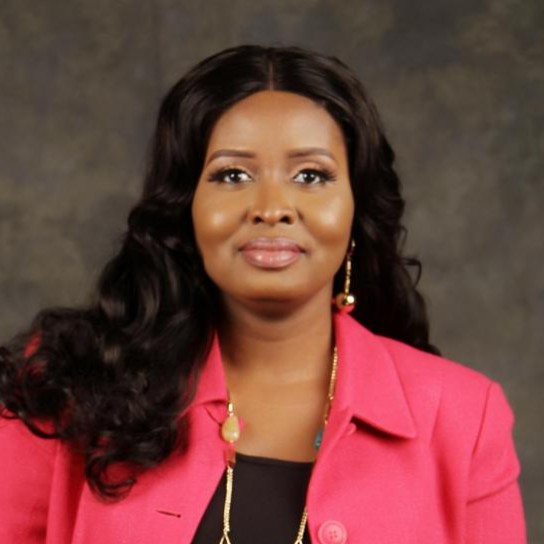
 Dr. Asmau Benzies Leo
In Nigeria, women’s leadership is frequently celebrated in rhetoric but punished in practice. Across politics, public service, civil society, media, academia, and community leadership, women who step into positions of authority quickly learn that representation does not come with protection. Instead, it comes with a hidden cost, one that many are forced to pay in silence.
Women leaders face multi-dimensional violence that extends far beyond physical threats. It includes online harassment, cyber stalking, character assassination, political intimidation, economic sabotage, threats to personal and family safety, and exclusion from key decision making spaces. These acts are often dismissed as “part of politics” or “normal criticism,” yet they operate as a deliberate system designed to delegitimise women’s authority and push them out of power.
Unlike their male counterparts, women leaders must constantly defend their competence, manage reputational attacks, and navigate unsafe physical and digital environments, often without institutional backing. Political parties rarely provide protection for female candidates or officeholders. Public institutions lack safeguarding and reporting mechanisms. Law enforcement responses to threats and harassment are weak, inconsistent, or dismissive. As a result, many women resort to self censorship, reduced visibility, or informal influence, making them lead from the sidelines rather than being at the center of power.
The personal toll is profound. Leadership under constant hostility produces burnout, anxiety, and emotional exhaustion, yet mental health remains largely absent from governance conversations. When women step back or opt out, the narrative often blames individual “capacity” or “commitment,” ignoring the hostile conditions that made sustained leadership untenable.
Violence against women in leadership is often seen strictly a women’s issue, but I can say it is a democratic and governance failure. A system that cannot protect women leaders cannot claim to be inclusive, accountable, or resilient. Addressing this issue requires deliberate institutional and policy action.
Nigeria must adopt mandatory safeguarding frameworks for women in leadership across political parties, public institutions, and civil society organizations. Political parties and public institutions should establish enforceable codes of conduct, sanctions, and protection mechanisms for female candidates and officeholders. Existing legal frameworks, including laws on cybercrime, office harassment, sexual exploitation and abuse and electoral violence, must be implemented and enforced through a gender responsive lens. Leadership institutions must integrate psychosocial and mental health support as part of governance infrastructure, not as an afterthought.
Until these protections exist, Nigerian women will continue to lead with intimidationand from the sidelines. This is not inevitable; it is a policy choice. Protecting women in leadership is a test of political will, institutional maturity, and democratic seriousness. Nigeria must decide whether women’s leadership is merely symbolic or truly worth defending, safeguarding, and sustaining.
Dr. Asmau Benzies Leo is a development practitioner with extensive national and international expertise in gender equality, peace-building, governance, and humanitarian action. She holds a PhD in Public Governance and Leadership, a Master’s degree in Conflict Management and Peace Studies, and executive certifications from leading institutions including Howard University, Harvard University and Glasgow Caledonian University. As Executive Director of the Centre for Non-violence and Gender Advocacy in Nigeria (CENGAIN), she has led ground-breaking advocacy initiatives on women’s political participation, gender-based violence prevention, and security sector reform across multiple World Bank, UN and EU-supported projects.
Latest Edition of IWA Magazine
September 8, 2026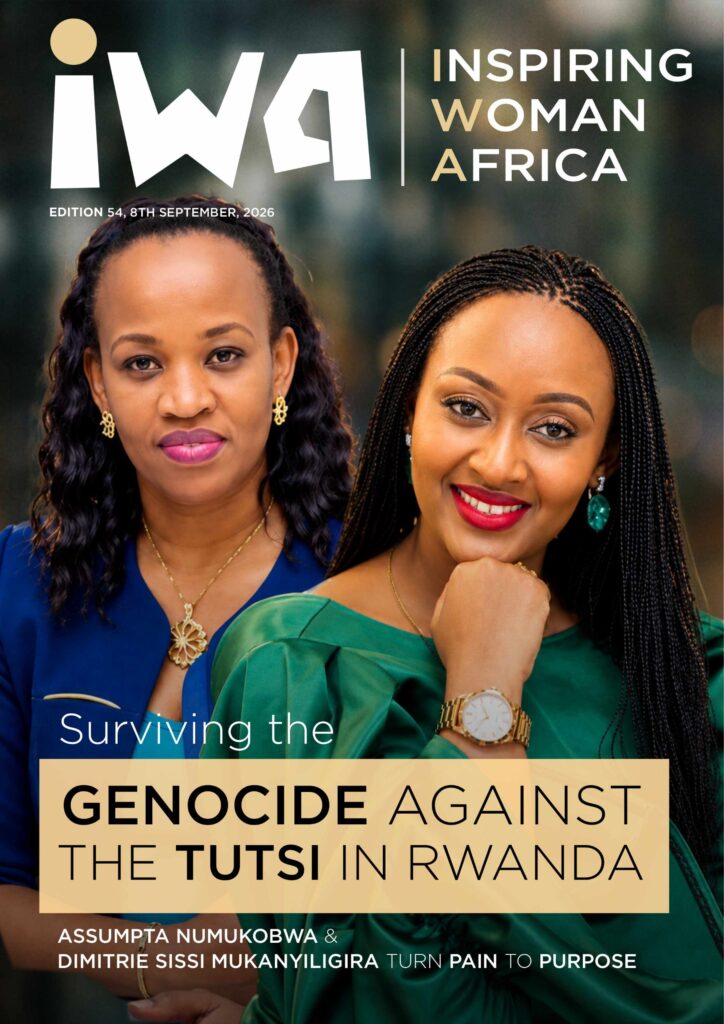
Surviving the Genocide Against the Tutsi in Rwanda: ASSUMPTA NUMUKOBWA and DIMITRIE SISSI MUKANYILIGIRA Turned Pain to Purpose
Latest Posts
-
 Sep 8, 2026 You Cannot Lead From a Broken Vessel