 Kemi Ajumobi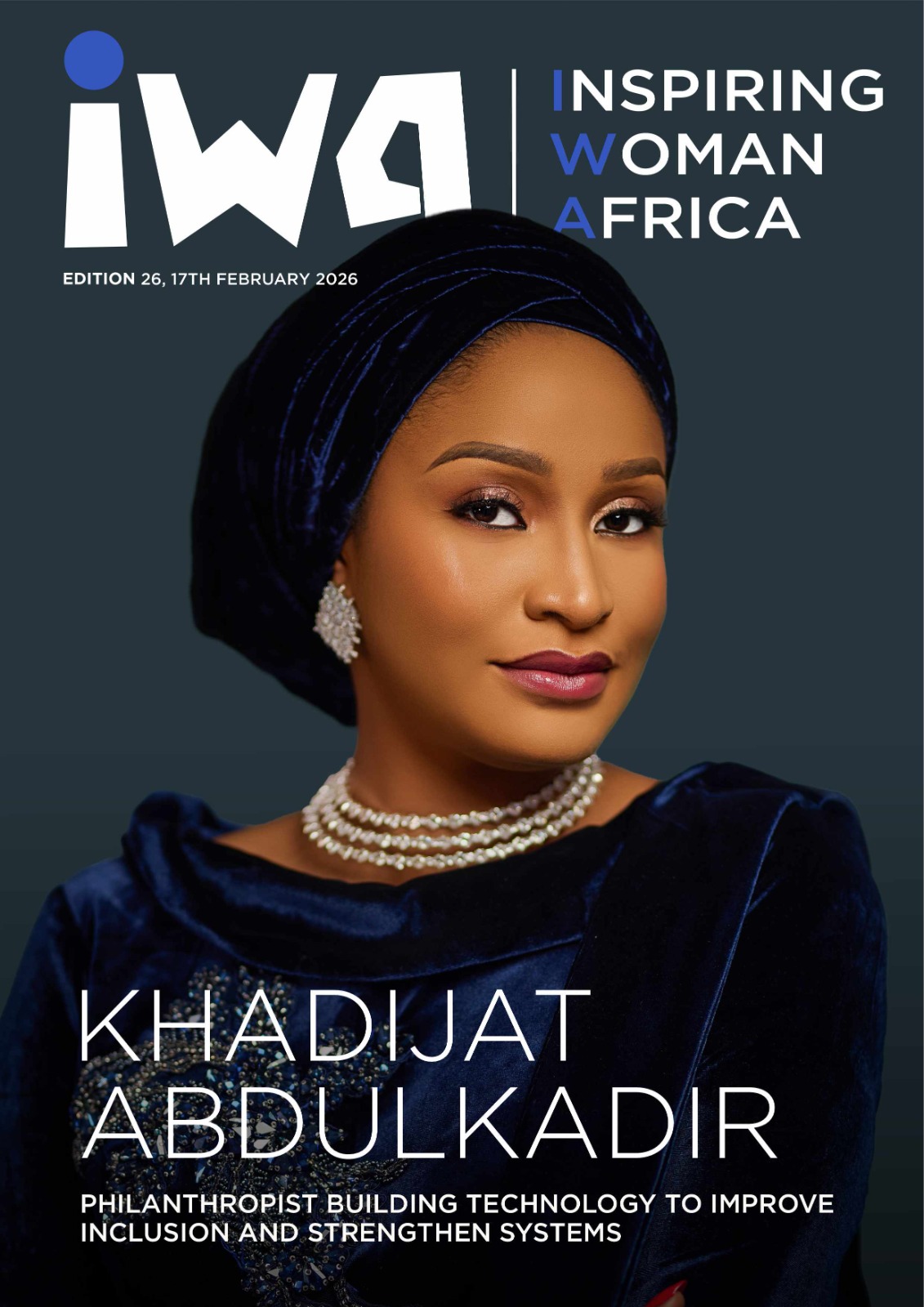
Khadijat Abdulkadir is a philanthropist, tech evangelist and the Founder of INGRYD Group, a visionary leader dedicated to empowering African youths through technology. As a trained software engineer and serial tech entrepreneur, she is the driving force behind INGRYD Academy, which is a specialised technology training and placement organisation that has trained over 4,000 individuals yearly to date. She previously served as the Senior Special Assistant on ICT to the Inspector Generals of Police, where she significantly advanced Cybersecurity and ICT trainings for the NPF and led the digitisation of the Nigerian Police Cooperative and Microfinance Bank. Her transformative work included deploying the Nigerian Police Cooperative platform while working as the Chief technology officer of Africa Prudential Plc, a digital solution serving over 387,000 police officers to date. She also led the launch of the Nigerian Police Digital Bank under IGP Adamu, which provides automated banking services to all police officers across Nigeria.
Khadijat’s entrepreneurial journey includes founding Xerde Technology among other fintechs like Tudo app. Her extensive career spans tech roles at global organisations in the United States such as Microsoft, Accenture, and Apside Belgium. She also founded Digital African Woman, a Belgium based social enterprise co-financed by the EU which was recently launched in Nigeria. In the last 10 years DAW has empowered 6,000 African and European migrant entrepreneurs to Start and scale businesses in various sectors. In her personal time, Khadijat enjoys reading, playing with her kids, and developing future AI models to advance the education sector.
Take us back memory lane and influence till date
I grew up in an environment where exposure shaped what felt possible. Technology was part of my life from an early age. I had my first computer around the age of nine, and that early access meant I wasn’t just consuming technology, I was learning how to use it to build, explore, and bring ideas to life. I took courses outside of school, experimented with different tools, and developed an early comfort with systems and problem-solving.
Growing up in the United States, technology was integrated into everyday living, so it never felt distant or exclusive. It was simply a normal part of how life worked, and that normalisation mattered. It built confidence, curiosity, and a mindset that kept asking, “What can be improved?” and “What can be built differently?”
That foundation shaped how I think and how I lead today. It taught me to adapt quickly, to learn continuously, and to see technology as a tool for impact, not just a career path. Looking back, it influenced not only what I pursued professionally, but also the kind of work I’m drawn to now, building systems that expand access and create opportunity.
Inspiration to become a tech evangelist and philanthropist, including how your journey began in the world of technology
My journey in technology was never defined by a single moment. It was the result of years of exposure, curiosity, and experience. Technology had been part of my life early on, but as I grew professionally, I became more intentional about the kind of impact I wanted to create through it.
Initially, my drive was centred on building products, particularly within financial services. I was interested in technology that could scale, improve inclusion, and strengthen systems. But as I began to build more deeply and engage with markets, I recognised a more fundamental reality: products do not scale without people. The quality of talent behind innovation ultimately determines what gets built, what survives, and what truly transforms.
That shift shaped how I began to think about impact. It became less about technology as an end in itself and more about access, opportunity, and capacity building. Over time, that led me naturally toward work that supports talent development, strengthens ecosystems, and expands participation in the digital economy.
For me, evangelism is not about promoting technology for its own sake. It is about advocating for the systems, education, and structures that allow people to benefit from it, contribute to it, and lead within it.

What is the vision behind INGRYD Group and what makes it unique in empowering African youths?
The vision behind INGRYD is rooted in a long-term commitment to developing talent at scale. The objective has never been training alone. It has been to build a pipeline of skilled, competitive professionals who can contribute meaningfully to Africa’s digital transformation and also compete globally.
What makes INGRYD distinctive is our focus on structure, outcomes, and credibility. We think about talent development as a system: training, professional standards, certification, and readiness for real work environments. We are intentional about producing people who are not only knowledgeable, but equipped to execute, build, and sustain technology solutions over time.
We also recognise that empowering young people means more than teaching tools. It means developing competence, confidence, and discipline. It means creating pathways that lead to opportunity and long-term growth, not short-term excitement.
Ultimately, INGRYD exists to close critical talent gaps and strengthen the ecosystem. When talent is properly developed and supported, innovation becomes sustainable, and that is the kind of impact we are committed to building.
The training programmes at INGRYD Academy, how has it evolved over the years, and key skills you focus on to prepare individuals for the tech industry?
INGRYD’s training programmes have evolved intentionally over the years, largely in response to what the market demands and what the ecosystem requires. We quickly learned that training alone is not enough. People need pathways that prepare them for real work, real performance standards, and long-term professional growth.
Over time, the Academy has strengthened its focus on employability and credibility. That includes building structured learning experiences, emphasising professional certification, and ensuring that learners are not only introduced to technology but equipped to deepen their skills and specialise.
The skills we prioritise include strong technical competence, problem-solving, adaptability, and the professional discipline required to perform consistently. We also emphasise readiness: how to work within teams, how to build with structure, how to learn continuously, and how to develop depth rather than remain at the surface.
As technology continues to change, the objective remains the same: to prepare individuals who can build, contribute, and grow within the industry, not simply participate in it.
As a former Senior Special Assistant on ICT to the Inspector General of Police, what were the biggest challenges you faced in advancing cybersecurity for the Nigerian Police Force?
I would not describe my role as advancing cybersecurity for the Nigerian Police Force in isolation, because that would give me too much credit for what has been a collective institutional effort. Progress in that area has been shaped by successive leadership within the Force, including previous Inspectors General, ICT leadership, and other stakeholders who had already contributed to strengthening those capabilities.
My specific focus during my time there was on building internal cybersecurity capacity. One of the most significant challenges was the heavy reliance on external vendors for critical technical functions. While outsourcing can be necessary, it can also limit institutional ownership, continuity, and long-term resilience. Strengthening internal capability therefore became a priority.
Another challenge was shifting mindset. Building technical systems is often easier than building confidence in using and managing them. Developing the culture of internal responsibility, where officers see themselves as custodians of their own technological infrastructure, required deliberate investment in training, exposure, and trust.
Fortunately, the Inspector General at the time was deeply committed to capacity development and provided strong support for initiatives aimed at strengthening internal competence. That level of leadership alignment made a significant difference. It meant that the work was not just approved, but actively supported and resourced.
The guiding question behind my efforts was simple: how do we ensure that police officers themselves are equipped to manage their own systems, protect their infrastructure, and take responsibility for their technological operations? The programmes we implemented were designed around that principle, and today there are officers handling critical functions who emerged from those training initiatives.

Can you elaborate on your experience with the digitisation of the Nigerian Police Cooperative and Microfinance Bank? What impact has it had on accessibility for police officers?
Technology is one of the most powerful tools for expanding access. It has the ability to move systems forward at a pace that would otherwise take decades, and in many cases it allows countries to leapfrog traditional limitations entirely. In Africa especially, digital systems have created opportunities for accessibility and efficiency that even some more established economies are still working toward.
For me, participating in the digitisation of the Nigerian Police Cooperative and Microfinance Bank was fundamentally about improving access for officers. Before that transition, many routine financial processes required physical presence. There were cases where cooperative members had to travel long distances, sometimes across states, just to submit requests or complete simple transactions. Similarly, many officers needed to visit physical bank branches to access their own funds.
Digitisation changed that experience significantly. Officers could now access their accounts remotely, make transfers, request services, and complete transactions without leaving their location. What once required travel, paperwork, waiting in queues, and significant time investment could now be done quickly and efficiently.
Given the size of the Nigerian Police Force, this shift was essential. Moving financial services into a digital environment improved not only convenience but also timeliness, efficiency, and overall user experience. It reduced logistical barriers and allowed officers to interact with financial services in ways that were faster, simpler, and more reliable.
Ultimately, the impact went beyond convenience. Improved access strengthened trust and engagement. When people can access their financial resources easily and confidently, it improves their relationship with the institution providing those services. In that sense, digitisation did not just modernise systems, it improved how officers experienced those systems.
How did your experiences with organisations like Microsoft, Accenture, and Apside Belgium shape your approach to technology and entrepreneurship in Africa?
Working within global organisations exposed me to structured environments where performance, accountability, and systems thinking are non-negotiable. It also gave me the opportunity to lead and collaborate within diverse teams across different cultures, mindsets, and expectations. That experience shaped both my leadership style and how I approach building technology. Those environments taught me how to think at scale, how to prioritise clarity in decision-making, and how to build systems that can operate beyond individuals. They also reinforced the value of strong processes and strong people. You begin to understand very quickly that sustainable outcomes come from structure, not improvisation.
When I began building and working across African markets, that foundation mattered. It allowed me to approach entrepreneurship with discipline and systems thinking, while still paying attention to context and culture. It also deepened my belief that the long-term success of African innovation depends heavily on human capital and the pipelines that produce it.
Discuss the mission of Digital African Woman and the impact it has had on migrant entrepreneurs. What are your hopes for its future in Nigeria?
Digital African Woman was born out of a moment that made representation very real to me. While attending a parliamentary session in Europe where the digital agenda was being discussed, I observed that conversations about inclusion, women, and participation were happening with limited representation from the people being discussed. That disconnect stayed with me.
Digital African Woman was created to ensure that African women are not only present in critical conversations but actively shaping them. Over the years, it has created visibility, access, and confidence for women navigating professional ecosystems across borders, particularly women in the diaspora who are building businesses, careers, and networks in new environments.
In terms of impact, it has helped expand what feels possible. It has demonstrated that African women can participate in policy and ecosystem level conversations, influence agendas, and contribute meaningfully in spaces where decisions are made.
Looking ahead, my hope is that its work continues to deepen in Nigeria by strengthening local networks, creating more structured pathways to opportunity, and supporting women entrepreneurs with the access, tools, and visibility required to scale sustainably.

Advice for young Africans seeking to enter the tech industry? What resources or platforms should they explore?
My advice is to prioritise focus, discipline, and depth. It is easy to chase quick wins, especially in a field that changes rapidly. But sustainable success comes from committing to a craft, building competence over time, and staying consistent.
Technology rewards specialisation. There will always be room for professionals who have developed real depth in a specific area. The goal should be to choose a direction you are genuinely interested in, build strong fundamentals, and then expand your capabilities strategically.
In terms of resources, there are many platforms available today, but tools are only helpful if there is commitment behind them. What matters most is consistency, curiosity, and the willingness to learn continuously. In the long run, those qualities build competence, credibility, and opportunities that are sustainable.
On developing future AI models for the education sector, can you share more about this project and its potential impact on learning?
Education is fundamentally about access. For learning to be effective, it must be accessible, adaptable, and responsive to the needs of individuals. Today more than ever, people need to access knowledge faster, in formats that suit them, in languages they understand, and in ways that align with how they learn best.
This is where artificial intelligence becomes transformative. AI allows us to rethink traditional education models and move beyond one uniform approach to learning. Instead of expecting everyone to learn the same way, at the same pace, and through the same structure, we can now create systems that support personalised and customised learning experiences.
One of the projects I am currently working on is centred on expanding access to this kind of adaptive education. The goal is to build solutions that allow individuals to learn at their own pace, access content in multiple languages, and develop skills that are relevant to real economic and societal participation. AI makes it possible to tailor knowledge delivery to the learner rather than forcing the learner to adapt to the system.
In the past, education was largely standardised. Today we can ask more meaningful questions. What if learning could adjust to the individual? What if people could explore subjects more deeply based on curiosity and need? What if education could respond dynamically instead of remaining static?
I believe the future of education will be shaped by systems that are both technologically advanced and deeply human centred. If we use AI intentionally, we can build learning environments that expand opportunity, strengthen capability, and prepare people not just for today’s workforce, but for the realities of the next hundred years.
How do your personal interests, such as reading and spending time with your kids, influence your professional life and decision-making?
At my core, I am a very human-centred person, and that perspective shapes everything I do. I have never been able to separate who I am from the work I do, because my values, my mindset, and my outlook on life naturally influence how I lead, how I build, and how I make decisions. I am also a deeply reflective and spiritual person, so personal growth has always been something I invest in intentionally.
Reading plays an important role in that process. It allows me to explore ideas, understand how other people think, and expand my perspective beyond my own experiences. It strengthens my ability to analyse situations from multiple angles and helps me remain open to new ways of thinking.
Spending time with my children grounds me in a different but equally important way. Children approach the world with curiosity, imagination, and freedom. Being around that energy reconnects me to creativity and reminds me of the importance of play, exploration, and possibility. Those moments often bring clarity and balance, which carry directly into how I approach my professional responsibilities.
Because of that combination of reflection and grounding, I tend to make decisions with a long-term view. I naturally consider multiple outcomes before acting, weighing impact, sustainability, and consequence. In many ways, my personal life strengthens my professional judgement, because it keeps me centred, thoughtful, and aware of the broader human impact behind every decision.
What is the future of technology in Africa, and what role do you see yourself playing in that future?
The future of technology in Africa will be shaped largely by human capital. Infrastructure matters, capital matters, policy matters, but talent will ultimately determine how far the continent can build and compete.
Africa’s advantage is not only market potential, it is also its people. But potential must be converted into capability, and that requires deliberate investment in education, professional development, and systems that produce competitive talent at scale.
My role in that future is centred on building those pipelines. I remain committed to contributing to how talent is developed, certified, and positioned to build technology solutions that are relevant locally and competitive globally. If we invest intentionally in people and create environments where talent can grow, Africa will not simply participate in the future of technology, we will actively shape it.
Throughout your career, what have been some of the greatest challenges you’ve faced as a woman in tech, and how have you overcome them?
One of the realities I have encountered is that credibility is not always granted automatically. In many environments, especially those that are highly technical or traditionally male dominated, trust must be earned deliberately and consistently.
Rather than seeing that as a barrier, I approached it as a responsibility. I focused on preparation, clarity, and results. Over time, performance speaks for itself, and consistency builds confidence among the people you work with.
I have also learned that representation matters. Being present, contributing meaningfully, and maintaining composure in complex environments helps reshape perceptions. Challenges will always exist, but resilience, competence, and patience remain powerful tools for overcoming them.

A day never to be forgotten and why?
There have actually been many unforgettable days in my life, so it is difficult to choose just one. Some of the most meaningful moments are also very personal, and not all of them are stories I am ready to share with the world yet.
What I can say is that those defining days, whether public or private, are often the ones that shape you quietly. They stay with you, influence your decisions, and remind you of what truly matters. I consider myself fortunate to have experienced many moments like that, even if some of them I choose to keep just for myself.
Conclusion
For me, life is ultimately about legacy. It is about impact, creating value, sustaining value, and building institutions that outlive us. The work we do should not exist only for our own comfort. It should exist to improve the lives of people we may never meet.
I believe deeply that meaningful progress comes when we begin to see our lives as contributions to something larger than ourselves. We are building not just for today, but for generations we will never see. Every society that exists today was shaped by people who made decisions with the future in mind, and we carry that same responsibility forward.
In everything we do, especially across Africa, we must recognise that we are custodians of tomorrow. The choices we make today will define the world our children, and their children, inherit. That is why it is important to live as impact-driven individuals, civically conscious citizens, and intentional builders of lasting systems.
We may never see the future we are helping to create, but because of what we build today, that future will exist.