 Dr. Maymunah Yusuf Kadiri
In today’s world, success is often measured by how much one can endure. The ability to carry expectations, manage financial pressure, and still show up daily is frequently applauded as strength. But beneath this quiet resilience lies a growing crisis—one that is rarely spoken about yet deeply felt. The cost of living a life misaligned with one’s capacity is not just stress; it is a slow erosion of holistic wellbeing.
Across cities like Lagos, countless individuals are navigating an invisible balancing act. They are expected to provide, to succeed, to meet familial and societal standards, while simultaneously managing their own aspirations and limitations. On the surface, they appear functional. Internally, many are overwhelmed, fatigued, and stretched beyond what is sustainable.
This is not merely a financial issue. It is not just a mental health issue. It is a holistic living crisis.
Consider the journey of a young professional burdened by responsibility. His life became a constant negotiation between expectations and reality. Financial obligations grew, societal pressures intensified, and over time, the weight began to manifest in every aspect of his life. Sleep became inconsistent, eating patterns disrupted, and his mind, once clear and focused, became clouded with worry.
What makes this story particularly important is not the struggle itself, but what it reveals.
The human system is interconnected. When financial stress rises, it does not stay confined to bank accounts. It affects sleep, mood, decision-making, relationships, and physical health. When expectations become overwhelming, they do not remain external; they become internalised, shaping self-worth and identity. This is why holistic living cannot be optional.
It is no longer sufficient to address one area of life while neglecting others. True wellbeing requires alignment—where financial realities, personal values, emotional health, and physical vitality coexist in a way that is sustainable.
One of the most powerful shifts an individual can make is internal reflection. Understanding one’s limits, priorities, and values creates clarity during chaos. It allows individuals to distinguish between what is necessary and what is imposed. Without this awareness, it becomes easy to live a life driven entirely by external expectations.
Equally important is financial awareness—not as a source of fear, but as a tool for control. Budgeting, planning, and seeking guidance are not signs of inadequacy; they are strategies for stability. Financial clarity reduces uncertainty, and with reduced uncertainty comes improved mental and emotional wellbeing. However, financial stability alone is not enough.
Many individuals achieve financial progress while simultaneously neglecting their health, relationships, and sense of self. This creates a different kind of imbalance—one where success exists externally but emptiness persists internally. This is where intentional balance becomes critical.
Holistic living requires the integration of rest, movement, emotional expression, and meaningful connection into daily life. It is about creating rhythms that sustain rather than deplete. Simple practices—pausing during the day, engaging in conversations that matter, protecting sleep, and creating boundaries can significantly shift one’s overall wellbeing.
Boundaries are often misunderstood. They are not acts of rebellion; they are acts of preservation. Learning to communicate limits, to say no when necessary, and to prioritise personal wellbeing does not weaken relationships—it strengthens them by fostering honesty and sustainability.
Community also plays a vital role in this journey. No individual is designed to navigate life’s complexities alone. Support systems—friends, family, mentors provide perspective, encouragement, and relief. Sharing burdens does not eliminate them, but it makes them lighter. In environments where open communication is encouraged, resilience becomes a shared resource rather than an individual struggle.
Perhaps one of the most overlooked aspects of holistic living is the courage to seek help. Whether through professional guidance, financial counselling, or trusted relationships, reaching out is not a sign of failure. It is a step towards restoration. The reality is this: the pressures of modern life are not going away. Expectations will continue to exist. Financial responsibilities will remain. But how individuals navigate them can change.
The goal is not to eliminate pressure, but to build capacity in a way that is sustainable. Because when life becomes a constant sacrifice of wellbeing for survival, something fundamental is lost. True success is not measured by how much one can carry, but by how well one can live. And holistic living begins when we stop trying to meet every expectation and start choosing alignment instead.
Dr. MAYMUNAH YUSUF KADIRI (aka DR. MAY) popularly referred to as “The Celebrity Shrink,” is a multiple award winning Mental Health Physician, Advocate & Coach. She is the convener of “The Mental Health Conference” and the Medical Director and Psychiatrist-In-Chief at Pinnacle Medical Services, Dr. Kadiri is a dynamic Consultant Neuro-Psychiatrist and a Fellow of the National Post Graduate Medical College of Nigeria (FMCPsych) with almost 20 years’ experience as a practicing Physician.
The IWA Series 15 Conference is Here
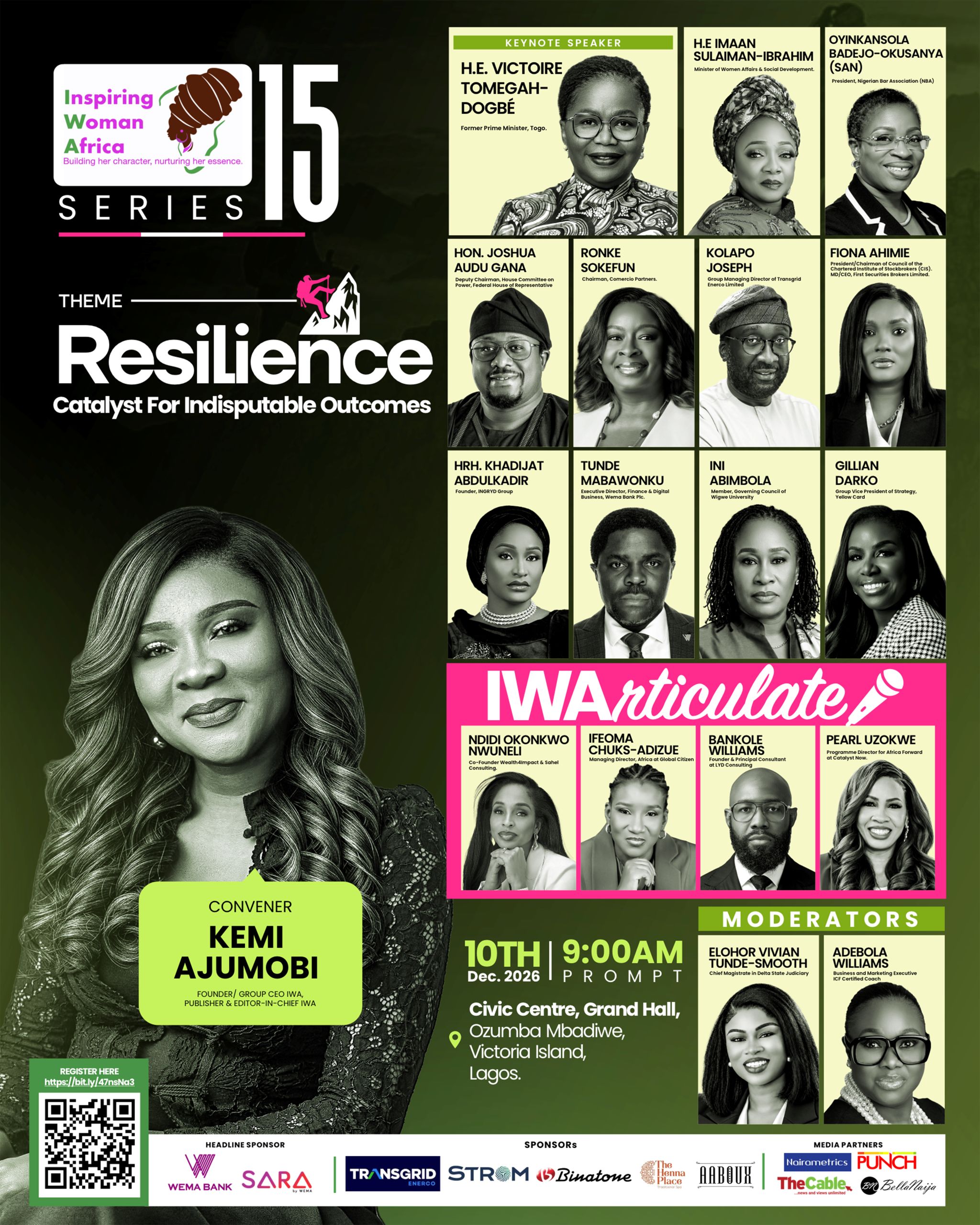
Click To Register
Latest Edition of IWA Magazine
October 20, 2026
Meet the Speakers of IWA Series 15 Conference
Latest Posts
-
 Oct 20, 2026 Hard Conversations: The Skill No One Puts on a CV
 -
 Oct 20, 2026 5 Africa Women Listed as 2026 Forbes Icons
 -
 Oct 20, 2026 You Are Wealthier Than You Think