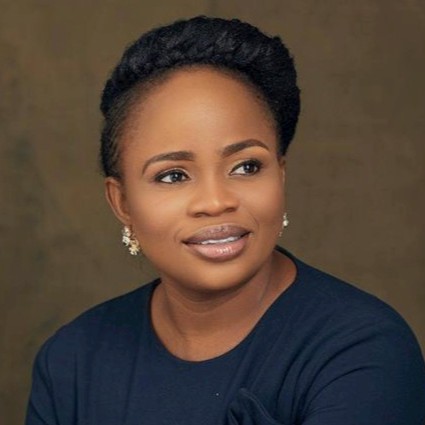
 Sola Adesakin
There is a lie that sits quietly at the centre of most people’s financial inaction. It does not announce itself. It sounds reasonable, almost responsible. It says: when I have more, I will start. When the salary increases. When the business picks up. When the children are older and the expenses are lighter. When conditions are better, I will begin doing the things I know I should be doing with money.
The problem is that conditions do not become better on their own. They become better because of decisions made in the current conditions. And the person waiting for a larger sum to begin is practising, every single day, the habit of not starting. That habit does not disappear when the money arrives. It simply scales.
The truth that changes everything is this: it is not the amount that builds wealth. It is the behaviour. And behaviour built on small money transfers directly to large money, while the absence of behaviour built on small money almost guarantees that large money will be mismanaged when it comes.
Consider Amaka. She earns N120,000 a month working as an administrative officer in Lagos. After rent, transportation, feeding, and sending something home, she tells herself there is nothing left to invest. But there is N5,000. Not nothing. N5,000 that currently disappears into the noise of daily spending without destination or intention.
She puts that N5,000 into a money market fund every month for twelve months. At the end of the year she has approximately N63,000, plus modest returns. Not life-changing on its own. But Amaka has now done something far more valuable than accumulate N63,000. She has built the identity of an investor. She knows how to open an account. She knows how to fund it consistently. She knows how to leave it alone. When her salary increases to N200,000, she does not have to start learning. She just scales what she already knows.
That is what teaching small money actually means. You are not just growing a balance. You are training a mind.
The mathematics support this more powerfully than most people expect. N10,000 invested monthly from age 28 in an instrument returning 12% annually becomes approximately N35 million by age 58. The person who waits until they have N50,000 a month to start, and begins that habit at 38 instead, ends up with roughly N23 million under the same conditions. The ten-year delay cost them N12 million, not because they invested less per month when they started, but because they gave up a decade of compounding. The small money, invested early, did work that the larger money starting later simply could not recover.
The practical starting point is embarrassingly simple. Open a dedicated investment account this week with whatever you currently have. Not whatever you wish you had. What you have. In Nigeria, regulated money market funds allow entry from as little as N1,000 through platforms that are SEC-compliant. In dollars, some diaspora-facing platforms allow micro-investment entry points that make the first step genuinely accessible. The barrier to starting has never been lower. The only remaining barrier is the belief that the amount is too small to matter.
It matters. Not because N5,000 will retire you. But because N5,000 placed with intention is the first sentence of a financial story that compounds.
Beyond investing, teach your small money to work in multiple directions simultaneously. Even on a tight income, the framework holds. Some of what comes in goes to living. Some go to saving. Some go to growing. Some go to giving. The percentages will be different for everyone depending on income and season of life, but the architecture should exist regardless of the amount. A person earning N80,000 who splits it intentionally is developing a more sophisticated financial mind than a person earning N500,000 who spends it all without structure.
The other thing small money teaches you is discernment. When the amounts are modest, every decision is visible. You notice what you are spending on. You feel the trade-offs. You become a sharper financial thinker, not despite the constraint, but because of it. That sharpness does not go away when the income grows. It becomes the filter through which larger decisions get made.
Do not wait for the big money to begin behaving like someone who builds wealth. Begin now, with what is in your hand.
Teach the small money. It will grow into something that teaches you back.
About Author
Sola Adesakin
Sola Adesakin is a highly respected wealth coach and chartered accountant with over two decades of transformative impact in the finance industry. As the visionary founder of Smart Stewards Financial Advisory Limited and Smart Stewards Advisory LLC, she has revolutionized the financial wellbeing of countless individuals and businesses across 40 countries. Her methodical approach to ‘make-manage-multiply’ money principles has elevated many from financial stress to prosperity, and mediocrity to exceptional achievement.
Latest Edition of IWA Magazine
August 25, 2026
Michelle McKinney Hammond — Living Intentionally, Inspiring Humanity Wholesomely
Latest Posts
-
 Aug 25, 2026 Money Responds to Clarity