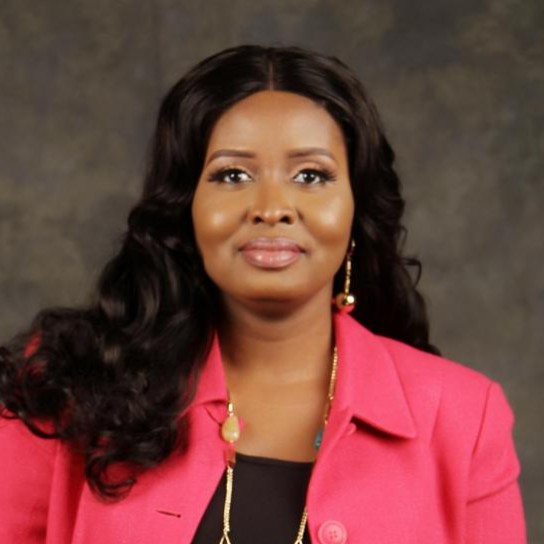
 Dr. Asmau Benzies Leo
African feminism is not simply an imported ideological framework applied to African realities. It is rooted in the lived experiences, histories, struggles and resilience of African women who have long challenged systems of domination in their homes, communities, economies, political institutions and societies. In Nigeria, the future of women’s activism will depend on how effectively feminist movements respond to the multidimensional nature of women’s oppression, including violence against women, toxic masculinity, sexism, patriarchy, economic exclusion and unequal power relations.
Nigeria has made important progress in developing laws, policies and institutional mechanisms for gender equality. Yet the gap between policy and lived reality remains significant. Women continue to experience violence, discrimination and exclusion from political and decision-making spaces. UN Women reports that about one in three Nigerian women aged 15–49 has experienced physical or sexual violence, while women’s representation in parliament remains extremely low. (UN Women Data Hub) These realities demonstrate that the struggle for gender justice cannot be reduced to the enactment of laws alone. It requires transformation of the social, cultural and political structures that reproduce inequality.
At the centre of this struggle is patriarchy, the system of social relations through which authority, resources, decision-making and legitimacy are disproportionately concentrated in male hands. Patriarchy manifests differently across Nigeria’s diverse communities, but its consequences are remarkably consistent: women are often expected to be submissive, economically dependent, sexually available, responsible for unpaid care work and less entitled to political authority.
Sexism reinforces these structures by normalising assumptions about what women can or cannot do. A woman who is assertive may be labelled aggressive; a woman who seeks political office may be judged by her marital status, appearance or sexuality; while a man displaying the same qualities may be celebrated as strong leadership. Such double standards are not merely cultural inconveniences, they are mechanisms through which power is reproduced.
Toxic masculinity must therefore become a central concern of contemporary African feminism. Masculinity itself is not the problem. The problem emerges when boys and men are socialised to equate manhood with dominance, control, aggression, sexual entitlement, emotional suppression and the ability to exercise power over women. In conflict-affected communities, these expectations can become even more dangerous. Research on northern Nigeria has highlighted how gender norms and notions of protective masculinity can interact with conflict and violence. (UN Women)
This means that women’s activism cannot focus exclusively on empowering women while leaving harmful constructions of masculinity untouched. The future must include men and boys, not as the leaders of feminism, but as partners in dismantling systems that also constrain them. Boys must learn that strength can mean empathy, responsibility and peaceful conflict resolution, while men must be encouraged to understand equality not as a loss of power but as a transformation of power.
Violence against Women represents one of the most visible expressions of unequal gender power. Sexual violence, intimate-partner violence, harassment, exploitation, child marriage and other forms of abuse do not occur in isolation. They are connected to economic dependency, harmful social norms, weak accountability mechanisms, stigma, unequal access to justice and the socialisation of entitlement.
Consequently, the future of activism must move beyond responding to violence after it occurs. Prevention must become equally important. This requires transforming social norms, strengthening survivor-centred justice systems, improving institutional accountability and investing in grassroots women’s organisations. UN Women similarly identifies gender discrimination, harmful social norms and gender stereotypes as structural drivers of violence against women and emphasises prevention alongside survivor response. (UN Women)
Conflict adds another dimension. Nigeria’s insecurity, from terrorism and insurgency to banditry, communal violence, displacement and farmer-herder conflicts, has gendered consequences. Women and girls may experience sexual violence, displacement, economic deprivation and loss of livelihoods, while also carrying disproportionate responsibilities for children, elderly relatives and displaced households. Yet women remain significantly underrepresented in formal peace and security decision-making. Nigeria has developed National and State Action Plans under the Women, Peace and Security agenda, but implementation and meaningful participation remain challenges. (UN Women Africa)
This raises an important question: Who has the power to define peace?
If peace is defined only by the absence of armed conflict, women’s experiences remain invisible. African feminist activism must broaden the meaning of security to include freedom from domestic violence, economic insecurity, political intimidation, sexual exploitation, environmental insecurity and structural discrimination. Peace must mean safety in the home, dignity in the workplace, representation in parliament and freedom to participate in public life without fear.
The future of Nigerian feminism must therefore also be about power, not simply gaining access to existing institutions, but questioning how those institutions distribute power. Women need seats at the table, but representation without influence can become symbolic. What is required is meaningful participation: the ability to shape budgets, policies, legislation, security priorities and development decisions.
This is particularly important in politics. Violence and intimidation directed at women in political spaces can discourage women from contesting elections and reinforce patriarchal control over political institutions. Recent research similarly identifies discrimination, intimidation and gender-based violence as barriers to women’s political participation in Nigeria. (Nigerian Journals Online)
African feminism must consequently become more intersectional and inclusive. Nigerian women are not a homogeneous group. The experiences of a woman in a conflict-affected community in the North-East may differ substantially from those of a professional woman in Abuja, a market woman in Lagos, a woman with a disability, a rural farmer, an internally displaced woman, a young activist or an older community leader. Future activism must recognise these differences while building solidarity around shared struggles for dignity, equality and justice.
Technology will also reshape women’s activism. Nigerian women are increasingly using digital platforms to organise, educate, expose injustice and influence public debate. But digital activism brings new threats, including online harassment, sexualised abuse, cyberstalking and coordinated attacks against outspoken women. The feminist movement must therefore fight for digital safety as part of women’s human rights.
Ultimately, the future of African feminism in Nigeria should not be about women replacing men at the top of existing hierarchies. It should be about transforming the hierarchy itself. It should challenge the assumption that leadership must be masculine, that care work is women’s responsibility, that violence is an inevitable part of relationships, and that political power belongs primarily to men.
Nigeria does not merely need more women activists. It needs a new generation of women who are organisers, negotiators, policymakers, peacebuilders, community leaders, researchers, entrepreneurs and political actors and who are prepared to challenge power wherever it reproduces injustice.
The future of women’s activism is therefore not only about women’s empowerment. It is about social transformation.
African feminism must continue to speak with its own voice, rooted in African histories and realities while engaging global movements for justice. Its greatest opportunity lies in connecting the personal with the political, SGBV with power, patriarchy with conflict, masculinity with violence, and women’s exclusion with the broader crisis of governance.
The question for the next generation is no longer whether women belong in the spaces where Nigeria’s future is decided. The question is whether Nigeria can afford to continue making those decisions without them.
The answer must be No.
About Author
Asmau Benzies Leo
Dr. Asmau Benzies Leo is a development practitioner with extensive national and international expertise in gender equality, peace-building, governance, and humanitarian action. She holds a PhD in Public Governance and Leadership, a Master’s degree in Conflict Management and Peace Studies, and executive certifications from leading institutions including Howard University, Harvard University and Glasgow Caledonian University. As Executive Director of the Centre for Non-violence and Gender Advocacy in Nigeria (CENGAIN), she has led ground-breaking advocacy initiatives on women’s political participation, gender-based violence prevention, and security sector reform across multiple World Bank, UN and EU-supported projects.
The IWA Series 15 Conference is Here
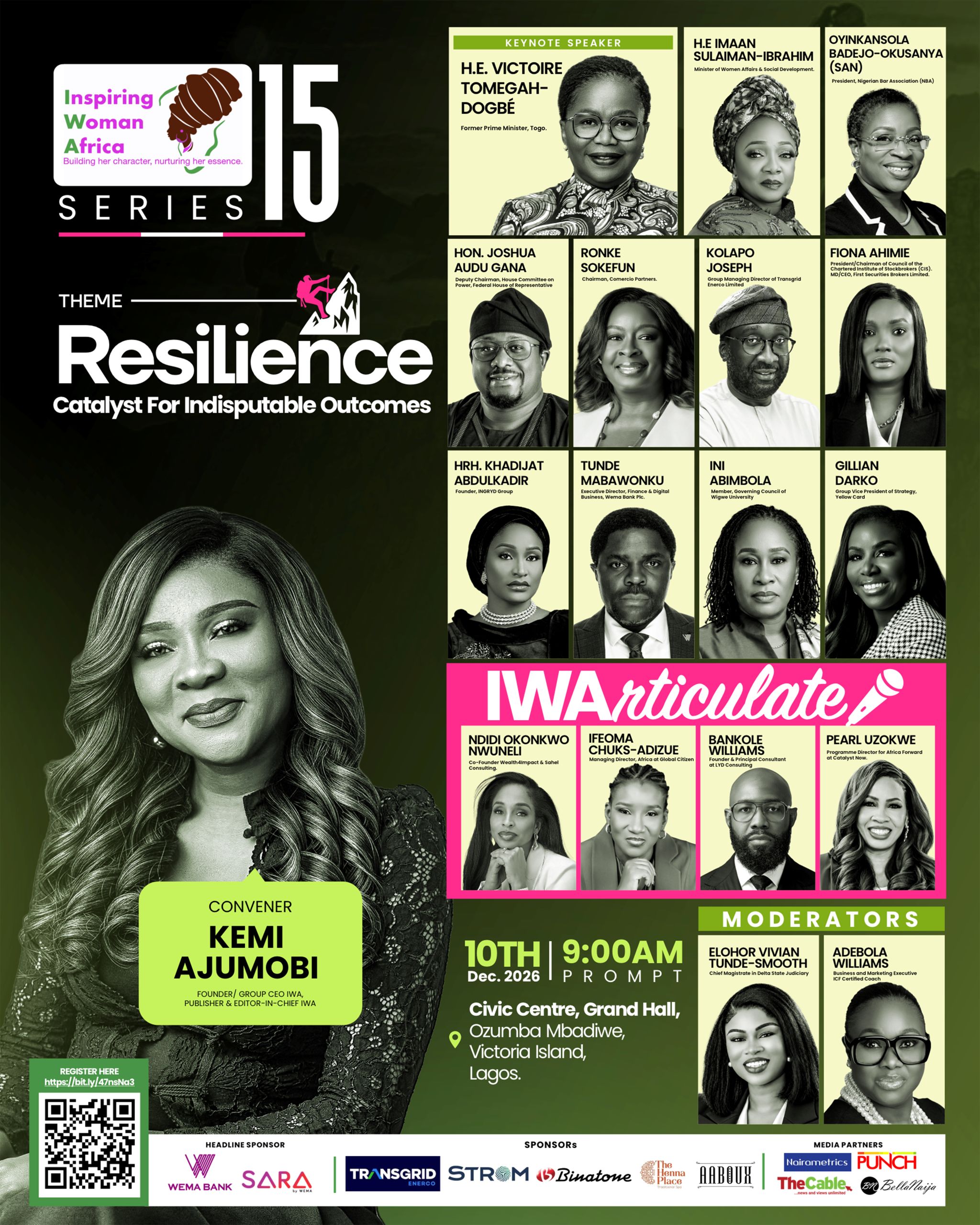
Click To Register
Latest Edition of IWA Magazine
October 20, 2026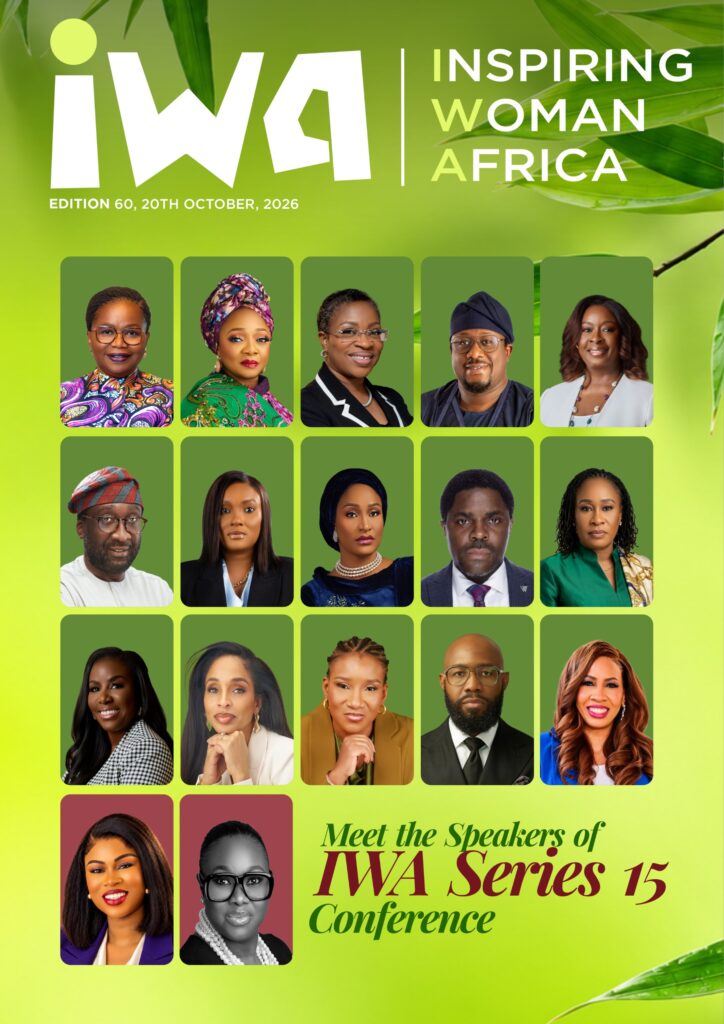
Meet the Speakers of IWA Series 15 Conference
Latest Posts
-
 Oct 20, 2026 Hard Conversations: The Skill No One Puts on a CV
 -
 Oct 20, 2026 5 Africa Women Listed as 2026 Forbes Icons
 -
 Oct 20, 2026 You Are Wealthier Than You Think