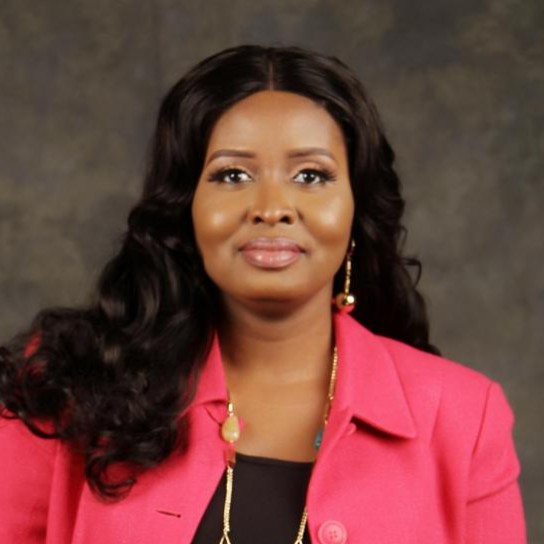
 Dr. Asmau Benzies Leo
When President Bola Ahmed Tinubu GCFR declared 2026 as the “Year of the Family,” the announcement carried both symbolic weight and strategic intent. It did not emerge in isolation. Rather, it reflects a growing recognition both globally and within Nigeria, that amid economic hardship, insecurity, and social fragmentation, the family remains the most immediate and enduring structure of support for individuals and communities.
The background to this declaration is rooted in Nigeria’s present realities. Over the past decade, families across the country have faced mounting pressures: rising cost of living, unemployment, internal displacement driven by insurgency and banditry, and the erosion of traditional support systems. In conflict affected regions, particularly in the North East and North West, families have been separated, reconfigured, or forced into survival under extreme conditions. At the same time, urbanisation and migration have weakened extended family networks that once provided a buffer against hardship.
This national move also aligns with broader international conversations on family wellbeing. Since the International Year of the Family, governments have increasingly acknowledged that sustainable development begins at the household level. The United Nations has consistently emphasised that strong, supported families are essential to achieving the Sustainable Development Goals (SDGs) especially those related to poverty reduction, education, health, and gender equality. Nigeria’s 2026 declaration can therefore be seen as part of this continuum, adapted to local urgency.
Understanding the importance of this “Year of the Family” requires looking beyond symbolism. At its core, the family is Nigeria’s first line of social protection. In the absence of comprehensive welfare systems, families absorb shocks, whether economic, emotional, or security related. They care for children, support the elderly, and provide informal safety nets in times of crisis. Strengthening families, therefore, is not merely a social objective; it is a development imperative.
The importance is also deeply tied to national stability. Families shape values, social behaviour, and identity. Where families are stable and supported, communities tend to be more cohesive and resilient. Conversely, when families are under strain, the effects ripple outward, manifesting in youth vulnerability, crime, social unrest, and weakened trust in institutions. In this sense, investing in families is an investment in peace and security, particularly in a country navigating complex conflict dynamics.
Central to this entire scheme is the role of women. In Nigeria, women are often the backbone of family life; caregivers, economic contributors, educators of children, and custodians of social values. In both stable and fragile contexts, women sustain households, manage scarce resources, and provide emotional stability. In conflict affected settings, many women serve as heads of households, navigating displacement, loss, and economic hardship while still ensuring the survival and cohesion of their families. Yet, women’s contributions are frequently undervalued and insufficiently supported. The “Year of the Family” presents a critical opportunity to correct this imbalance. Supporting families must necessarily mean supporting women, through access to quality maternal healthcare, protection from gender based violence, economic empowerment opportunities, and inclusive policies that enable them to balance productive and reproductive roles. Without addressing the structural inequalities that women face, the goal of strengthening families will remain incomplete.
Moreover, women are not only caregivers within families; they are also agents of change within communities. Their participation in decision making, whether at household, community, or national levels has been shown to improve outcomes in education, health, and peacebuilding. Integrating women’s voices into the design and implementation of family-centered policies will therefore be essential to the success of this declaration.
Economically, the family remains central. Households drive consumption, labour participation, and informal economic activity. Policies that support family stability, such as access to affordable healthcare, education, housing, and livelihoods, can significantly reduce poverty and inequality.
For women especially, targeted support systems like childcare services, financial inclusion programmes, and skills development can enhance their economic participation while strengthening family resilience.
Yet, the declaration also demands a careful and honest approach. Elevating the family must not romanticise it or ignore internal challenges. Many Nigerian families grapple with domestic violence, child abuse, and unequal gender dynamics. The “Year of the Family” will only be meaningful if it promotes not just unity, but safety, dignity, and justice within the home. This requires strengthening legal frameworks, expanding access to support services, and embedding survivor centered approaches into policy and practice.
The prospects, however, are promising, if the declaration is matched with deliberate action. It offers a platform to integrate family focused policies across sectors: education systems that engage parents, health services that prioritise maternal and child care, and social protection programmes that reach the most vulnerable households. It also creates space for collaboration with civil society, faith-based organisations, and community leaders who already play a critical role in supporting families at the grassroots level.
Ultimately, the “Year of the Family” is important because it reframes national priorities. It shifts attention from abstract development indicators to the lived realities of people, the everyday experiences of parents, children, and caregivers. If implemented with clarity, inclusiveness, and accountability, 2026 could mark a turning point where Nigeria not only acknowledges the centrality of the family but actively invests in its strength.
The true measure of this declaration will not be in its announcement, but in whether Nigerian families across regions, classes, and circumstances feel its impact in tangible, lasting ways. And at the heart of that outcome will be the extent to which women, so often the quiet anchors of family life are recognised, empowered, and supported to thrive.
Dr. Asmau Benzies Leo is a development practitioner with extensive national and international expertise in gender equality, peace-building, governance, and humanitarian action. She holds a PhD in Public Governance and Leadership, a Master’s degree in Conflict Management and Peace Studies, and executive certifications from leading institutions including Howard University, Harvard University and Glasgow Caledonian University. As Executive Director of the Centre for Non-violence and Gender Advocacy in Nigeria (CENGAIN), she has led ground-breaking advocacy initiatives on women’s political participation, gender-based violence prevention, and security sector reform across multiple World Bank, UN and EU-supported projects.
Latest Edition of IWA Magazine
September 8, 2026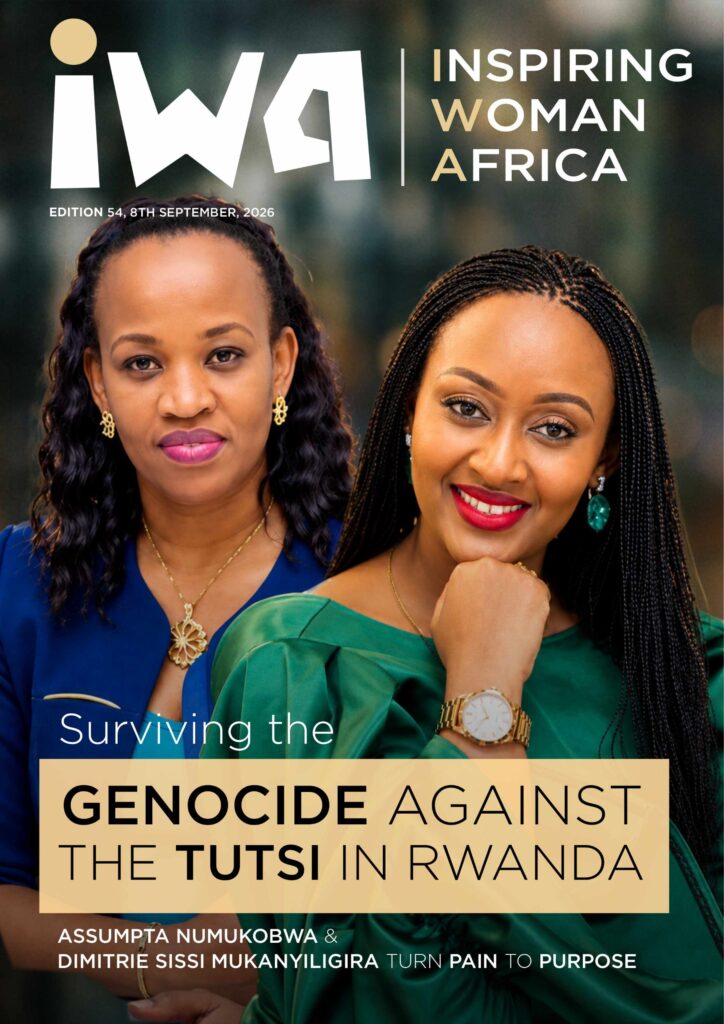
Surviving the Genocide Against the Tutsi in Rwanda: ASSUMPTA NUMUKOBWA and DIMITRIE SISSI MUKANYILIGIRA Turned Pain to Purpose
Latest Posts
-
 Sep 8, 2026 You Cannot Lead From a Broken Vessel