 Sola Adesakin
You have built the budget. Now look at the beliefs running underneath it.
You can have the most organised spreadsheet, the most disciplined savings plan, and still find yourself making decisions that contradict both. You buy something you did not budget for. You delay an investment you already decided on. You lend money you cannot afford to lose because saying no felt impossible. The spreadsheet did not fail you. The software underneath it did.
By software, I mean the beliefs, narratives, and emotional associations about money that were installed in you long before you ever earned your own. These are not abstract psychological concepts. They are operational. They run quietly in the background, shaping every financial decision you make, often without your awareness.
Think back. What did money look like in the house you grew up in? Was it discussed openly or treated as a private matter, almost shameful? Was there enough of it, or was its scarcity a constant presence, one of those things adults lowered their voices about? When it arrived, was it celebrated or spent immediately, as though holding onto it was dangerous? When it left, did it leave through generosity, through crisis, through poor planning, or through someone else’s need?
These experiences did not just inform you. They programmed you. The woman who grew up watching her mother give away money the family needed because to refuse was to be selfish now struggles to protect her own savings from extended family demands. The woman who watched her father lose everything in a failed business may be so afraid of financial risk that she keeps money in a savings account that loses value to inflation every year, calling it safety. The woman who was never shown how money works may unconsciously equate earning more with spending more, because that is the only model she saw.
None of this is a character flaw. It is learned behaviour. And learned behaviour can be unlearned, or at minimum, made visible so it no longer operates without your consent.
The practical exercise here is a money autobiography. Not a long document, just a set of honest questions answered in writing. What is your earliest memory of money? What were you taught, explicitly or implicitly, about what money means? Did you have financial role models growing up, people who made you feel that building wealth was possible and legitimate? If not, whose model have you been running on?
Then, look at your current patterns. Where does money consistently disappear in your life, and does that pattern connect to something you felt or experienced earlier? What financial decisions do you avoid, and what are you really afraid of when you avoid them? When you imagine yourself wealthy, genuinely, sustainably wealthy, does it feel natural or does it bring up something uncomfortable? Some women feel guilty about wanting money. Others feel exposed, as though having it makes them a target. Others do not believe it is for them at all.
These are not small questions. They are the most important financial audit you will ever run, because no amount of budgeting corrects a belief system that is working against you.
Awareness alone changes things. When you recognise that your reluctance to invest is rooted in a fear that was never yours to carry, you create space to choose differently. You do not have to be defined by what money meant in your mother’s house, or your grandmother’s. You can decide what it means in yours.
Update the software. Then the spreadsheet will finally work the way it is supposed to.
Sola Adesakin is a highly respected wealth coach and chartered accountant with over two decades of transformative impact in the finance industry. As the visionary founder of Smart Stewards Financial Advisory Limited and Smart Stewards Advisory LLC, she has revolutionized the financial wellbeing of countless individuals and businesses across 40 countries. Her methodical approach to ‘make-manage-multiply’ money principles has elevated many from financial stress to prosperity, and mediocrity to exceptional achievement.
Author
Latest Edition of IWA Magazine
September 8, 2026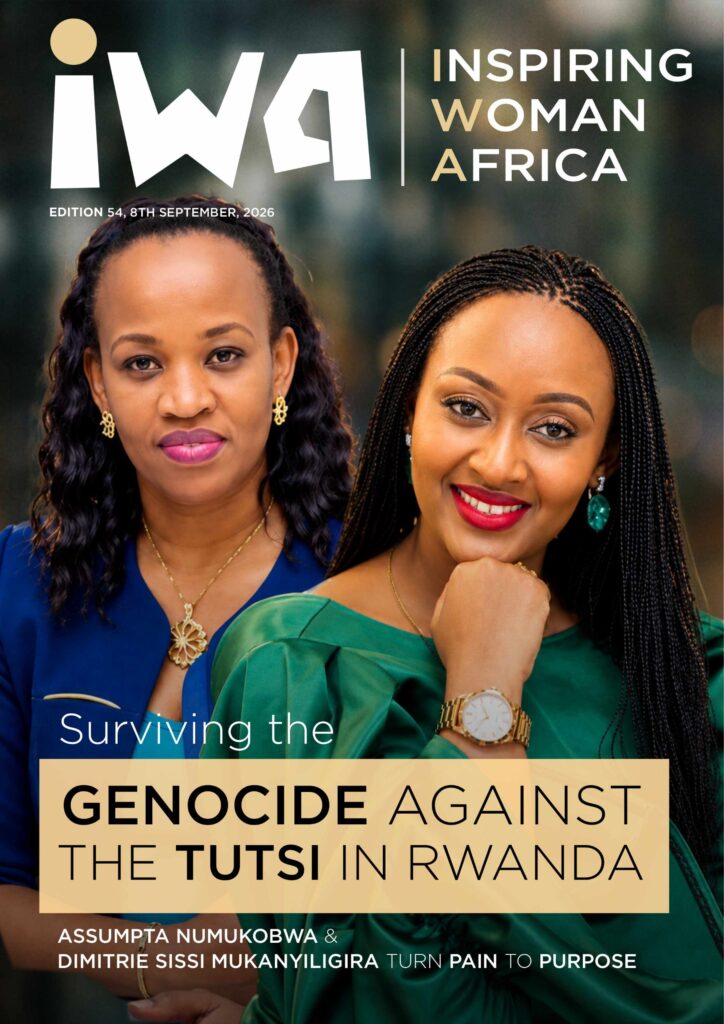
Surviving the Genocide Against the Tutsi in Rwanda: ASSUMPTA NUMUKOBWA and DIMITRIE SISSI MUKANYILIGIRA Turned Pain to Purpose
Latest Posts
-
 Sep 8, 2026 You Cannot Lead From a Broken Vessel