 Wola Joseph-Condotti

Nobody lists it on a CV, but it may be the single most important skill a leader ever develops.
The ability to have the hard conversation.
The performance review that has to say what everyone has been avoiding. The word with the underperformer you have carried for too long. The peer who crossed a line and needs to hear it, from you, directly. The boss whose decision you have to challenge, knowing full well they can make your life difficult for it.
We are not taught this. We are taught strategy, finance, operations, all the technical things. But the thing that actually determines whether a team functions, whether a culture stays healthy, whether problems get solved or quietly rot, is almost always a conversation somebody was brave enough, or too afraid, to have.
Avoidance Is Not Kindness
Let me say the thing we do not want to admit. Most of the time, when we avoid a hard conversation, we tell ourselves we are being kind. We do not want to hurt them. We do not want to embarrass them. We are giving them grace, we say. A little more time.
But if I am honest, and I have had to be honest with myself about this more than once, the avoidance is rarely about them. It is about us. We are not protecting the other person. We are protecting ourselves from the discomfort of the conversation. From the awkwardness, the pushback, the possibility of being disliked.
That is not kindness. It is cowardice, dressed up in the language of grace. And it is not even kind in its outcome, because avoidance never actually helps the person. The underperformer you never corrected does not improve; they simply carry on failing, right up until the day it becomes so serious you have to let them go, and then they are blindsided, because nobody ever told them the truth while there was still time to fix it.
The most unkind thing you can do to someone is let them keep failing quietly, while you keep smiling and saying nothing.
Clarity Is Kindness
Here is the reframe that changed how I lead.
Clear is kind. Unclear is unkind.
When you tell someone the truth, plainly, early, and with respect, you are giving them something valuable. Information they can actually use. A chance to change while the changing still matters. You are treating them as an adult who can handle reality, rather than a child who must be protected from it.
The kindest leaders I know are not the soft ones who avoid every difficult word. They are the ones who will tell you the truth to your face, and then stand beside you while you fix it. That combination, honesty and support, is what people come to trust. Not the absence of hard words. The presence of true ones.
Direct and Humane at the Same Time
The mistake people make is thinking they must choose. Either be direct and harsh, or be gentle and vague. But the whole skill lives in doing both at once. Direct about the issue. Humane about the person.
A few things that have helped me. Be clear about the behaviour, not the character. “This report was late three times” is workable. “You are lazy” is an attack, and it closes the door. Have the conversation privately, and soon, not saved up and unloaded all at once months later. Say the hard thing early in the conversation, not buried at the end after so much cushioning that they walk out unsure anything was wrong at all. And then listen. A hard conversation is not a verdict you deliver. It is a door you open.
Above all, go in for them, not at them. The other person can feel the difference immediately, and it changes everything about how the truth lands.
A Word From Scripture
Scripture does not tiptoe around this. “Faithful are the wounds of a friend.” (Proverbs 27:6)
Sit with that phrase. The wounds of a friend. It acknowledges plainly that the honest word can hurt, that truth sometimes wounds. But it calls those wounds faithful. Because a real friend, and a real leader, will risk your temporary discomfort for your lasting good. The same proverb warns of the opposite, the one whose constant agreeableness is actually a kind of betrayal.
Nathan confronted King David directly over a grave mistake. Jesus corrected His own disciples, plainly, when they needed it. Love, in Scripture, is never too polite to tell the truth.
Final Thoughts
If there is a hard conversation you have been avoiding, and there is almost certainly one, understand what your silence is actually doing. It is not sparing anyone. It is letting a fixable thing quietly grow into an unfixable one.
Have the conversation. Prepare for it, yes. Choose your words with care, absolutely. But have it.
Be clear, because clarity is respect. Be kind, because they are a person, not a problem. And be brave, because that is the part of leadership no one can do for you.
The hard conversation is not the enemy of a good relationship.
Very often, it is the only thing that saves one.
About Author
Wola Joseph-Condotti
Wola Joseph-Condotti is the CEO, Eko Power Limited. She is a Harvard-trained lawyer and passionate advocate for faith-driven leadership, gender equity, and energy transition in Africa. She writes from the intersection of power, purpose, and personal growth.
The IWA Series 15 Conference is Here
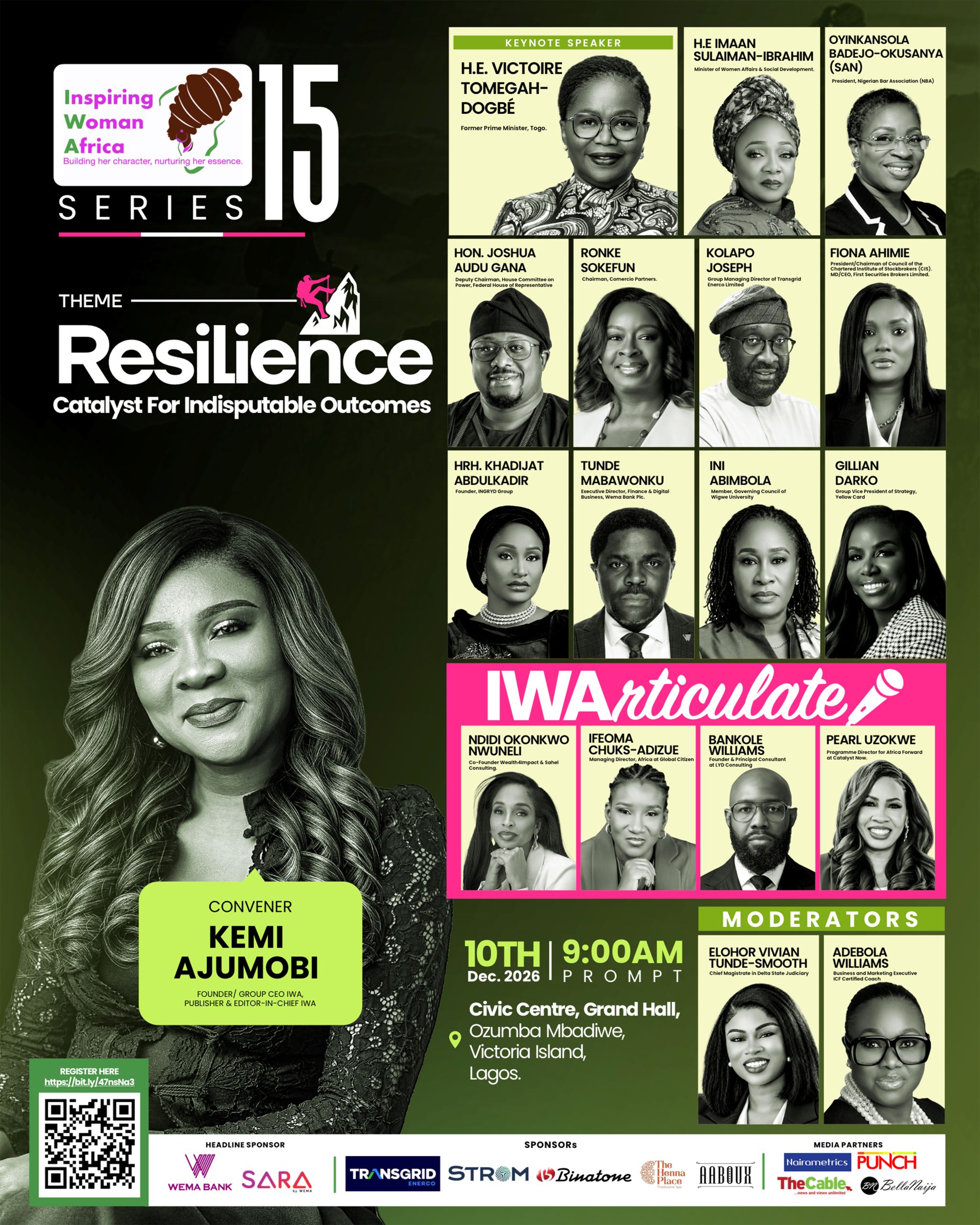
Click To Register
Latest Edition of IWA Magazine
October 20, 2026
Meet the Speakers of IWA Series 15 Conference
Latest Posts
-
 Oct 20, 2026 5 Africa Women Listed as 2026 Forbes Icons
-
 Oct 20, 2026 You Are Wealthier Than You Think