 Kemi Ajumobi
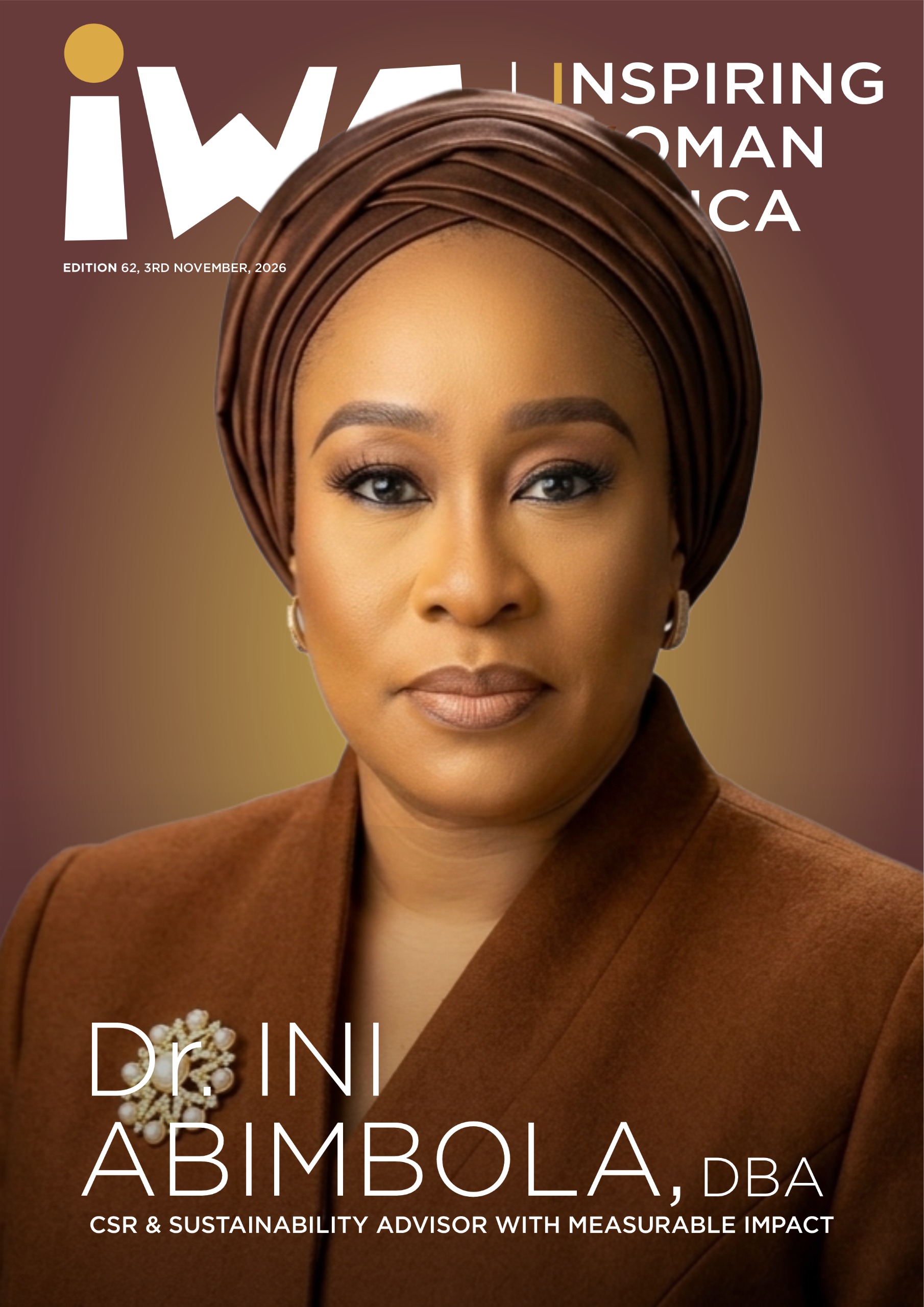
Dr Ini Abimbola has spent more than twenty-five years across the public and private sectors advising institutions on governance, strategy, public policy execution, and sustainability, including fifteen years in development sector programme management and results-based monitoring and evaluation. She founded ThistlePraxis Consulting in 2010 and led it as Chief Executive for nine years before stepping down in 2020. She served until 2023 as the United Nations Technical Expert on Women’s Political Leadership, supporting the Office of the Speaker of the Federal House of Representatives. She teaches international corporate social responsibility management on the MBA programme at the University of Applied Sciences in Austria, is Vice President and a founding trustee of the Sustainability Professionals Institute of Nigeria, holds a Doctorate in Business Administration from Rome Business School, sits on the Governing Council of Wigwe University and works from Lagos.
Good governance practically in institutions that must deliver results under real constraints
Constraints are the normal operating conditions in Nigeria and across much of Africa, so good governance means making a few decisions well and sticking to them. I judge governance by how an institution behaves when money is short and pressure is high, because that is when the quality of its decision rights and its discipline becomes visible. Good governance shows when leadership knows its three or four priorities, agrees who owns each one, and reviews progress against evidence on a fixed rhythm. It is also evident when the institution can explain its trade-offs to the people it serves.
Strategies most often fail, how do you diagnose that early?
Most of the failures I have seen happen at the joints between stages, and the most common one sits between design and resourcing. A strategy is approved with a budget line that was never cost against its activities, or with staff who are already fully committed elsewhere, and the gap surfaces months later under the label of implementation delay. Coordination is the second big failure point, especially where several departments each own part of an outcome and nobody owns the whole. I typically use four simple tests in the first 90 days. Can each objective be traced to a funded line and a named owner? Has any money actually been released against the plan? Are the agencies that must cooperate meeting, and is anything changing because they met? Is anyone collecting baseline data yet? When two of those answers are no, the strategy is already off course, irrespective of what the progress reports say.
Translating sustainability into enforceable priorities, budgets and measurable outcomes
I translate it into the three things: money, mandate, and measurement. I start with a materiality assessment, which means: what impact do these have on the business? This narrows the agenda to the critical issues that genuinely affect the organisation’s value and its impact on people and the environment. Each material issue then gets a board-level owner, a dated target, a budget line and a KPI that sits in the same performance system as revenue and cost; then use disclosures to close the loop.
Single best lesson you have learnt about balancing impact with adaptability in complex environments
Fix the outcome firmly and hold the route lightly. Adaptability without a fixed outcome becomes drift, and a rigid plan in a shifting context becomes waste, so the discipline lies in knowing which of the two you are holding at any moment. In the complex projects I have managed, the teams that delivered were clear, almost stubborn, about the change they were accountable for. They were willing to change activities, partners, and timelines once the evidence showed the original plan wasn’t working. That only happens when learning is built in from day one, with short review cycles, an honest feedback channel from the people the project serves, and a funder relationship strong enough to approve a change of course without turning it into a crisis.
Most effective levers for strengthening women’s political leadership beyond representation
The first lever is the political party, because that is where most women are filtered out through candidate-selection rules, the cost of nomination forms, and primaries that reward money and patronage networks. Party reform and dedicated campaign finance support will move women’s numbers more than any awareness campaign. Representation counts heads, while influence depends on where those heads sit and what they control.
The next lever is positional power, and it lives inside the legislature: principal offices, committee chairs, and seats on committees that control budgets and appropriations. I will also say we need sponsorship over mentorship, because a mentor offers advice while a sponsor spends personal political capital to open a door. The pipeline has to be built years ahead, through local government, party women’s and youth wings, professional bodies and student politics, so that prepared women are ready when an opening comes.

When supporting an institution like the Office of the Speaker, what change is hardest to achieve, and what intervention unlocks the most momentum?
The hardest change that I saw was the norms and institutional memory. Legislatures run on informal rules, seniority, and political calendars, and each new Assembly brings new members and advisers, so reforms that depend on one leader’s goodwill can disappear at the end of a term. Changing how decisions are actually made, who is consulted and whose priorities reach the floor, takes far longer than drafting a policy. In my opinion, the intervention that can unlock the most momentum is an early, visible win that the presiding officer can personally own and champion, paired with work at the level of permanent staff, clerks, and committee secretariats who outlast politicians. Leadership ownership gives a reform political cover, and the bureaucracy gives it a life beyond the current Assembly.
How leaders should create a culture where accountability is not feared but consistently practised
People fear accountability when it appears only as blame after something goes wrong, so leaders must make it routine and run it in both directions. The decisive test is how the organisation treats the first person who honestly reports a problem. If that person is protected and the problem gets fixed, others will follow, but if the messenger is punished, everyone learns to hide problems in a way no policy document can reverse.
Expectations should be explicit, with everyone knowing what they own and how it will be judged, and reviews should happen on a regular rhythm so bad news arrives early and in small doses. Leaders also need to go first, admit their own misses in front of the team, and show what they did about them.
Most difficult decision you made while founding and scaling ThistlePraxis Consulting, and lessons learnt from it
The hardest decision was stepping down as Chief Executive in 2020, after leading the firm I founded in 2010 for close to a decade. Although that was the plan from day one, it was hard to trust others with my baby, especially when my two planned successors left the organisation, one to start their own firm and the other to a competitor. A founder’s identity becomes tied to the business, and clients often expect to deal with the founder personally, so handing over the executive role felt like a risk to relationships built over many years. I made the move because a firm that cannot run without its founder has a ceiling, and I wanted to test the institution while I was still close enough to support it as a non-executive director on its board, and I now share that lesson with every board I work with. Succession is a governance decision to make while things are going well, and a leader’s real measure is whether what she built can thrive under someone else.
Keeping your teaching grounded in practice
I teach from what I do every day. My advisory work keeps my teaching current, as do my students’ questions in class, whether I’m teaching the MBA class on International CSR Management at the University of Applied Sciences in Austria or facilitating training sessions for business clients. My cases come from live and recent engagements, anonymised where necessary, including board sessions on corporate governance, sustainability, ESG, regulatory changes such as Nigeria’s adoption of IFRS S1 and S2, and development programmes I have evaluated. Students work with real documents, including annual reports, sustainability disclosures, codes of corporate governance and regulatory roadmaps, and they must reach a decision and defend it, because that is what boards and executives actually have to do.
When organisations face pressure to deliver quickly, how do you ensure ethical standards are not the first casualty?
Ethics typically fall apart when they depend on individual courage in the moment, so I build them into the process before the pressure arrives. That means agreeing on a short list of non-negotiables at the start of any engagement, which covers procurement, conflicts of interest, data integrity, and safeguarding, and giving named people clear authority to stop work when one is breached. Leaders must also be willing to accept a visibly slower result rather than a quiet compromise, because the legal and reputational cost of an ethical failure almost always exceeds the cost of a delay.
Which governance indicators do you trust most, and which do you distrust?
I trust indicators that show the direct line between behaviour and consequences. Board minutes that record dissent and show decisions changing as a result of the dissent tell me far more than attendance figures do. I look at how quickly audit and regulatory findings are closed, whether related-party transactions are disclosed and approved by people without a stake in them, whether whistleblowing reports are received and resolved, staff turnover in the risk, compliance and internal audit functions, and how closely actual spending tracks the approved budget.
I don’t trust indicators that measure the existence of structures, like the number of policies adopted, committees formed, or meetings held; the proportion of independent directors on paper; training attendance; and self-assessed compliance checklists can all look excellent in an institution where real power sits elsewhere.
Effective collaboration between government, the private sector and the civil service requirement
It requires a shared definition of the problem, clear roles and trust built through small commitments that are kept. Each party brings something different: Government brings authority and policy direction, the private sector brings capital and speed of execution, and the civil service brings continuity and institutional knowledge across political cycles. Collaboration breaks down and treats business purely as a funder, when business treats government as a permit office, or when the civil service is brought in at the end and quietly stalls what it did not help design. What often works is a joint delivery structure with an owner, agreed data, transparent conflict-of-interest rules, and a published timetable, with civil society at the table as the independent check that keeps the partnership honest with citizens.

If you could give one framework to emerging leaders in governance, sustainability and public policy execution, what would it be?
I would give them three questions to ask before any initiative, which I call Purpose, Power and Proof. Purpose asks what specific change you are trying to create and for whom, stated precisely enough that someone could disagree with it. Power asks who decides, who funds, who implements and who can block, because a misreading of power sinks more good ideas than any flaw in their content. Proof asks what evidence will show the change happened, and insists you start collecting it from day one. Leaders who answer all three before they launch avoid most of the failures I am called in to fix later.
What should sustainability professionals in Nigeria and beyond be trained to do differently to become truly future-ready?
They need to be trained to speak the language of the boardroom and the balance sheet without giving up the language of impact. That means being able to read financial statements, understand how a sustainability risk becomes a cash flow, cost of capital or asset impairment issue, and work comfortably with the disclosure and assurance requirements that IFRS S1 and S2 now bring. They must equally be able to measure an organisation’s impact on people and the environment, which matters to communities and regulators even where it does not yet show up in the accounts. Beyond technical skill, they need data literacy, climate scenario analysis, regulatory and policy engagement, and the confidence to challenge a chief executive. In the African context, they must also understand the just transition, adaptation, and the informal economy, because frameworks designed elsewhere do not automatically fit our realities in Africa, as I have outlined in my book, The Operators Trap.
As a member of the Wigwe University Governing Council, what is the role of universities in national development?
Universities build the skills an economy needs, and they do it best when employers help shape the curriculum and students learn by solving real problems. Universities should ensure their research addresses national questions, from energy and agriculture to public finance and health, so it reaches policy and practice and earns its public funding. That research gives universities the standing to influence policy, as long as they are independent and rigorous. The rest is held together by moral leadership, and it begins with how the university governs itself: transparent decisions, sound finances, and protection of academic freedom and integrity in admissions and assessment. A university that is well governed teaches governance by example.
What research question inspired your Doctorate in Business Administration, and how has it changed your way of advising institutions?
My doctoral work produced two studies, both stemming from questions I kept encountering in my practice. The first, From Theory to Practice: Implementing Sustainable Business Strategies for Organisational Success in Sub-Saharan Africa, examined why sustainability strategies that read well on paper so often stall when organisations in our region try to implement them. The second, Exploring The Efficiency of Corporate Governance in State-owned Agencies and Enterprise: A Comparative Analysis of Ghana and Nigeria, examined how governance arrangements shape the performance of public enterprises in two neighbouring West African economies.
Taken together, the two studies changed how I work with any institution, be it public or private. I now look past the policies, the strategy document and the governance code to the mechanisms that carry them out: who holds decision rights, how boards are appointed and held to account, and whether incentives and budgets actually reward the outcomes the strategy promises. When those mechanisms are weak, no amount of well-written policy will close the gap between intention and results, and that is where I now focus my advice.

If an organisation wants to improve governance and sustainability within 90 days, what should its first three actions be?
- Diagnose honestly in the first 30 days. Run a short board effectiveness review, map who actually makes key decisions, check compliance against the applicable codes and regulations (CAMA 2020, the Nigerian Code of Corporate Governance 2018, sector rules and the FRC sustainability reporting roadmap), and identify the five or six sustainability issues that matter most to the business (materiality) and its stakeholders.
- Assign ownership by day 60. Give a named board committee a written mandate for sustainability oversight, appoint an accountable executive, and include each priority issue in the budget and performance system with a target and an indicator.
- Install a reporting rhythm by day 90. Agree on a simple quarterly dashboard for the board, set up or repair the whistleblowing and conflict-of-interest processes, and publish one honest progress statement, because public commitment is what keeps the effort alive after the first quarter.
Tell us about your book
The book is The Operator’s Trap: Why Africa’s Best Executives Never Truly Lead, and How the Ones Who Escape It Build Something That Lasts, with the foreword by Bola Adesola, Chairman of Ecobank Nigeria. It argues that many of Africa’s most capable executives are held back by the very competence that made them successful. They rise because they solve problems, fix operations, and deliver under pressure, but over time that strength becomes a trap, keeping them managing the present when their organisations need them to shape the future. The book explains why this happens so often in African institutions and shows how leaders make the shift from operator to strategic leader.
I wrote it because most of the strategy and leadership frameworks we were trained on were built for Western operating environments, and they rarely account for the realities African executives navigate every day, from currency volatility and policy shifts to weak infrastructure and complex stakeholder politics.
The book offers a practical toolkit of 22 frameworks that executives, boards, and leadership teams can apply directly, and it is written for chief executives and senior managers, board members, MBA students, and anyone responsible for leading an African institution through change.
The Operator’s Trap is available on Amazon in paperback, hardcover and e-book. As a bonus, readers can also take The Operator’s Trap Test, a free self-assessment, at https://traptest.theiniabims.com/ to see how far the trap applies to them.