 Sola Adesakin

It sounds like a contradiction. How can someone who is making more money than they have ever made be worse off financially than they were five years ago? It does not make logical sense. More money should mean more progress. More income should mean more security. More earnings should mean more wealth.
And yet.
I see it constantly. The woman who moved from N200,000 a month to N500,000 and somehow has less saved than she did at the lower income. The business owner whose revenue tripled last year but who still cannot point to a single asset built from the increase. The professional who got the promotion, the raise, the bonus, and is more financially anxious now than she was before any of it arrived.
This is not a story about irresponsibility. These are often disciplined, hardworking, intelligent women. The problem is not character. The problem is a pattern so common it should have a name. I call it the income illusion, the belief that earning more automatically means building more. It does not. Not without structure. And structure is the thing that almost nobody puts in place when the money increases.
Here is what actually happens when income rises without structure.
The salary goes up, and within two to three months, the lifestyle follows. Not dramatically or recklessly, it just moves naturally. The apartment gets a little nicer. That is reasonable, you earned it. The car gets an upgrade. That makes sense, you can afford it now. The restaurants shift from casual spots to places with better ambiance. The wardrobe evolves. The holidays get slightly more expensive. The children move to a better school. The contributions to family and friends increase because you are now seen as the one who is doing well.
None of these decisions are wrong on their own. But here is what happens underneath them. Your cost of living, the number it takes to simply maintain your life each month, has risen right alongside your income. The gap between what comes in and what goes out, which is the only space where wealth is built, has not changed. In some cases, it has shrunk. You are on a bigger treadmill. The scenery is nicer. But you are not actually moving forward.
And then comes the part nobody talks about. At a higher lifestyle, the cost of a crisis is also higher. When something goes wrong at N200,000 a month, the recovery is uncomfortable but manageable. When something goes wrong at N500,000 a month with expenses calibrated to match, the fall is longer, harder, and more destabilising. You have more to lose because you have built more that depends on the income continuing uninterrupted.
That is the trap. Earning more without building more means you have simply raised the stakes without improving your position.
So how do you break the pattern?
First, every time your income increases, apply the 50% rule. Whatever the raise, the bonus, the new contract is worth, commit at least half of the increase to savings or investment before your lifestyle absorbs it. If your salary moves from N400,000 to N550,000, that is a N150,000 increase. N75,000 goes directly into an investment account on payday. The remaining N75,000 is yours to enjoy however you choose. You have given yourself a raise and a future at the same time.
Second, recalculate your survival number every time your life changes. When you move apartments, change schools, or upgrade your car, your minimum monthly cost of living shifts. Know the new number. Because that number determines how many months your emergency fund actually covers, and you may find that the upgrade just cut your safety net in half without you noticing.
Third, track your net worth, not just your income. Income is what comes in. Net worth is what stays. If your income has doubled over five years but your net worth has not moved proportionally, the income is being consumed, not converted. The statement that matters most is not your payslip. It is your asset position.
Earning more is not the finish line. It is the starting material. What you build with it determines whether the increase was a genuine step forward or just a more expensive version of standing still.
More money is only more wealth if you make it so. Otherwise, it is just more spending with better packaging.
Check your gap, that is where the truth lives.
About Author
Sola Adesakin
Sola Adesakin is a highly respected wealth coach and chartered accountant with over two decades of transformative impact in the finance industry. As the visionary founder of Smart Stewards Financial Advisory Limited and Smart Stewards Advisory LLC, she has revolutionized the financial wellbeing of countless individuals and businesses across 40 countries. Her methodical approach to ‘make-manage-multiply’ money principles has elevated many from financial stress to prosperity, and mediocrity to exceptional achievement.
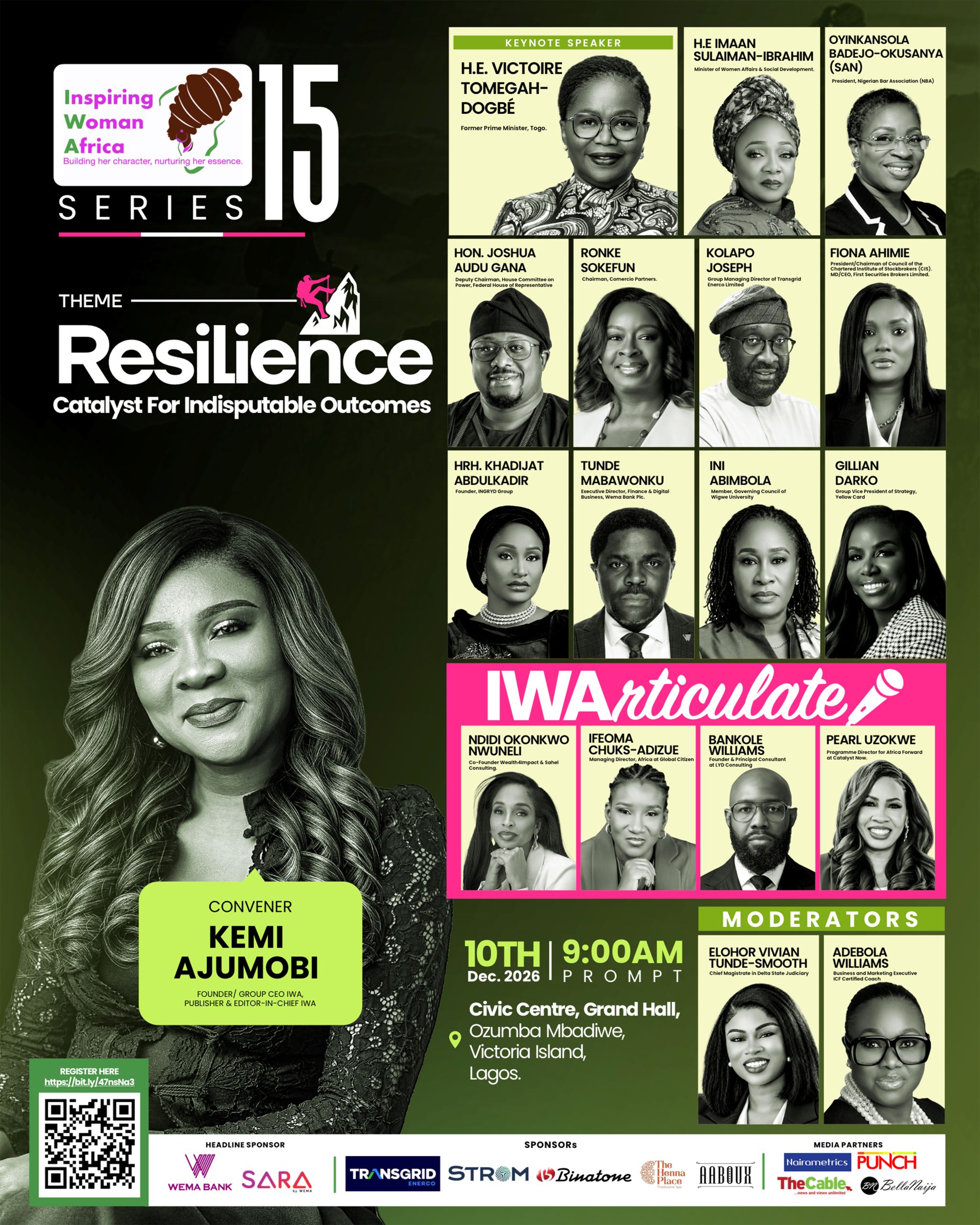
The IWA Series 15 Conference is Here
Click To Register
Latest Edition of IWA Magazine
November 10, 2026