 Chinyere Okorocha
Over the years, I have had many conversations with brilliant female professionals who felt stuck, overwhelmed, or emotionally drained, not because they lacked competence, but because they worked under difficult bosses. For many women, this experience is more common than we admit. A demanding supervisor with unpredictable moods, harsh feedback, or unrealistic expectations can slowly chip away at confidence and joy at work. When you add unspoken gender dynamics and the pressure to “prove yourself” without being labelled difficult, the experience can feel even more daunting.
But here is what I always remind women in these situations: a difficult boss does not have to derail your career. If navigated strategically, it can become one of the most defining growth phases of your professional life.
Ada came to me at such a crossroads.
She had recently joined a top consulting firm, excited about the exposure, the learning curve, and the opportunity to work on high-impact projects. However, within months, the shine began to fade. Her boss was highly competent but deeply demanding, impatient with questions, blunt in communication, and unforgiving of even the smallest mistakes. One email in particular, titled “Are You Really Up for This?”, shook her confidence. She began doubting herself, dreading meetings, and questioning whether she truly belonged.
When Ada asked me what to do, my first advice was simple but crucial: do not internalise your boss’s behaviour as a reflection of your worth. I explained that difficult bosses often operate from pressure, fear of failure, or their own leadership gaps. The mistake many women make is turning someone else’s behaviour into self-doubt. Instead, I encouraged Ada to anchor herself in facts, her track record, her qualifications, and the reason she was hired in the first place.
Next, I advised her to stay relentlessly professional, especially when emotions run high. Reacting defensively or emotionally, no matter how justified, rarely works in your favour. I told her to let her work speak loudly and consistently. Professionalism is not passivity; it is control. Over time, calm competence earns respect in environments where emotional reactions are expected.
We then spoke about empathy, not as an excuse for poor behaviour, but as a strategy. I encouraged Ada to observe her boss more closely. What pressures was he under? What outcomes mattered most to him? Once she understood this, she could align her communication accordingly. Difficult bosses often value efficiency and results, not long explanations. So I advised her to adjust her style: be concise, anticipate needs, and clarify expectations early. This shift alone often reduces friction dramatically.
When conflict arises and it inevitably will, I told Ada that timing is everything. Challenging a difficult boss in the heat of the moment is rarely productive. Instead, choose calm moments to offer alternatives, framed around solutions and outcomes. I reminded her that influence grows when you are seen as someone who adds value, not resistance.
I also stressed the importance of building a support system. No woman should navigate a difficult workplace in isolation. I encouraged Ada to seek mentors, both within and outside her organisation, who could offer perspective and guidance. Colleagues, too, can be invaluable sounding boards. Strong networks do not just support you emotionally; they sharpen your thinking.
One practical habit I insisted on was documentation. I advised Ada to keep records of key conversations, instructions, and decisions. This was not about being defensive, but about clarity and protection. Documentation reinforces professionalism and helps prevent misunderstandings, especially with bosses who may later deny or reinterpret conversations.
When Ada asked if and when to involve HR, I told her this: seek help strategically, not emotionally. Escalation should be calm, factual, and focused on impact, not accusations. When handled professionally, it often opens doors to support rather than conflict.
Finally, I reminded her to protect her well-being. Working under constant pressure without relief leads to burnout. I encouraged her to prioritise rest, relationships, and activities that grounded her outside work. A regulated nervous system is one of the most underrated career assets.
Over time, Ada began to notice a shift. Her boss became more trusting, more receptive to her input. But even more importantly, she became stronger, more confident, emotionally intelligent, and self-assured.
Ada’s experience reinforces what I have seen time and again: a difficult boss can either break you or build you. With the right mindset and strategy, it becomes a training ground for leadership, resilience, and self-belief. For female professionals, the goal is not merely to survive such environments, but to rise from them wiser, stronger, and ready for the next level.
Sometimes, the toughest bosses produce the most formidable women.
With over three decades of experience as a trailblazer in the legal profession, Chinyere Okorocha has established herself as a leading voice in law, leadership, and career growth for women. As a partner in one of the most prestigious law firms in the country, she has not only navigated the complexities of a competitive industry but has consistently broken barriers to become a sought-after leader, mentor, and advocate for women in the workplace.
A devoted wife and proud mother of three, her career development platform, Heels & Ladders, is dedicated to mentoring and guiding women who aspire to redefine success, achieve career mastery, and lead with purpose.
Latest Edition of IWA Magazine
March 3, 2026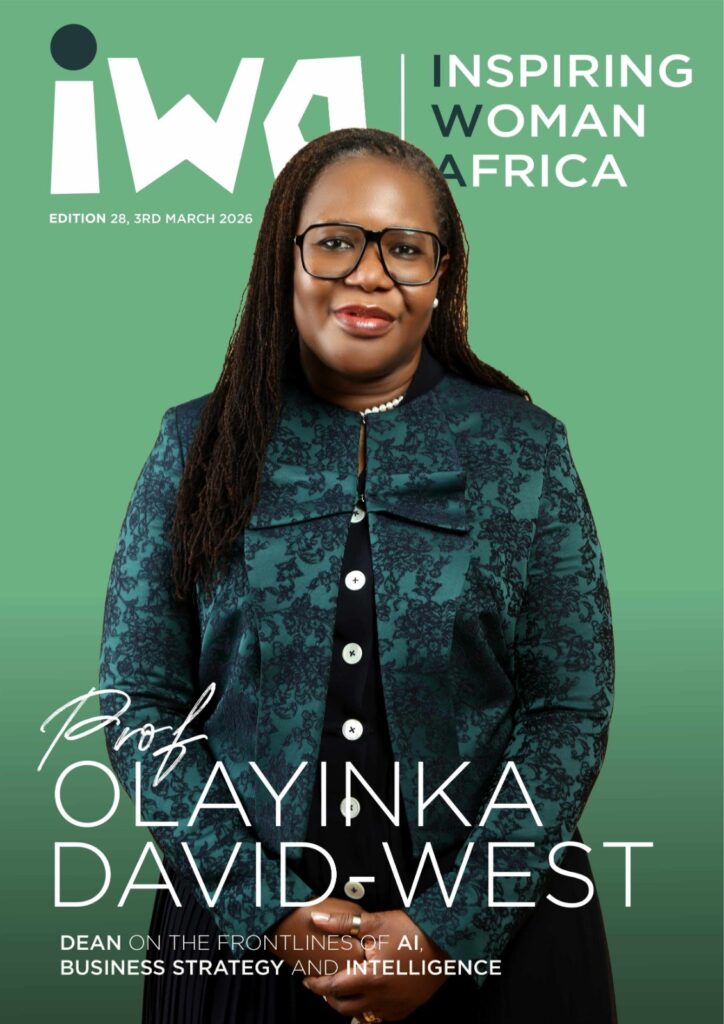
Prof. OLAYINKA DAVID-WEST, Dean on the Frontlines of AI, Business Strategy and Intelligence
Latest Posts
-
 Mar 3, 2026 Fatoumata Doro