 Kemi Ajumobi
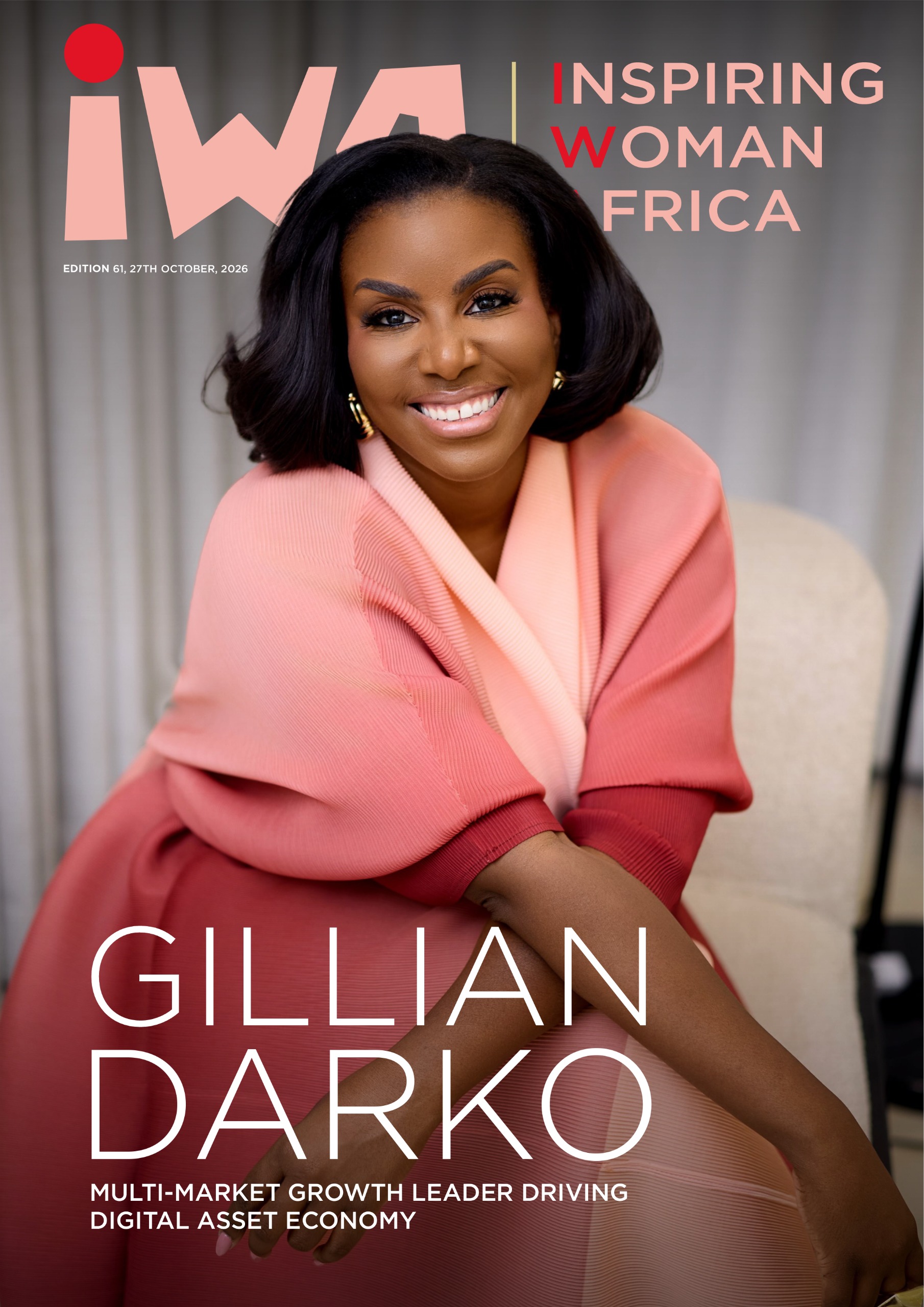
Gillian Darko is an accomplished Executive Director, Board Member, and C-suite leader, with a strong track record of building high-performance growth engines and delivering transformative commercial strategies across fintech, blockchain, and financial services.
Currently serving as Group Vice President of Strategy at Yellow Card and a member of the executive team, following prior roles as Chief of Staff and Director of Strategy, she leads the company’s growth agenda across 20+ markets. Her remit spans revenue strategy, strategic partnerships, GTM, market expansion, and the development of innovative commercial models that unlock scalable, multi-market growth. She has played a key role in structuring and executing high-value partnerships across stablecoin issuers, blockchain ecosystems, telcos, banks, and global payment networks, positioning the business at the center of the digital asset economy in emerging markets.
She has been featured in leading media including ELLE Afrique, which profiled her in its Impact section as a Woman of Influence in Business & Entrepreneurship, as well as Forbes Africa, Business and Financial Times Ghana, CNBC Africa in conversation with Fifi Peters, and other reputable African media outlets. She is also a featured speaker on global stages, including the Forbes Leading Women’s Summit, GITEX Africa, Token2049 Singapore, the Qatar Africa Business Forum, the Africa Prosperity Dialogues, and the Forward Africa Leaders Symposium during UN General Assembly week.
Her leadership has earned multiple industry recognitions, including Fintech Personality of the Year (Female) at the 2026 Ghana Fintech Awards. She was also named an Outstanding Woman in Tech (West Africa) nominee in 2021, appointed an Ambassador for Women in Payments Africa in 2024, and in 2026 was appointed to the Steering Committee of the Africa Financial Industry Summit (AFIS).
Her career spans senior strategy, transformation, and general management roles at leading global institutions, including ICE Futures Europe and PwC (with client engagements across Goldman Sachs, HSBC, RBS, Citigroup, and UBS). She served as Vice President of Strategy at J.P. Morgan Asset Management, and at JUMO as General Manager, Market Operations, where she concurrently took on the remit of Chief Executive Officer of JUMO Ghana.
She brings board-level and executive experience across Tanzania, Uganda, Nigeria, Ghana, Kenya, and Zambia, with deep expertise in scaling businesses across frontier and emerging markets, structuring cross-border partnerships, and delivering measurable commercial outcomes in high-growth environments.

Formative years and influence till date
I grew up in Ghana and attended an international boarding school, where I completed the International Baccalaureate. I have always been in competitive environments and enjoyed pushing myself. I swam, played volleyball and basketball, so teamwork, discipline and learning to perform under pressure were part of my life quite early on. Boarding school also helped develop my independence and ability to live and work with people from different backgrounds.
I then moved to the United Kingdom to study law, completing my Bachelor of Laws, a Master’s in Corporate and Commercial Law, and the Legal Practice Course, specialising in Advanced Commercial Litigation and Equity Finance.
Studying law shaped how I think. It taught me to pay attention to detail, work through complex information and simplify it into something clear and useful. That has stayed with me throughout my career, particularly in strategy, where you need to understand complexity and help people make decisions and act on it.
I worked through much of my education and undertook internships between my studies. That gave me opportunities to apply what I was learning, understand professional environments and develop a sense of responsibility early on.
Those foundations carried into my career across corporate law, ICE Futures, PwC and J.P. Morgan Asset Management, and later into leadership roles at JUMO and Yellow Card.
I have always been curious, ambitious and creative, and I would describe myself as an old soul. Looking back, there is a consistent thread: I have sought out environments that challenge me, enjoyed being part of teams and remained willing to learn. Those experiences have shaped both my drive to achieve and the way I work with people to deliver.
Tell us about Yellow Card, your responsibilities as VP, and why the choice to work with them.
Yellow Card provides stablecoin and payments infrastructure that helps businesses move money across borders, access liquidity and connect local currencies to the digital asset economy.
As Group Vice President of Strategy and a member of the executive team, my remit spans revenue strategy, strategic partnerships, go-to-market, market expansion and commercial models. I work across teams to turn opportunities into partnerships and business that we can execute and scale.
I joined as Chief of Staff and Director of Strategy, initially focused on strategy, OKRs and KPIs. My responsibilities evolved into building the revenue organisation, leading partnership teams and working with banks, telcos and institutions.
The attraction was the opportunity to help solve a real infrastructure problem. Moving money remains unnecessarily difficult for many businesses in the emerging markets. What makes the work compelling is seeing how technology, supported by regulation, compliance and strong local relationships, can change that.
Share with us about a time you challenged a “we’ve always done it like this” situation and the result.
A useful example is the evolution of my own role. My initial focus was strategy, OKRs and KPIs, but as the business grew, my work moved much closer to revenue generation and commercial execution.
The question became: how do we make sure the strategy translates into clear ownership, effective partnerships and results? What is the problem we wish to solve?
I went from not leading a team to building out the revenue organisation, managing partnership teams and structuring commercial models. That experience reinforced my belief that an organisation’s structure should evolve with what the business needs to achieve.
It also taught me that challenging an established approach is most effective when you can explain the business need and take responsibility for helping deliver the change.

What’s your approach to conflict resolution?
I try to understand what is underneath the disagreement. People may appear to be arguing about a decision when they are actually concerned about different things: risk, resources, timing or accountability.
I bring the conversation back to the outcome we are responsible for, establish the facts and make the trade-offs clear. I also believe difficult conversations should happen directly and respectfully.
Something, I use often is from Thasunda Brown Duckett that said “your role is rented”.
That perspective keeps me grounded. While you hold a position, you have a responsibility to use it well, listen and make decisions in the interests of the organisation. It helps keep ego out of difficult conversations.
Everyone should have the opportunity to be heard. Once a decision is made, we need clarity on ownership and a shared commitment to moving forward.
What’s something you learnt the hard way?
I learnt that being able to carry a great deal yourself does not mean you should.
As your responsibilities grow, your effectiveness increasingly depends on how well you build the team around you. You need to make expectations clear, delegate meaningful responsibility and give people room to develop their own judgment.
Taking ownership comes naturally to me. Learning to create that same ownership in others is an important part of leadership. You want to build a team that can make good decisions and deliver consistently, with the confidence and support to do so.
Strategy belief you held strongly early in your career that became embarrassingly wrong—and what replaced it?
The belief that a clear strategy will naturally produce alignment.
You can explain the direction beautifully and still have people leave the room with different interpretations of what matters, what they own and what should happen next.
What replaced that belief is a much stronger focus on execution: who is accountable, what resources they have, how progress will be measured and what decisions we will make when the evidence changes.
A strategy has to show up in the way the organisation operates. That means translating it into priorities, decisions and responsibilities that people understand.
What is the most dangerous KPI you’ve seen leaders optimise in fintech—and what alternative do you trust more?
Transaction volume becomes dangerous when it is treated as proof of business health on its own.
You can move a great deal of money while earning very little, carrying excessive costs or relying on activity that will not last.
I would put more weight on contribution margin from repeat customer activity, supported by retention, transaction reliability and appropriate risk controls. I want to understand whether customers keep using the product, whether we serve them well and whether the economics improve as we growth.
Compress Yellow Card’s growth philosophy into one sentence, and tell us what proof you would point to.
Build trusted infrastructure around real customer needs, then make it work across markets.
The proof I would point to is the work required to support local payments across 20 African countries: banking relationships, liquidity, payment methods, compliance and commercial partnerships.
That is where growth becomes tangible. A customer needs to be able to use the infrastructure reliably in the markets that matter to them. Building that capability requires both a regional vision and a detailed understanding of local execution.
Which stakeholder group is hardest to win over in emerging markets—and what narrative works for them?
I would highlight established financial institutions, particularly where a proposal needs support from commercial, compliance, risk and operational teams.
Each has a legitimate set of questions, and enthusiasm from one team does not resolve the concerns of another.
The most effective conversation starts with their priorities: the customer problem, the commercial opportunity, how funds move, how responsibilities are allocated and how risks are managed.
You need to make the proposition understandable and demonstrate that you can deliver it responsibly. Trust develops when your commercial ambition is matched by operational credibility.

What is the most non-intuitive lesson you’ve learnt about multi-market expansion?
I have learnt that being present in a market and being able to serve it well are very different achievements.
A launch can look successful on paper while the customer experience is constrained by liquidity, payment reliability, settlement or the strength of a local relationship.
Expansion has taught me to look closely at those details. The regional opportunity may be compelling, but execution depends on understanding how each market actually works.
It has also taught me to respect local knowledge. Experience in one country can inform your questions in another, but you still have to listen and test your assumptions.
Describe your strategy style.
Commercial, practical and accountable.
I start with the opportunity, then work through what it will take to deliver: the customer need, the economics, the regulatory environment, the partners, the team and the execution plan.
I like ambition, and I am equally interested in the mechanics. What are we prioritising? Who owns it? What needs to happen next? How will we know whether it is working?
I’m comfortable adjusting the approach as we learn, while remaining clear about the outcome. Execution is central to how I think about strategy.
How do you decide whether a partnership is a growth catalyst or a distraction, especially when it is strategically exciting?
I ask what it will change for the business.
Will it unlock customers, distribution, liquidity, revenue or a capability that matters? Is there a credible route to activation? Do both sides have an accountable owner and the resources to deliver?
Then I look at the cost of pursuing it, including the opportunities we would have to delay.
A strong name or an exciting announcement can open a door. The partnership earns its place when we can explain how it will create value, what it will take to get there and how we will measure progress.
What is the one question you ask before committing to a major go-to-market bet across multiple countries?
“What must be true in each country for this to work?”
That question forces us to examine the assumptions behind the regional plan. The customer need may exist across several markets, while the payment behaviour, regulatory requirements, economics and distribution routes differ considerably.
I want to know which parts of the model we can repeat and which parts need to be adapted before we commit significant resources. It also helps us identify where to start and what we need to learn before expanding further.
What can be done to have more women in key leadership positions?
Give women responsibility that builds a credible path to senior leadership: revenue ownership, budgets, teams, major negotiations and consequential decisions.
Mentorship is valuable. Sponsorship also matters—having someone advocate for you when opportunities and appointments are being discussed.
Organisations should examine how they allocate stretch assignments, assess potential and reward performance. Women need fair access to the experiences through which leadership capability is demonstrated, alongside clear standards and recognition for the results they deliver.
We also need to broaden our understanding of what leadership looks and sounds like, so that capable women are not overlooked because their style differs from what an organisation is accustomed to.
Which decision took the most courage: stopping a promising initiative, changing a deal or challenging leadership?
Challenging leadership, particularly when you respect the people involved and understand the stakes.
It requires preparation and judgment. You need to be clear about your concern, the evidence behind it and the alternative you are proposing.
For me, having a seat at the table comes with a responsibility to contribute honestly. There are moments when supporting the business means raising a difficult issue and being prepared to work through it.
The courage is in having the conversation constructively and remaining accountable for what happens next.
What is the greatest lesson life has taught you?
Life has taught me that I can take responsibility for my direction without having every step figured out.
There will always be something new to learn, and there will be moments when the responsibility feels bigger than anything you have carried before.
I have learnt to keep preparing, stay open to feedback and trust my ability to do the work. Confidence grows through the experience of showing up, solving problems and following through.
You can have conviction about where you are going while remaining open to how you get there.
A day you will never forget, and why?
I would choose something that may seem quite ordinary to other people: the day a child says their first word.
You have been caring for them, watching them grow and communicating with them, and then, all of a sudden, they form a word. Something so small feels like such a miracle.
Everything is still a wonder to them, and I love watching that discovery unfold. To witness that first word is incredibly special. It is one of those moments that stays with you forever.

What are you looking forward to?
I’m particularly looking forward to how stablecoins will continue to shape financial infrastructure, and to playing an active part in that evolution.
What excites me is the practical application: how businesses move money, access liquidity, settle transactions and participate in the global economy. There is so much scope to improve those experiences, particularly across Africa and other emerging markets.
I want to help shape how that infrastructure develops—bringing together institutions, technology providers, regulators and commercial partners to build solutions that work in practice. Africa’s needs and experience should help inform what is built.
Being able to contribute to that, drawing on what I have learnt across strategy, partnerships and execution, is something I’m very much looking forward to. It is a space that continues to challenge me, and that is part of what makes it exciting.
Concluding words.
Be ambitious about what you want to contribute, and be prepared to do the work that ambition requires.
What I really want to leave you with is the importance of a willingness to grow and to continuously learn, regardless of where you think you have reached in life. There is always more to understand, another perspective to consider and room to become better. That openness has been important in my own journey, and it is something I intend to keep.