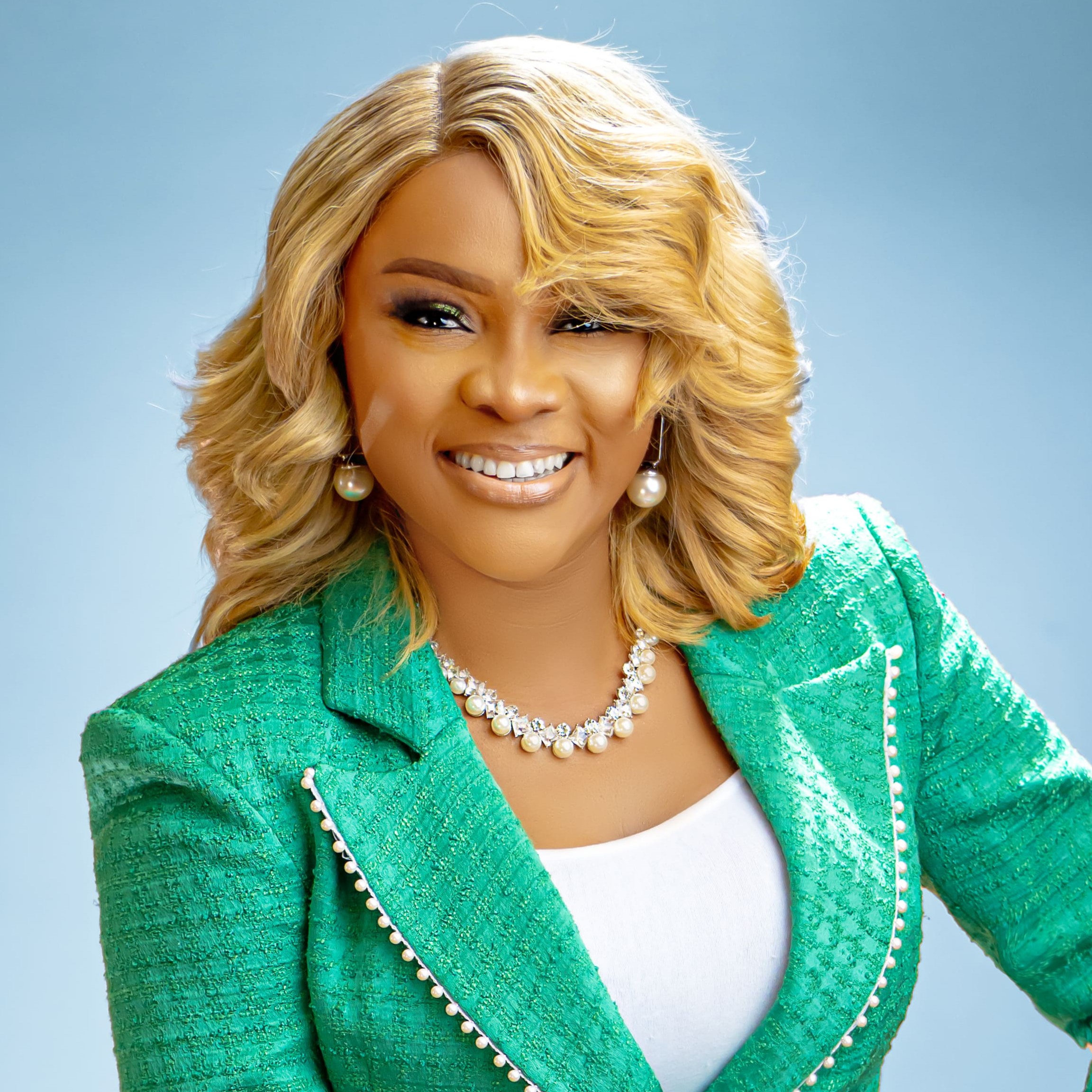
 Kemi Ajumobi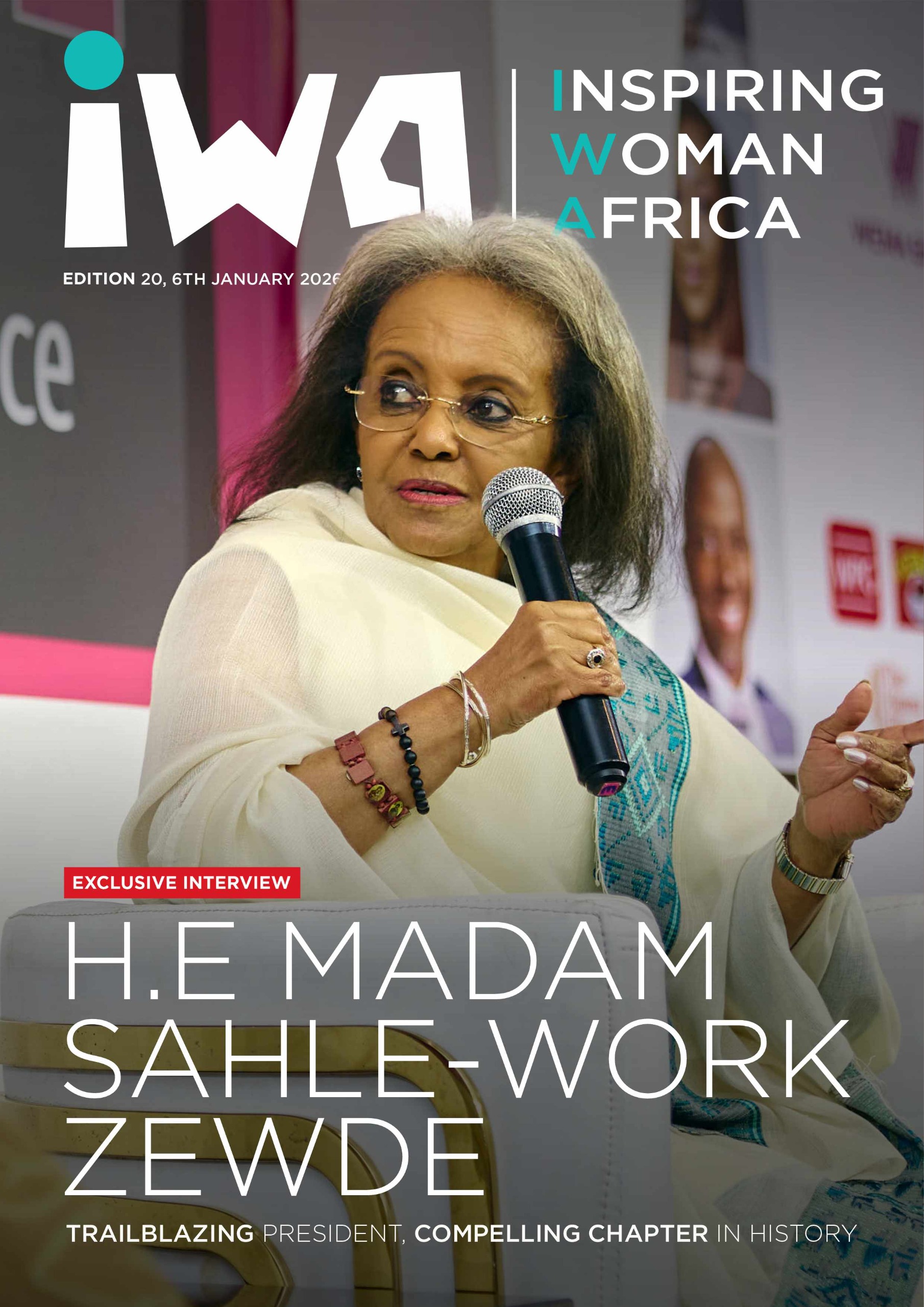
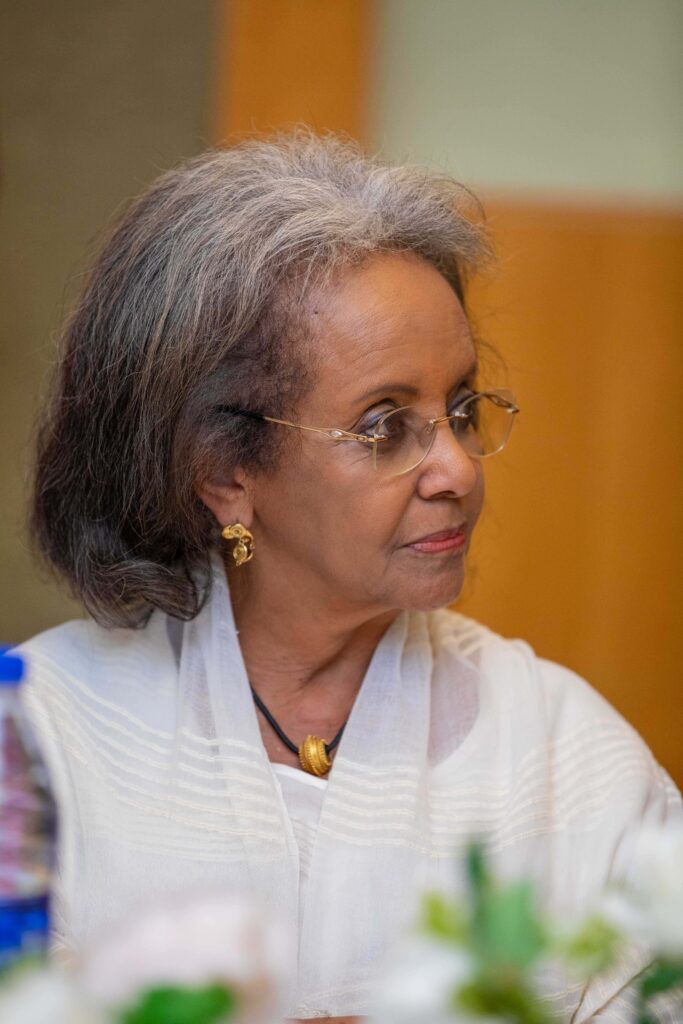
H.E Madam Sahle-Work Zewde, the first woman to hold the office of the President of Ethiopia. She served as President from 2018 to 2024. Born in Addis Ababa in 1950, she studied natural science in France before starting her career as a public relations officer at the Ministry of Education.
In 1989, she became the second woman to be appointed as an Ethiopian ambassador, serving in Senegal and five neighboring countries. She later served as Ambassador to Djibouti (1993-2002), Ambassador to France, and Permanent Representative to UNESCO./ 2002-2006. She was also Ethiopia’s Permanent Representative to the African Union.
Her extensive United Nations career started in 2009 as the first African woman Special Representative of the Secretary-General-SRSG at the UN peace-building office in the Central African Republic in 2009.
She was appointed Under-Secretary-General and first Director-General of the UN Office at Nairobi in 2011. During that time, she served as mediator in the political crisis in Malawi. She was appointed Special Representative of the Secretary-General (SRSG) to the African Union. She is fluent in Amharic, French and English.
Memories of Childhood
My childhood has profoundly shaped the adult I became. I had the chance of having wonderful childhood experiences mainly due to the fact that I was born after long years of waiting, prayers and pilgrimages and so on…and also the first born among four sisters. Growing up, my parents would encourage me to push the limits. My father always said “There is nothing that you won’t be able to do.” They charged me with responsibilities that other kids of my age or my gender were not asked to carry out. I learnt from my early years how to be accountable, serious among other qualities. Sustained exposure to such values helped me build strong self-esteem and self confidence in my capabilities. Born from a high ranking officer of the Imperial Ground Forces, I learnt of the critical importance of the independence of one’s country, the provision of service to one’s country and its people as well as other core values such as accountability and empathy. My mother was one of the first women entrepreneurs in Ethiopia who broke numerous barriers. I learnt a lot from the very close relationship between my parents, the resultant support to one another and how such a supportive environment can facilitate far the emancipation of women. Subsequently, when I became President, such lessons helped me use not only my head, but my heart as well.
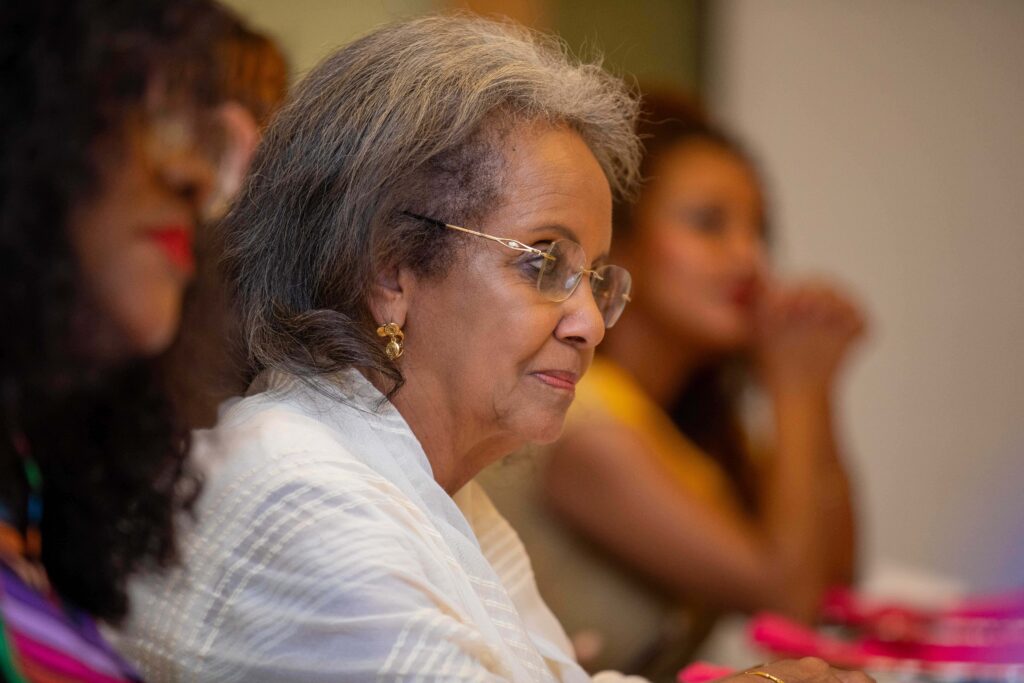
As the first female President of Ethiopia, how did you surmount the challenges that came with the office, especially being a female and what should female leaders know when opportunities of elevation like this come?
I moved to Ethiopia after having served as head of the only UN headquarters away from New York based in Nairobi for 8 years to become the UNSG representative to the African Union, a dream job for a diplomat who has extensively worked on Africa. Three months later, I found myself as the first female President of my country, a job I have never thought of, even in my wildest dreams. The challenges I had were many, one of the worst being the deadliest civil war known as the war in Tigray and ongoing deadly fighting in other regions. Some challenges came with the office more so at a time when the country was bleeding. But I did what a Head of State should be doing under similar circumstances and that is staying close to the people, remaining the glue that keeps all Ethiopians together, listening to them, giving them courage, amplifying their voices, speaking truth to them, showing compassion, visiting the displaced, the wounded and so on. But most of all, I remained faithful to my ideals, principles, never forgetting that I was where I was by the will of the people, and in our case, through its representatives. On what female leaders should know, female leaders have to vie for executive positions that would allow them decide and execute positive actions. They should hold positions of real power. They should be able to legislate as well. Otherwise, they risk being used to tick boxes, to just be counted and appear to be politically correct.
What steps do you believe are essential for promoting gender equity across Africa, especially in leadership roles?
The Constitutive Act of the African Union recognises the critical role of women in promoting inclusive development and calls for the AU to “ensure effective participation of women in decision-making, particularly in the political, economic and socio-cultural areas”. The Constitutive Act has been amended to include the above. There are many steps to be taken both at national and continental levels. We have to domesticate and properly unpack the above. As far as leadership is concerned, I would like to encourage our women to join the National Chapters in their respective countries of the African Women Leaders Network – AWLN, engage in an intergenerational dialogue, be part of the endeavor of producing the women leaders Africa needs. AWLN played a big role in having women mediators. History was made when the Summit of the AU Heads of States and Governments held in February 2025 adopted the ‘AU Convention on Ending Violence Against Women and Girls.’ We have to create this collective force to push governments to be serious on their commitments. We should all push for its ratification and implementation.
Your extensive diplomatic experience spans numerous countries and organisations. What lessons did you learn in this process and how important is it for countries to encourage better relationships that can even be mutually beneficial in the long run?
My diplomatic experience has been the fascinating and best part of my life. I have been a diplomat, mostly as ambassador of my country, but also a decade long service as multilateral diplomat, that spans from the UN, the AU to regional and sub-regional organisations. Diplomacy is an art, skill and practice of the management of relations between states or international organisations through negotiation, representation, finding areas of common interest, in order to advance your country’s national interests. Diplomacy is a tool to resolve disputes. It is grounded in International Law. Through time we see change in the nature and traditional form of diplomacy. But this will be a discussion for another day. As much as we are in this changing world, I think there is a need to preserve the rule based order.
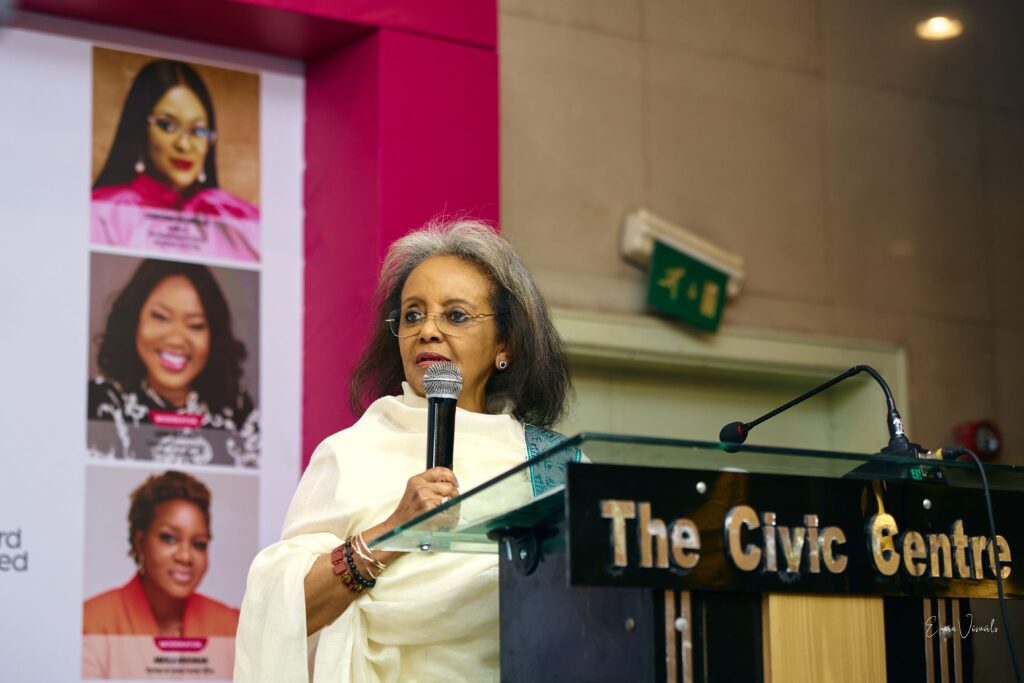
In your opinion, what role do women play in shaping the future of politics in Ethiopia and the broader African continent?
Women have played a big role in Ethiopia’s history. We have had queens, those who led troops in battle fields, and so on. As in many countries, the day history will be written by women, I am sure we will discover many unsung heroes. Politics is a space that has remained unreachable for Ethiopian women. They are rarely seen as members of political parties. Those who tried have left discouraged and demoralised. It is sad to see that while women constitute the majority of voters, we have not been able to bring women to power. We need to support women candidates. There is a lot to do in raising women’s awareness on the formidable tool they have in their hands.
As a former Special Representative of the Secretary-General in peace-building, what do you see as the most pressing challenges for peace in the region today?
To be honest, the main challenge is that, instead of trying to find a solution to conflicts, we spend time, resources and energy on the competing interests of major internal and external actors. In some areas where I have worked, we spent time on groups and actors with not much significance. We most of the time forget that, at the end of the day, the main focus has to be how to support the population and live a peaceful life.
You were the first female President of Ethiopia, you didn’t lobby, no political affiliation, share that process with us and how you were able to rise to the occasion. Secondly, what should women who are given opportunities they may not necessarily be pre equipped for learn from this?
Yes indeed. After more than two decades of non-stop ambassadorial and UN/ Assistant-Secretary-General and UN/ Under-Secretary-General positions, I was appointed as the Special Representative of the UNSG to the African Union. I was eagerly looking forward to starting the job. My first two months were hectic. I learnt about my new office UNOAU, housing and so on. One fine morning in October 2018, I was asked to come to the Prime Minister’s office. He asked me to become the President of Ethiopia. Before I even understood what it meant I was sworn in few days later on Oct 25/2018 as the first woman President in our history. For women who are given unexpected opportunities, well, I think no one comes fully equipped, if at all “equipment” exists. I am not sure if same questions are raised for male candidates. Having said that, we shouldn’t be asking women to take up positions just because they are women. We have seen that they can also be like any other bad male leader.
What advice would you give to young women aspiring to become leaders in their communities and nations?
I will say just go for it. But make sure you meet the criteria. Do whatever is necessary for what you have enough conviction and dedication for. No one knows it all. Learn. Be humble. It is not a sign of weakness, be your true self, stick to your values, be ready to lead not only with your brain but with your heart as well, have people you trust not too far. You need your solid rock. Ensure you peak your mind.
As you reflect on your presidency, what do you hope your legacy will be, and what are your aspirations for the future of Ethiopia?
Well, I will keep my answer to this question for another opportunity waiting for me. But let me say that I am serene. I did what was possible for me to do under extremely difficult circumstances. I tried to see beyond myself. It can’t be otherwise when confronted with the sufferings of your people. I wish I could have done much more. My aspirations are for a peaceful Ethiopia, where killing your own brother will be a red line not to cross.
Throughout your career, what practices or philosophies have helped you maintain resilience in the face of adversity?
I would say my philosophy was to keep open the door of opportunity that has opened for me so that other women would pass through. I would tell myself that I am not worse than many. Thinking of the many sufferings I have witnessed and heard has helped me minimise mine.
Done with Presidency, what is next?
The Presidency came as a complete surprise. Therefore what I had in mind of doing after I leave the UN is still valid now. My commitment to an equitable world is life-long. I will do my best to have more women leaders in all areas. My other lifelong commitment is to Africa, the continent of the future. Currently, I serve as one of the five facilitators, member of a Panel of the African Union mediation process in Eastern Democratic Republic of Congo /DRC/. I keep receiving many invitations to speak on diplomacy, the UN, role of women leaders and more. I would like to underline the following. Whenever a woman is assertive or has a different view, not only all is done to sabotage her, but also to undermine her as if she was where she is by the will of a person or a group, as if she hasn’t accomplished much in her life. Well, that is not true. We have to believe that we have our own records. We have proved ourselves. I know I stand on my own records of which I am really proud.
You visited Nigeria recently to attend Inspiring Woman Africa (IWA) Series 14, take us through your experience
It was a great pleasure to be in Nigeria where I have many friends. I was impressed by what IWA is all about. This is a wonderful platform that will bring us together. It was a big opportunity to meet many accomplished women in many areas. This is how you create solid bonding. My best wishes for more success to IWA.
What is the greatest lesson life has taught you?
When I was a little girl, my dad used to tell me “In life, you will meet persons well dressed, who seem to know how to talk and other endearing attributes, and you will think you can trust them. Beware of those, they might not even have one of the many good values a person should have.”