 Kemi Ajumobi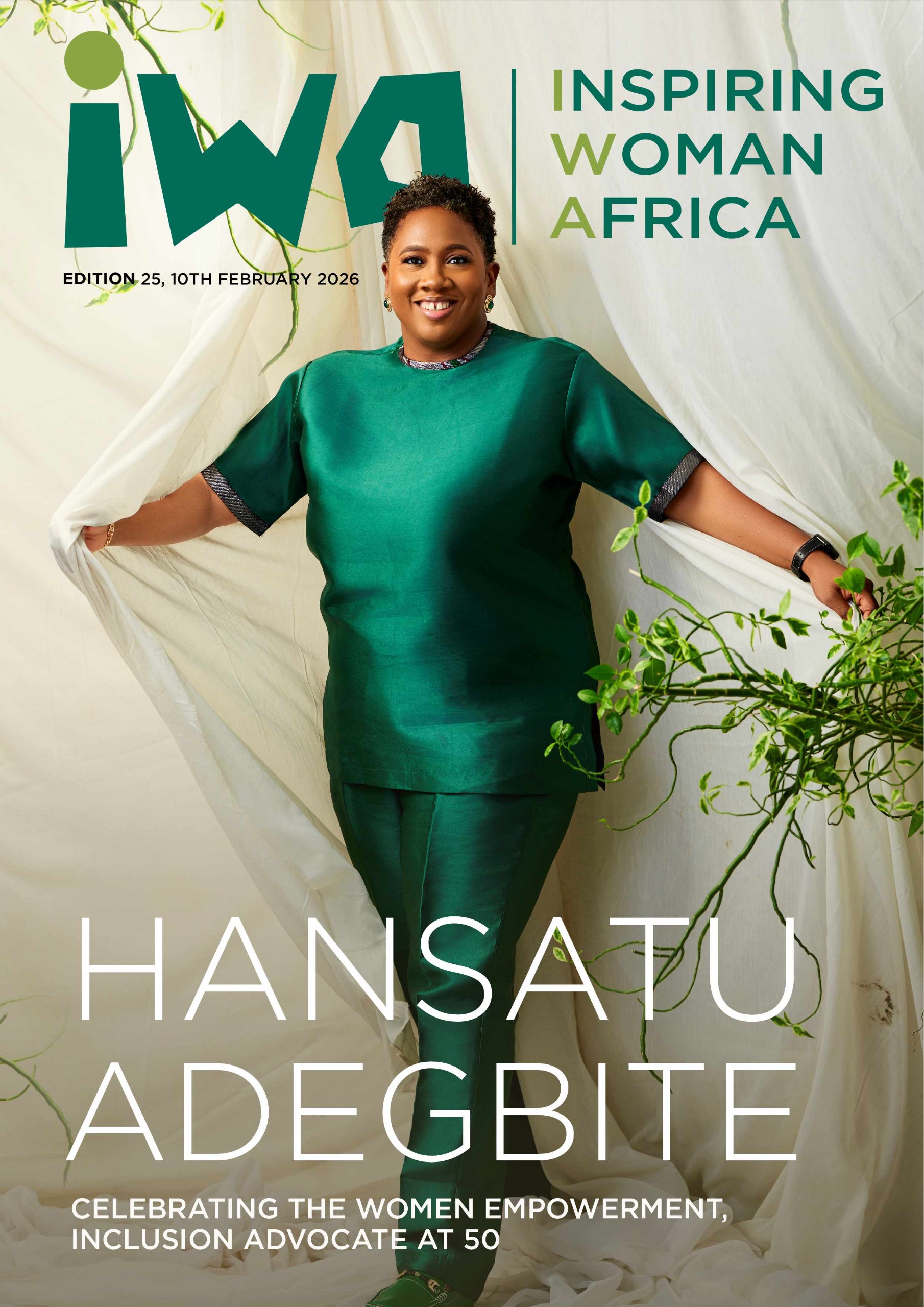
Hansatu Adegbite is a strategic leader with proven expertise in driving initiatives, building alliances, and delivering measurable social impact. A passionate advocate for diversity, inclusion, and women’s economic empowerment, she has contributed extensively to national and international development efforts, serving on two Nigerian Presidential Committees. She has served on 15 Boards and Chaired 5 of them. A graduate of Harvard Business School, Business School Netherlands, and the University of Abuja, Hansatu holds degrees in Business Administration. She currently serves as the National Consultant on Private Sector Partnerships with UN Women and is the immediate past Executive Director of Women in Management, Business & Public Service (WIMBIZ). Beyond leadership, she is deeply committed to mentorship and capacity building, serving as a faculty member / trainer at the National Institute for Policy & Strategic Studies, the Policy Innovation Center, and the Enterprise Development Center of Pan-Atlantic University.
Hansatu also holds significant board and advisory roles, including:
• National Steering Council Member, Presidential High-Level Advisory Council for Women and Girls in Nigeria
• Advisory Committee Member, CARE Nigeria
• Board Member, Global Entrepreneurship Festival
• Advisory Board Member, Business School Netherlands
• Board Member, Nigerian Women Trust Fund
• Advisory Board Member, Women in Health Care Network
• Board Member, Women Rising International
• Board Member, Nigerian Conservative Foundation
• Board Member, Women’s Radio
• Member, African Women Leaders Network
• Summit Chairperson, Association of Nigerian Women Business Network (ANWBN)
• President, Business School Netherlands Nigeria Alumni
Her contributions have been recognised with prestigious honors, including the Award of Excellence by the Federal Ministry of Women Affairs and the Woman of the Year Award by the Voice of Women Empowerment Foundation in 2022.
A proud mother of two adult sons, Hansatu remains dedicated to advancing social change, strengthening inclusive leadership, and shaping the next generation of transformative leaders.
Childhood Memories and Influence till today
I was fortunate to know my late maternal great-grandmother, my grandmother, and my grandaunts, remarkable women who left a lasting imprint on my life. They were the matriarchs of our extended family and leaders in their own right, women whose presence commanded respect and whose words influenced and shaped others.
The late Mama Juli Martha Miller, my great-grandmother, was married to the late Reverend Canon Henry Galtir Miller, who became the first Northern Nigerian ordained as a priest in 1924 under the Church Missionary Society, an institution now within the Anglican Communion of the Church of Nigeria. For our family, she was far more than a figure in the archives of our lineage. Great-grandma Miller was among the early female pupils of Dr. Walter Samuel Miller’s Missionary School in Zaria City, and she also received education at Kudeti Girls School in Ibadan.
Every Christmas and New Year, she made sure our entire extended family came together at the family home in Wusasa, Zaria. Those reunions are among my fondest childhood memories of a household would overflow with cousins, uncles, aunts, grandparents, grand-aunts and grand-uncles, laughter spilling into laughter, stories travelling across generations, and food and joy flowing with the ease of tradition.
After she passed, the yearly gatherings ended. Even as a child, I began to understand what a matriarch truly is, not merely the oldest person in the room, but the steady bond that draws everyone in from near and far. And when that bond is gone, even the strongest families can slowly drift apart, until what’s left are faint recollections and a quiet yearning for the presence that once held everyone together.
The late Helen Asabe Miller was my grandmother and married Mallam Joseph Mijinyawa Taidi, and together they served as nurses at the City Hospital in Kano State, Nigeria. Their lives revolved around compassion, caring for others, saving lives, and being present for people in their most fragile moments. My mother was the first female grandchild in my great-grandmother’s line, but she lost her father when she was only three years old, her mother remarried and give birth to 2 more daughters.
My grandaunts, widely known as the Miller twins were the youngest of six children, and in many ways, they helped raise several members of the family at different points of their lives, including my mother. They had a reputation for being strict and unyielding, guided by strong values and high moral standards. Yet as a child, I encountered more of their gentler side, enjoying their stories, the songs they taught us, the small treats they slipped into our hands, and the comforting prayers they spoke over us.
Top of Form
Among the Miller twins, Dr. Maude Akanya, OFR broke historic ground, becoming Northern Nigeria’s first female Commissioner and later the first woman to be appointed as a Civil Service Commissioner in Nigeria. Long before women’s leadership became a popular conversation, she was already demonstrating, by sheer performance and integrity, that competence is not limited by gender.
Her twin sister, Jummai Jarma, OFR, was an accomplished educator and widely founding principal of two of Northern Nigeria’s landmark women’s institutions, Queen Amina College, the renowned all-girls secondary school, and the Women’s Teachers’ College, both in Kaduna State. She went on to serve as a Director in the Ministry of Education and as a Council Member of Usman Dan Fodio University, influencing policies and structures that went on to shape countless lives.
They served in many other roles and earned numerous recognitions over the course of their lives, including the national honour of Officer of the Federal Republic (OFR), conferred on both of them by the President of Nigeria in 2008. Yet beyond their public achievements, what stood out most was their steadfast devotion to God. For many years, they served as Supreme Mothers of the Kaduna Diocese of the Anglican Communion, highly respected women who led with conviction, offered wise counsel.
Why the Choice of a Career Focused on Social Impact, Diversity & Women’s Economic Empowerment?
These five women gave me a powerful inheritance that shaped how I see myself and what I believe is possible. Because of them, I grew up without placing limits on my dreams or my potential. They lived richly and intentionally, and the lessons they passed on were beyond anything a classroom could offer, I learned most simply by watching the way they lived.
In many ways, being raised around these five educated women, each a strong leader in her own right and a meaningful contributor to social development, charted a course for my own life. Their example shaped my commitment to social impact, especially in advancing women’s leadership, gender equity, and women’s economic empowerment. My work in the gender space feels like a continuation of where they left off, an inherited call to service that I stepped into, even though their legacies were already unfolding long before I was born.
I was born into a family of four children, two girls and two boys, I am the second-born and the second daughter. My mother gave us the best of education both in Nigeria and the United Kingdom. Education wasn’t a plan in our home, it was a covenant for a secured future. She was a firm disciplinarian, her upbringing showed in the stern standards she set for us, we had to be respectful, upstanding, and hardworking representatives of the family.
As I grew up in life, I became deeply touched by the realities women faced in patriarchal societies, pressures and barriers that often trap them in poverty, leaving them feeling powerless. At the same time, watching my mother work relentlessly and sacrifice so much to see my siblings and I educated all the way through university left a permanent mark on me on the need to help women in my lifetime to live a more purposeful life with the support that they need from the networks that are relevant to their journey. With over 28 years of selfless and committed volunteering, my values were also shaped and have guided me toward causes where I can do my part to build a more just and equitable society.
How Are You Able to Measure Social Impact Through Your Work
One of the greatest advantages of serving as a National Consultant with UN Women’s Nigeria Country Office, under the leadership of the Country Representative for Nigeria & ECOWAS, Ms. Beatrice Eyong, has been the depth of learning I have gained on measuring key interventions and their impact on society. I have further strengthened this experience through the professional networks, women organisations, Business Membership Organisations (BMOs) and Non-Governmental Organisations (NGOs) that I have worked with and in some cases served on their Boards, while contributing to efforts that address social development gaps and reduce disparities.
I also measure social impact through a consistent focus on outcomes, not activities, tracking how my interventions translate into real improvements in women’s lives and in the systems that shape their opportunities. Across my work on women’s leadership, gender equity, and women’s economic empowerment, I monitor clear indicators such as the number of women reached and trained, the quality of partnerships mobilised, policies or institutional practices influenced, resources unlocked for women-led initiatives, and the tangible results that follow such as jobs created, businesses strengthened, procurement opportunities accessed, and safer, more inclusive communities. I combine data with stories and stakeholder feedback to ensure the impact is measurable, credible, and sustainable.
Harvard Business School Experience and Influence on your Approach to Leadership and Social Change
My Harvard Business School experience sharpened and strengthened my approach to leadership and social change by grounding my work in strategy, execution discipline, and measurable results. It trained me to define problems clearly, understand stakeholder incentives, weigh trade-offs, and design solutions that are sustainable, not just well-intentioned. It also reinforced the importance of data, accountability, and adaptive learning, which now shapes how I build partnerships, lead teams, mobilise resources, and scale interventions that advance women’s leadership, gender equity, and women’s economic empowerment.
One of the most valuable outcomes of my Harvard Business School course was that it focused on Strategic Perspectives in Nonprofit Management and brought me into a learning community of non-profit executives from across the world. Being in that room exposed me to a rich mix of tested ideas and diverse, validated perspectives, insights that broadened my thinking and strengthened how I approach strategy, leadership, and impact in the social sector.
Key Lessons about Effective Governance and Collaboration
The key lessons I have learnt on effective governance and collaboration are the importance of staying anchored to the organisation’s core mission while clearly understanding the internal and external stakeholder landscape, including the power dynamics, without getting drawn into politics that can erode your values or derail your purpose. I have also learned to keep a disciplined focus on the outcomes set out to achieve, resisting distractions that come from personalities, or deliberate attempts to shift attention away from the end goal.
The leaders I admire most in governance are those who deliberately build their capacity, expand their networks, consistently contribute value and that principle has guided my own journey. I have also been intentional about learning from men and women I respect, drawing on their experience and expertise as mentors and role models. Where I needed deeper understanding, I sought formal training, earning corporate governance certifications through the Chartered Institute of Directors (CIoD) and the Institute of Chartered Secretaries and Administrators of Nigeria (ICSAN). I was however practically trained in corporate governance through service by the Founders of Women in Management, Business and Public Service (WIMBIZ) when I served under them as Executive Director as well as other Board that I either served as Secretary or a Member over the past 20 years.
Strong governance is not about bureaucracy to me but about defining purpose, roles, and decision-making lines, setting ethical standards, managing risk, and measuring performance so the mission is protected and results are visible. In the same way, collaboration works best when partners align around shared outcomes, understand one another’s incentives, and commit to structured coordination with clear responsibilities, timelines, and communication. Over time, I have learned that well-documented agreements, transparent reporting, and consistent delivery are what transform good intentions into reliable partnerships, and reliable partnerships into sustainable social change.
Essential Qualities of a Strategic Leader in Today’s Complex Social Landscape
A strategic leader in today’s complex social landscape combines clarity of purpose with the ability to navigate uncertainty and competing interests without losing sight of outcomes. They are systems thinkers who understand root causes and design solutions that can scale, while remaining data-informed and committed to measurable impact. They lead with integrity and accountability, build trust-based partnerships across government, private sector, and communities, and communicate with influence and empathy. Above all, they are adaptive and resilient, able to learn quickly, manage risk, mobilise resources, and translate vision into coordinated action that delivers sustainable results.

What challenges do you believe are most pressing for women in leadership roles today, and how can organisations address them?
In Nigeria, women in leadership often face entrenched cultural expectations and gender norms that question women’s authority, place a heavier burden of caregiving and household responsibility on them, and limit mobility for networking, late meetings, and travel that many senior roles require. They also contend with “old boys’ networks” that influence hiring, board appointments, contracts, and political access, alongside workplace harassment, religious or community pressures, and credibility gaps that force women to be “twice as good” to be seen and heard. In some sectors, unequal access to capital, land, and procurement opportunities further restricts women’s pathway into executive and board-level influence, while insecurity and unsafe commuting can reduce participation in public-facing leadership spaces.
Organisations can respond by institutionalising transparent recruitment and promotion processes, creating structured sponsorship and leadership pipeline programmes for women, enforcing strong safeguarding systems, and offering flexible work and childcare support that reflects Nigerian realities. They should also intentionally open access to decision-making networks through board diversity targets, inclusive procurement and supplier diversity initiatives, and partnerships with credible women’s professional associations, backed by measurable goals and senior leadership accountability. All of these can be established easily if the right policies are in place with the leaders who are committed to implement them.
Discuss the importance of mentorship in empowering women in the workplace, based on your experiences as a mentor?
I am a product of mentorship from women across five key pillars, family, spiritual (Christian) guidance, professional mentors, sectoral leaders, and social networks, received through both formal structures and informal relationships. Perhaps the ones who invested the most into my live are the spiritual leaders particularly, Pastors Sarah Omakwu, Mary Abioye, Comfort Adesoye, Virygl David and Sister Asibi Makama. Across these spaces, I have been nurtured, corrected, encouraged, and exposed to opportunities that shaped my values, strengthened my confidence, and expanded my capacity to lead. Their support did more than advise me, it modelled what is possible, opened doors I could not have accessed alone, and taught me how to navigate purposefully while staying grounded in integrity and service.
Mentorship is critical to empowering women in the workplace because it closes the “invisible gap” between talent and opportunity. In my experience as a mentee as well as a mentor, I have seen how guidance and honest feedback help women build confidence, sharpen leadership skills, and make strategic career decisions, position their value, negotiate promotions, navigate workplace dynamics, and prepare for bigger responsibilities without shrinking themselves. Mentorship also provides access to networks and exposure that women are too often excluded from, opening doors to stretch assignments, board opportunities, and decision-making spaces. Beyond skills, it creates a safe space for women to process real challenges, bias, work-life pressures, harassment, self-doubt, and to develop resilience, professional boundaries, and a clear leadership identity. Most importantly, mentorship builds a pipeline, when women rise with support, they turn around to lift others, creating a multiplier effect that strengthens organisational culture and performance.
What strategies do you recommend for organisations looking to improve their diversity and inclusion efforts?
To improve diversity and inclusion in a real, measurable way, organisations need to move from statements to systems, embedding inclusion into how they hire, promote, pay, lead, and procure. Start by setting clear diversity and inclusion goals tied to business outcomes and tracking gender- and disability-disaggregated data across recruitment, performance ratings, promotions, pay, and attrition.
They can further standardise hiring and promotion with structured interviews, diverse panels, and transparent criteria, while investing in leadership pipelines through sponsorship, mentorship, and targeted development for underrepresented talent. Then strengthen culture by training managers, enforcing zero tolerance for harassment and discrimination, and creating safe reporting channels that are trusted and independent. Further ensure inclusion is resourced by auditing pay equity, allocating equitable budgets and high-visibility assignments, and adopting flexible work policies that recognise caregiving realities.
Finally, expand impact beyond the workforce through inclusive procurement and supplier diversity also referred to as gender responsive procurement or affirmative procurement, intentionally engaging women-owned and underrepresented businesses, while holding leaders accountable through key performance indicators (KPIs), performance reviews, and regular public or internal reporting on progress.
How can businesses better support women entrepreneurs in Nigeria?
Businesses can better support female entrepreneurs in Nigeria by intentionally reducing the barriers that limit their access to markets, finance, skills, and supportive networks. This starts with inclusive procurement, setting targets for spending with women-owned businesses, simplifying bid requirements, unbundling large contracts, and paying on time to ease cashflow pressure. Companies can also partner with banks and DFIs to expand access to affordable finance through guarantees, invoice discounting, asset financing, and lower-collateral products, while pairing funding with practical coaching on bankability, bookkeeping, and compliance.
Beyond funding, female entrepreneurs benefit from revenue-focused capacity building, mentorship and sponsorship that opens doors to buyers and investors, and shared infrastructure such as business hubs, equipment, logistics support, and digital storefronts. Finally, businesses should design interventions around women’s realities, addressing care responsibilities, safety concerns, and legal or regulatory hurdles, while measuring impact through indicators like supplier spend, business growth, jobs created, and enterprise survival over time.
In what ways do you think men can play a role in advancing women’s economic empowerment?
The United Nations refer to men who play this role as HeForShe or Male Allies who are very important community influencers for change and support. Men can play a powerful role in advancing women’s economic empowerment by using their influence at home, at work, and in society, to remove barriers and open opportunities. In the workplace, this means sponsoring women into high-impact roles, insisting on fair recruitment and promotion processes, challenging bias when it shows up in meetings or performance reviews, ensuring gender-responsive budgets guide decision-making and revenue-generating initiatives.
Men can also champion pay equity, enforce zero tolerance for harassment, and support policies that make work more compatible with caregiving realities, such as flexible work arrangements. Beyond the office, men can support women’s economic power by buying from women-owned businesses, connecting them to markets and networks, mentoring them, and advocating for inclusive procurement and better access to finance. At home and in communities, sharing unpaid care work, backing girls’ education, and speaking up against harmful norms helps create the enabling environment women need to earn, build assets, and lead, because when men actively shift systems and behaviours, women’s economic empowerment becomes faster, safer, and more sustainable.
Serving on the Nigerian Presidential Committees, what impact do you feel those roles have had or will have on policy-making for women and girls?
Serving on Nigerian Presidential Committees gave me a rare, high-leverage platform to help shape what government prioritises, funds, and measures for women and girls, moving issues from advocacy into policy, budgets, and implementation. These roles have strengthened my understanding and participation in policy-making by bringing frontline evidence and private-sector or development realities into national decisions, convening key ministries or agencies and influential stakeholders around shared targets, and pushing for practical reforms such as gender-responsive budgeting, affirmative procurement, tax incentives and women’s economic empowerment strategies and stronger accountability on Gender Based Violence (GBV) prevention and response. Over time, the greatest impact is the ability to institutionalise change, embedding gender considerations into frameworks, performance indicators, and inter-agency coordination, so progress does not depend on individuals, but becomes part of how the system works for women and girls.
UN Women’s work and how it has influenced change in private sector partnerships
UN Women’s work has influenced change in private sector partnerships by shifting conversations from one-off corporate social responsibility considerations to more strategic, measurable collaborations that address root causes of gender inequality such as philanthropic giving. Through evidence, global standards, and practical frameworks, UN Women helps companies see gender equity as both a rights issue and a business imperative, strengthening how partners design interventions, track results, and report impact.
This influence is visible in more intentional partnerships that support women’s economic empowerment through inclusive value chains especially in trade, affirmative procurement, climate smart agriculture, safer workplaces, anti-harassment systems, leadership pipelines for women, the care economy and gender-responsive policies. By convening stakeholders and providing technical guidance, UN Women also increases credibility and accountability, making it easier for the private sector to align investments with national priorities while delivering outcomes that are sustainable and scalable.
How do you measure the success of initiatives geared towards women’s empowerment and social change?
I measure the success of women’s empowerment and social change initiatives by looking beyond activities to evidence of real, lasting outcomes at three levels, individual change, institutional change, and systems change. At the individual level, I track indicators such as increased income, decent jobs created, business growth, access to finance or procurement opportunities, leadership advancement, confidence, agency, and improvements in safety as well as wellbeing.
At the institutional level, I measure shifts in policies and practices, such as gender-responsive budgeting, inclusive recruitment and promotion, safeguarding systems, supplier diversity targets, and changes in how resources are allocated to women and girls. At the systems level, I look for wider influence, including strengthened partnerships, new funding mobilised, reforms adopted by government or industry, replication across states or sectors, and sustained results over time.
Advice to young intending women leaders
To young women who intend to lead, start by building clarity, competence, and character, know what you stand for, master your craft, and protect your integrity like your name depends on it because literally it does. Be intentional about learning, unlearning and relearning continuously. Learn by being in the right rooms, attending the right events, signing up for the right courses, reading widely, getting relevant certifications where necessary, and seeking constructive feedback that stretches you.
Invest in relationships and visibility, find mentors and sponsors, join strong networks, and don’t be afraid to sit at tables where decisions are made. Learn to communicate with confidence, speak up early, document your work, negotiate fairly, and don’t shrink to make others comfortable. Set healthy boundaries and manage your energy because the leadership journey is a marathon, not a sprint.
Prepare yourself for the good, the bad, and the ugly, because leadership exposes you to all kinds of people, some who will support you and others who may come at you with arrows or stones, often without warning. Don’t be overly trusting or naïve, stay wise and discerning. Build shock absorbers around your heart, strengthen your boundaries, and cultivate a resilient spirit so you can stay steady, focused, and grounded through it all.
Finally, lead with service, solve real problems, deliver results, and when you rise, carry other women with you, your success becomes a ladder for someone else. So be known for the problem(s) you solve not those you create.
Turning 50
At 50, my biggest lessons are hinged around the importance of choosing to live in alignment with my inner conviction and sense of purpose, so that I am not derailed by challenges, distractions, nor painful experiences. I have learned to stay true to myself, to refuse the trap of being limited by other people’s opinions especially when it becomes harmful, and to own my decisions with courage. I may not always get everything right, but I choose to carry no regrets, only lessons that make me wiser, stronger, and more intentional.
I have learnt that not everyone who applauds you is for you, and not every delay is denial, some seasons are simply refining seasons. Therefore, I have learnt to lead with clarity, to set boundaries without guilt, to choose relationships with discernment, and to measure success not only by milestones achieved, but by the lives touched and the peace preserved.
It is also important to remain grounded with real friends who energise you when you need to the support to just breathe, laugh and play before you keep moving forward. I have been privileged to have a lot of good friends who provide me with support in different ways and at different times especially Olayinka Adeyinka and a lot of my 1988 set mates as well as those from other sets of the Air Force Girls Military School in Jos, popularly known as EX-JAW, they are the real deal.
I have also learnt that most human beings are innately selfish, they only care about what value you can add to them, but when the ships are down, many of them are gone, so you must be careful not to live your life only for others but also for yourself, in such a way that when you die, it will be with a sense of fulfillment that your sojourn on earth was worth it.
I am deeply grateful for God’s mercy and guidance, for the women and mentors who shaped my values and expanded my vision, and for the strength of my mother’s sacrifices that taught me what love looks like in action. I am also grateful for family, friendships who have stood the test of time, for professional relationships, opportunities to serve, to create impact, and for every setback that became my classroom, because each one strengthened my voice, deepened my compassion, and reminded me that my story is still unfolding.
Greatest wish
I long for leaders in Nigeria and across Africa who genuinely have a heart and deep care for the people they lead. Leaders committed to building countries and systems that work for the good of all. For too long, we have been battered by cycles of structural poverty that breed frustration, insecurity, and a deep sense of helplessness, even among those eager to drive change. And the leadership deficit I speak of is not limited to political alone, it extends to traditional, religious, and business leadership as well, where unhealthy appetites for absolute power and control have widened inequality and steadily hollowed out the middle class. The result is a growing population of young people who feel disenchanted and directionless, despite living in an era filled with possibilities for learning, enterprise, and growth.
We are blessed with immense resources, yet too often the benefits are captured by a narrow political class whose priorities have been hardened by self-interest. This is why I am deeply committed to the push for more women in leadership. I believe female leaders are more likely to lead with empathy, to see the humanity behind the statistics, and to prioritise the needs of the marginalised and vulnerable. More importantly, they can serve as critical bridge-builders, helping to create fairer, more inclusive, win-win outcomes for all stakeholders.
My greatest wish is for an inclusive and equitable society, one where every person, regardless of background or circumstance, has fair access to the basic necessities of life and the opportunity to live with dignity.
Recharging and maintaining your passion for the causes you advocate for, especially in challenging times
I recharge by always returning to my “why” and reminding myself that this work is ultimately about people, real women, youth, and communities whose lives can change because someone chose to stay the course.
In challenging times, I lean into my faith, prayer, and quiet reflection to reset my spirit, and I take intentional pauses to rest and protect my energy, because burnout helps no one. Most times I love the privacy of being in my room to relax and rejuvenate. I also draw strength from my community especially from trusted friends, and accountability partners, who help me process disappointments, regain perspective, and keep moving.
Practically, I recharge by celebrating small wins and focusing on what I can control, the quality of my work, the value from my choices, and the next right step. Most importantly, I allow myself to feel the hard moments without surrendering to them, then I re-center, recalibrate, and return to the work with renewed clarity and resolve.
What do you envision for the future of women’s leadership in Nigeria and globally over the next decade?
Over the next decade, I envision women’s leadership in Nigeria and globally moving from being symbolic representation to becoming normalised with measurable results, more women not only at the table, but shaping budgets, reforms, and outcomes in politics, business, civil service, technology, security, and community leadership. In Nigeria, I expect stronger pipelines driven by deliberate mentorship and sponsorship, more women entering leadership through entrepreneurship and the private sector, and growing pressure for transparent governance, where women leaders are increasingly seen as credible bridge-builders who can reduce polarisation and prioritise human development, especially in education, health, safety, and economic inclusion.
Globally, I see a shift toward women leading in hard power spaces such as finance, climate change, artificial intelligence, peace and security, alongside social sectors, with higher expectations for accountability, performance, and integrity. I also believe the next decade will reward leaders who can collaborate across sectors, use data to prove impact, and build inclusive systems that expand opportunity for the most marginalised, so women’s leadership becomes less about breaking ceilings and more about redesigning the room for everyone to thrive.
Concluding words
In 2025, I came across two insights online that reinforced a simple truth for me, I must remain true to myself and stay anchored to what genuinely matters. They reminded me to be intentional at every stage of the years ahead, about the core things I want to do, live for, achieve, and explore, so that I don’t drift through life on autopilot or get pulled off course by distractions and other people’s expectations.
The first insight came from Nurse Bronnie Ware, a hospice nurse who spent 8 years caring for people who were dying and in their final days. From those intimate conversations, she documented the top five regrets she heard most often from her dying patients, reflections that struck me deeply and reinforced the urgency of living intentionally and true to myself. The most frequent regret was wishing they had lived authentically, true to themselves, rather than conforming to other people’s expectations. The second was wishing they hadn’t spent so much of life working tirelessly, and the third was regretting a lack of courage to express how they truly felt. The fourth was wishing they had kept closer ties with friends, and the fifth was wishing they had given themselves permission to experience more happiness. I was sure that I did not want any of these to be my thoughts on my dying bed but to have a sense of inner peace and joy knowing that I had lived a fulfilled life of personal and professional impact.
The second insight came from the idea often described as the three-to-four generation rule, the reminder that, for most people, their personal memory lasts only as long as the generations who knew them in real life like their children, grandchildren, and perhaps great-grandchildren. After that, they can become more of a name than a person, remembered through fragments of stories rather than lived relationships. Many versions of this reflection also note that within about a century, your life’s details may fade, your possessions will change hands, and strangers will occupy the spaces you once called home.
The perspectives were sobering, but also clarifying. It pushed me to be deliberate about what I choose to live for, what I will prioritise, what legacy of impact I want to leave as my footprint on the earth, and the lives I hope to touch in meaningful, lasting ways.