 IWA Team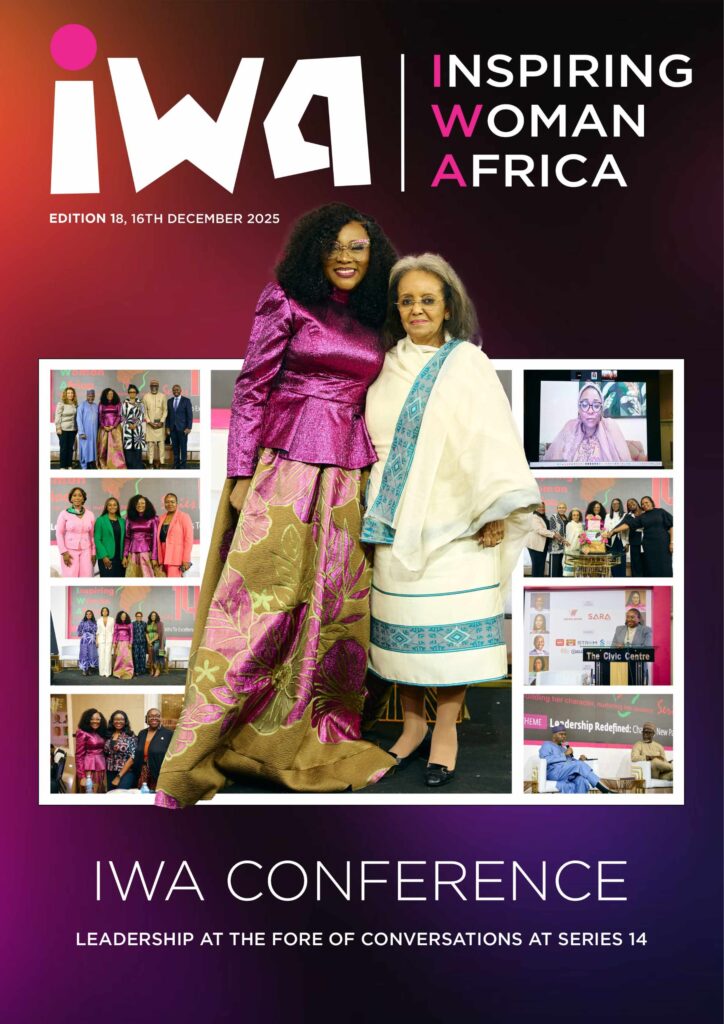
The Inspiring Woman Africa (IWA) Conference just concluded and it was indeed a great one. Themed ‘Leadership Redefined: Charting New Paths to Excellence’ All the speakers did excellently well and in this edition, we shall be sharing on all that happened in details.
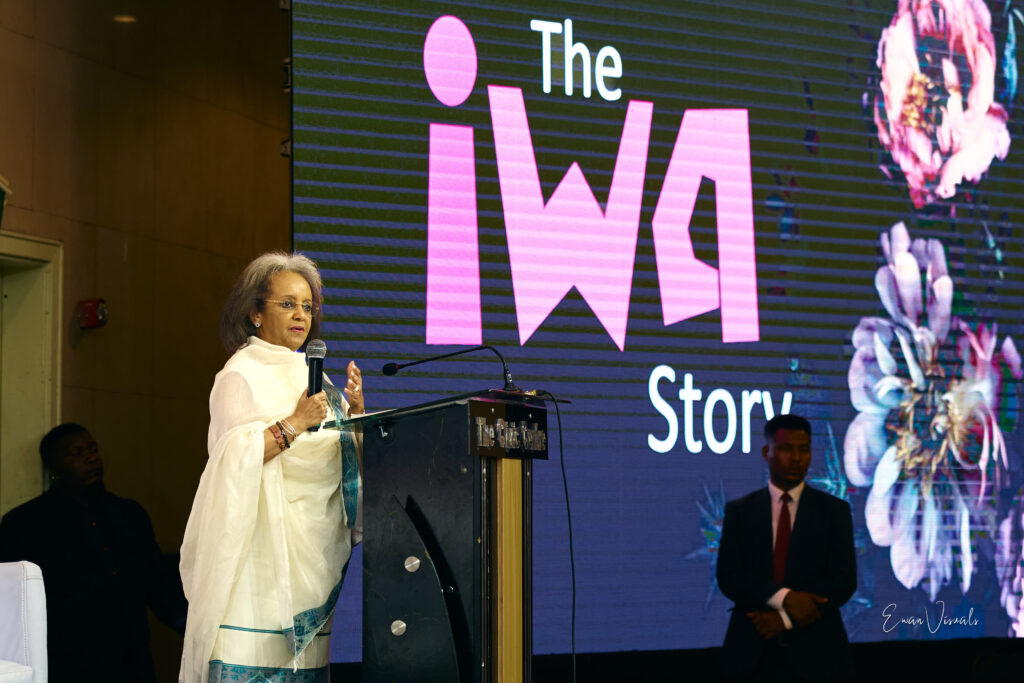
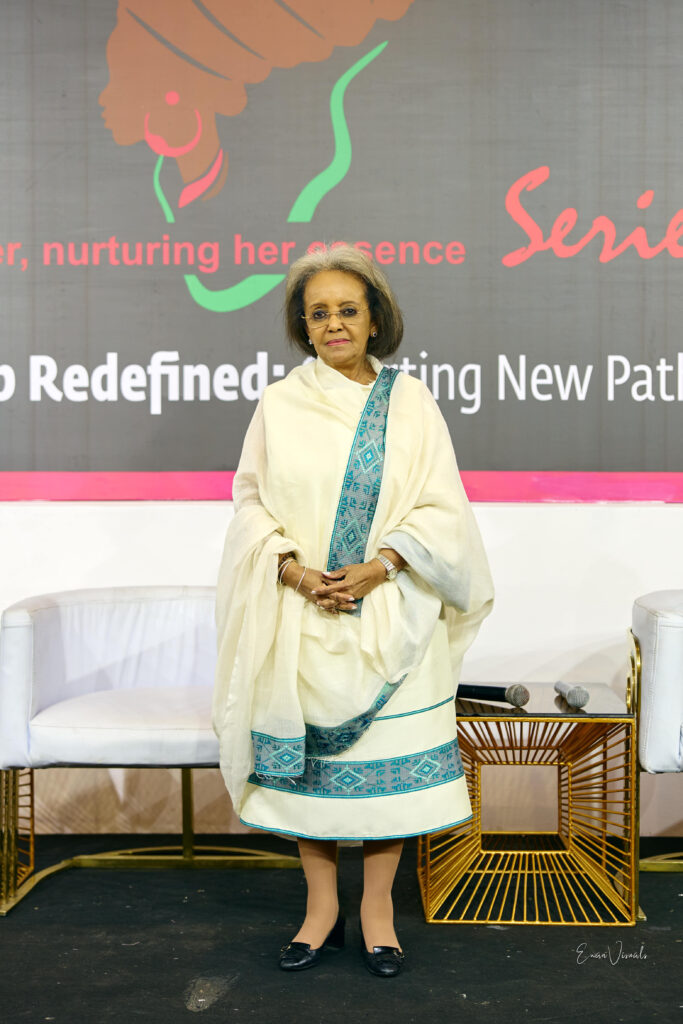
KEYNOTE SPEAKER
‘Women leaders are forcing doors of power open’ — Sahle–Work Zewde
Data has shown that women are able to effectively contribute and lead in society, there’s transformation, not only socially but also economically. The life and career of the keynote speaker at the Inspiring Woman Series 14, embodies what is possible when women lead in society.
As the keynote speaker, the former president of the Federal Democratic Republic of Ethiopia, Madam Sahle-Work Zewde chronicled her life’s journey and how she got to become president of a great country like Ethiopia.
She shared deep reflections from her diplomatic and leadership journey, spanning 29 years, noting her longstanding relationship with Nigeria and her joy at returning, this time as a former president.
Arriving in Nigeria from Tunisia, where she had participated in an African forum on women and security, she stated that the Inspiring Woman Series aligns closely with her lifelong commitment to women’s empowerment.
“My lifelong commitment has always been to support women; to whom much has been given, much is expected,” she said.
She says it is important for women to own and tell their own stories, noting that “if a woman doesn’t tell her story, nobody will.” According to her, women must speak boldly about their experiences and capacities because “what a woman can do has no limit.”
Reflecting on her career, she shared that she began her professional journey in France, where she was recruited into the Ministry of Education. She stressed that “education is fundamental if we want to change the world.” Over the course of 29 years, she served as an ambassador, specialising in African affairs and postings in Paris, driven by a mindset where she had “only one option; to be successful.”
She spoke candidly about her six-year tenure as President, acknowledging that the journey was far from easy. “The road has not been smooth. As women leaders, “we forced the door open” she said.
She also highlighted a critical leadership gap, noting that leaders sometimes fail to listen to community dwellers who possess vital grassroots insights. According to her, this disconnect limits effective problem-solving because leaders may not fully understand what is happening on the ground.
Addressing power and leadership, she asserted that “nobody gives you power, you have to take it.” According to her, sponsors and support systems are important, stating that for substantive change to occur, women must be empowered. While encouraging women to participate actively in politics, she said that they must not do it alone and called on others to support them.
“Let’s amplify each other’s voices,” she urged, encouraging women to join networks and build strong alliances. Anything is possible and the sky is the limit. You work hard and believe in yourself,” she concluded.
Beyond her keynote speech, the Founder and Group CEO of the Inspiring Woman Africa Group, Kemi Ajumobi sat with her in an intimate fireside chat to ask her specific questions about her time in office.
She reflected on her first moments in office where she had been chosen, expelling the need to campaign for the position, as both the President and Vice President in Ethiopia are elected by parliament. She admitted that she was not prepared for the role, noting that it was not something she had imagined for herself. The experience was initially intimidating, but it quickly became a moment of resolve.
“I told myself, I cannot fail, so I worked harder in that phase of my life,” she said.
Sharing one of the greatest lessons life has taught her, she spoke about the importance of demystifying power, particularly the office of the presidency. According to her, leadership should not feel distant or untouchable. She said that it is essential to simplify power and lead with humility, noting that humility remains a key leadership value.
Offering advice to women in politics, she encouraged persistence and clarity of purpose. She also urged women to continue pursuing political leadership and to speak boldly about the solutions they bring to the table.
“You have to continue to pursue it. If you have solutions to problems, talk more and more about it. Have clarity, be true to what you believe.” she said. She also stressed the importance of staying true to one’s beliefs, and standing firmly in what one represents.
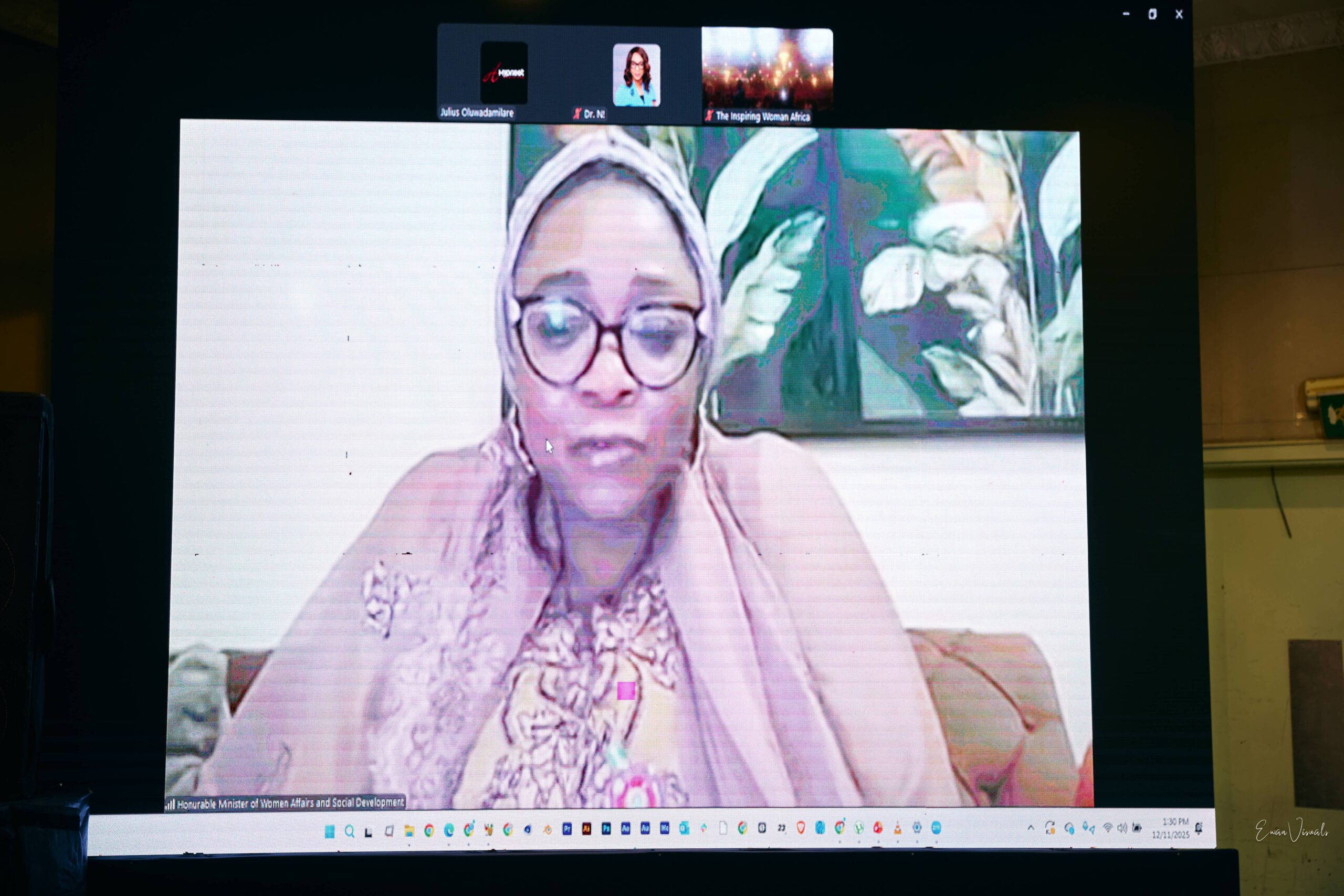
The 14P’s for Life by Hon. Imaan Sulaiman-Ibrahim, Minister of Women Affairs, Nigeria
The Honourable Minister for Women Affairs, Imaan Sulaiman-Ibrahim, shared 14 life changing nuggets for women at the Inspiring Woman Series 14.
She first commended the founder and CEO, Kemi Ajumobi, for her consistency and diligence, describing the convening as both remarkable and impactful. She noted that the Inspiring Woman Africa (IWA) Group continues to spotlight the brilliance and influence of women, emphasising that women are not merely observers of change but “architects of possibilities.”
Speaking on the work of the Ministry of Women Affairs and Social Development, she reaffirmed the government’s commitment to expanding Nigerian women’s access to opportunities.
“As part of our commitment to deepen, improve and expand access to opportunities for women across Nigeria, we are vigorously implementing the renewable Social Impact Intervention Program 774.”
“Within this vision, I employ all participants here today to connect and fully utilise the Happi women’s app. This is a digital classic innovation and is more than just an application. It is a gateway to verify information, economic prospects, mental well-being, tools, legal guidance,” she said.
She then shared what she described as the 14 Ps for or life, leadership, and impact:
She began with purpose, stating the importance of living a purpose-driven life, supported by prayers as a foundation. She spoke about positivity, urging women not to see themselves as victims but to choose optimism, seeing the cup as half full, not half empty.
On passion, she noted that it is contagious, and that perseverance provides the staying power needed to endure challenges. Closely linked to this is persistence, the commitment to keep going even when progress feels slow. She emphasised the importance of planning, to be intentional and strategic, and that punctuality lets you own the agenda. She also underscored practice, the discipline of continuous improvement.
In terms of leadership and relationships, she spoke about perspective, encouraging respect for differing views, and presence, the power of being fully engaged and visible. She recognised politics for its role in shaping systems and influence, as well as people who we choose to support and nurture.
Finally, she concluded with play, urging women to embrace joy and balance, reminding them that “you only live once.”
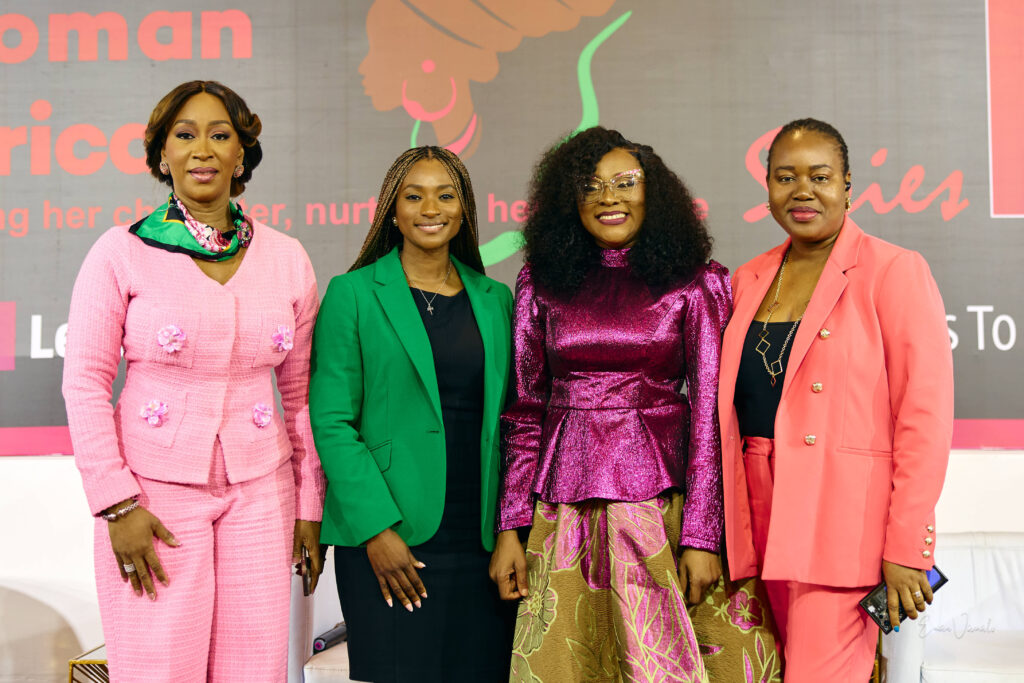
PANEL 1: Excellence in Action, I Committed to Lead
Aristotle once said, “We are what we repeatedly do, therefore, excellence is not an act, but a habit”. The first panel at the Inspiring Woman Series 14 brought together excellent women executives whose careers span banking, media, and entertainment, to speak about what excellence looks like in action.
Moderated by Ozim Ibeziako, Executive General Counsel Africa, GE Vernova, the panel featured Chinwe Iloghalu, Acting MD/CEO of Nova Bank, and Dr. Busola Tejumola (PhD), Executive Head, General Entertainment Channels at MultiChoice Group.
Chinwe Iloghalu began by highlighting that excellence is anchored in intentional growth. Quoting the leadership expert John Maxwell, she said “change is inevitable, but growth is intentional”. According to her, leadership styles shouldn’t be a one-size-fits-all. Whether a leader adopts an autocratic or democratic approach often depends on several factors.
“What influences your leadership style is the organisational culture, power dynamics, team dynamics, the team you are leading, and the life cycle of the organisation. For a growth organisation, you must be willing to be transactional in your role and build a great network you can bank on”, she concluded.
Dr. Busola Tejumola, sees excellence, as empowerment, and leadership as legacy. True leadership, she explained, is creating impact that outlives your tenure. She particularly mentioned how Africa must properly position with increased focus from other parts of the world.
“With global attention increasingly focused on the continent, leaders must ask critical questions: How are we delivering more value? How are we positioning Africa not just as a market, but as a powerhouse of creativity and innovation?” She stated.
MultiChoice has been pushing the frontiers of African creativity and excellence, particularly with the role of the AMVCAs as a tool for rewards and recognition as well as investing in local talents and artists.
“People who haven’t gotten an AMVCA, aspire to get and I’m not saying that’s the only thing that exists, it is one of the tools that helps to create a great standard benchmark for the market,” she said.
In terms of leveraging AI and Machine Learning, Chinwe Iloghalu explained that Nigerian Banks leverage technology as a response to customers’ needs for speed and efficiency.
“In a country like Nigeria, where we have 70 percent of the people under 30, you just have to change the way you do your business. So whether it’s in banking, whether it’s in telecoms, it’s all about speed and efficiency”, she said.
On the percentage of women’s representation of women on board, she emphasised quality over quantity.
“We have decent numbers of women at the top, quality over quantity if you ask me. In 2021, the sustainability banking principle ensured that women are represented at the top level in the banking sector, up to 30 percent on boards and 40 percent in management level. Some factors, however, impede women from getting to these top levels,” she noted.
She also emphasised that women’s representation on boards have proven to be fruitful for such organizations that practice diversity.
“Five extra women might not seem like a lot, but we have to look at the impact that these women bring to those boards in terms of social impact, innovation and of course performance. It’s been proven that once you have women on the board, the overall performance of the company improves”, she said.
Finally, Dr Tejumola explained how content and entertainment can be used to create possibilities by conditioning people to see what could be.
“There was a lot of awesome content in the past. Reverse Engineering content in TV would be one thing I would love to bring back, where content is intentionally structured to help people see what is possible for them in the future,” she noted.
For her, the possibility of a female president had been seen in movies long before it happened.
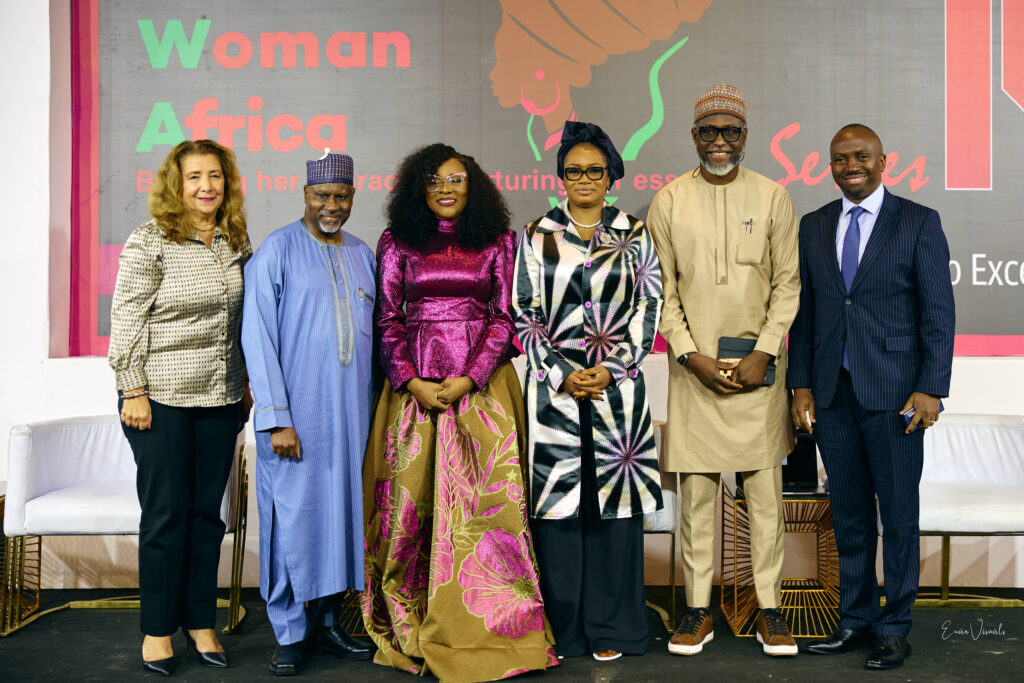
PANEL 2: Visionary Leadership in Transformative Times
What does it take to lead through uncertainty, disruption, and large-scale change? The second panel session at the Inspiring Woman Africa Series 14, was titled: Visionary Leadership in Transformative Times, and it had visionary leaders who have sailed through tough times share their experiences.
The session, which was moderated by Ugochukwu Obi-Chukwu, Founder and CEO of Nairametrics, also featured Obafemi Banigbe, CEO of T2 (formerly 9mobile), Aishah Ndanusa Ahmad, former Deputy Governor of the Central Bank of Nigeria, Mohammed Mustapha Bintube, Chairman, Farinruwa Power Limited and Franca Ciambella, Senior Consulting Counsel at Dentons Law Office.
Obafemi Banigbe launched by outlining four leadership qualities required during periods of significant change. First, he emphasised clarity. “Leaders must define the situation, the direction of events, and reality, honestly. Without a clear understanding of the present, it becomes impossible to design a path forward” he noted. He followed this with courage, explaining that transformational leadership often requires confronting uncomfortable truths.
“Imagine taking up a business where the running cost is ten times the revenue and the infrastructure is obsolete,” he said. “We knew it would take us four years to compete.”
He further noted that this reality forced difficult but necessary decisions, including engaging competitors directly.
“You must listen to others and put yourself in the shoes of the people you are leading,” he said, noting that empathy empowers teams to innovate rather than operate from fear. He also highlighted adaptability as “the ability to adjust, learn, and pivot, especially when the circumstances are unfamiliar, without losing the essence of the mission,” stressing that leaders must adapt.
Stepping into Leadership at the Central Bank of Nigeria, Aishah Ahmad reflected on her time as Deputy Governor at the Central Bank of Nigeria, describing leadership during crises as action driven by responsibility.
“During COVID, ensuring cybersecurity became critical. You do what you need to do because it is the right thing to do,” she stated.
She highlighted measurable progress during her tenure, noting that financial inclusion moved to 74% under her watch, a feat she attributed to strong ecosystem collaboration. While acknowledging leadership authority, she emphasised facilitation over control.
“You may be in the driver’s seat, but your role is to facilitate to ensure the right thing is done. I believe strongly in competition,” she said, referencing the importance of bridge-building dialogue between regulators and service providers. According to her, trust, literacy, infrastructure, co-creation, and inclusion must be addressed intentionally, with providers and regulators trusting each other.
Addressing the principles that guide system-building and partnerships for transformation, Mohamed Mustapha Bintube emphasised inclusion, trust, and long-term thinking as foundational to sustainable impact.
“I am one of those who believe women have their place at the table,” he stated, drawing from his experience across the banking, insurance, and power sectors. He explained that meaningful transformation requires strong infrastructure and intentional system design. “We build infrastructure, and we do it well,” he said, highlighting his role in advancing financial inclusion through the establishment of Jaiz Bank.
“We don’t charge interest; we share profit and lease equipment,” a model he described as both ethical and inclusive. Outlining the principles that guide his approach, he noted that leaders must first understand their core responsibilities.
Meanwhile, Franca Ciambella shared personal stories on elements required to successfully navigate business and transformation periods. She noted how her 23-year journey in Nigeria pushed her out of her comfort zone.
“It has been an adventure,” she framed transformation as both organisational and personal, noting that leaders must evolve alongside the systems they manage. “We try to be transformative when needed,” she added.
She highlighted the importance of stabilisation during periods of uncertainty. “First, let’s stabilise the situation, be calm and find what works,” she said, emphasising clarity of objectives and principled decision-making. According to her, transformation should not be reactionary. “It’s not just about following trends, but always doing the right thing.”
Listening, she explained, is central to effective change. “You must listen to your employees and take feedback from your clients,” she said, adding that flexibility in vision enables organisations to adjust without losing direction.
Addressing how organisations can retain customers during periods of intense transformation, Obafemi Banigbe likened taking over 9mobile to starting from scratch. “Taking over at 9mobile was like starting over. Every infrastructure was obsolete,” he noted.
To navigate this reality, he explained that the recovery process was divided into four phases, beginning with stabilisation. “We leveraged other people’s infrastructure”. This was followed by Mordernisation, guided by a clear principle: “We must build infrastructure if we must, and share infrastructure if we can.”
He added a candid reflection on leadership humility, stating, “Sometimes, you will need to stoop to conquer. Leverage relationships and never be ashamed to admit your scars.”
From a policy perspective, Aishah Ahmad addressed the role of diversity, equity, and inclusion in leadership and governance. She framed DEI not as a moral obligation alone, but as a strategic advantage. “Diversity and inclusion ensure better decisions are made,” she said, noting that every policy decision carries both intended and unintended consequences.
She explained that “boards that are diverse are prone to less risk because they see situations more holistically.” Citing an IMF working paper, she added that female professionals contribute to stability because of how they assess risk.” Women, she noted, “are more inclusive and think along spectrums, considering others.”
On the influence of organisational culture in transformation, Franca Ciambella emphasised leadership by example. According to her, “The actions of the CEO set the stage for the organisation.”
She explained that transformation is rooted in values and consistency. “Transformation is about doing the right thing, and it is about change,” she said, noting that when leaders model the desired behaviour, transformation naturally follows. “If the CEO is doing the right thing, then transformation is coming from the top.”
She concluded by reinforcing the role of leadership in shaping culture: “Leadership sets the culture of the organisation, and that is what everyone follows.”
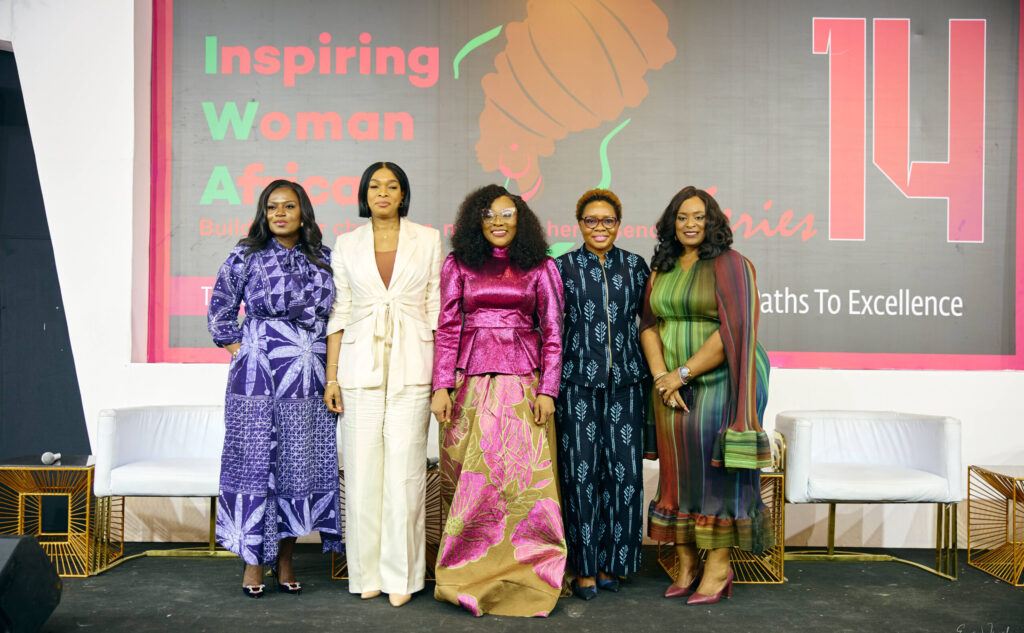
PANEL 3: Empowered for Excellence, I am Driving Change
The “Empowered for Excellence” panel, at the Inspiring Woman Series 14, moderated by Abiola Adediran, Partner at Genea Family Office, focused on purpose-driven leadership, women’s agency, and the power of influence in creating sustainable change. The session featured Patricia Obozuwa, Managing Director, Nigeria Global Reputation Management Project, and Abe Jawando, Executive Senior Sales Director, Mary Kay Cosmetics, whose stories reflected conviction, excellence, and intentional advocacy.
Patricia Obozuwa began by anchoring her answer in clarity of purpose. “It starts from my career purpose. I want to be a change agent,” she said. Drawing from her background in communications, she explained that the work she has done has created tangible impact, particularly in supporting women.
“The work I did in communications made a great difference,” she noted, emphasising that impact is not accidental. “Supporting women is ingrained in the work I do. I am intentional about being impactful.”
Reflecting on her transition from investment banking to entrepreneurship, Abe Jawando shared a deeply personal perspective. “I did not curate my journey from investment banking to entrepreneurship,” she said. For her, the shift was less about careful planning and more about surrendering to purpose. “Sometimes, the path you don’t plan leaves the greatest impact in your life.”
She framed her journey through faith and service, stating, “It is not my purpose; it is God’s agenda on earth.” Her decision to say yes to entrepreneurship, she explained, has continued to create ripple effects. “My yes to entrepreneurship continues to empower other women.”
Chinyere Okorocha anchored her journey in the last three decades on clarity, courage, and intentional evolution.
“I have a small corner in the Inspiring Woman Africa Magazine, called ‘From My Point of View,’” she began, describing it as a space shaped by lived experience and reflection. “I have been practicing law for 34 years now, and it has been such an interesting journey.”
She explained that her progress was anchored in early clarity. “I was very clear about what I wanted to be and the kind of lawyer I wanted to become,” she said. “I knew I wanted to be a female professional.” This clarity informed her approach to practice. “I ensured that the way I practiced law was different from the traditional way.”
As her career evolved, exposure played a defining role. “I was lucky to be in a very comprehensive law firm,” she noted, one that offered opportunities to attend international conferences. “I saw the women abroad and how they carried themselves, and it changed my perspective.”
Approaching a personal milestone, she made a deliberate decision to re-evaluate her path. “When I was turning fifty, I wanted to know what my next was,” she said. “There was so much in me that I wanted to give.” Seeking guidance, she engaged a career coach, whose advice reshaped her outlook. “My coach told me, ‘You don’t have to be one thing in order to be another.”
This insight led her to expand rather than replace her professional identity. “When I became a career coach myself, I didn’t stop being a lawyer” she explained. “I was able to balance both.” She recently captured these lessons in writing. “I just wrote a book on career.”
On women’s advancement, her position was unequivocal. “Women are not limited by capacity,” she stated. “Change the system and let women thrive.”
Addressing whether women are limited by resources when driving change, Patricia Obozuwa spoke candidly about systemic barriers. “The system around us is not built to accommodate women to thrive” she said, pointing to funding constraints and structural limitations faced by women-led businesses.
Despite these challenges, she rejected narratives of helplessness. “Women are not powerless,” she emphasised. “Women today are not waiting to be given permission anymore.” While advocating for systemic reform, she called for intentional design of environments that support women. “The system should intentionally create structures that allow women to thrive.”
She also stressed personal responsibility and collective action. “Be intentional as a woman to build your network” she said. “Be a great advocate for women.” According to her, influence comes with responsibility. “When you are in a position of power, you have influence. Advocate for other women and the women coming up.”
She concluded with a powerful call to action: “We have it in our hands today to change things. Let women thrive.”
When asked about experiences that inspire her to drive positive change, Abe Jawando highlighted the power of storytelling. “People don’t remember things; they remember stories,” she said.
She urged women to be intentional about collaboration and support systems. “Women, we need to structure our networks to work for us,” she concluded, reinforcing the idea that collective strength is a catalyst for sustained impact.
Speaking on the steps organisations can take to improve work-life balance, Chinyere Okorocha revealed that fairness and transparency is key in performance evaluation. “There has to be a clear and transparent way of appraising people,” she said.
She highlighted a persistent structural gap affecting women’s career progression. “When women take time away to have children or care for family, by the time they return, their male colleagues have overtaken them,” she observed. “This needs to change.”
For her, improving work-life outcomes is not about lowering standards, but about building systems that recognise life realities while rewarding competence and contribution.