 Kemi Ajumobi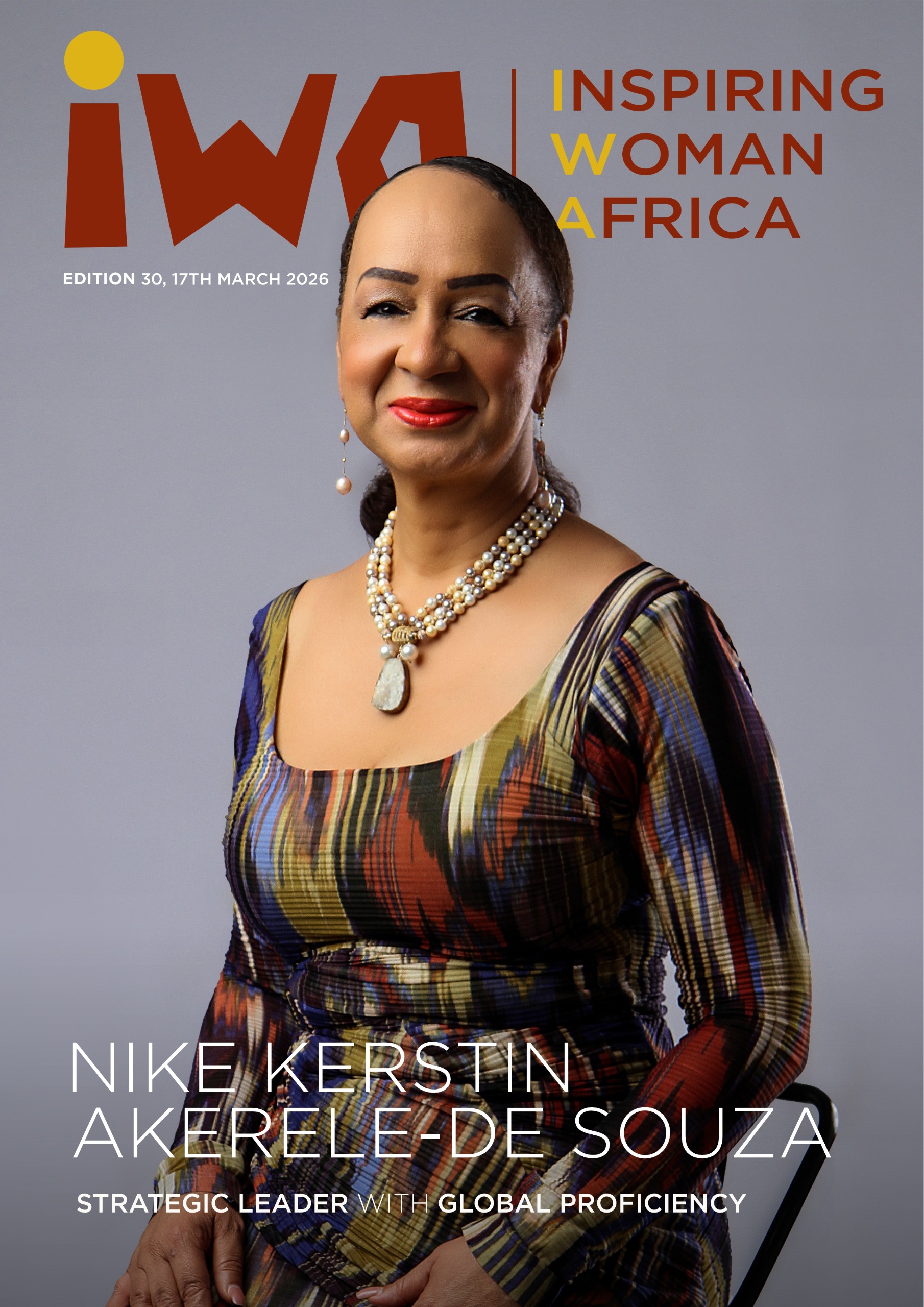
Nike Kerstin Akerele-De Souza is a strategic and operational leader with international experience in Big 4 consulting, the private sector, development, and social impact sectors. She has been fortunate to live and work across sub-Saharan Africa, the USA, and the UK, building a career that has been as diverse as it has been fulfilling.
She possesses expertise in finance, human resources, risk management, governance, compliance, operations management, and program design and implementation, serving as a trusted advisor to boards, leadership teams, and senior management. As a C-suite executive, she has played a key role in developing organisational strategies and driving execution, with leadership oversight for finance, people, governance, and risk.
A decisive and inclusive leader with calm and effective leadership in periods of growth and change, an advisor and subject matter expert on human resources, diversity, equity, and inclusion (DEI), and social impact, she has also chaired and contributed to board committees on people, culture, nominations, programmes, finance, and risk.
In 2003, she transitioned into entrepreneurship. “Building a human resources (HR) consulting business from the ground up was exhilarating and humbling. It challenged me to think strategically while staying grounded in people’s needs.” She stated.
She is Principal Consultant/Strategic Advisor, Dressler KBO Consulting, where she works closely with leadership teams and the Boards of purpose-driven organisations (non-profits, social enterprises, social impact initiatives) to understand their challenges, needs, and potential opportunities.
Nike is driven by the desire to make a meaningful impact wherever she finds herself. She is focused on building institutions that are not only mission-driven, but resilient by design. She is committed to investing in human capital development, with a personal focus on education (skills development, employability), leadership development, gender, and youth empowerment.
Formative years and influence till date
I grew up in a family deeply committed to social justice and public service in Nigeria. This shaped my character and values from a young age. Our home was a gathering place for political leaders and a venue for important family and national discussions. My father, Chief Babs Akerele, was actively involved in politics in Lagos State and at the national level. My paternal grandfather, Chief Abiodun Akerele, was one of the founding members of the Action Group, a formidable political party that played a critical role in Nigeria’s path to independence.
Their legacy, along with the guidance of mentors throughout my career, profoundly shaped my worldview. From an early age, I understood that my life had to be anchored in service and purposeful leadership. I have always felt a desire to give back to society and the responsibility to use my knowledge, skills, and resources to create positive change wherever I find myself. I learned that character matters more than status, and that life is not merely about personal success but about significance. This conviction has guided my decisions, shaped my career, and has continued to define the life I strive to live.
Motivation for transitioning from a career in Big Four consulting to becoming a strategic leader in the non-profit and social impact sectors?
I felt compelled to contribute more directly to human capital development in the country. This led me into entrepreneurship, where I established a human resources (HR) consulting firm, PeoplePrime, and an HR outsourcing firm, PeopleTemp.
Through our graduate recruitment services, I gained insight into the widening skills gap and the structural inequalities affecting young people from disadvantaged communities. I became increasingly concerned about the barriers limiting their opportunities and the overall quality of education feeding into the workforce.
I was determined to understand the root causes, so I began examining the challenges within Nigeria’s primary and secondary education systems to address systemic issues of access and quality. This journey ultimately led to my role in establishing Teach for Nigeria, a non-profit organisation dedicated to cultivating a movement of young leaders committed to ensuring an excellent education for all Nigerian children. That experience marked a defining shift in my career and continues to shape my work across the broader social impact sector.
Human capital development has been a consistent thread throughout your career. Why has investing in people remained central to your philosophy?
I believe everyone deserves access to education, healthcare, water, electricity, and housing. These are the basic building blocks for a meaningful life. Across my career, I have witnessed the barriers that inequality creates and the ways it limits potential, especially for those from disadvantaged communities. With Africa’s demography and the continent with the youngest population, I see lots of opportunities for our youth, but only if we address the barriers to access for them.
For me, it’s not enough to recognise the problem; I feel a responsibility to be part of the solution. Whether through developing talent in organisations, creating opportunities for young leaders, or supporting social impact initiatives, creating transformative impact, I have always sought to empower people to reach their full potential.
What pivotal moment in your career significantly shaped your approach to leadership?
A pivotal period in my career was my early experience at Andersen Nigeria, now KPMG. It was a work environment defined by high standards, discipline, and performance. Client demands were intense, but what distinguished the firm was its uncompromising commitment to the values of transparency, accountability, integrity, stewardship, and excellence, which align with my own values.
What truly shaped me, however, was the culture of service. We were encouraged to give our time and expertise to non-profit organisations, and through my involvement with institutions like MUSON, NESG, and Corona Schools, I began to see leadership differently. I realised that leadership was not about position or prestige; it was about responsibility and our role in strengthening institutions and society.
Most significant challenges you’ve faced while working across different regions, like Sub-Saharan Africa, the USA, and the UK, and how you overcame them
I’ve had the privilege of working and living across different regions and each comes with its own unique challenges and opportunities. One of such challenges for me has been navigating differences in culture and work styles. Approaches to decision-making, communication, and leading teams can vary widely, and adapting to these differences requires humility, empathy, and respect for local perspectives.
Over the years, I developed a broad worldview, but I’ve always felt a strong sense of belonging in Nigeria and across Africa. At times, I’ve faced personal challenges, including experiences of racism in professional settings and general society outside Nigeria, which have tested me, but have also strengthened my resilience and commitment to inclusive leadership.
Another challenge is balancing global standards with local realities. The approach that has worked best for me is to create clear frameworks that provide consistency, while giving teams the flexibility to adapt to their local context. Fostering open dialogue, encouraging local ownership, and leading by example have been key to bridging differences and achieving results for me.
As a C-suite executive, what key strategies have you found to be most effective in driving organisational change?
Vision as a leader is key, but change requires more than this. I believe it requires alignment, discipline, and trust. Over the years, working with various organisations, I have found three strategies particularly effective: clarity of purpose, leadership alignment, and disciplined execution.
Change needs to be anchored in a compelling “why” that connects strategy to values and long-term sustainability. When key stakeholders, especially employees, understand the purpose behind the change, resistance decreases and ownership increases.
We also can’t underestimate the role of leadership. Transformation efforts will likely fail when the executive team is not visibly and consistently united. I try to prioritise building consensus at the top, within the leadership team, and the Board, ensuring that we model the behaviours and mindset shifts we expect across the organisation. This forms part of the culture, and change is about people and building trust and shared accountability. Finally, successful execution is critical. Change is a process and takes time. It requires measurable milestones, clear accountability, and constant communication.
How do you approach decision-making in high-stakes situations, especially when dealing with diverse teams?
As a leader, I am responsible for critical decisions and a range of strategic priorities. I try to stay calm and focused, making sure I understand the full picture before acting, though I’ll admit, it’s not always easy. Emotional intelligence is key.
I believe in collaboration, and I make it a point to listen carefully to my team and key stakeholders. Different perspectives often reveal insights I might have missed. The best decisions, in my experience, come from combining experience, insight, and a shared sense of purpose.
With my background in risk management, I also consider potential outcomes and mitigations to each scenario. I do my best to communicate openly about these possibilities, so everyone understands why a decision is made and what it means for them and the organisation. When people feel included and understand the reasoning and possible impact of decisions, they are more committed and engaged, even when the choices are tough.
How important is fostering an inclusive culture within organisations?
Organisations thrive when people feel valued, respected, and able to contribute their full potential. Inclusion encourages diverse perspectives, drives innovation, and strengthens decision-making.
From my experience, creating an inclusive culture starts with leadership. Leaders must model the behaviour they want to see, listen actively, and ensure that policies, practices, and day-to-day interactions reflect fairness and respect. It’s also about giving people a sense of ownership and belonging. It is difficult to be engaged and to feel included where there is no sense of belonging.
Inclusion is a mindset. You must want to include others and honour that diversity. This mindset, values, behaviour, and systems need to be embedded in the way an organisation operates. For me, it’s a guiding principle that shapes how I build teams, make decisions, and drive lasting impact.
Approaches you emphasise when strengthening organisational resilience and enhancing operational effectiveness for purpose-driven organisations
In purpose-driven organisations, every strategy, process, and decision must align with the mission and its underlying theory of change. This serves as a guiding compass to navigate uncertainty or change.
My experience serving clients over the years and my roles as CEO/COO have provided me with the competencies and frameworks to build strong systems and processes that are adaptable rather than rigid. Whilst navigating an increasingly uncertain and volatile global environment, organisations need to be resilient and agile to adapt. Resilient and operationally effective organisations respond quickly to challenges without losing sight of their long-term goals. This means investing in people, structures, and systems, fostering a culture of accountability, building strong governance, decision-making, and risk management systems.
In practical terms, how does strong governance shape organisational credibility and long-term sustainability?
I believe strong governance sets the standards for accountability, transparency, and ethical decision-making, ensuring that every action aligns with the organisation’s mission and values. With clear structures, processes, and checks in place, stakeholders, whether they are employees, investors, partners, or the communities served, can trust that the organisation is well-managed and reliable. Trust not only protects reputation but also enables organisations to attract talent, partnerships, and resources critical for long-term growth.
Governance also allows organisations to navigate challenges and change more effectively. When roles, responsibilities, and decision-making frameworks are clear, teams can respond quickly, adapt responsibly, and maintain focus on strategic objectives. From my experience as a C-suite executive and a member of leadership teams and boards, I have seen the difference in the performance, impact, and resilience of organisations with sound governance.
What advice would you give to organisations seeking to align their missions with effective operational strategies?
The mission should be clear, and operational strategies should align with the mission. As leaders, we must ensure that every goal, process, and structure directly supports the purpose of the organisation. Without alignment, well-intentioned efforts and plans can become fragmented or ineffective.
I advise organisations to take a systematic approach. Starting with articulating the mission in actionable terms, translating it into measurable objectives, designing processes, allocating resources, and assigning responsibilities to support the set objectives. With regular reviews and open communication, strategies remain relevant and connected to the mission as the organisation grows and faces new challenges.
What are the most frequent challenges you encounter when advising non-profits and social enterprises?
Many organisations are driven by a strong mission and want to do a lot, but they often face constraints in funding, talent, and operational capacity. Part of my role is helping them prioritise initiatives, build sustainable models, and focus on areas where they can create the greatest impact.
I have seen that many founders and teams often start with passion, a cause that they are trying to address, or social innovations for transformative change. Making an impact in the community drives these organisations, but operationally, they don’t have clear roles, structures, systems, processes, and reporting frameworks, making scaling impact difficult and unsustainable. Helping leadership teams implement simple, practical systems ensures they can deliver results consistently and build trust with stakeholders.
What day will you never forget and why?
A few years ago, I made the decision to return to university to pursue a Master’s degree at University College London (UCL). Balancing a demanding career, motherhood, and other commitments made the decision daunting, but it was one I knew was worth taking.
My time at UCL was an incredible experience, collaborating with students from around the world, exploring social challenges, and engaging in research and thought leadership was exhilarating. Then the Covid pandemic struck, presenting unexpected obstacles to the course and its execution. Despite the disruption, I stayed focused and resilient, completing the program successfully. Graduation day was a memorable moment, a personal milestone that reminded me that nothing is impossible. I have learnt to be persistent and to embrace challenges, no matter how intimidating they may seem.
Most rewarding project or initiative you’ve led, and what impact did it have on the community or sector?
Teach For Nigeria has been the most rewarding initiative of my career. Nine years after launching across several states, we have recruited and placed over 2,500 young leaders in schools serving disadvantaged communities, reaching more than 400,000 children to date.
Beyond the numbers, what has been most encouraging is seeing tangible improvements in learning outcomes, as well as increased enrolment and attendance in the schools where we work. These outcomes affirm our belief that leadership, when placed where it is needed most, can transform lives.
As we look ahead, we are preparing to scale significantly across more states and deepen our partnerships with state governments. Our ambition is bold. We plan to mobilise 20,000 young leaders into the education sector over the next decade and contribute meaningfully towards ensuring quality education for every Nigerian child.
If you could give one piece of advice to your younger self, what would it be?
To trust the journey and not rush the process. There were moments early in my career when I felt the pressure to have everything mapped out, to move faster, achieve more, and prove myself. With time, I’ve learned that some of the most meaningful opportunities come from unexpected turns. I couldn’t have imagined that a career initially in accountancy, along with several bold career transitions, could have led me to do what I do now.
I would also remind myself that resilience matters more than perfection. Challenges, setbacks, and even failures are often the greatest teachers. They build character, sharpen judgment, and strengthen resolve. Finally, to stay true to your values. Titles and achievements will come and go, but integrity, purpose, and the impact you have on others are what truly endure.
It’s International Women’s Month. How does this year’s theme speak to you?
This year’s theme is “Give to Gain,” and it resonates deeply with me. Throughout my career and life, I’ve seen firsthand that when we invest in others through giving of our resources and time, the returns extend far beyond the individual. Organisations and teams grow stronger, communities thrive, and people can live meaningful lives.
As a woman in leadership, I have the responsibility to lift others, open doors to opportunities, and support where needed. I believe that the “gain” is collective. This theme is a powerful reminder that generosity is not a loss; it’s an investment in others.
Concluding words
I love African proverbs and one of my favourites is:
“If you want to go fast, go alone. If you want to go far, go together.”
Every time we choose collaboration over competition, community over individual glory, we’re not just solving problems, we’re living out the future we want to create.