 Kemi Ajumobi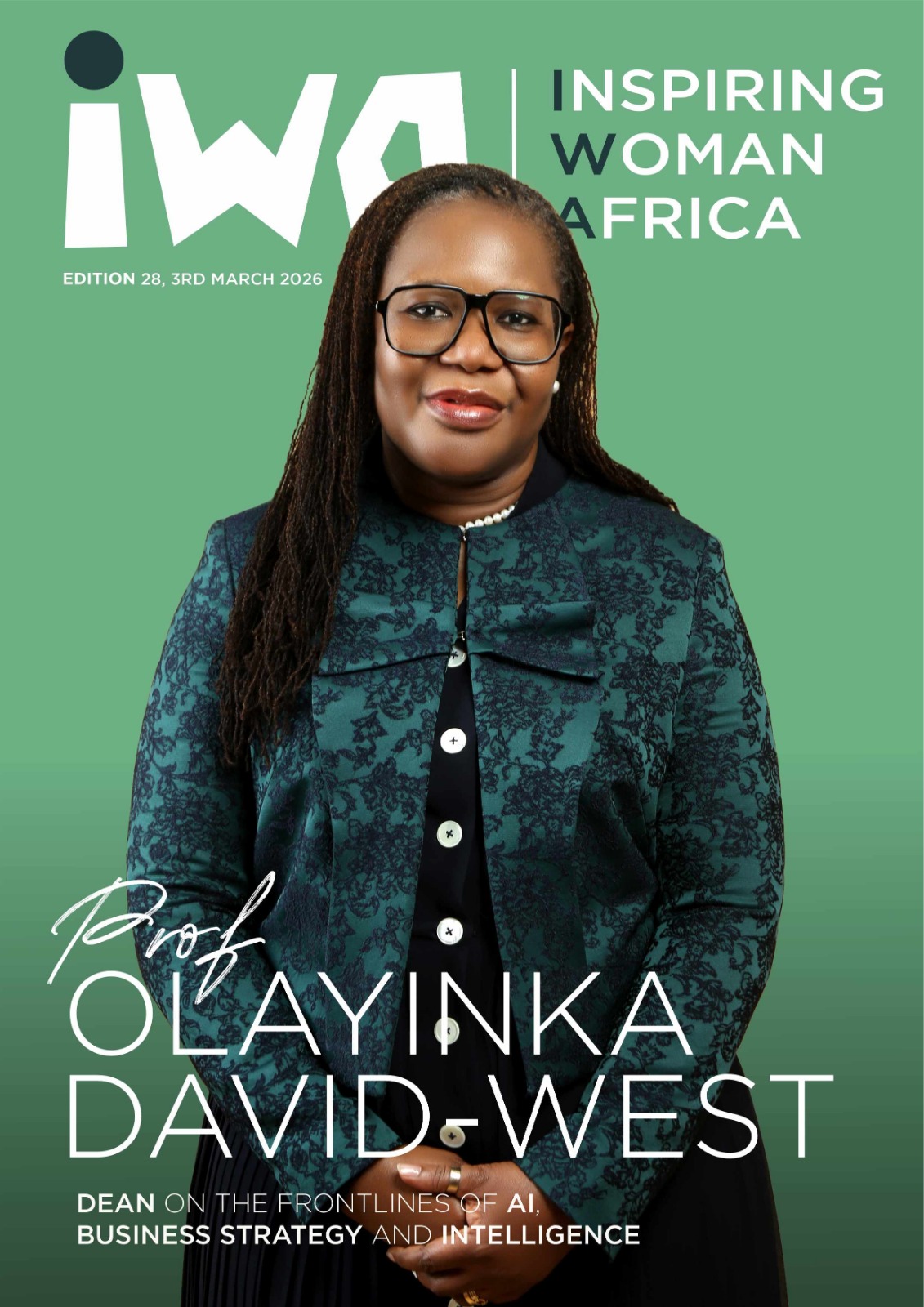
Professor Olayinka David-West is an esteemed academic and thought leader renowned for her expertise at the intersection of business management, technology, and artificial intelligence (AI). With an illustrious career spanning several decades in IT and financial services, she has made significant contributions to academia, research, and the advancement of business practices through her insightful analyses and strategic thinking.
As the Dean of Lagos Business School, Professor David-West brings visionary leadership to one of Africa’s premier business institutions. She is passionate about digital transformation, inclusive finance, and the role of AI in enhancing business models and strategies. Her leadership has propelled LBS to attain international accreditations and global rankings, and she has held critical positions, including faculty member, faculty director, academic director, and associate dean.
Her research and practice engagements focus on the transformative impact of technology, particularly AI, on business models, strategy, and organisational dynamics. She advocates for policy interventions that foster digitally transformed businesses and society.
Professor David-West’s thought leadership is exemplified by her numerous publications in renowned journals, particularly in digital transformation, innovation adoption, and technology-driven disruption across various industries. She is often sought after as a keynote speaker, panellist, and consultant by organisations looking to navigate the complexities of modern business environments influenced by AI.
Since 2015, she has led the Sustainable and Inclusive Digital Financial Services (SIDFS) initiative, a research and advocacy initiative dedicated to enhancing financial inclusion in Nigeria. Under her leadership, SIDFS has become the leading capacity-building platform for operators and regulators within the financial service ecosystem. Her collaborations with businesses, startups, and governmental bodies have led to pragmatic solutions that bridge the gap between theory and practice, particularly in leveraging AI.
Professor David-West’s contributions have been recognised with numerous awards and accolades, highlighting her impact on academia and the business community. Her ability to translate complex concepts, including those related to AI, into actionable insights has garnered respect and admiration from peers, professionals, and students.
Holding advanced business administration and technology management qualifications from renowned institutions, Professor David-West is committed to continuous learning and exploring the evolving dynamics of business, technology, and AI. She holds expert certifications in financial inclusion policy and digital money, is a member of the governing council of the Fintech Association of Nigeria, and is a member of African Women in Finance and Payments. Additionally, she is a Certified Information Systems Auditor (CISA), Certified in the Governance of Enterprise IT (CGEIT), and an academic advocate for the Information Systems Audit and Control Association (ISACA). She is also a qualified Skills Framework for the Information Age (SFIA) practitioner.
Professor David-West is dedicated to mentoring young women in STEM and AI. She was featured in the Tech Women of Lagos exhibition, listed among the Leading Women in Nigeria’s Financial Technology Industry, and profiled in FintechTimes as a leading financial inclusion expert in Africa.
Professor David-West is dedicated to mentoring young women in STEM. She was featured in the Tech Women of Lagos exhibition, listed among the Leading Women in Nigeria’s Financial Technology Industry, and profiled in FintechTimes as a leading financial inclusion expert in Africa.

Take us through your formative years
Growing up was a learning adventure; we were encouraged to seek learning opportunities. Thus, the art of reflection was established early with day-to-day activities and visits. For example, on family holidays, we were tasked with writing essays about our experiences. Knowing you had to write interesting things, we became more observant and curious.
Share your journey to the role of Dean at Lagos Business School, and what motivated you to pursue a career in academia and business management?
Honestly, I am an “accidental academic”. I studied computer science and began a career in technology with the core goal of driving technological transformation across business and society. After about 10 years in several IT roles, including research and development, I sought a deeper understanding of technology adoption in business and joined a bank. There, I experienced first-hand the misalignment of business and technology. My 2003 foray to Lagos Business School was to engage business people and educate them about how technology could transform their work. Even though I had been engaged in administrative activities since 2006, my journey to becoming Dean was quite unexpected.
What are the key challenges and opportunities you see for business schools in Africa today?
Business schools in Africa face significant challenges. First, competition, especially from Ivy League business schools in the global north. Second, even though the COVID-19 pandemic accelerated our digital teaching and learning, the infrastructural deficit in terms of quality connectivity and high-end audio-visual equipment is expanding the digital divide. Third, faculty availability and development are another barrier, especially in the era of “Japa”. Finally, quality assurance standards stamped by global accreditation bodies like AACSB, EQUIS, and AMBA (or the triple crown) are out of reach.
As a leader, what strategies do you employ to foster a culture of innovation and inclusivity within the Lagos Business School community?
Lagos Business School is a unique organisation that was established with a social mission centred on the Christian identity of man. Our mission states, “Lagos Business School is a community of people committed to creating and transmitting management and business knowledge based on a Christian conception of the human person and economic activity that is relevant to Nigeria and Africa at large. We strive to be a world-class business school which will significantly impact the practice of management.” Thus, our strategies are embodied in our core values – community, mutual respect, integrity, spirit of service and professionalism.
How do you define digital transformation, and why is it critical for businesses in today’s economy?
In the digital era, we use three terms synonymously, even though they are somewhat different. First is digitisation, the digital reproduction of physical items such as documents, pictures, and music, facilitating storage/retention and collaboration. Next is digitalisation, which automates business processes and activities to enhance decision-making and productivity/efficiency. Finally, digital transformation is about technologically enabled change of the entire entity – processes/work activities, people, culture, etc., driven by new business/economic models, competitiveness and changing customer/user experience.

AI is rapidly changing the business landscape. What are some of the most significant ways you believe AI will impact business models in the next decade?
Indeed, AI is here to stay, and the mantra is that all digital transformations should leverage its power. Regarding business models, these are simply manifestations of how organisations create and deliver value – this will change with AI.
We’ve moved past seeing AI as just another digital tool; it is now the very architectural foundation for how businesses create and deliver value. In the next decade, we’ll see a shift from selling ‘products’ to selling ‘guaranteed outcomes,’ where AI manages the complexity behind the scenes to ensure customers always get the results they pay for. Ultimately, the most successful business models will be those that use AI to achieve hyper-personalisation at scale, treating every single customer as a market of one.
Elaborate on the role of technology in enhancing financial inclusion, particularly in Nigeria
Digital technologies, such as mobile phones and mobile money, have been instrumental in advancing access to finance (or financial inclusion). These technologies have made it easier for underserved populations, especially in rural areas, to access financial services without a traditional brick-and-mortar bank.
Your work with the Sustainable and Inclusive Digital and Financial Services initiative has been impactful. What have been some of the most rewarding outcomes of this initiative?
At the Sustainable and Inclusive Digital and Financial Services Initiative, some of our most rewarding outcomes have been:
1) Providing a holistic lens on Nigeria’s digital financial services ecosystem with the annual publication of our State of the Market reports.
2) Being a convening platform for open conversations between policy makers, operators and civil society towards unpacking Nigerian issues.
3) The Product Innovation Lab (PIL) to support the product design and innovation capabilities of financial services providers.
How do you approach research, especially in the fast-evolving fields of digital transformation and innovation adoption?
Research is a process of scientific enquiry, and in the fast-evolving fields of digital transformation and innovation adoption, I am not researching the emerging technology itself, but its impact on business and society. So, we identify the technology, pose the types of questions, and choose a method/approach to conduct the study. For example, during my doctoral project, I wanted to ensure we had a way to define and measure the quality of electronic banking services, and I created a tool to do so.
What are the most pressing policy interventions you think are necessary to support digitally transformed businesses in Nigeria?
When you think about Nigeria, the majority of businesses are categorised as small and medium enterprises (SMEs), and their digital transformation will be more catalytic than that of traditional corporates. These SMEs have limited resources and capabilities, including access to digital solutions and talent. While the government has skilling programmes like the 3MTT, these skills are globally sought after, and SMEs are often unable to compete on remuneration terms. Thus, we need incentives for skilled IT workers to build and support affordable platforms and products for SMEs.
You advocate for mentoring young women in STEM and AI. What specific actions do you take to inspire and support them?
Mentoring happens in many formal and informal settings. On the formal side, I am an active mentor to some women-focused development programmes, and I am typically assigned to women with a science background. Speaking informally at events is also an opportunity to engage with young women and provide a role-modelling perspective.
In your experience, what are the main barriers young women face in pursuing careers in STEM?
I would say that the main barriers are the informal factors that manifest at the individual and systemic levels. For example, traditional norms about the role of women are a deterrent when the communities we live in do not support such choices.

What is your take on mentorship and what ideals should young people be seeking for in people they desire as mentors?
Mentorship is not a magic bullet. In my view, it offers a perspective to guide decision-making. Nonetheless, we are all independent beings and can choose freely.
Looking ahead, how do you envision the role of academia evolving in response to technological advancements and shifts in the business landscape?
With a technology like AI, everything changes. In academia, AI is a double-edged sword in the business of teaching and learning and scientific enquiry (research). For example, in research, AI can help find related scientific papers and synthesise them – a process that could ordinarily take 6 – 9 months.
What emerging trends in technology or business do you believe will have the most significant impact on African economies in the coming years?
Honestly, there will not be one technology trend or business area. But one thing we can be certain of is that the pace of technological innovation will be much faster. For example, the garnet hype cycle will be more frequent. On the business side, again, it will not be one business area, but rather one focused on capturing markets, such as opportunities through the African Continental Free Trade Area (AfCFTA), which can expose you to cross-border opportunities.
What continues to inspire you personally and professionally in your work?
The desire to see how technology can serve business and society. The desire to see an inclusive Nigeria that works for all.
Can you share a defining moment in your career that significantly influenced your path?
Completing my doctorate in business administration (DBA) and the self-discovery of an individualised learning path.
Day never to be forgotten and why?
Today. My philosophy is that every day presents a special opportunity to be.
What makes LBS tick?
LBS is an example of what Nigeria can be when a diverse group of people are committed to a mission. They show up every day and do their best in each role they play. In sum, great and committed people ensure we deliver high-quality education in a world-class facility.
As we commence the IWD for 2026, what do you want to say about this year’s theme and your message to women generally?
This year’s IWD theme, Give to Gain, reminds me that we all have something to give, beyond money – a smile, a hug, time, while breaking the spirit of reciprocity of not expecting a reward. Essentially, it’s the freedom to share your essence!