 Dr. Maymunah Yusuf Kadiri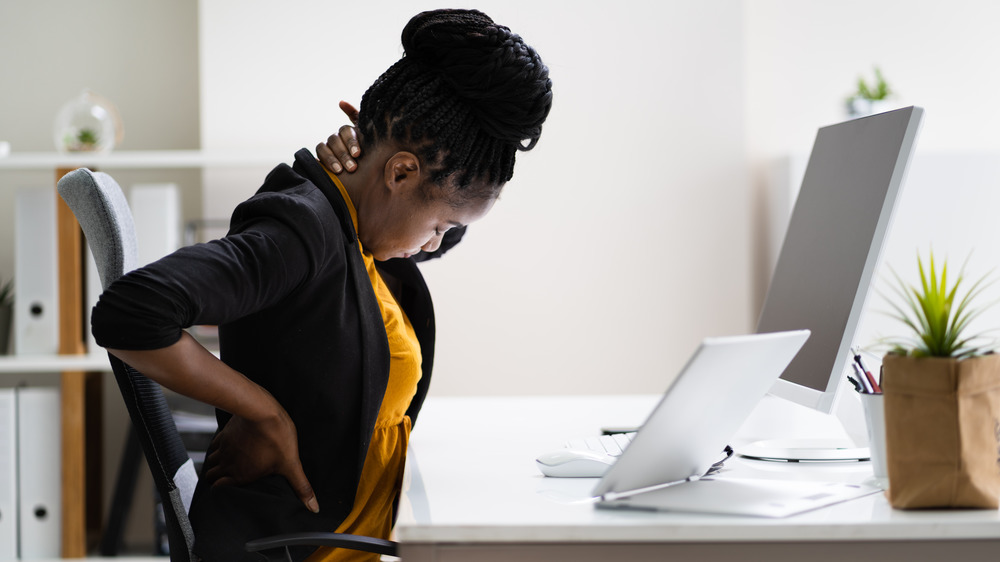
Modern life has quietly changed the way our bodies move. Many people now spend most of their day seated at desks, in cars, during meetings, and while scrolling through screens. What once required physical movement can now be done almost entirely from a chair. While technology has made life more efficient, it has also introduced a silent health challenge: prolonged sitting. One of the first parts of the body to suffer is the spine.
In the story of Emily, a talented graphic designer. She loved her work and spent long hours creating digital designs, often deeply absorbed in projects that kept her seated at her computer for most of the day. At first, the signs were easy to ignore. A dull ache in her lower back. Tightness across her shoulders. A subtle forward tilt of her neck as she leaned closer to the screen.
Like many professionals, Emily assumed it was simply part of the job.
Weeks gradually turned into months, and the discomfort slowly grew into persistent pain. Sitting began to feel heavier. Standing up after long work sessions required effort. Even outside the office, her posture changed without her noticing. Her shoulders rolled forward and her back curved slightly inward.
One afternoon, while taking a rare break in a nearby park, Emily noticed an elderly man sitting on a bench with strikingly graceful posture. His back was upright, his shoulders relaxed, and he moved with an ease that suggested strength rather than stiffness. Curious, Emily approached him and asked how he maintained such remarkable posture.
The man smiled and said something simple that stayed with her long after the conversation ended: “The spine remembers how you treat it every day.”
Poor posture is often dismissed as a cosmetic issue, but its consequences go far beyond appearance. Chronic slouching can lead to persistent back pain, reduced flexibility, headaches, and even breathing difficulties as the chest becomes compressed. The body begins to operate under constant tension.
Holistic living invites us to rethink posture not as an aesthetic concern but as a fundamental aspect of health. Fortunately, protecting the spine does not require complicated interventions. Often, it begins with simple daily habits. One of the most effective strategies is strengthening the core muscles. The abdominal and lower back muscles act as the body’s natural support system for the spine. Activities such as yoga, Pilates, and strength training help stabilize these muscles, allowing the spine to remain aligned and supported.
Equally important is movement throughout the day. Sitting places continuous pressure on the spinal discs, which can lead to stiffness and discomfort. Standing, stretching, or walking for even a few minutes every hour helps relieve this pressure and restores circulation to the surrounding muscles.
Workspace design also plays a crucial role in spinal health. Many people unknowingly strain their neck and back because their workstation is poorly aligned. Ideally, a computer screen should be positioned at eye level so the neck remains neutral rather than tilted downward. A chair with proper lumbar support helps maintain the natural curve of the lower back, while feet should rest flat on the floor with knees slightly below hip level.
Awareness is another powerful tool. Many individuals do not notice when their posture begins to collapse. The shoulders creep forward, the chin drops, and the spine rounds. Taking a moment to reset postureby lifting the chest, relaxing the shoulders, and lengthening the spine can instantly relieve tension.
Sleep also plays a surprisingly important role in spinal health. A supportive mattress and pillow help maintain the natural alignment of the spine during rest. Poor sleep posture can quietly undo the benefits of good posture maintained during the day.
Weight management is another often overlooked factor. Excess weight, particularly around the abdomen, increases pressure on the lower back and can accelerate spinal strain. Maintaining a balanced weight supports both posture and mobility.
Stretching also deserves attention. Sedentary lifestyles often create tightness in the chest, shoulders, and hips. Gentle stretching restores flexibility and counteracts the stiffness that prolonged sitting creates.
Emily eventually decided to apply the wisdom she had heard in the park. She began making small adjustments to her daily routine. Every hour, she stood up to stretch or walk briefly. She raised her computer monitor to eye level and invested in a chair that supported her lower back. In the mornings, she practiced simple yoga poses that strengthened her core and improved flexibility.
Within a few weeks, the constant ache in her back began to fade. Her shoulders felt lighter, and she noticed that breathing deeply became easier. Even more surprising was the boost in her energy and focus throughout the day.
When the spine is aligned, the body functions more efficiently. Muscles work together in balance, breathing improves, and circulation flows more freely.
Holistic living reminds us that the body is an interconnected system. Protecting the spine does more than prevent pain; it supports overall vitality. In a world that increasingly encourages stillness, choosing movement becomes an act of self-respect.
Stand up. Stretch. Walk. Realign. Because the spine you protect today will carry you through the life you are building tomorrow.
Dr. MAYMUNAH YUSUF KADIRI (aka DR. MAY) popularly referred to as “The Celebrity Shrink,” is a multiple award winning Mental Health Physician, Advocate & Coach. She is the convener of “The Mental Health Conference” and the Medical Director and Psychiatrist-In-Chief at Pinnacle Medical Services, Dr. Kadiri is a dynamic Consultant Neuro-Psychiatrist and a Fellow of the National Post Graduate Medical College of Nigeria (FMCPsych) with almost 20 years’ experience as a practicing Physician.