 Zainab Aderounmu
I watched the documentary on Jacinda Ardern’s time as Prime Minister of New Zealand, and it left me with one question; why is there so much resistance to women in leadership positions.
Nigeria presents a peculiar case. Women work tirelessly behind the scenes yet remain overwhelmingly underrepresented in decision making roles. A recent report by the Women in Leadership Advancement Network paints the picture lucidly: in the National Assembly, only 21 out of 469 seats are held by women and only 8 female ministers out of 48 in the executive cabinet.
This raises a pressing question: why does a country filled with competent, capable, and visionary women continue to shut them out of leadership?
Jacinda’s story exemplified what becomes possible when the usual barriers are out of picture or weakened. One of the most common arguments used against women being in leadership roles is child care. Women are believed to be the primary and sometimes, sole caregiver, especially in the early years due to breastfeeding.
Yet, in Jacinda’s first year as Prime Minister, she had a surprise baby. While breastfeeding was her responsibility, every other aspect of childcare was covered by her partner, Clarke. She once said, “Clarke is at home, raising our girl.” His intentional support allowed her to lead at the highest level without losing her home or her responsibilities.
This isn’t a foreign concept. A prominent Nigerian CEO once recounted how he encouraged his wife to take up a lucrative job opportunity in the United States, while he stayed home nursing their 18-month-old baby. These examples remind us that women do not lack capacity; they often lack support. When systems, partners, workplaces, and political structures show up for them intentionally, women thrive.
Beyond her partner’s support, Jacinda also had her party’s unwavering support. She had built credibility over the years, demonstrated competence, and earned trust, and when it mattered most, they stood unflinchingly behind her.
However, WILAN found that 31% of the challenges Nigerian women face in ascending to leadership roles come from the perception that a woman is simply “unfit to lead.” This is in addition to harassment, intimidation, and violence that confront many Nigerian women who dare to step into political spaces.
Beyond that, Jacinda suffered crippling anxiety as Prime Minister. But her anxiety was rarely about her inadequacy, but rather about her desire to deliver more in such little time. She has an unwavering sense of personal belief in her abilities, reinforced by her party’s support. Thus, she had a strong bias for action, and knew when to stand her ground and when to defy resistance.
Currently, Nigeria stands at a similar crossroads to redefine women’s participation in politics. In less than 8 days, members of the National Assembly would vote on the reserved seats bill for women, a proposal that would define the role of women in Nigeria’s politics in the next decade and beyond.
The National Assembly will have to make a choice: whether to keep Nigeria anchored in the past, or to unlock the leadership potential half the nation already possesses. The reserved seats bill isn’t just about representation, it’s about whether Nigeria is finally ready to tap its full economic potential and prosperity.
Zainab ADEROUNMU A. W. is a First Class graduate of English Language and the Overall Best Graduating Student from the Lagos State University, Lagos Nigeria. She’s a professional Master of Ceremonies, known as The Hijabi Compere , a public speaking coach and Communications Professional. She is currently a Youth advisor to the European Union where she doubles as the Spokesperson and Head of Communications & PR for the Youth Sounding Board.
Latest Edition of IWA Magazine
March 31, 2026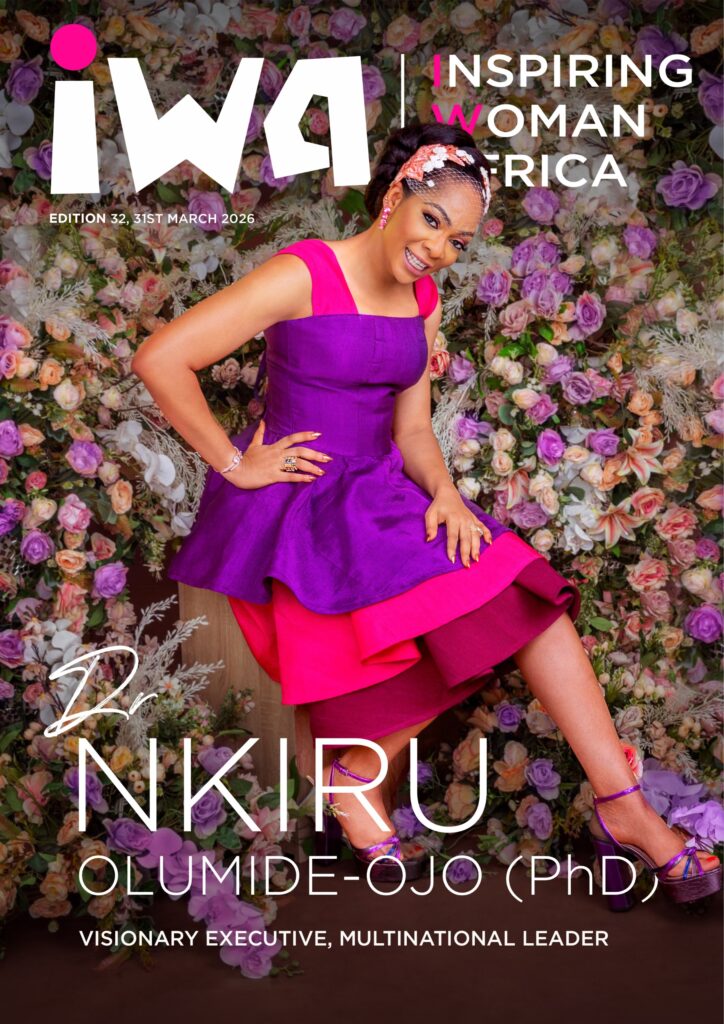
Dr. Nkiru Olumide-Ojo (PhD) Visionary Executive, Multinational Leader
Latest Posts
-
 Mar 31, 2026 The Career Advantage of Thinking Like an Owner