 Kemi Ajumobi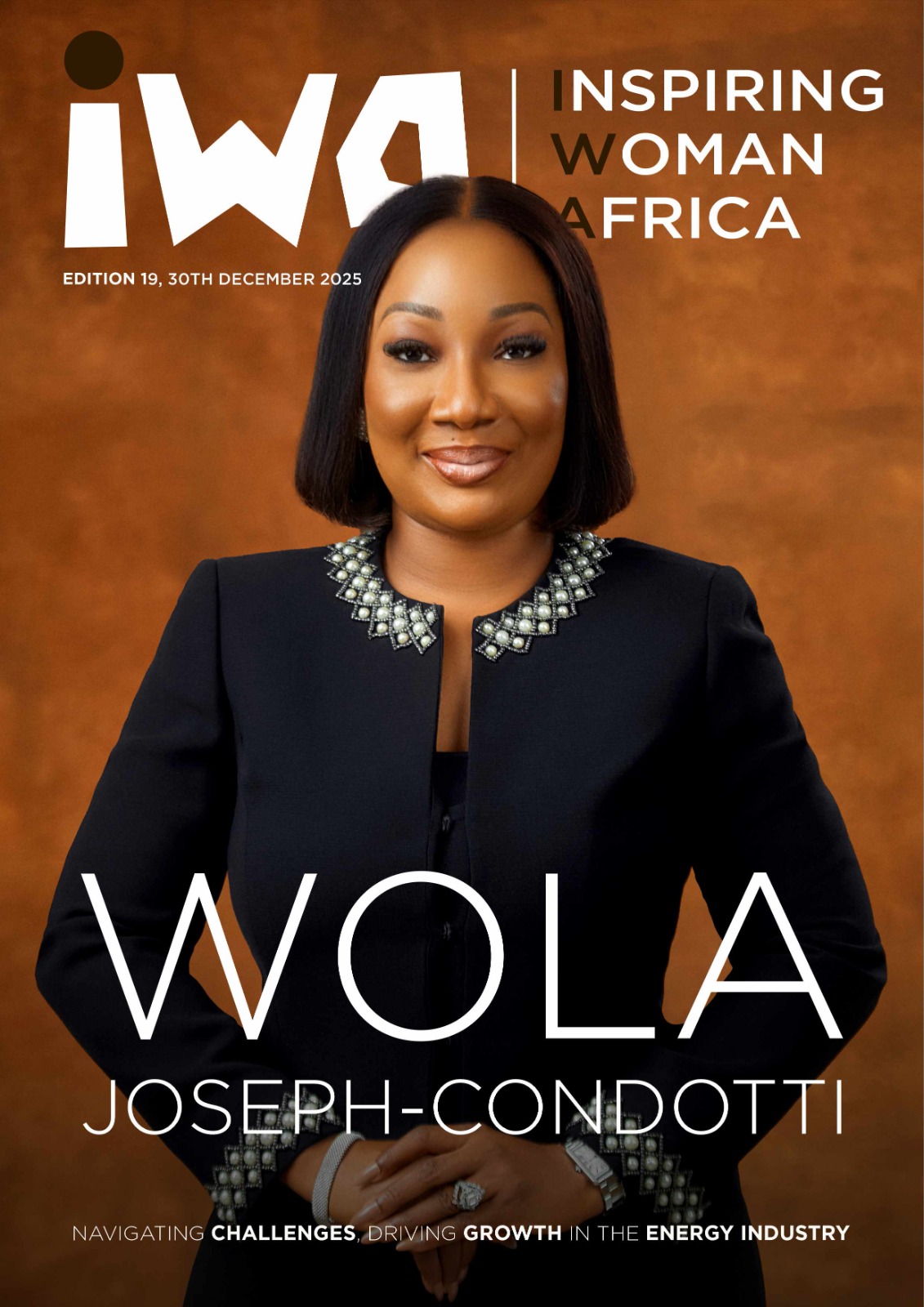
Wola Joseph-Condotti is the Group MD/CEO of West Power & Gas Limited, the parent company of Eko Electricity Distribution PLC (EKEDP) and six other affiliate companies with interests in both conventional and renewable energy sectors.
Prior to her current role, Wola was the pioneer Chief, Legal & Company Secretariat at EKEDP. During her tenure, she also held multiple key positions simultaneously including Head of Regulatory Compliance, Chief Human Resources and Administration Officer, Supervising Chief of the Customer Service Department, and Data Protection Officer. Her previous experience includes roles as General Counsel/Company Secretariat Lagoon Home Savings and Loans, and Legal Associate at Banwo & Ighodalo.
Wola holds a law degree from the University of Ibadan, an LLM in International Finance Law from Harvard Law School, and an MBA from INSEAD Business School. She is also an International Finance Corporation (World Bank) Board Evaluation Certified Professional and Corporate Governance Trainer and a Notary Public of the Federal Republic of Nigeria.
Wola’s achievements have earned widespread recognition. Most recently, she received the inaugural Leadership Excellence Award of the Year at the Legal Era Africa Awards 2024, becoming the first-ever recipient of this category. The award celebrated her historic transition from General Counsel to Group MD/CEO, a milestone applauded for redefining leadership pathways in the legal profession.
In addition, she was recognised among the Ascent Top 100 Career Women in Africa (2025), honored as the “INSEADer of the Month” in April 2024 by INSEAD Business School and named one of the top 100 most inspiring women in Africa by the Enterprising Women Awards Africa, 2024 amongst several others.
Wola serves on numerous boards, providing advisory and strategic guidance on corporate and business matters. She currently chairs the Board of JagaBeauty Limited and serves on the Governing Board of the Nigeria Wind Energy Council, the Electricity Law Reports (the first-ever electricity law report in Africa), the Advocacy Committee of the Lagos Chamber of Commerce & Industry, the Exponential Foundation Nigeria, Prime-Rose Nursery & Primary School, the Jimi Tewe Foundation, and Newswire Law & Events Magazine.
She is a founding member of the Women in Energy Nigeria, a member of the Institute of Directors and the Society for Corporate Governance Nigeria. Additionally, she is an associate member of the Institute of Chartered Secretaries and Administrators of Nigeria, and Women in Management, Business, and Public Service.
Transition from legal career to current position as Group MD/CEO
Leadership has always been the destination, but my journey toward it was shaped not by a single turning point, but by a series of intentional steps, pivotal encounters, and divinely ordered seasons. Each experience (academic, professional, and deeply personal) contributed to the leader I have become.
After completing my LL.M at Harvard Law School, I had a quiet but certain realisation: I should have pursued an MBA. I had always possessed a natural business instinct, and it became increasingly clear that my interests extended beyond interpreting the law to understanding how organisations grow, transform, and ultimately impact society.
My older brother, a finance professional with an extraordinary grasp of strategy and governance, played an unexpected role in this awakening. Watching him approach problems with a strategic lens helped me recognise my own appetite for structure, business, and leadership.
This inner prompting eventually led me to INSEAD for my MBA. I vividly remember scoring one of the highest marks in a strategy exam, a moment that affirmed not just my capability, but my calling. Strategy, organisational architecture, and business transformation came naturally to me, and I realised these were essential tools for the kind of leadership I envisioned.
Professionally, I had the privilege of working under transformational leaders like Engr. Oladele Amoda and Engr. Adeoye Fadeyibi, both former MD/CEOs of Eko Disco. They exposed me to the operational realities of running a utility company and broadened my understanding of what true executive leadership entails.
A defining moment came during a conversation with Mr. Alex Okoh, then Director-General of the Bureau of Public Enterprises. After scanning my CV, he looked up and said, “This reads like a managerial profile, but it should start to read like a CEO’s.”
That statement was both a challenge and a validation, call to rise into the fullness of the leader I was becoming.
Through every step, one truth has remained consistent: every opportunity found me prepared. I am, in many ways, a manifestation of the biblical principle, “As a man thinketh in his heart, so is he.” The journey has not been without its valleys. I have experienced my share of “miry clay” moments. Seasons that tested my identity and resolve. But those moments refined me, deepened my faith, and strengthened my capacity to lead with clarity, empathy, and resilience.
Today, as Group MD/CEO of West Power and Gas Limited, I carry not only the strategic and technical competence I have gathered over the years, but the lived experience of someone intentionally shaped for leadership by discipline, by destiny, and ultimately, by God.
Legal background shaping your leadership style and approach to management
My legal background has been foundational to my leadership style and overall approach to management, but not in a narrow or technical sense. It shaped the way I think, decide, and lead across complex organisations.
First, my legal training instilled in me a strong discipline of structured thinking and risk awareness. From my early years at Banwo & Ighodalo, I learnt to analyse issues holistically, anticipate second and third-order consequences, and make decisions grounded in evidence and sound judgement. As a leader, this translates into being deliberate, measured, and forward-looking, particularly when navigating regulatory complexity, stakeholder interests, and long-term institutional risk.
Second, my progression from private practice into in-house and executive roles broadened my perspective beyond legal correctness to commercial and operational practicality. At EKEDC, whilst serving as Chief Legal Officer and Company Secretary, I concurrently led Regulatory Affairs, Compliance, HR, Customer Service, Data Protection, and several Districts within the Commercial Directorate at various times. That experience taught me that effective leadership is not about enforcing rules in isolation, but about enabling the business to achieve its objectives responsibly and sustainably.
Third, legal practice sharpened my governance and accountability lens. Serving as Company Secretary and Chief Legal Officer across different stages of Organisational growth embedded a deep respect for transparency, process, and ethical leadership. This has influenced my management style to be values-driven, with clear decision rights, well-defined escalation paths, and an emphasis on institutional resilience rather than personality-led leadership.
Finally, my legal background strengthened my communication and people-management approach. Law trains you to listen carefully, articulate clearly, and manage divergent interests, skills that are critical when leading large, diverse teams and engaging regulators, boards, customers, and employees. Over time, especially following my executive education at INSEAD, I have complemented this with a more empathetic and human-centered leadership style.
In summary, my legal foundation gave me the analytical rigour, governance mindset, and ethical compass that underpin my leadership, while my subsequent operational and strategic experiences shaped those attributes into a balanced, inclusive, and execution-oriented management approach.
Challenging experience from career that significantly impacted your professional growth
A defining challenge in my career came in 2023, when a deliberate attempt was made to undermine my reputation and derail my professional journey. It was an intensely painful season, not merely because of the challenge itself, but because it stood against my integrity and years of diligent work. In hindsight, that period became a turning point. It became a catalyst for growth, elevation, and clarity of purpose. It strengthened my faith, deepened my resilience, and ultimately shifted my career into a new dimension. That experience taught me that adversity, when met with discipline and faith, can become a powerful instrument for transformation. Today, I stand not as a victim of that moment but as a living testimony of Romans 8:28, all things truly work together for good.

Most rewarding aspect of your role at West Power & Gas Limited
The most rewarding aspect of my role at West Power & Gas Limited is the depth of exposure to corporate governance within a highly complex, regulated, and systemically important sector.
The power sector sits at the intersection of public policy, private capital, regulation, and social impact. Leading a group with multiple subsidiaries across this ecosystem requires constant engagement with governance structures that are both robust and adaptive. I find it deeply fulfilling to help design and steward frameworks that balance regulatory compliance, commercial sustainability, stakeholder accountability, and long-term value creation.
At the group level, this involves working closely with boards, regulators, lenders, and investors to ensure that governance is not treated as a box-ticking exercise, but as a strategic enabler. Whether it is aligning subsidiary boards with group strategy, strengthening risk oversight, or embedding ethical decision-making across operations, the challenge lies in translating governance principles into practical, day-to-day leadership behaviors in a fast-moving environment.
What makes this especially rewarding is the opportunity to institutionalise good governance in a sector where decisions have real economic and social consequences. Sound governance directly impacts service delivery, investor confidence, regulatory trust, and organisational resilience. Being able to shape those outcomes, while building enduring institutions rather than personality-driven organisations, is both intellectually engaging and personally fulfilling.
Key attributes of effective leadership, particularly in the energy sector
Effective leadership, particularly in the energy sector, requires a careful balance between empowerment and accountability, given the sector’s operational complexity, regulatory intensity, and broad stakeholder impact.
First, team empowerment is essential. The energy sector is too technically diverse and geographically dispersed for leadership to be overly centralised. Effective leaders must build capable teams, delegate authority with clarity, and create an environment where professionals are trusted to exercise judgment within defined parameters. Empowerment, however, is not abdication. It involves equipping teams with the right skills, data, and decision frameworks, and encouraging ownership at all levels of the organisations. When people feel trusted and supported, they are more likely to innovate, respond quickly to operational challenges, and take responsibility for outcomes rather than simply follow instructions.
Equally critical is accountability. In a sector where decisions affect system reliability, safety, financial sustainability, and regulatory compliance, clear accountability structures are non-negotiable. Effective leaders establish unambiguous roles, measurable performance expectations, and consequences that are applied consistently. Accountability creates discipline, reinforces ethical behaviour, and ensures that empowerment translates into results rather than diffusion of responsibility.
The most effective leadership approach integrates both attributes. Teams are empowered to act, but within a framework where responsibilities are clearly defined, performance is transparently measured, and outcomes, positive or negative, are owned. In my experience, this balance fosters high-performance cultures that are resilient, execution-focused, and aligned with long-term Organisational objectives.
The role of women evolving in leadership positions within traditionally male-dominated industries
The role of women in leadership within traditionally male-dominated industries is evolving in a substantive and increasingly visible way, driven by competence, performance, and institutional maturity rather than symbolism.
In the power sector, this shift is already evident. Once viewed as overly technical and operationally intense, the industry is now recognising that effective leadership requires a broader mix of capabilities across regulation, governance, customer engagement, and transformation. As a result, leadership pipelines are becoming more inclusive.
This progress is reflected in women leading and governing some of the sector’s most critical institutions. The appointment of Folake Soetan as Chief Executive Officer of Ikeja Electric, alongside her role as a Non-Executive Director of the Nigerian Independent System Operator, and the leadership of Rekhiat Momoh as Chief Executive Officer of Eko Electricity Distribution Company, demonstrate growing confidence in women to run large, complex utilities. In addition, Jennifer Adighije’s role as Managing Director and Chief Executive Officer of Niger Delta Power Holding Company speaks to the expanding influence of women at the highest levels of sector governance and system leadership. At the policy level, the appointment of Olu Verheijen as Special Adviser to the President on Energy further speaks to the growing presence of women shaping Nigeria’s energy future, advising President Bola Tinubu on repositioning the sector for sustainability and long-term growth.
Collectively, these developments are reshaping leadership norms, strengthening governance, and normalising female representation across both operational and oversight roles. The energy sector’s experience shows that when opportunities are equitable, women do not merely participate in leadership, they excel, and the institutions they lead are stronger for it.
Specific initiative you implemented that had a significant positive impact on your company or community
One initiative that stands out for its depth and lasting impact is the work I led in strengthening both institutional capability within our Group and the broader policy environment across the electricity value chain. It was a multidimensional effort that combined operational execution with sector-wide reform.
At the corporate level, during my tenure as Group MD/CEO of West Power & Gas Limited, we secured an Electricity Trading Licence for one of our subsidiaries, a milestone that positioned us strategically within the Nigerian Electricity Supply Industry and expanded our ability to participate in regulated power-trading arrangements. In addition, we launched and operationalised a new subsidiary within the NESI distribution value chain, which rapidly emerged as a high-performing collection partner. Today, it supports approximately 5,000 active users and has facilitated transactions valued at about ₦3.5 billion, enhancing efficiency and strengthening revenue assurance across key districts.
Beyond organisational initiatives, I have also been deeply involved in shaping the policy frameworks that govern Nigeria’s evolving power landscape. I was nominated by the Nigerian Electricity Regulatory Commission to serve on the Legal and Regulatory Working Group responsible for developing implementation regulations under the Electricity Act. Before that, I led the legal team of a distribution company during the Act’s legislative process, advocating for strong provisions on energy transition, renewable energy, and decentralised electricity markets that are now reflected in the law.
I also contributed to subnational reform. I supported energy-transition policy discussions in Lagos State and worked with institutions in Akwa Ibom State to develop the state’s emerging electricity market framework, laying the foundation for a more decentralised, sustainable, and future-ready power ecosystem.
On the community side, philanthropy is an intrinsic part of who I am. I am a philanthropist to the core, and while I support numerous initiatives that transform lives, I hold a personal principle of not publicising most of them. My main ministry, however, is education for brilliant children from poverty-stricken homes who cannot afford school fees, as well as projects that improve the learning environment in public schools. These efforts speak to my belief that education is one of the most powerful equalisers and a direct pathway to generational transformation.
My passion for education is deeply personal. My mother is an educationist, and after losing my father at a very young age, it was education that became the bridge that carried my siblings and me into opportunity, stability, and purpose. I witnessed firsthand how learning can alter the trajectory of an entire family. That experience cemented my conviction that education is one of the most powerful equalisers and remains the clearest pathway to generational transformation.
One initiative I can speak openly about is my work with the Justice Aderemi Annual Lecture Series (JAALS) Foundation, where I serve as Matron. Through JAALS, we mentor young lawyers, support their early career journeys, and host an annual essay competition in my name with cash prizes for the top three finalists. This initiative promotes excellence, critical thinking, and ethical leadership in the next generation.
Together, these efforts (institutional, regulatory, and philanthropic) reflect a philosophy I hold deeply: real transformation happens when we build strong systems, enable good policy, and invest intentionally in people.
Balancing your various roles on numerous boards while leading a major organisation
Balancing multiple board and advisory roles alongside leading a major organisation requires intentional structure, clarity of purpose, and strong discipline around time and decision-making.
First, I am highly selective about the boards and advisory roles I accept. Each role must align with my professional values, sector expertise, and the broader impact I seek to make. This alignment ensures that my contributions are meaningful rather than symbolic and that insights gained in one role often reinforce value creation in another.
Second, I operate with a clear distinction between governance, advisory oversight, and executive management. As a Group CEO, my primary responsibility is leadership and performance delivery within the organisation. My board roles are therefore approached from a governance and strategic-oversight perspective, not an operational one. Clear boundaries, well-defined mandates, and strong secretariat support are critical to maintaining this balance.
Third, effective delegation and empowered management teams are essential. Leading a complex group structure would be impossible without capable executives who own day-to-day execution. This allows me to focus on strategic direction, governance, and stakeholder engagement, while ensuring continuity and accountability across the organisation.
Finally, discipline and structure underpin everything. I maintain a rigorous approach to planning, prioritisation, and preparation for board engagements. I ensure that my participation is focused, value-adding, and efficient, whether in boardrooms, advisory settings, or executive forums.

Biggest challenges facing the energy sector today, especially in Nigeria
Nigeria’s energy sector continues to face a set of structural challenges that cut across the entire value chain and constrain power reliability, investor confidence, and long-term sustainability.
A key challenge is infrastructure fragility and insecurity, particularly across gas supply, transmission, and distribution networks. Repeated incidents of gas pipeline vandalisation expose the system’s vulnerability, with disruptions at the gas level quickly translating into reduced generation capacity, transmission wheeling constraints, and widespread outages. These risks are amplified by ageing transmission and distribution infrastructure, which limits the ability to evacuate and deliver power even when generation is available.
Closely linked is the heavy dependence on gas-fired generation, making the sector highly sensitive to gas supply constraints. Inconsistent gas availability creates cascading effects across generation, transmission, and end-user supply, reinforcing the cycle of unreliability.
Another major constraint is the absence of fully cost-reflective tariffs. While affordability remains an important consideration, tariffs that do not reflect the true cost of supply weaken operators’ ability to recover costs, reinvest in infrastructure, and attract long-term capital. This undermines investor confidence and slows the flow of financing into critical power infrastructure. A more sustainable approach requires targeted subsidies that protect vulnerable customers while preserving sector viability.
Metering gaps also remain a critical issue. As at 30 June 2025 (latest NERC quarterly report), only 6.42 million of 11.82 million active customers were metered, representing an industry-wide metering rate of about 54%. The continued reliance on estimated billing undermines transparency, weakens collection efficiency, and constrains liquidity across the value chain, making broader reforms around tariffs, investment, and service reliability more difficult to implement.
That said, there has been meaningful progress through government and development-partner interventions. Programmes such as the MAP Scheme, NMMP, and MAF (Tranches A and B) have accelerated meter deployment. The World Bank–funded DISReP IPF component, targeting the rollout of approximately 3.2 million smart meters, and the Presidential Metering Initiative, backed by about ₦700 billion from FAAC to deploy 1.1 million meters by end-2025 and two million meters annually thereafter, are expected to significantly reduce estimated billing. In parallel, Nigeria’s participation in Mission 300 supports infrastructure upgrades and interconnected mini-grids aimed at improving supply reliability and enabling accurate metering for up to 150 million Nigerians.
The future of renewable energy impacting traditional energy companies
The future of renewable energy will significantly shape traditional energy companies in Nigeria, with the transition being clearly guided by the Electricity Act 2023.
The NERC regulation on tariffs mandates that 10% of energy procurement must come from embedded generation, with at least 50% of that sourced from renewable energy. This firmly positions renewables as a core component of the power market rather than a peripheral option. For traditional energy companies, this requires a strategic shift toward portfolio diversification and greater system resilience.
Crucially, the Act empowers States to drive this transition. Lagos State is already leading implementation through the Lagos State Ministry of Energy & Mineral Resources and the Clean Lagos Electricity Market, with recent calls for bids and expressions of interest covering grid-scale solar and wind, gas-fired power hubs, and off-grid solutions for public infrastructure.
Overall, the trajectory points to convergence rather than displacement. Traditional energy companies that align with the Electricity Act 2023 and actively participate in state-led renewable and embedded generation initiatives will be better positioned for long-term relevance and sustainability in Nigeria’s evolving energy landscape.
Most promising trends in corporate governance and compliance within the energy industry
In October 2025, I had the opportunity to serve on a panel discussion organised by the Institute of Chartered Secretaries of Nigeria, where we examined emerging trends in corporate governance and compliance within the energy sector. One of the most significant developments we discussed was the shift toward sector-specific governance frameworks, particularly in the Nigerian electricity industry.
While the Financial Reporting Council’s 2018 National Code of Corporate Governance provides a strong, principles-based foundation across all sectors, the issuance of a dedicated NESI Code of Corporate Governance by Nigerian Electricity Regulatory Commission in May 2025 reflects a maturing understanding that the power sector has unique governance risks. Electricity is both critical national infrastructure and, in parts, a natural monopoly operating under regulated revenue frameworks rather than pure market pricing. Failures in governance here have immediate social, economic, and political consequences, far more visible and destabilizing than in many other sectors.
A second promising trend is the elevation of the regulator’s role from purely technical oversight to active governance enforcement, enabled by the Electricity Act. By linking board accountability, transparency, and disclosure directly to operational performance, the NESI Code moves governance from a theoretical ideal to a measurable performance driver.
Importantly, this does not signal regulation for its own sake. Rather, it creates the foundation for a more performance-driven partnership between regulators and licensees. Strong governance is rewarded with regulatory confidence, while weak governance attracts closer scrutiny as an early intervention tool. In my view, this shift, from generic compliance to sector-tailored, outcome-focused governance, is one of the most promising trends shaping the future of corporate governance in the energy industry.
Prioritising sustainability and how West Power & Gas Limited is aligning
Sustainability is no longer optional for companies in the energy sector; it is central to long-term reliability, financial viability, and social license to operate. In a sector where infrastructure decisions have multi-decade implications, sustainability directly influences cost efficiency, regulatory alignment, investor confidence, and public trust.
At West Power & Gas Limited, sustainability is embedded in our operating philosophy rather than treated as a standalone initiative. A key focus is embedded and distributed generation, which we see as critical to building a more resilient energy mix, reducing over-dependence on centralised generation, and improving supply reliability for end users.
This approach is already being demonstrated in practice through initiatives such as VI Power’s collaboration with Eko Electricity Distribution Company on a 30MW embedded gas-fired power plant in Victoria Island, Lagos. Under this model, VI Power manages generation, targeted distribution network upgrades, and billing for commercial customers, while complementing EKEDC’s service delivery in the area.
Projects of this nature illustrate how embedded generation can enhance reliability, improve customer experience, and support the financial and operational sustainability of distribution networks.
In addition, we continue to invest in grid modernisation and smart metering, which support transparency, accurate billing, and improved customer experience while strengthening the commercial sustainability of the network. Equally important is community engagement and social inclusion. By working closely with host communities and stakeholders, we address issues such as asset protection, customer trust, and shared responsibility for infrastructure sustainability.
Inspiration to pursue advanced degrees in law and business, and how they contributed to your success
My decision to pursue advanced degrees in both law and business was driven by a deliberate desire to broaden my perspective and prepare myself for leadership beyond technical expertise.
My time at Harvard Law School was an opportunity to expand my global and cultural understanding of the legal profession. The experience deepened my appreciation of how law intersects with policy, economics, and institutional leadership, and it was during this period that I became more intentional about pursuing leadership roles. I realised that to lead effectively, particularly in a sector as complex as energy, I needed more than legal training; I needed a stronger foundation in management, governance, and finance.
INSEAD became the natural next step in that journey. The MBA provided the strategic and business frameworks that complemented my legal education and equipped me with the tools to think holistically, make informed decisions, and lead at an enterprise level.
Together, these academic experiences shaped me into a more rounded and balanced leader, combining legal rigor with strategic and commercial insight, and prepared me to operate confidently in complex, high-impact environments.

Mentors or role models throughout your career and lessons learnt from them
My husband, Hakeem Condotti, has been my foremost influence. Beyond being my life partner, he embodies wisdom and calm under pressure. His ability to remain steady in the midst of storms has shaped how I lead, decide, and respond to challenges. His mentorship, spiritually, intellectually, and professionally, has strengthened my discipline and sharpened my vision, serving as a constant compass through pivotal seasons.
One of my earliest influences has been my brother, Kolapo Joseph, a finance professional with a strong strategic mindset. From him, I learnt that disciplined hard work makes anything achievable. His seamless engagement with both legal and commercial thinking sparked my interest in the business side of leadership and continues to make him a trusted sounding board.
Professionally, I owe much to Adeoye Fadeyibi, who expanded my exposure beyond legal advisory into the operational realities of managing a utility. My cousin, Eyo Ekpo, reinforced the value of hard work and principled thinking, offering clear, timely counsel at critical decision points.
I have also learnt deeply from Tein George, whose example underscores the importance of integrity, being fair and doing right by everyone, regardless of the circumstance.
Together, these mentors have reinforced a core lesson for me: success is never purely technical. It is built on integrity, hard work, calm leadership under pressure, and the relationships that challenge, guide, and sustain you.
Advice to young women aspiring to reach top leadership positions like you
I would say this: do not rush the process. Be intentional about your growth, because every season of your journey matters. The roles that seem small, the work that feels unseen, and the people who stretch you are all part of your preparation for something greater.
Master your craft, but do not stop there. Learn how to lead, how to collaborate, and how to think critically. Leadership is not only about technical excellence; it is about building people, systems, and institutions that outlast you.
Stay curious and stay grounded. Anchor yourself in values that do not shift with trends or titles, because integrity and character are what sustain leadership over time. The world needs leaders who combine conviction with compassion.
Finally, do not aim only for success, aim for significance. Let your life and work create impact. Let your excellence open doors not just for you, but for those coming behind you, especially other women who are watching and drawing courage from your example.
Recharging and maintaining a healthy work-life balance
I am very intentional about how I recharge and maintain balance. My home is my sanctuary, and spending quality time with my husband and children grounds me deeply. I also draw strength from time spent with my close inner circle, whose support and perspective help keep me centered.
Beyond that, I prioritise rest, worship, and quiet reflection. These moments allow me to reset spiritually and mentally, ensuring that I lead from a place of clarity rather than exhaustion. I have also learnt the discipline of stopping when it is time to stop. For me, balance is not a weakness, it is wisdom, and it is essential for sustainable leadership.
Day never to forget and why?
Profoundly for me, my wedding day to the love of my life, Hakeem Condotti and the birth of my children. Both marked pristine and remarkable moments that ushered me into entirely new beginnings, marriage and motherhood. They redefined my sense of purpose, responsibility, and love, and remain anchors in my personal journey.
Inspiring Woman Africa (IWA) Series 14 experience
This is my 3rd IWA conference and my mind is blown away each year. IWA14 was a deeply powerful and affirming experience, one of those rare moments where purpose, presence, and impact genuinely converged in the room.
The 14th Annual Inspiring Woman Africa Conference was more than an event; it was a reminder of the strength of collective vision and intentional leadership. Curated with excellence by Kemi Ajumobi, the platform continues to stand out as a defining voice for women’s leadership, resilience, and influence across Africa. Year after year, IWA creates space not just for inspiration, but for meaningful dialogue that shapes industries, policy, and society.
IWA14 was also a moment of affirmation. The brilliance of Nigerian women was on full display, audacity, intelligence, creativity, and excellence. The energy in the room was unmistakable and deeply moving, reinforcing a powerful truth: women are not future leaders; we are present leaders, actively shaping institutions, industries, and nations today.
Above all, IWA14 reaffirmed why this platform remains critical. Fourteen years of consistent impact is no small achievement, and the experience underscored the importance of sustaining spaces where women are empowered, voices are amplified, and leadership is shaped with intention.
What are you grateful for in 2025 and what are your plans for 2026?
In 2025, I am deeply grateful for God’s mercy, the growth of my family, remarkable career advancements, and the continued opportunities to serve, both professionally and in God’s vineyard. It has been a year marked by grace, alignment, and meaningful progress.
Looking ahead to 2026, my focus is firmly on impact. I plan to expand mentorship, deepen sustainability initiatives, and consolidate governance reforms across the Group. Above all, I am committed to showing up fully and faithfully in every space God opens.
Concluding words
I am a product of grace, discipline, and divine alignment.
If my journey offers any lesson, it is that God writes far better scripts than we could ever imagine.
My prayer is that every woman who reads this finds the courage to rise, the clarity to lead, and the faith to become all she was created to be.