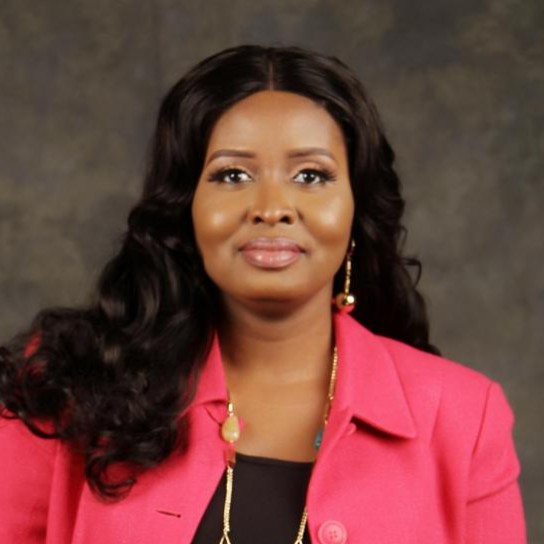
 Dr. Asmau Benzies Leo
On the 5th of February 2026, Nigeria reaffirmed its commitment to inclusive growth with the official launch of the Nigeria for Women Project Scale-Up (NFWP-SU), a flagship, World Bank assisted programme designed to deepen women’s economic empowerment and social inclusion nationwide. The launch, held at the State House Conference Hall in Abuja, which marked a transition from a successful pilot phase to a broader national effort capable of reaching millions of women across states and communities.
The scale-up builds on the achievements of the initial pilot project, the Nigeria for Women Project, which was implemented in selected pilot states. The first phase adopted a community driven model centred on Women Affinity Groups (WAGs), which is a self-organised collective that enabled women to save together through a village savings and loans association (VSLA), access internal loans, receive financial literacy and life skills training, and engage in livelihood activities.
Evidence from the pilot phase, NFWP had shown measurable improvements in women’s income stability, access to basic financial services, entrepreneurial confidence, and household decision making. Importantly, the project demonstrated that economic empowerment is most sustainable when women build social capital alongside financial assets.
The newly launched scale-up phase significantly expands this vision. With support from the World Bank through the Federal Government of Nigeria, aims to strengthen the institutional delivery, leverage digital solutions, and bring additional interested states into a unified national framework.
One of the key innovations introduced into the project at this stage is a technology-enabled platform designed to connect these women to training opportunities, access to markets, financial services, and government support programmes. By reducing information and access gaps, the scale-up seeks to ensure that women in rural, peri-urban, and underserved areas are not left behind.
At the launch, the President of the Federal Republic of Nigeria, underscored that women’s economic empowerment is not a peripheral social issue but a strategic pillar of national development. He noted that empowering women contributes directly to poverty reduction, food security, social stability, and economic productivity. Framed within Nigeria’s broader reform and development agenda, the Nigeria for Women Project Scale-Up was presented as an investment in human capital with long term national returns.
A driving force behind the project’s consolidation and expansion is H.E Imaan Sulaiman‑Ibrahim, the Honorable Minister of Women Affairs. Since assuming office, the Minister has prioritised women’s economic empowerment as a core policy objective, working to strengthen coordination between federal and state governments and deepen partnerships with development actors. Her leadership has focused on ensuring that the scale-up is not merely larger in size but stronger in quality, integrating social safeguards, gender-based violence prevention, and inclusion measures to protect women as they engage more actively in economic life. By aligning the project with Nigeria’s national gender and development priorities, the Ministry has positioned it as a long-term institutional programme rather than a one-off intervention.
The scale-up also opens new opportunities for additional states to join the initiative. State governments are being encouraged to align their development plans with the project framework, establish functional implementation structures, and invest in women-centred economic initiatives. As more states come on board, the programme is expected to create a nationwide ecosystem that supports women-led enterprises, cooperatives, and value chain participation.
For Nigerian women, the practical benefits are significant. Participation in Women Affinity Groups offers a structured pathway to savings, credit, skills acquisition, and collective enterprise development. Through group based businesses ranging from agriculture and agro processing to trade, services, and small manufacturing, women can move beyond subsistence activities, expand market access, and create employment within their communities. The digital platform further enhances access to information, mentorship, and public services, enabling women to make informed economic decisions.
The Nigeria for Women Project Scale-Up represents a shift from pilot success to systemic impact by consolidating lessons from the first phase and expanding them nationwide. The programme has the potential to reposition women as central actors in Nigeria’s economic transformation. If sustained with strong political will, adequate financing, and effective state level implementation, it can serve as a powerful catalyst for inclusive growth, affirming that empowering Nigerian women is essential to building a resilient, a more peaceful and prosperous nation.
Dr. Asmau Benzies Leo is a development practitioner with extensive national and international expertise in gender equality, peace-building, governance, and humanitarian action. She holds a PhD in Public Governance and Leadership, a Master’s degree in Conflict Management and Peace Studies, and executive certifications from leading institutions including Howard University, Harvard University and Glasgow Caledonian University. As Executive Director of the Centre for Non-violence and Gender Advocacy in Nigeria (CENGAIN), she has led ground-breaking advocacy initiatives on women’s political participation, gender-based violence prevention, and security sector reform across multiple World Bank, UN and EU-supported projects.
Latest Edition of IWA Magazine
September 8, 2026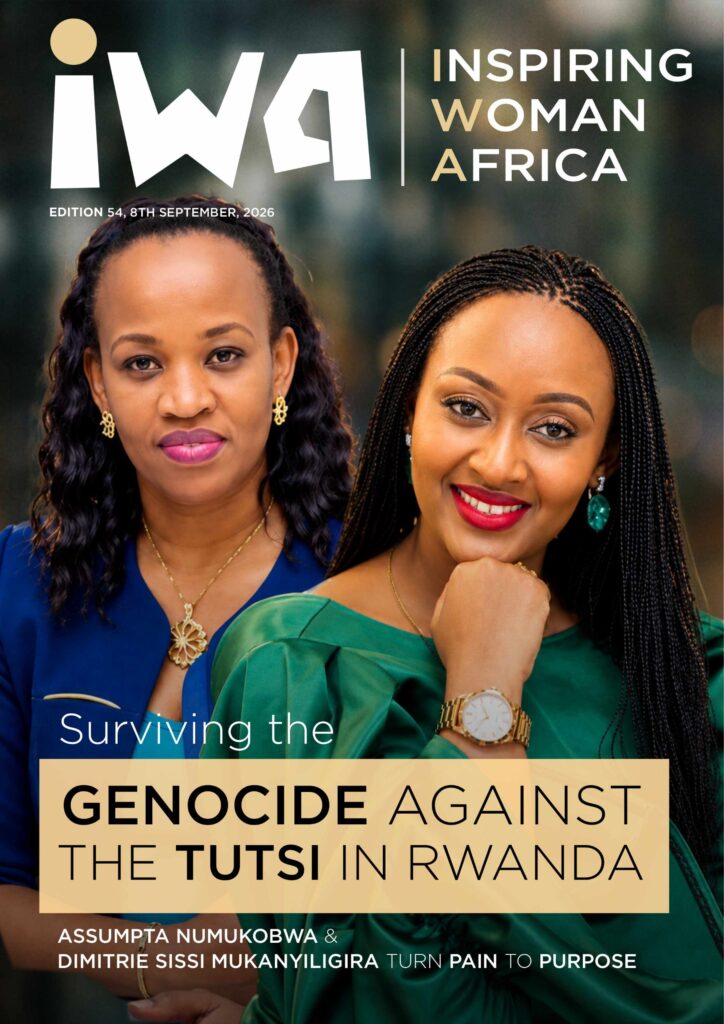
Surviving the Genocide Against the Tutsi in Rwanda: ASSUMPTA NUMUKOBWA and DIMITRIE SISSI MUKANYILIGIRA Turned Pain to Purpose
Latest Posts
-
 Sep 8, 2026 You Cannot Lead From a Broken Vessel