 Wola Joseph-Condotti
There is a layer of leadership that is rarely documented. It does not show up in quarterly reports. It is not tracked in performance dashboards. And yet, it is often the glue that holds organisations together.
It is the invisible labour of leadership. And for many women executives, it is a quiet, constant assignment carried with grace, but often without recognition.
The Work Behind the Work
Beyond strategy, operations, and execution, many women leaders are doing another kind of work:
- We are mentoring the struggling team member who does not feel confident enough to ask for help.
- We are mediating tensions before they escalate into conflict.
- We are absorbing emotions in meetings, reading the room, softening difficult conversations.
- We are encouraging, often when we ourselves are running on empty.
We remember birthdays. We notice disengagement. We check in when someone is unusually quiet.
This is not written in our job descriptions. But it is expected. And over time, it becomes normalised.
The Silent Cost
The challenge is not that we care. The challenge is that this care often goes unacknowledged and unstructured. Emotional labor, when left unmanaged, becomes a slow drain.
You leave meetings not just mentally tired, but emotionally depleted.
You carry conversations long after they have ended. You become the safe space for everyone without having one for yourself.
And because this work is invisible, it is rarely compensated, rarely measured, and rarely shared.
So we continue.
Until one day, we realise we are leading from exhaustion, not from overflow.
Why It Matters
Let us be clear: this invisible labour is not trivial.
It builds trust. It sustains culture. It improves team cohesion. It often determines whether a team thrives or fractures. In many ways, it is the human infrastructure of leadership.
But like all infrastructure, it must be maintained or it will collapse under pressure.
Leading with Empathy—Without Losing Yourself
The goal is not to become less empathetic. It is to become more intentional.
We must begin to distinguish between empathy as leadership strength and emotional overextension as a leadership risk.
Here are a few truths I have learned:
1. You are not the solution to every emotional need.
You can support, guide, and listen but you are not called to carry every burden.
2. Boundaries protect your leadership.
Saying, “Let us escalate this appropriately,” or “Let us revisit this in a structured setting,” is not cold, it is wise.
3. You need safe spaces too.
Every leader needs a circle where they can exhale. Mentors. Peers. Friends. Spaces where you are not the strong one.
4. Structure emotional labour where possible.
Mentorship programmes, HR support systems, and clear reporting lines help ensure that emotional leadership is shared and not silently assigned to one person.
A Biblical Reflection
Even Jesus (who embodied perfect compassion) did not carry every burden alone.
He healed. He listened. He wept. But He also withdrew. He rested. He created space between Himself and the constant demands of the crowd.
There is wisdom in that rhythm.
Compassion without boundaries leads to depletion. Compassion with discernment leads to impact.
Final Thoughts
To every woman executive carrying more than her title requires:
I see you.
The conversations you hold. The tensions you diffuse. The encouragement you give when no one is watching. It matters.
But so do you.
You are not just a leader of people. You are a person who must be led, cared for, and restored.
So lead with heart. But guard your energy. Give generously. But not endlessly.
Because the goal is not just to build strong teams, It is to remain a whole leader while doing so.
And that is the kind of leadership that truly lasts.
Wola Joseph-Condotti is the CEO of Eko Electricity Distribution Company (EKEDC). She is a Harvard-trained lawyer and passionate advocate for faith-driven leadership, gender equity, and energy transition in Africa, she writes from the intersection of power, purpose, and personal growth.
The IWA Series 15 Conference is Here
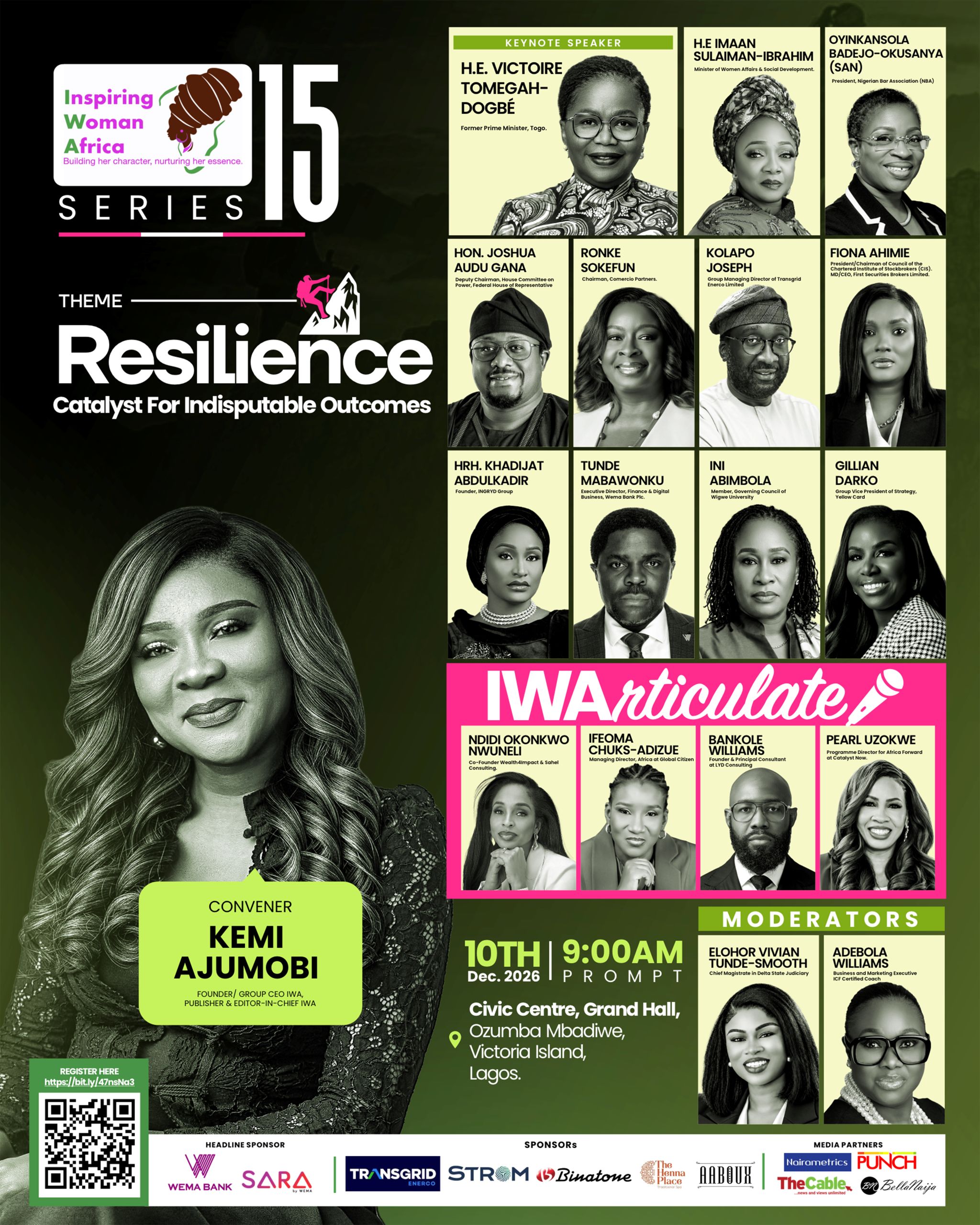
Click To Register
Latest Edition of IWA Magazine
October 27, 2026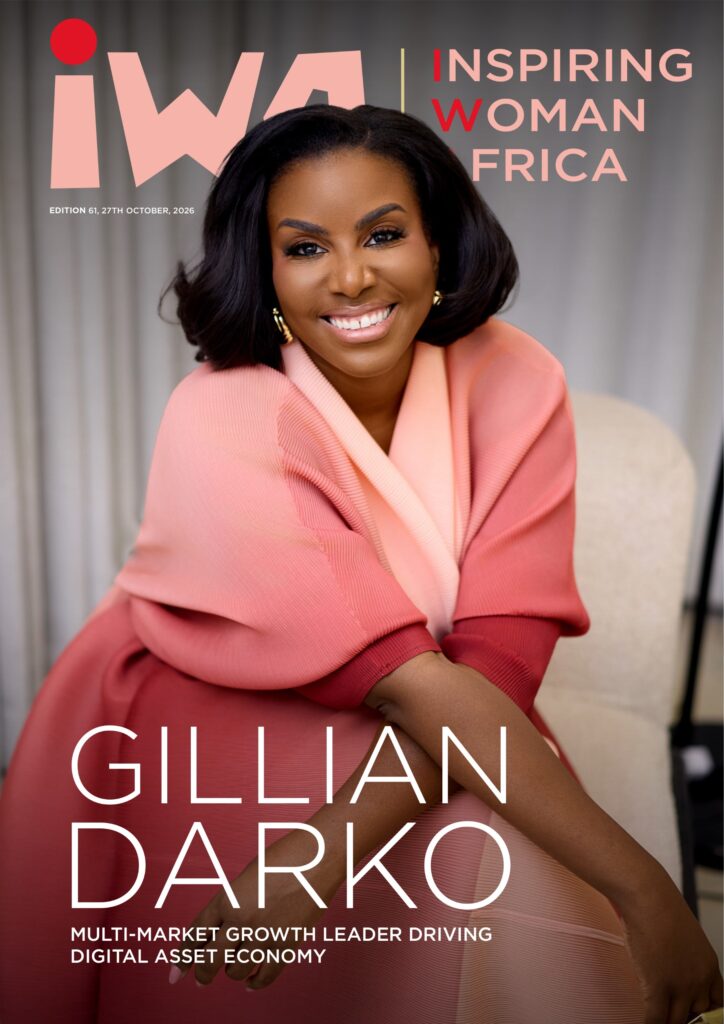
GILLIAN DARKO: Multi-market Growth Leader Driving Digital Asset Economy
Latest Posts
-
 Oct 27, 2026 Your Money Is Wasting. You Just Cannot See It.
 -
 Oct 27, 2026 THE PRIVILEGE OF BEING THE ONLY WOMAN IN THE ROOM
 -
 Oct 27, 2026 LUÍS FILIPE RODRIGUES LÉLIS