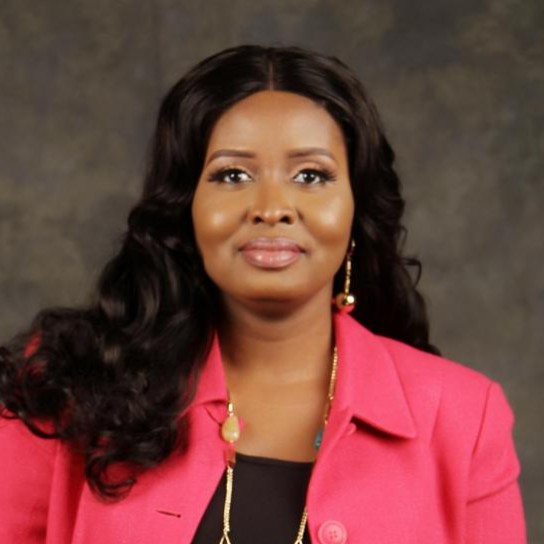
 Dr. Asmau Benzies Leo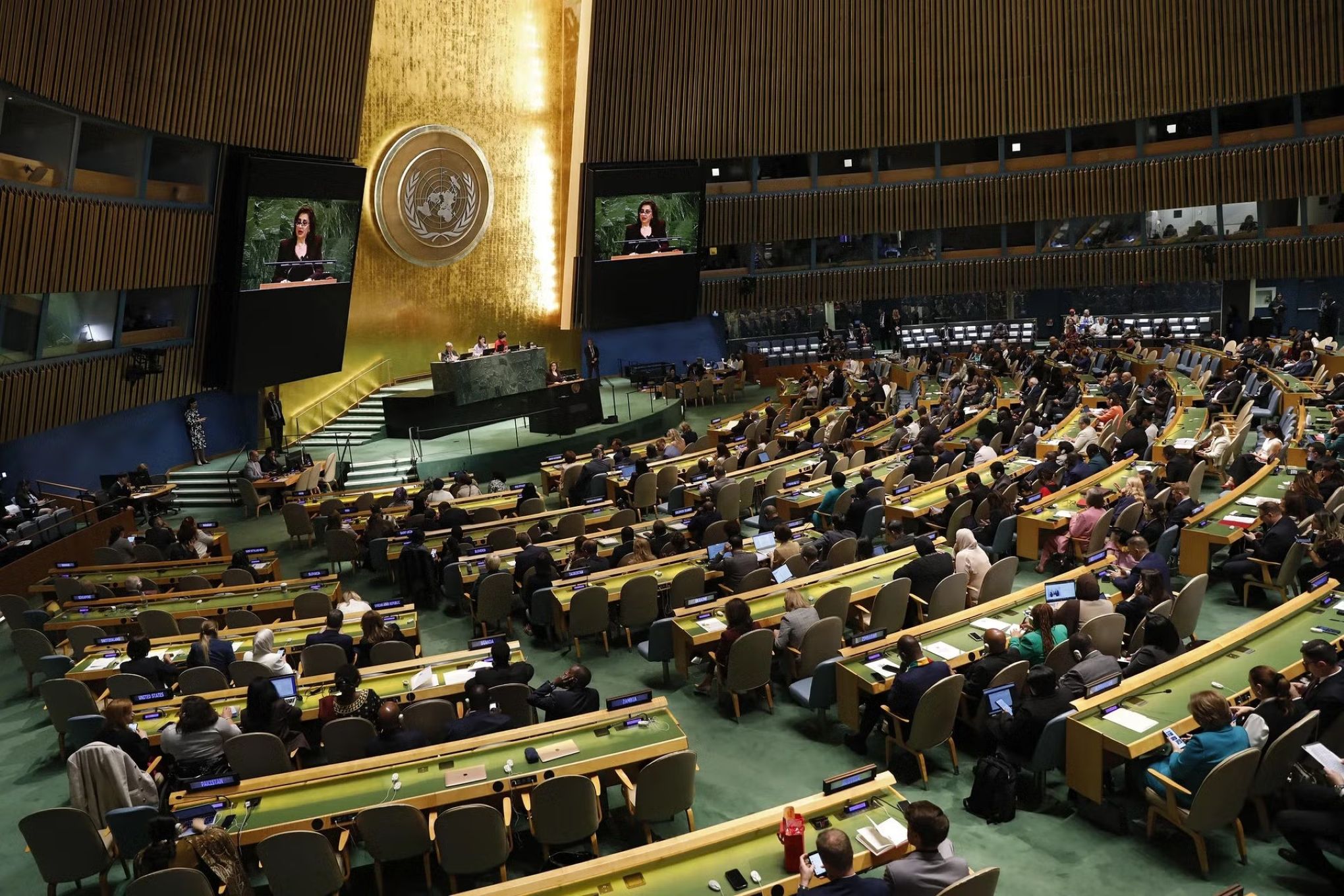
World leaders gathered in New York for the 81st session of the United Nations General Assembly(UNGA), the global conversation on women’s rights took place at a defining moment for multilateralism. The UNGA 81 which had its theme “Restoring Trust, Managing Transformation: A United Nations That Delivers for All” raises a fundamental question for women and girls, will global commitments to gender equality finally translate into power, protection, resources and participation?
The evidence confronting governments is stark. According to UN Women–UN DESA Gender Snapshot 2026, released during the opening of UNGA 81, reports that no single indicator under Sustainable Development Goal 5-Gender Equality is currently on track to be achieved by 2030. At current rates of progress, gender equality remains approximately 171 years away. The report also finds that 32 per cent of national gender equality mechanisms surveyed experienced an erosion of institutional power over the previous two years.
This is more than a statistical warning. It is a warning about political will.
The central issue: women and power
For decades, the international community has adopted conventions, resolutions, declarations and development goals affirming women’s equality. Yet the latest evidence suggests that the central problem is no longer simply the absence of commitments. It is the persistent exclusion of women from the institutions where decisions are made.
The 2026 Gender Snapshot reports that women remain substantially underrepresented in political, judicial and economic leadership. Only 31 of 175 Chief Justices globally are women, while women occupy only around six per cent of corporate chief executive positions globally. The report also notes that close to nine in ten defence ministers and more than eight in ten finance ministers are men.
The message for governments at UNGA 81 is therefore increasingly clear, gender equality cannot be achieved without addressing unequal access to power.
This is why women’s political participation, leadership and representation are central to the current UN agenda. The question is not simply how many women are present in parliament or government, but whether women have meaningful influence over budgets, laws, peace processes, economic policy, technology and national priorities.
From Beijing to the SDGs: the implementation gap
The international framework is already extensive. The Beijing Declaration and Platform for Action, the Convention on the Elimination of All Forms of Discrimination against Women, the Sustainable Development Goals, the Women, Peace and Security agenda and the Pact for the Future collectively establish a substantial architecture for women’s rights. Yet implementation remains uneven.
The Pact for the Future, adopted by Member States in 2024, places women’s full, equal and meaningful participation within the wider transformation of international cooperation. Its commitments connect gender equality with peace and security, sustainable development, technology, youth participation and reform of global governance.
UNGA 81 therefore provides an opportunity to move the conversation from what governments have promised to what governments are actually financing and implementing.
That means strengthening national gender institutions, protecting women’s rights organisations and civic space, investing in gender responsive public financing, improving gender data and ensuring that laws protecting women are implemented rather than merely enacted.
Women’s rights and access to justice:
The 2026 agenda also places justice at the heart of gender equality. The 70th session of the Commission on the Status of Women, held in March 2026, focused on women’s access to justice and the removal of legal and structural barriers. This is particularly important because discriminatory laws, weak institutions, inaccessible justice systems and social norms continue to prevent millions of women from exercising rights that formally exist on paper.
Justice must therefore be understood broadly: access to courts and legal remedies, protection from violence, property and inheritance rights, economic rights, political rights, digital rights and protection from discrimination. For women living in fragile and conflict-affected settings, access to justice is inseparable from peace and security.
Women, Peace and Security: from participation to influence
Twenty five years after the UN Security Council Resolution 1325, on Women, Peace and Security (WPS) agenda remains one of the most important frameworks for women’s participation in peacebuilding.
Yet women remain dramatically underrepresented in formal peace negotiations and decision making structures. UN Women continues to emphasise that women must not be seen only as victims or beneficiaries of humanitarian assistance. They are negotiators, mediators, community leaders, peacebuilders and political actors.
This matters particularly in an era of protracted conflicts, forced displacement, violent extremism, climate-related insecurity and humanitarian crises.
The question for governments is therefore whether WPS will remain primarily a policy commitment or become a properly financed political and security priority.
Women need seats at the table, but they also need the authority, resources and institutional support to influence what happens at that table.
The Secretary General’s transition: A test for the UN
Perhaps no issue symbolises the gender question within the multilateral system more clearly than the ongoing selection of the tenth UN Secretary General.
The UN Sec. Gen. António Guterres’ second term ends on 31 December 2026, and the next Secretary General is expected to assume office on the 1st January 2027. The selection process has introduced greater public engagement, including interactive dialogues between candidates, Member States and civil society.
There is also a historic dimension to this. In the UN’s 80-year history, no woman has ever served as Secretary General.
During the 2026 selection process, the President of the General Assembly explicitly highlighted gender parity. She noted that all 193 Member States had supported calls for women to be nominated while also stressing that candidates must meet the required standards of competence, leadership, integrity and international experience.
The significance of the transition therefore goes beyond the identity of the next office holder. It raises a wider institutional question on what does representative leadership look like in a multilateral system serving a world in which half of humanity is female?
Importantly, gender parity cannot begin and end with the Secretary General’s office. As the President of the General Assembly observed, parity must also be reflected in ministerial positions, diplomatic negotiations, General Assembly processes and other centres of international decision making.
What should Governments deliver?
The women’s agenda emerging from UNGA 81 can be understood through five interconnected priorities:
First, political power: increase women’s meaningful participation and leadership in decision making.
Second, justice: eliminate discriminatory laws and strengthen accessible, accountable justice systems.
Third, economic empowerment: invest in women’s access to finance, land, decent work, markets, technology and social protection.
Fourth, freedom from violence: strengthen prevention, protection, survivor-centred services and accountability for gender-based violence.
Fifth, peace and security: move from symbolic participation to women’s meaningful influence in conflict prevention, mediation, peacebuilding and security governance.
These priorities require money as well as political declarations.
Global Women’s Coalitions are calling for stronger gender institutions, protection of women’s rights organisations and civic space, adequate financing, and equal participation in decisions affecting economies, peace and security, technology/AI and public life.
The moment for implementation
The world is entering a period in which trust in multilateral institutions is under intense pressure. The UN itself is asking how it can become more effective, representative and capable of delivering for people.
For women, the answer cannot be another declaration alone. The international community already possesses the legal and policy architecture needed to advance equality. What remains is the political courage to implement it.
The real measure of UNGA 81 should therefore not be the number of references to women and girls in speeches. It should be whether governments commit resources, institutional authority, legal reform and political space to women’s equality.
The transition to a new UN Secretary General offers an additional opportunity to examine who exercises power within the multilateral system and whose voices shape its future.
The challenge before governments is ultimately simple but profound: women cannot remain subjects of global policy while men overwhelmingly retain the power to make it. If the United Nations is to restore trust and manage transformation for all, women must not merely be included in the future being designed but they must have equal power to design it.
About Author
Asmau Benzies Leo
Dr. Asmau Benzies Leo is a development practitioner with extensive national and international expertise in gender equality, peace-building, governance, and humanitarian action. She holds a PhD in Public Governance and Leadership, a Master’s degree in Conflict Management and Peace Studies, and executive certifications from leading institutions including Howard University, Harvard University and Glasgow Caledonian University. As Executive Director of the Centre for Non-violence and Gender Advocacy in Nigeria (CENGAIN), she has led ground-breaking advocacy initiatives on women’s political participation, gender-based violence prevention, and security sector reform across multiple World Bank, UN and EU-supported projects.
Latest Edition of IWA Magazine
September 29, 2026
SETUTSI GOKA IVOWI, Visionary Builder of Intra‑African Trade
Latest Posts
-
 Sep 29, 2026 Three Roads to Wealth. Same Destination
 -
 Sep 29, 2026 When Will Abuse, Violence Against Women Stop?
 -
 Sep 29, 2026 DIABETES: More Than the Numbers