 Wola Joseph-Condotti

Let me write about something we almost never say out loud in leadership circles.
Being betrayed by your own.
Not by a rival, or a competitor, or someone who never pretended to be on your side. Those sting, but they are clean. I mean the other kind. The trusted deputy who undermined you in the very room you had championed them into. The protégé you poured years into, who turned the moment it served them. The ally who looked you in the eye, promised to stand with you, and then went quiet at the exact moment their voice would have cost them something.
If you have led for any length of time, you have a face in your mind right now. I certainly do.
Why This One Cuts Deeper
The reason this kind of hurt goes so deep is simple. It was never really about the business. It was about the trust.
You can lose a deal and recover by Friday. But when someone you believed in betrays you, the wound is not to your strategy. It is to your judgement, and to something more tender underneath it, your willingness to trust at all. You replay it. How did I not see it? Was I naive? You start to wonder whether your openness, the very thing that made you a good leader, was actually a liability all along.
That is the real damage of betrayal. Not the thing they did. What it tempts you to become afterwards.
The Temptation to Close
After you are burned, there is a voice that sounds remarkably like wisdom. It says: never again. Trust no one. Keep everyone at arm’s length. Lead with your guard permanently up.
And I understand that voice. I have heard it. But I have come to believe it is one of the most dangerous things a leader can listen to.
Because a leader who stops trusting stops being able to lead. You cannot build anything real with people you have decided to suspect. You cannot delegate, develop, or genuinely connect from behind a wall. If betrayal turns you cynical, then the person who wronged you has not just hurt you once. They have quietly reached into every future relationship and poisoned it too. They get to keep costing you, for years, long after they are gone.
I refuse to hand anyone that much power over the rest of my life.
Forgiveness as Discipline, Not Sentiment
This is where I want to be very clear, because forgiveness is badly misunderstood.
Forgiveness is not saying what they did was fine. It was not. It is not pretending it did not happen, or rushing back into trusting someone who has shown you exactly who they are. You can forgive a person completely and still never hand them access again. Forgiveness and trust are two different things. One you give freely; the other must be re-earned.
What forgiveness actually does is set you free. It is the decision to stop carrying the offence, to stop letting it live rent-free in your mind and harden your heart. It is, for a leader, not a spiritual nicety but a discipline, a way of refusing to let bitterness run your decisions. The bitter leader makes bad calls, sees enemies everywhere, and slowly becomes someone her own people learn to fear.
So you forgive. Not for them. For your own freedom, and for the sake of everyone who will be led by who you become next.
A Word From Scripture
King David knew this pain by name. His most trusted counsellor, Ahithophel, whose advice was so wise it was treated like the very oracle of God, betrayed him and joined his own son’s rebellion.
David wrote about it, and the words are almost unbearably honest: “It is not an enemy who taunts me, then I could bear it… But it is you, a man, my equal, my companion, my familiar friend. We used to take sweet counsel together.” (Psalm 55:12-14)
He does not pretend it did not break his heart. He names it fully. And yet he does not let it harden him into someone who can no longer trust or lead. He takes the betrayal, and the pain, and the anger, and he carries it to God rather than letting it calcify in him.
That is the model. Feel it honestly. Then refuse to let it make you small.
Final Thoughts
If you have been let down by your own, I am sorry. It is one of the loneliest things leadership will ask you to carry.
But do not let it close you. Grieve it, name it, learn whatever it has to teach you about discernment. Then choose, deliberately, to stay open. To trust again, wisely. To lead with your hands open, not clenched.
Because the goal was never to become someone who can no longer be hurt.
It was to become someone who can be hurt, and still, bravely, keep leading like a person who believes in people.
About Author
Wola Joseph-Condotti
Wola Joseph-Condotti is the CEO, Eko Power Limited. She is a Harvard-trained lawyer and passionate advocate for faith-driven leadership, gender equity, and energy transition in Africa. She writes from the intersection of power, purpose, and personal growth.
The IWA Series 15 Conference is Here
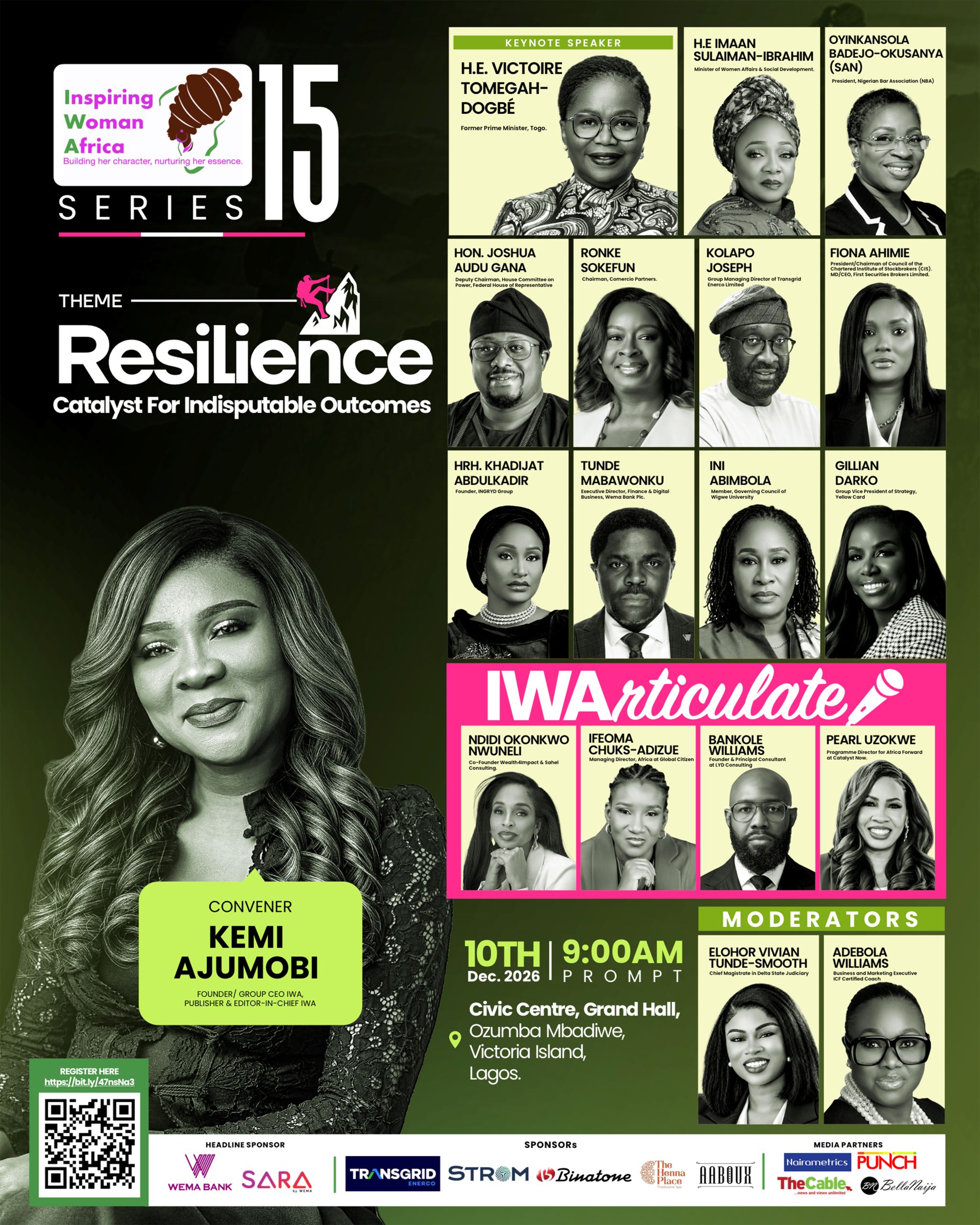
Click To Register
Latest Edition of IWA Magazine
November 17, 2026
Dr. Chanita Foster: Unstoppable Change-Maker, Global Entrepreneur, Humanitarian Mind
Latest Posts
-
 Nov 17, 2026 The World Is Shifting. Are You Positioned?