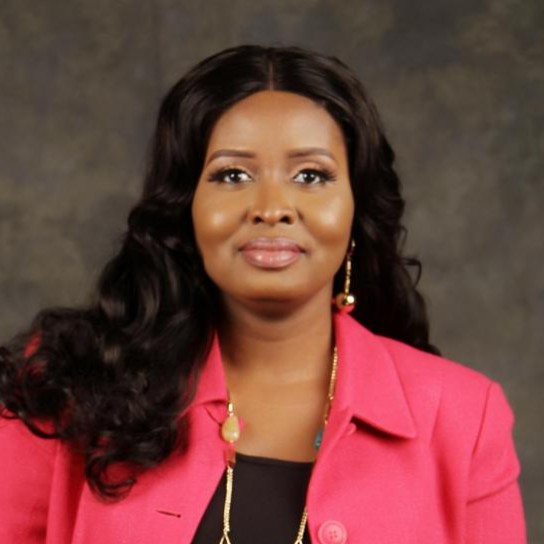
 Dr. Asmau Benzies Leo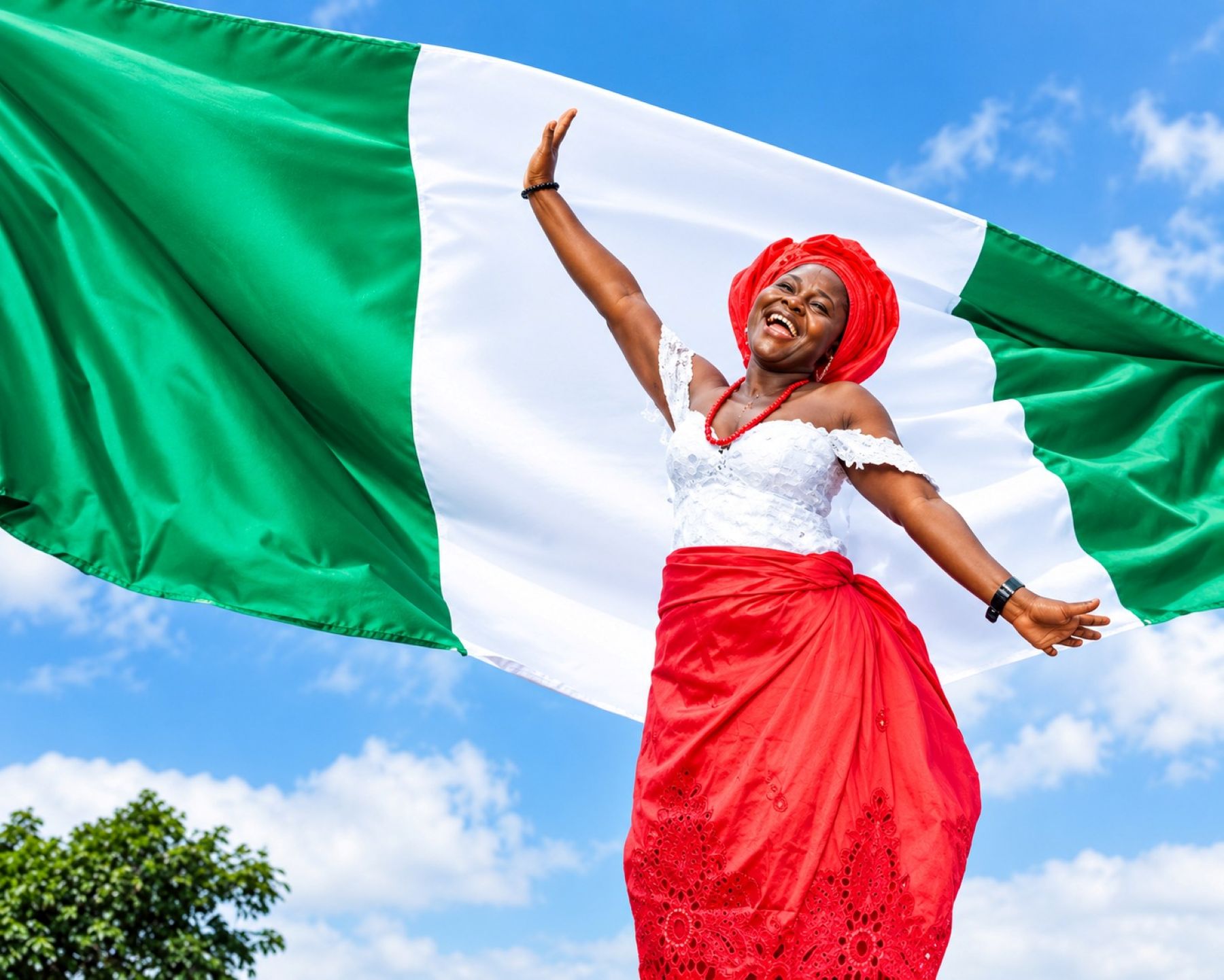
On 1 October 1960, the green-white-green flag was raised over a newly independent Nigeria, marking the beginning of a sovereign national journey. Sixty-six years later, as Nigeria celebrates its 66th Independence Anniversary, the country pauses to reflect on a history marked by resilience, diversity, sacrifice, achievement and an enduring determination to build a better future.
Independence anniversaries are often narrated through the milestones of political leaders, constitutional transitions, economic developments and national institutions. Yet beneath these official accounts lies another story, one that is equally fundamental to understanding Nigeria: the story of Nigerian women
To celebrate 66 years of Nigerian statehood without recognising the contributions of women would be to leave a significant part of the national story unwritten. From pre-colonial communities and trading networks to contemporary boardrooms, laboratories, farms, security institutions, technology hubs and international organisations, Nigerian women have consistently contributed to the economic, social, political and cultural life of the nation.
Their story is not simply one of endurance. It is a story of agency, leadership, courage, innovation and transformation.
The Women Who Helped Build the Foundations
Long before independence, Nigerian women had established powerful traditions of economic organisation, community leadership and political mobilisation.
The Aba Women’s riot of 1929, for example, demonstrated the extraordinary capacity of women to organise collectively against policies they considered unjust. Thousands of women mobilised across communities in southeastern Nigeria to protest colonial taxation, warrant chiefs and other forms of administrative interference. Their resistance remains an important chapter in the history of anti-colonial mobilisation in Nigeria.
In the west, Funmilayo Ransome-Kuti emerged as one of the country’s most influential women activists and nationalists. Through the Abeokuta Women’s Union, she mobilised women to challenge taxation and political exclusion while advocating for education, representation and women’s rights. Her activism demonstrated that the struggle for self-government was inseparable from the struggle for dignity, participation and social justice.
Other pioneering women, including Margaret Ekpo and Gambo Sawaba, also challenged the political and social limitations of their time. They demonstrated that Nigerian women were not passive observers of the nation’s political evolution, but they were active participants in shaping it.
Their courage created pathways for generations that followed.
From Independence to Economic Impact
Since independence, Nigerian women have remained central to the country’s economy. These women are farmers producing food, some are traders sustaining markets, entrepreneurs creating employment, professionals managing institutions, teachers educating generations, health workers caring for communities, artisans preserving skills and caregivers sustaining families.
Much of this contribution occurs outside the formal economy and therefore does not always receive adequate recognition in conventional measures of national productivity. Yet the resilience of Nigeria’s economy has repeatedly depended on the ingenuity and adaptability of women.
Across rural and urban Nigeria, women have built enterprises from modest beginnings. They have developed informal savings and credit systems, entered domestic and international markets, embraced digital platforms and expanded their businesses despite limited access to capital, land, technology and formal support systems.
Today, Nigerian women are increasingly visible in sectors such as technology, finance, agriculture, manufacturing, media, entertainment, academia and professional services.
The challenge, therefore, is no longer whether Nigerian women have demonstrated their capacity to contribute, yes they have. The question is whether Nigeria’s institutions will create the conditions necessary for millions more women to translate their potential into sustained economic power.
Women at the Frontiers of Leadership
The evolution of Nigerian women in leadership provides another remarkable dimension of the country’s 66th year journey.
Women have risen to senior positions across government, the judiciary, diplomacy, academia, business, civil society and international institutions.
Justice Mariam Aloma Mukhtar, Nigeria’s first female Chief Justice, represented an important milestone in the country’s legal history. Her achievement helped challenge assumptions about women’s capacity to occupy the highest levels of judicial leadership.
On the global stage, Dr. Ngozi Okonjo-Iweala represents one of the most visible examples of Nigerian women’s international leadership. She became the first woman and the first African to serve as Director General of the World Trade Organization in 2021 and began a second four-year term in September 2025.
Similarly, Amina J. Mohammed, Nigeria’s former Minister of Environment, serves as Deputy Secretary General of the United Nations. Her international career has included significant contributions to the Sustainable Development Goals and global sustainable development policy.
These achievements are more than individual success stories. They expand the boundaries of what Nigerian girls and young women can imagine for themselves in the future.
Women in Peace, Security and National Resilience:
Perhaps one of the most important, yet least sufficiently recognised dimensions of women’s contribution is their role in peacebuilding, security and humanitarian response.
Across Nigeria, women have worked in communities affected by conflict, displacement, insecurity, climate related disasters and poverty. They have supported survivors of violence, provided humanitarian assistance, facilitated dialogue, advocated for displaced populations and helped rebuild community relationships.
Women peacebuilders have demonstrated that security is not simply about military strength. It is also about human security, safety, dignity, livelihoods as well as the welbeing of the communities.
This understanding is at the heart of the Women, Peace and Security agenda, which recognises women not merely as victims of conflict but as essential actors in conflict prevention, peacebuilding, mediation, recovery and reconstruction.
The growing participation of women in Nigeria’s security institutions also reflects changing national attitudes towards women’s leadership. From the military and police to civil defence, intelligence and other security structures, Nigerian women continue to break institutional barriers and demonstrate professional competence.
The advancement of Nigerian women has never occurred in isolation. Behind many successful women are parents who invested in their education, spouses who supported their ambitions, mentors who opened doors, colleagues who created opportunities and male allies who understood that empowering women strengthens families, institutions and society.
Recognising women’s contributions should therefore not create a narrative of women versus men. Rather, it should remind us that nation building is a shared responsibility. A Nigeria in which women can participate fully, is not a Nigeria that diminishes men but a Nigeria that makes better use of the talents, knowledge and creativity of its entire population.
The future must therefore be built on partnership where women and men work together to remove barriers, challenge harmful stereotypes, strengthen institutions and create opportunities for every citizen.
The Work That Remains
Celebration, however, must be accompanied by reflection.
Despite significant achievements, many Nigerian women continue to face barriers to political participation, economic opportunity, access to finance and land, quality education, healthcare and protection from gender based violence.
Women’s representation in many political and decision making institutions remains considerably below their population share. This means that the next phase of Nigeria’s development must move beyond celebrating women’s achievements towards creating systems that enable broader participation. This includes investing in girls’ education, expanding women’s access to finance, technology, land and markets; strengthening protection from gender based violence; supporting women’s participation in governance and peace processes; improving maternal and reproductive healthcare; and creating environments in which women can build businesses and careers without structural discrimination.
These are not simply women’s issues, they are national development issues.
Nigeria at 66: A Future Written Together
The story of Nigeria at 66 is a story still being written. It is visible in the marketplace, where a woman builds a business from limited resources. It is present in the classroom, where a teacher prepares the next generation. It is found on the farm, in the hospital, in the courtroom, in the laboratory, in the newsroom, in the boardroom and at the negotiating table. It is also present in the quiet sacrifices of mothers, caregivers, community leaders and countless women whose contributions may never make the headlines.
As Nigeria celebrates 66 years of independence, we must remember that national development is not measured only by roads built, institutions established or economic statistics recorded. It is also measured by whether every citizen has the opportunity to contribute meaningfully to the nation’s future.
Nigerian women have contributed immensely to the journey from independence to impact. They have resisted injustice, sustained families, built businesses, served communities, led institutions, promoted peace and represented Nigeria on the world stage.
Their story is a reminder that resilience is not simply the ability to survive difficult circumstances, but the courage to transform those circumstances.
At 66, Nigeria should therefore celebrate its women not merely as beneficiaries of national development, but as architects, partners and drivers of the nation’s future.
And as the green-white-green flag rises once again, the message should be clear, the next chapter of Nigeria’s story must be written together with women and men contributing their talents, leadership and vision to building a more peaceful, inclusive, prosperous and resilient nation.
From independence to impact, Nigerian women have never stood at the margins of the national story. They have helped write it. And the next chapter belongs to all of us.
Happy 66th Independence Anniversary, Nigeria. 
About Author
Asmau Benzies Leo
Dr. Asmau Benzies Leo is a development practitioner with extensive national and international expertise in gender equality, peace-building, governance, and humanitarian action. She holds a PhD in Public Governance and Leadership, a Master’s degree in Conflict Management and Peace Studies, and executive certifications from leading institutions including Howard University, Harvard University and Glasgow Caledonian University. As Executive Director of the Centre for Non-violence and Gender Advocacy in Nigeria (CENGAIN), she has led ground-breaking advocacy initiatives on women’s political participation, gender-based violence prevention, and security sector reform across multiple World Bank, UN and EU-supported projects.
Latest Edition of IWA Magazine
October 6, 2026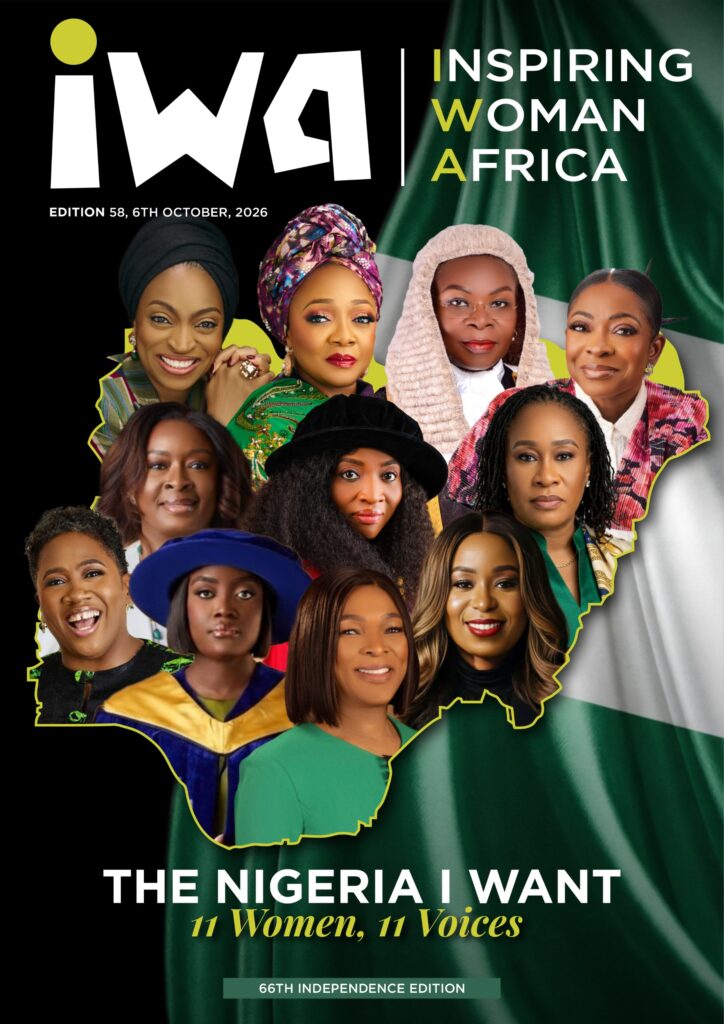
THE NIGERIA I WANT: 11 Women, 11 Voices
Latest Posts
-
 Oct 6, 2026 After the Red Sea
 -
 Oct 6, 2026 NIGERIA AT 66: THE COURAGE TO KEEP BECOMING
 -
 Oct 6, 2026 The Independence Worth Celebrating