 Sola Adesakin

Let me tell you something that sounds too simple to be worth N100 million. The answer to wealth creation is almost never a complicated idea. It is almost always a common problem that enough people have and not enough people are solving well.
The woman who builds a daycare in a neighbourhood where every mother is struggling with childcare did not invent anything. She noticed a daily frustration and built a reliable answer to it. The woman who started packaging and delivering fresh meals to busy professionals did not discover a new market. She saw that thousands of people in her city were hungry at lunchtime and tired of their options. The woman who built a platform that helps small businesses manage their bookkeeping did not create a new need. She recognised that millions of business owners were drowning in receipts and spreadsheets and offered them a way out.
None of these ideas are revolutionary. All of them are valuable. And that is the point.
Wealth does not only chase originality, it chases usefulness. When what you build becomes genuinely valuable to a large enough number of people, money does not trickle toward you. It chases you. That is the game. And the game has steps.
Step 1: Find the need.
Start with what you hear people complain about repeatedly. Not once. Repeatedly. The complaint your colleagues share every Monday. The frustration your neighbours mention every school term. The gap your friends keep describing when they talk about a service that does not exist or one that exists poorly. Write down five problems you have heard at least ten different people describe in the last three months. That list is your starting inventory.
The best businesses do not begin with a product. They begin with a pain point. If you cannot name the specific pain your business solves, you do not have a business. You have a hobby with a price tag.
Step 2: Build a simple solution.
You do not need N5 million to start. You need a minimum viable version of the answer to that problem. If the problem is that working mothers in your area cannot find affordable, trustworthy after-school care, your solution might start with three children in your living room three afternoons a week at N15,000 per child per month. That is N45,000 a month. It is not wealth. It is proof that people will pay for what you are offering. That proof is worth more than any business plan you will ever write.
If the problem is that small businesses in your network cannot produce professional financial reports, your solution might start with offering the service manually to five clients at N30,000 each per month. That is N150,000 in monthly revenue from a service you deliver with skills you already have, a laptop, and your time.
Start ugly. Start small. Start with what you have. But start with something people will actually pay for, because payment is the only validation that matters.
Step 3: Systematise it.
The difference between a job you gave yourself and a business that builds wealth is the system. Once you have proven the model with your first five to ten paying customers, document everything. How you deliver the service. How you find clients. How you handle money. How someone else could do what you do without you being physically present for every transaction. This is where most people stall. They build something that works but only works through them. That is a ceiling, not a foundation.
Hire your first person when revenue consistently exceeds your costs by at least 30%. Even if that person is part-time. Even if they handle just one part of the delivery. The moment the business operates for one hour without your direct involvement, you have crossed a line most small businesses never cross.
Step 4: Scale it.
Scaling is not about doing more. It is about reaching more people with the same solution. Can the daycare open a second location? Can the meal service expand from 50 deliveries a day to 200? Can the bookkeeping platform move from five manual clients to 500 clients on a software tool? The answer to each of those questions is a multiplication of revenue without a proportional multiplication of your time. That is where wealth lives.
N45,000 a month is a side income. N450,000 a month is a business. N4.5 million a month is a company. The difference between each level is not a different idea. It is the same idea, systematised and scaled.
Find the need, build the solution and scale it.
The problem someone complained about at lunch today might be worth more than you think.
About Author
Sola Adesakin
Sola Adesakin is a highly respected wealth coach and chartered accountant with over two decades of transformative impact in the finance industry. As the visionary founder of Smart Stewards Financial Advisory Limited and Smart Stewards Advisory LLC, she has revolutionized the financial wellbeing of countless individuals and businesses across 40 countries. Her methodical approach to ‘make-manage-multiply’ money principles has elevated many from financial stress to prosperity, and mediocrity to exceptional achievement.
The IWA Series 15 Conference is Here
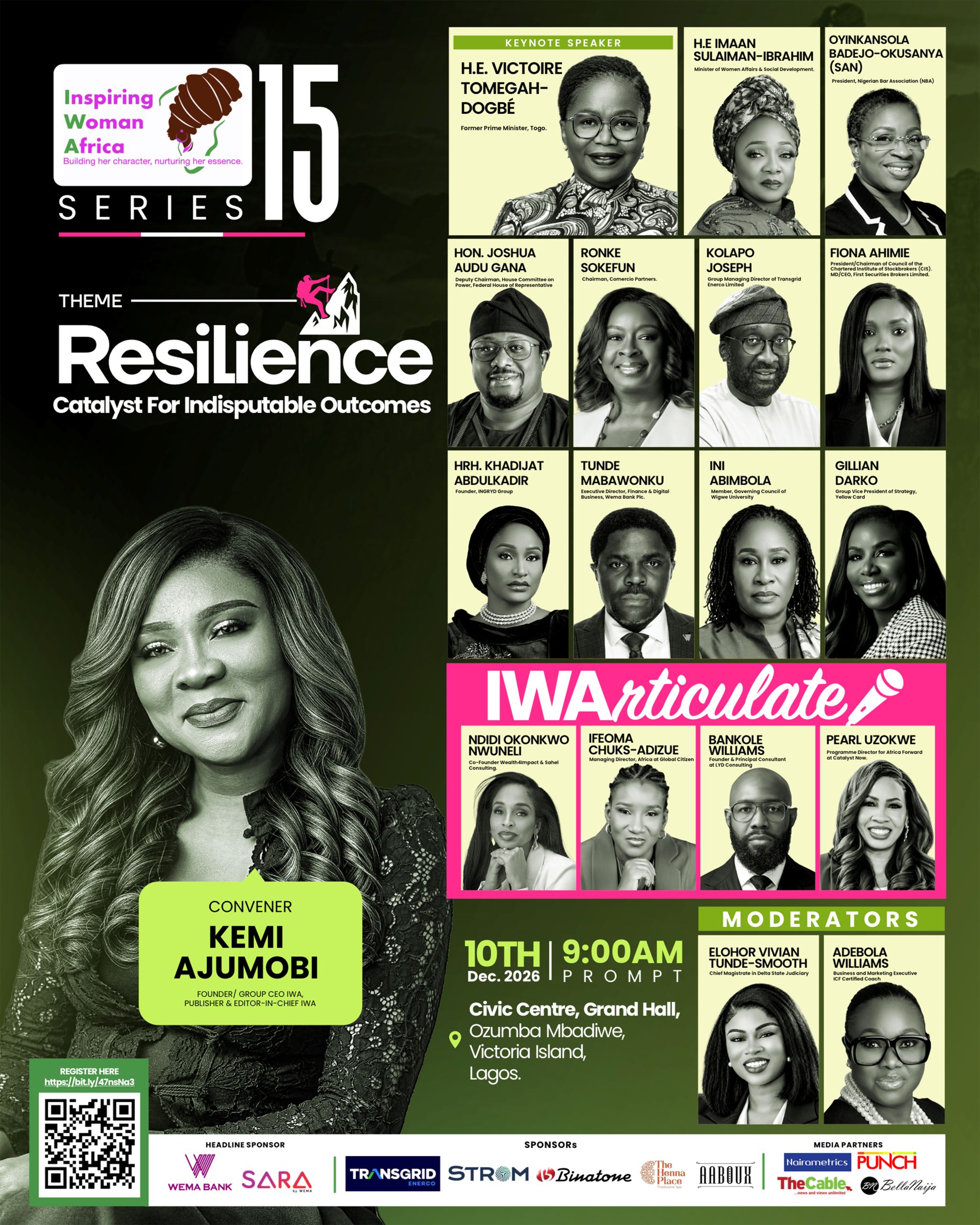
Click To Register
Latest Edition of IWA Magazine
November 3, 2026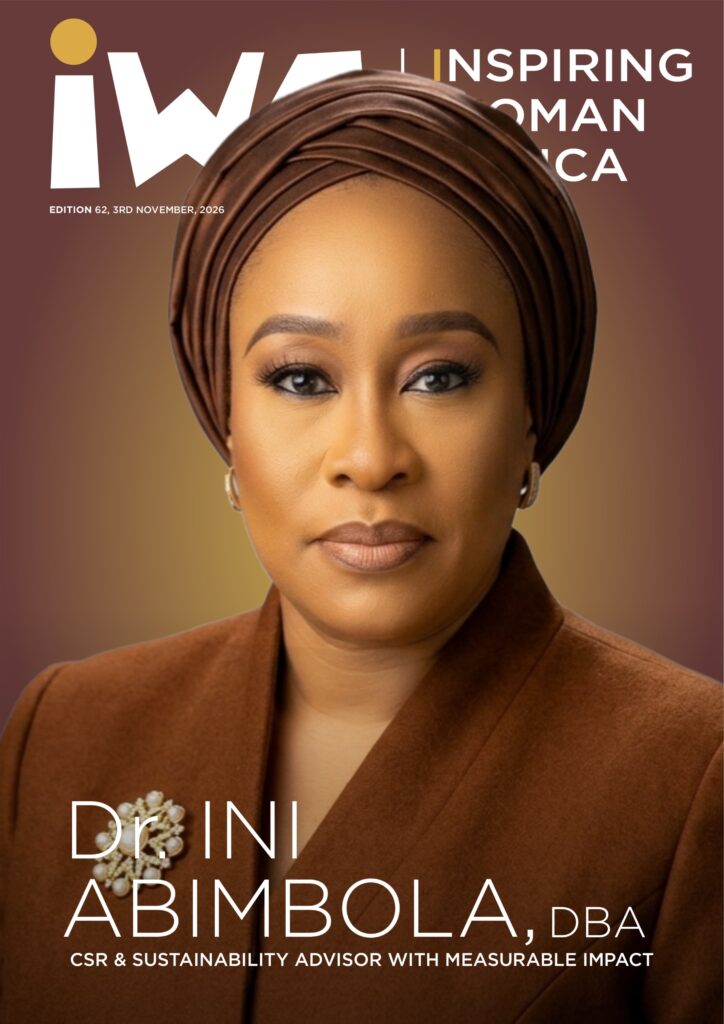
Dr. INI ABIMBOLA, DBA, CSR & Sustainability Advisor with Measurable Impact
Latest Posts
-
 Nov 3, 2026 From Chronic Pain to a Whole-Life Healing