 Wola Joseph-Condotti
Every leadership book I have ever read quietly assumes something that is almost never true.
It assumes you will have the data.
Gather the information, weigh the options, run the analysis, and the right answer will more or less reveal itself. It is a lovely idea. And in real leadership, at the levels where the decisions actually matter, it is mostly fiction.
The truth is that the biggest calls you make will almost always be made in the dark. The data will be incomplete. Or it will be contradictory, two credible people looking at the same situation and telling you opposite things. Or it will be politically charged, where the numbers are technically fine but everybody in the room has a stake in how you read them.
And you will still have to decide. That is the job.
The Judgement Nobody Warns You About
Here is the part that took me a while to make peace with. You will be judged, later, by information you did not have at the time.
Someone will look back at the decision six months from now, holding facts that had not surfaced yet, and they will ask, quite reasonably, how you did not see it. And you will not be able to fully explain that on that day, in that room, with what was actually in front of you, the call you made was the right one.
That is not unfair, exactly. It is just the reality of leading. Hindsight always shows up better dressed than foresight. And if you need every decision to look wise in the rear-view mirror, you will freeze, because the only way to guarantee that is to never decide anything at all.
So you have to make peace with this early. You will get some calls wrong. Not because you were careless, but because you were deciding with a partial picture, which is the only kind of picture leadership ever offers you.
Instinct Is Not Magic
People talk about executive instinct as though it were some mystical gift. A gut feeling. A sixth sense. I want to push back on that, because it does a disservice to how it actually works.
Instinct is not magic. Instinct is compressed experience.
When a decision needs to be made and half the information is missing, an experienced leader is not guessing. They are drawing, very fast and often without noticing, on hundreds of situations they have seen before. The pattern that felt off last time. The deal that looked perfect and quietly fell apart. The person whose confidence did not match their competence. All of it is filed away, and it fires when a new situation rhymes with an old one.
That is what your gut actually is. It is your years, condensed. Which is also why you should trust it more as you go, and why you should be a little suspicious of it when you are somewhere genuinely new, where you have no experience to compress.
The Most Expensive Decision Is Often No Decision
Now, I have written before that delay is not always denial, that some waiting is genuine preparation. I believe that. But I want to be careful here, because there are two very different kinds of waiting, and leaders confuse them constantly.
There is the wait that prepares. You are gathering something specific, building capacity, letting the right timing arrive. That wait is active, and it is wise.
And then there is the wait that just avoids. You have enough to decide, you know you do, but deciding is uncomfortable, so you call one more meeting. Ask for one more analysis. Wait for a certainty that is never actually coming.
That second kind of delay is one of the most expensive decisions a leader ever makes, and it is expensive precisely because it does not feel like a decision at all. It feels responsible. But while you wait, the window closes. The good people lose confidence. The problem you could have contained quietly grows into one everybody can see.
Choosing not to decide is still choosing. It just lets the situation choose for you.
A Word From Scripture
When Nehemiah was rebuilding the wall, enemies kept inviting him down to “talk.” Four times they called. Four times it was a trap dressed up as a reasonable meeting.
His answer has stayed with me for years. “I am doing a great work, so that I cannot come down.”
He did not have complete information about their intentions. He could not be certain it was a trap. But he had enough. He read the situation, made the call, and refused to be pulled off the wall into endless deliberation while the real work waited.
He decided in the dark, and he kept building.
Final Thoughts
If you are waiting to feel certain before you decide, you will be waiting a long time. Certainty is not coming. It rarely does, and never on the big things.
What you can build instead is this. Enough humility to know your picture is partial. Enough experience, gathered honestly over the years, to read the shape of a thing before all the details arrive. And enough courage to act on a decision you cannot yet prove, and then to own it, whichever way it turns out.
You will not always be right.
But a leader who decides thoughtfully in the dark will always be worth more than one who waits, safely and endlessly, for a light that was never going to come on.
About Author
Wola Joseph-Condotti
Wola Joseph-Condotti is the CEO, Eko Power Limited. She is a Harvard-trained lawyer and passionate advocate for faith-driven leadership, gender equity, and energy transition in Africa. She writes from the intersection of power, purpose, and personal growth.
The IWA Series 15 Conference is Here
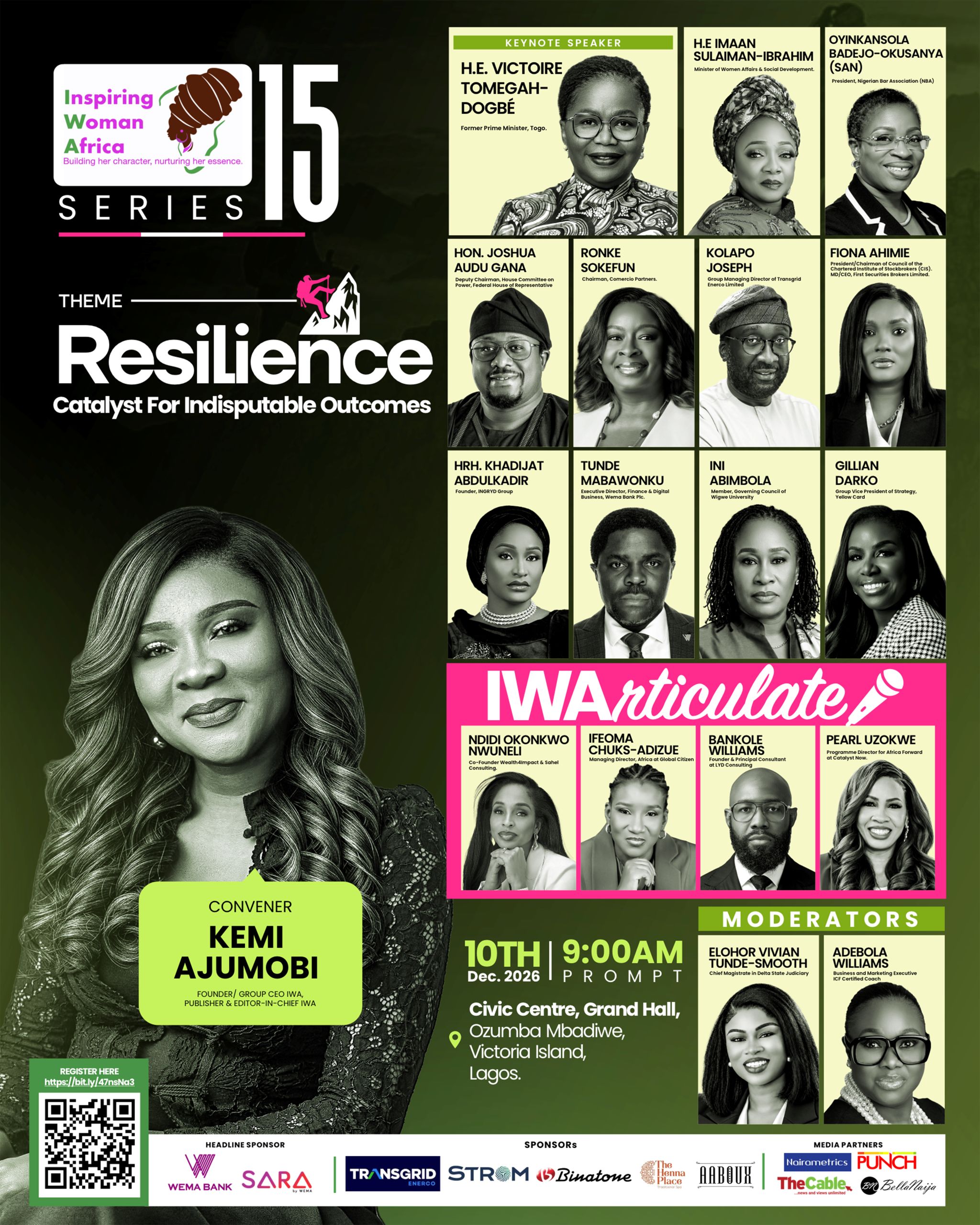
Click To Register
Latest Edition of IWA Magazine
October 20, 2026
Meet the Speakers of IWA Series 15 Conference
Latest Posts
-
 Oct 20, 2026 Hard Conversations: The Skill No One Puts on a CV
 -
 Oct 20, 2026 5 Africa Women Listed as 2026 Forbes Icons
 -
 Oct 20, 2026 You Are Wealthier Than You Think