 Wola Joseph-Condotti
In today’s workplace, productivity is measured in data points. Communication is filtered through algorithms. Insight is outsourced to artificial intelligence. Efficiency is king.
And yet, in all this hyper-optimization, a quiet erosion is taking place. The erosion of presence. Of empathy. Of the human touch.
We live in a world where digital tools are meant to empower us, and indeed, they do. But with each new advancement comes a subtle temptation to replace intuition with automation, depth with speed, discernment with data.
I believe that the most important executive skill of our time is not technical mastery but discernment. The ability to hear what is not being said, to pause amidst the noise, and to lead with humanity in spaces increasingly driven by systems.
Because no matter how advanced our tools become, technology cannot replicate trust. It cannot replace wisdom. And it cannot substitute the presence of a grounded, discerning leader.
Where Women Lead Differently
Women, particularly in executive spaces, have long brought something essential to leadership—emotional intelligence, collaborative strength, relational depth. We often lead with heart and head aligned, balancing execution with empathy.
But in the algorithmic era, even these strengths are at risk of being devalued or drowned out. We are told to be data-driven. But what about being values-driven?
We are told to scale. But what about seeing, really seeing the people we are leading?
Digital dignity means preserving what makes us uniquely human, even as we harness what makes machines powerful.
I Use AI—But It Doesn’t Use Me
Let me be clear: I am not anti-technology. I use AI. I work in a highly demanding energy-intensive industry where data is king. I run teams across multiple locations. I automate what should be automated.
But I have also sat across from a staff member on the verge of burnout and no algorithm could have picked that up. I have felt the shift in a meeting room when someone was silenced. I have read between the lines of an email that looked “professional” but came from a place of deep frustration.
These moments require more than digital competence. They require human discernment. They require leaders who are not just smart, but present. Not just efficient, but emotionally intelligent.
What We Risk Losing. If we are not careful, we risk:
- Replacing listening with transcripts
- Replacing feedback with analytics
- Replacing mentoring with metrics
We risk building perfectly optimized systems filled with deeply disconnected people.
And women in leadership must guard against this most of all. Because we have often had to fight to prove that our “soft skills” are strategic assets. That our intuition is not emotional indulgence. It is executive wisdom. That our pauses are not hesitation, they are discernment in action.
Lead with Presence, Not Just Performance
In this digital age, showing up fully may be the boldest leadership move of all.
Put the phone down in a meeting. Make eye contact. Listen beyond the surface. Ask questions that are not on the agenda. Notice tone. Honour nuance.
Do not let the efficiency of AI erode the efficacy of your humanity.
Because long after the dashboards have changed and the apps have evolved, people will remember how you made them feel. How you noticed. How you led with grace.
Final Thoughts
The future will be built with machines but it will be led by people.
And the leaders who thrive will not just be those who understand AI. They will be the ones who understand people. Who protect digital dignity in a world of digital speed.
So yes, learn the tools. Leverage the tech. But do not outsource your judgment, your values, or your voice.
We are not just data points. We are daughters of wisdom, stewards of legacy, and carriers of something no algorithm can ever replicate:
Presence. Discernment. Humanity.
And in this noisy world, that may be your most disruptive advantage.
Wola Joseph-Condotti is the CEO of Eko Electricity Distribution Company (EKEDC). She is a Harvard-trained lawyer and passionate advocate for faith-driven leadership, gender equity, and energy transition in Africa, she writes from the intersection of power, purpose, and personal growth.
Latest Edition of IWA Magazine
September 8, 2026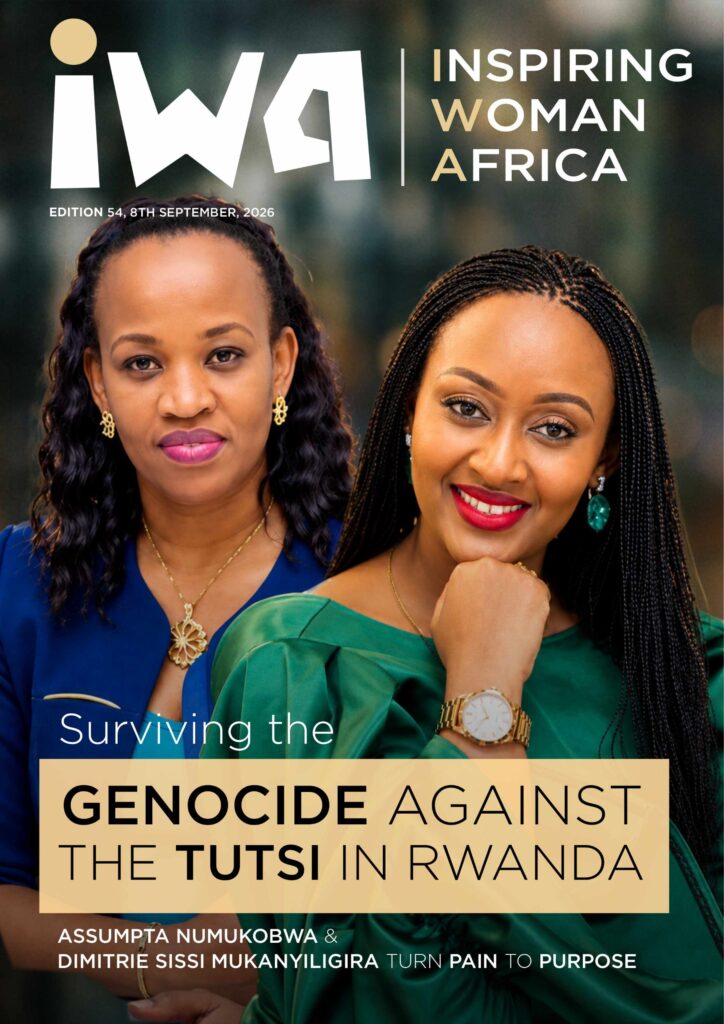
Surviving the Genocide Against the Tutsi in Rwanda: ASSUMPTA NUMUKOBWA and DIMITRIE SISSI MUKANYILIGIRA Turned Pain to Purpose
Latest Posts
-
 Sep 8, 2026 You Cannot Lead From a Broken Vessel