 Dr. Asmau Benzies Leo
The adoption of the African Union Convention on Ending Violence Against Women and Girls (AU-CEVAWG) in 2025 marks a historic milestone in Africa’s collective effort to eradicate gender based violence (GBV). The Convention provides a comprehensive, legally binding framework that addresses the root causes, manifestations, and consequences of violence against women and girls across the continent. As Nigeria continues to grapple with complex security challenges, the ratification and domestication of this Convention present a timely and strategic opportunity to strengthen national responses to violence, insecurity, and social instability.
At its core, the AU-CEVAWG seeks to eliminate all forms of violence against women and girls, including physical, sexual, psychological, and economic abuse, both in public and private spaces. It goes beyond existing frameworks by addressing emerging issues such as technology facilitated violence, conflict related sexual violence, and harmful traditional practices.
The Convention also emphasises state accountability, survivor centered approaches, access to justice, and the provision of comprehensive support services including healthcare, psychosocial support, and legal aid.
The importance of this Convention cannot be overstated. Violence against women and girls remains one of the most pervasive human rights violations in Africa, and Nigeria is no exception. From domestic violence to conflict related abuses in the North East, and increasing reports of sexual violence across the country, GBV continues to undermine the dignity, safety, and potential of millions of women and girls. While Nigeria has made progress through laws such as the Violence Against Persons (Prohibition) Act, gaps remain in implementation, coordination, and access to justice.
The AU-CEVAWG provides a unified continental framework that can help Nigeria strengthen its legal and institutional mechanisms. By aligning national laws and policies with the convention, Nigeria can ensure a more coordinated and effective response to GBV. It also reinforces commitments already made under instruments such as the Maputo Protocol, while expanding the scope to address contemporary challenges.
Importantly, the convention has significant implications for Nigeria’s current security landscape. Insecurity in Nigeria; ranging from insurgency and banditry to communal conflicts and displacement, has a disproportionate impact on women and girls. They are often targets of abduction, sexual violence, forced marriage, and exploitation. The Convention recognizes the intersection between GBV and conflict, and calls for the protection of women in fragile and conflict affected settings. Ratifying the Convention would therefore strengthen Nigeria’s security architecture by integrating gender responsive approaches into peacebuilding, counterterrorism, and humanitarian interventions.
Addressing violence against women is not only a human rights imperative but also a development and security priority. Societies that tolerate violence against women are more likely to experience instability, poverty, and weak governance. By contrast, protecting women’s rights contributes to stronger families, resilient communities, and sustainable peace. The Convention thus offers Nigeria a pathway to tackle underlying drivers of insecurity, including inequality, marginalisation, and social exclusion.
Nigeria can also draw valuable lessons from countries like The Gambia, which just ratified the convention and has demonstrated strong political will in advancing gender equality and combating GBV. The Gambia’s proactive stance in adopting and implementing progressive gender policies highlights the importance of leadership, institutional commitment, and collaboration with civil society. By following in this path, Nigeria can reaffirm its leadership role in Africa and demonstrate its commitment to protecting the rights and dignity of women and girls.
To fully realise the benefits of the AU-CEVAWG, several key steps are recommended for Nigeria:
First, the Federal Government should prioritise the signing and ratification of the Convention without delay. This will signal political commitment and positions Nigeria within the community of progressive African states championing women’s rights.
Second, there must be a deliberate effort towards domestication, in line with Section 12 of the 1999 Constitution of Nigeria. This involves translating the provisions of the Convention into national legislation that is enforceable across all states. Given Nigeria’s federal structure, it is also critical to ensure that state governments adopt and implement aligned laws, particularly in states where the VAPP Act has not yet been domesticated.
Third, the government should invest in institutional strengthening and capacity building for law enforcement agencies, the judiciary, and service providers. This includes training on handling GBV cases, improving survivor support systems, and ensuring accountability for perpetrators.
Fourth, there is a need for sustained funding and resource allocation to GBV prevention and response initiatives. Without adequate funding, even the most robust legal frameworks will fail to deliver impact.
Fifth, community engagement and social norm change must be prioritised. Ending violence against women requires shifting deeply entrenched cultural attitudes and practices that perpetuate discrimination and abuse.
Finally, partnerships with civil society organisations, women’s groups, and international partners should be strengthened to ensure a holistic and inclusive approach.
In conclusion, the AU Convention on Ending Violence Against Women and Girls represents a transformative opportunity for Nigeria. Its ratification and domestication would not only advance the rights and protection of women and girls but also contribute significantly to national security, peacebuilding, and sustainable development. At a time when Nigeria faces multifaceted security challenges, investing in the safety and empowerment of women is not optional, it is essential. By taking decisive action and following the example of countries like The Gambia, Nigeria can move closer to a future free from violence, where every woman and girl can live in dignity, safety, and equality.
About Author
Asmau Benzies Leo
Dr. Asmau Benzies Leo is a development practitioner with extensive national and international expertise in gender equality, peace-building, governance, and humanitarian action. She holds a PhD in Public Governance and Leadership, a Master’s degree in Conflict Management and Peace Studies, and executive certifications from leading institutions including Howard University, Harvard University and Glasgow Caledonian University. As Executive Director of the Centre for Non-violence and Gender Advocacy in Nigeria (CENGAIN), she has led ground-breaking advocacy initiatives on women’s political participation, gender-based violence prevention, and security sector reform across multiple World Bank, UN and EU-supported projects.
The IWA Series 15 Conference is Here
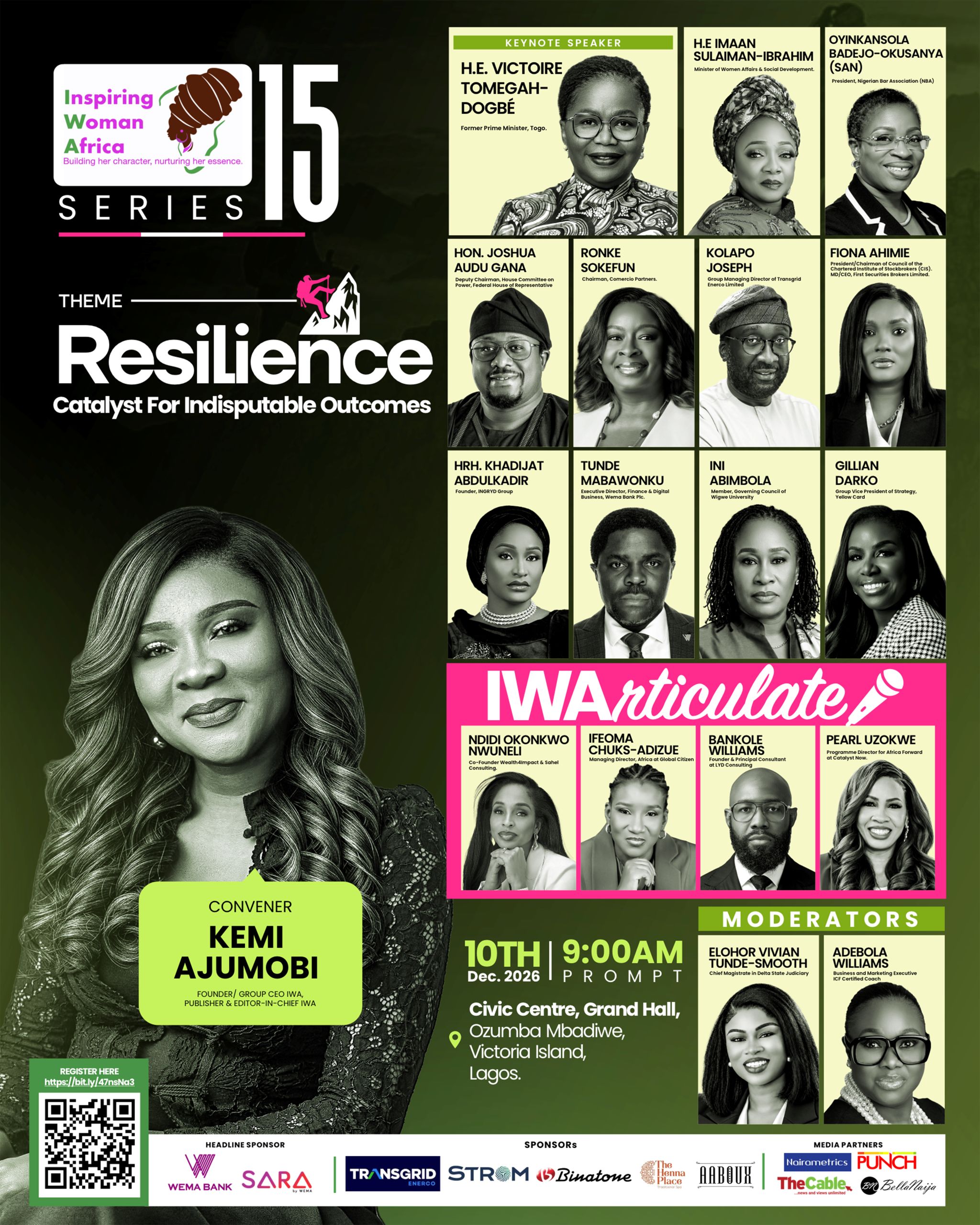
Click To Register
Latest Edition of IWA Magazine
October 20, 2026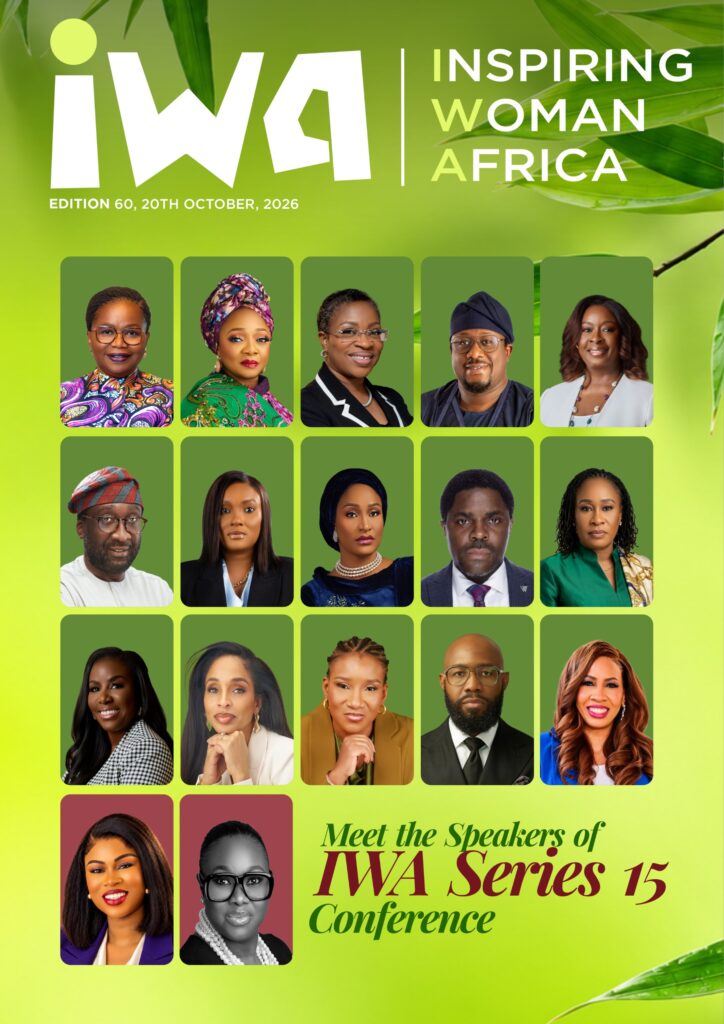
Meet the Speakers of IWA Series 15 Conference
Latest Posts
-
 Oct 20, 2026 Hard Conversations: The Skill No One Puts on a CV
 -
 Oct 20, 2026 5 Africa Women Listed as 2026 Forbes Icons
 -
 Oct 20, 2026 You Are Wealthier Than You Think