 Wola Joseph-Condotti
We do not talk enough about the calls we got wrong.
Read most leadership profiles and you would think we all rose in a straight line. Win after win. Good decision after good decision. A tidy story of a person who somehow always knew.
It is not true. Not for me, and not for anyone who has led for any real length of time. If you have sat in the chair long enough, you have made a call you would give a great deal to take back. A hire that was a mistake. A strategy you backed that did not work. A moment you read the room wrong, or trusted the wrong person, or moved too slowly, or moved too fast. You know the one. It probably came to mind before I finished the sentence.
So let me say the thing we rarely say out loud. Leaders fail. Good ones too. The question was never whether you would get something wrong. The question is what kind of leader you become on the other side of it.
The Fantasy of the Flawless Leader
Somewhere we absorbed the idea that authority means never being wrong. That admitting a mistake leaks credibility, so the safest thing is to explain it away, quietly bury it, or find somewhere else for the blame to land.
I understand the instinct. But it is backwards.
Because people are not actually looking for a leader who never fails. They know that person does not exist, and frankly they do not trust the ones who pretend to be her. What people are looking for is a leader who can be trusted with a failure.One who will tell the truth when it goes wrong, own her part cleanly, and lead everyone forward without drama or deflection.
That leader is rarer than the brilliant one. And people will follow her much further.
Owning It Out Loud
The hardest version of this is the public one. When the failure is not private, when your team saw it, when it is out there, and everyone is quietly watching to see what you will do.
The temptation in that moment is enormous. Reframe it. Blame the market, the circumstances, the person below you. Say the words “mistakes were made,” in that passive way that carefully avoids naming who made them. Do not.
The most powerful thing a leader can say in that moment is simple and almost never said. “That was my call, and I got it wrong.” No passive voice. No cushion. No quiet redistribution of the blame onto someone who cannot answer back.
Something happens in a room when a leader does that. The air changes. Because everyone was braced for spin, and instead they got the truth. And a leader who tells the truth about her own failure has just made it safe for everyone else to tell the truth about theirs. That is how honest cultures are actually built. From the top, out loud, in the hard moment.
Accountability Is Not Self-Flagellation
Now, there is a trap on the other side, and women fall into it more than men do, so let me name it plainly.
Owning a failure is not the same as punishing yourself for it.
Accountability says, “I got this wrong, here is what I am doing about it, here is what I have learned.” Then it moves. Self-flagellation says, “I am a failure,” and stays there, replaying it at 2am, apologising long past the point of usefulness, letting one bad call quietly rewrite your whole sense of yourself.
One of those is strength. The other only looks like humility. Real accountability is clean. You name it, you carry your portion of it, you make it right as far as you can, and then you genuinely let it go. You are not required to bleed to prove you are sorry.
A Word From Scripture
Peter is my favourite picture of this. He failed spectacularly and publicly. He denied Christ three times, at the worst possible moment, exactly when he had sworn he never would.
And yet. That same Peter stood up weeks later and preached, and thousands turned. His failure did not disqualify him. It seasoned him.
Notice what Jesus did when He restored him. He did not lecture him or make him grovel. He simply asked, three times, “Do you love me?” and then recommissioned him. “Feed my sheep.” Get up. There is still work for you.
Failure was not the end of Peter’s story. It was the making of him.
Final Thoughts
If you are leading, you will get things wrong. Accept it now, before it happens, so that when it does, you are not destroyed by a thing you should have expected.
When it comes, own it cleanly. Say it plainly. Fix what you can. Learn what it is teaching you. And then, this part matters, get back up.
Because the leaders people trust most are not the ones who never fell.
They are the ones who fell, told the truth about it, and rose to build again.
About Author
Wola Joseph-Condotti
Wola Joseph-Condotti is the CEO, Eko Power Limited. She is a Harvard-trained lawyer and passionate advocate for faith-driven leadership, gender equity, and energy transition in Africa. She writes from the intersection of power, purpose, and personal growth.
Latest Edition of IWA Magazine
September 15, 2026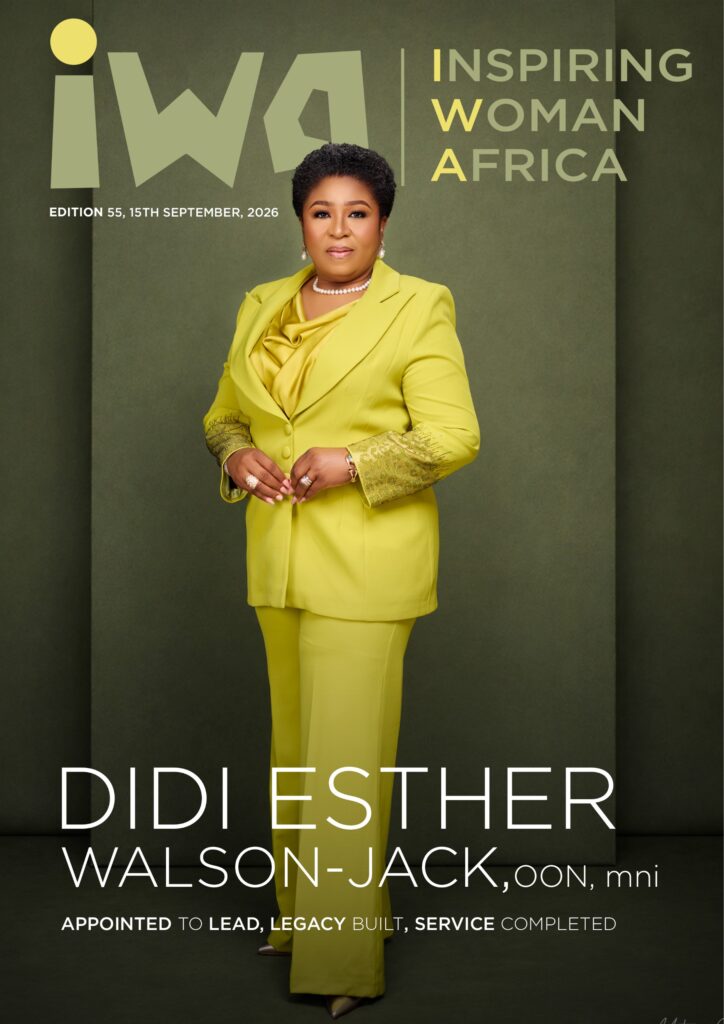
Didi Esther Walson-Jack, OON, mni — Appointed to Lead, Legacy Built, Service Completed
Latest Posts
-
 Sep 15, 2026 The Battles You Win by Refusing to Fight