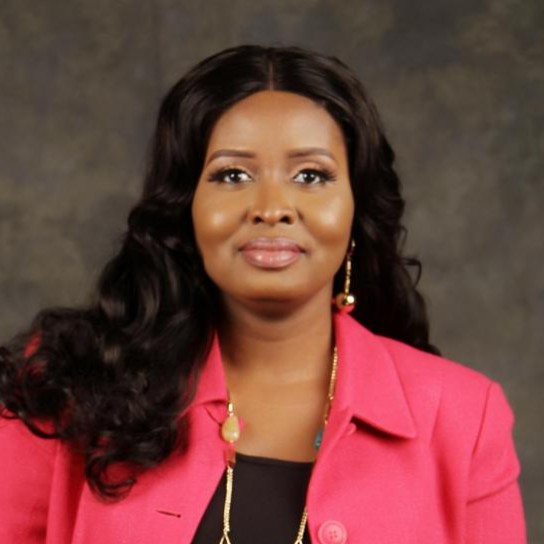
 Dr. Asmau Benzies Leo
Each year, governments, civil society organisations, and gender advocates from around the world gather at the United Nations headquarters in New York for the annual session of the United Nations Commission on the Status of Women (CSW). Now in its 70th session, widely referred to as the 70th Session of the Commission on the Status of Women (CSW70), the forum remains the world’s largest intergovernmental platform dedicated to promoting women’s rights, reviewing global progress on gender equality, and shaping policies that advance the empowerment of women and girls. Member States participate by presenting national statements, sharing policy experiences, and committing to stronger actions that promote inclusive development.
The 70th Session of the Commission on the Status of Women, holds from March 9–19, 2026, focuses on the theme: “Ensuring and strengthening access to justice for all women and girls, including by promoting inclusive and equitable legal systems, eliminating discriminatory laws, policies, and practices, and addressing structural barriers.” This priority theme reflects the growing global recognition that justice systems must work effectively for women if societies are to achieve sustainable peace, development, and equality.
Nigeria is actively participating in CSW70 alongside other member states through an official government delegation coordinated by the Federal Ministry of Women Affairs and Social Development, under the leadership of the Honourable Minister, H.E Imaan Sulaiman-Ibrahim.
The Nigerian delegation is presenting the country’s national statement, engaging in ministerial dialogues, and highlighting key programmes and reforms aimed at strengthening gender equality and social inclusion. Nigeria’s participation reflects its continued commitment to advancing the rights and opportunities of women and girls while contributing to the global discourse on gender justice.
In his opening remarks, António Guterres, the Secretary General of the United Nations, warned that women’s rights across the world are facing renewed threats and setbacks. He emphasized that achieving justice for women and girls requires deliberate investments in legal protections, inclusive governance, and social systems that eliminate discrimination. According to him, strengthening justice systems is essential not only for protecting women but also for building stable and prosperous societies.
Nigeria’s national statement at CSW70 aligns with this global call to action. The country reaffirmed its commitment to gender equality as a pillar of inclusive governance and sustainable development. Under the leadership of President Bola Ahmed Tinubu and the Renewed Hope Agenda, the government has declared 2026 as the “Year of Families and Social Development,” emphasising that empowered women and resilient families are essential to national progress.
Nigeria also highlighted notable progress in social protection and economic inclusion. Over the past decade, the country’s social protection framework has expanded significantly, from supporting fewer than one million households in 2015 to nearly ten million households in 2026. Women make up more than seventy percent of these beneficiaries, demonstrating a deliberate focus on empowering women economically and socially.
Furthermore, initiatives under the Renewed Hope Social Impact Interventions are working to expand livelihood opportunities, promote digital inclusion, improve access to clean energy, and strengthen financial empowerment for women across Nigeria’s 774 local government areas. These initiatives aim to remove structural barriers that limit women’s participation in economic, social, and civic life.
Nigeria’s engagement at CSW70 therefore represents both a national commitment and a global partnership.
Beyond government efforts, Nigerian civil society organisations, gender advocates, and women leaders continue to play a critical role in advancing accountability, supporting survivors of injustice, and promoting inclusive policies. As discussions continue at the United Nations, Nigeria’s voice contributes to a shared global vision: a world where women and girls enjoy equal access to justice, opportunity, and leadership, ensuring that gender equality becomes not only an aspiration, but a lived reality for all.
Dr. Asmau Benzies Leo is a development practitioner with extensive national and international expertise in gender equality, peace-building, governance, and humanitarian action. She holds a PhD in Public Governance and Leadership, a Master’s degree in Conflict Management and Peace Studies, and executive certifications from leading institutions including Howard University, Harvard University and Glasgow Caledonian University. As Executive Director of the Centre for Non-violence and Gender Advocacy in Nigeria (CENGAIN), she has led ground-breaking advocacy initiatives on women’s political participation, gender-based violence prevention, and security sector reform across multiple World Bank, UN and EU-supported projects.
The IWA Series 15 Conference is Here
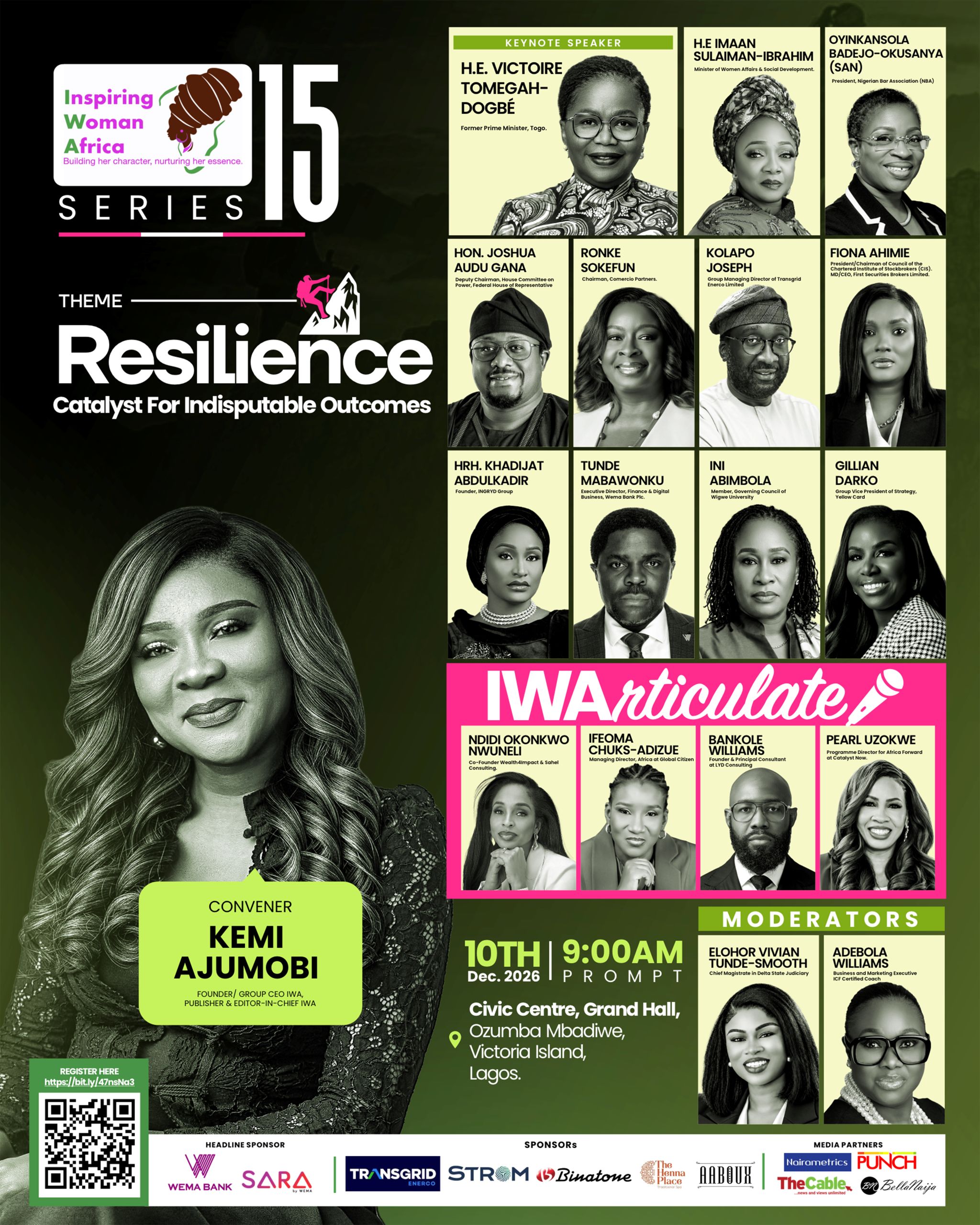
Click To Register
Latest Edition of IWA Magazine
October 20, 2026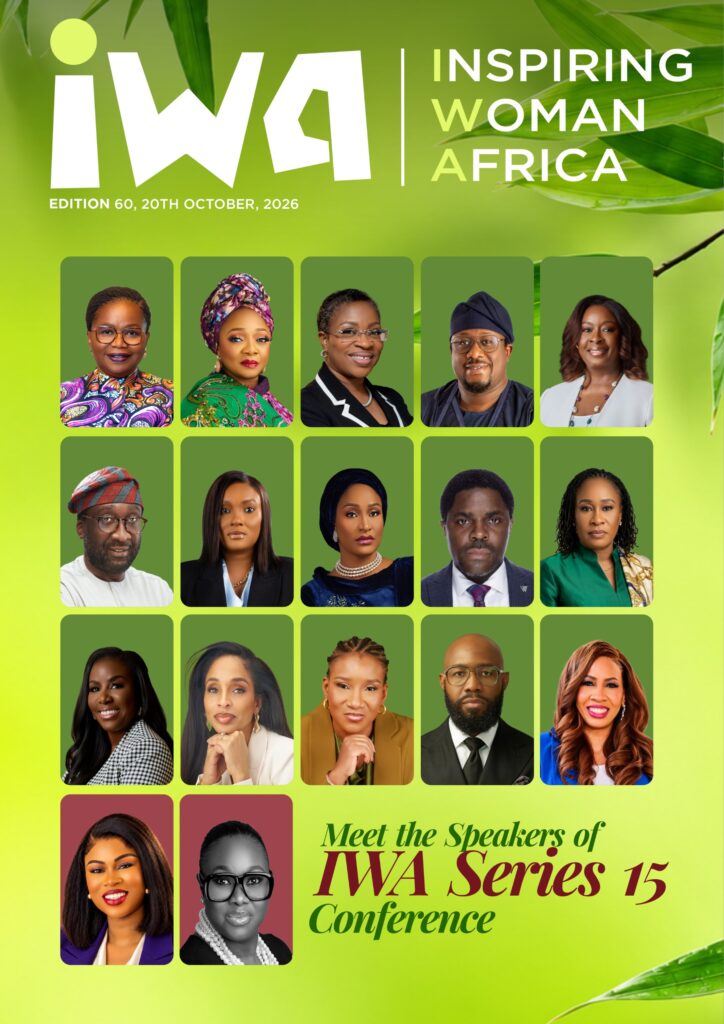
Meet the Speakers of IWA Series 15 Conference
Latest Posts
-
 Oct 20, 2026 Hard Conversations: The Skill No One Puts on a CV
 -
 Oct 20, 2026 5 Africa Women Listed as 2026 Forbes Icons
 -
 Oct 20, 2026 You Are Wealthier Than You Think