 Wola Joseph-Condotti
Leadership is often celebrated for its visibility.
The titles. The influence. The ability to make decisions that shape organisations and industries.
But what is less often spoken about is the weight.
The weight of expectations. The weight of responsibility. The weight of knowing that your decisions affect not just outcomes – but people, livelihoods, and futures.
And then, there are the seasons when that weight intensifies.
The seasons of pressure. Of criticism. Of fatigue.
The seasons when leadership does not feel powerful. It feels heavy.
When the Fire Comes
Every leader, at some point, will walk through fire.
It may come as public criticism. A failed initiative. A difficult boardroom. A season where nothing seems to align despite your best efforts.
And in those moments, the instinct is often to push harder.
To rely on grit. To tighten control. To prove strength.
But here is a truth I have learned over time: grit may get you through a moment but only grace will sustain you through a season.
The Difference Between Reaction and Response
Pressure has a way of exposing what is within.
When leadership feels heavy, it is easy to become reactive:
To respond sharply
To make rushed decisions
To lead from frustration instead of clarity
But grace creates space. Space to pause. Space to reflect. Space to respond with wisdom rather than emotion.Grace does not mean weakness. It means strength under control.
It is the ability to remain grounded when everything around you feels uncertain.
Anchored from Within
The higher you rise, the fewer places you have to hide.
You cannot always share your fears openly. You cannot always offload the weight you carry. Which is why your internal anchoring becomes critical.
For me, that anchor is faith.
It is the quiet moments of prayer before difficult meetings. It is the reminder that I am not carrying this alone. It is the discipline of returning to stillness when the noise gets loud.
Because when you are anchored internally, you are not easily shaken externally.
Lessons from the Storm
One of the most powerful biblical moments is when Jesus calms the storm.
While others panicked, He slept. Not because the storm was not real but because He was anchored beyond it.
And when He rose, He did not react to the chaos. He spoke with authority. With calm. With clarity.
That is the posture of grace.
Not denying the storm. But not being defined by it.
Leading with Humility and Peace
There is also a humility required in difficult seasons.
To admit that you do not have all the answers. To seek counsel. To listen, even when you are the leader.
Because leadership is not about having control over everything. It is about maintaining peace within yourself, even when circumstances are unstable.
And that peace becomes contagious.
Your team will draw strength not just from your strategy, but from your stability.
Final Thoughts
To anyone carrying the weight of leadership in a difficult season:
You are not alone.
The pressure you feel does not mean you are failing. It means you are leading in a space that matters.
But you do not have to carry it in your own strength.
Choose grace over grit. Stillness over striving. Response over reaction.
Because the storms will come.
But they do not have to shake you.
When you are grounded (spiritually, emotionally, internally)
you can lead through fire without being consumed by it.
And that is the kind of leadership that endures.
About Author
Wola Joseph-Condotti
Wola Joseph-Condotti is the CEO, Eko Power Limited. She is a Harvard-trained lawyer and passionate advocate for faith-driven leadership, gender equity, and energy transition in Africa. She writes from the intersection of power, purpose, and personal growth.
The IWA Series 15 Conference is Here
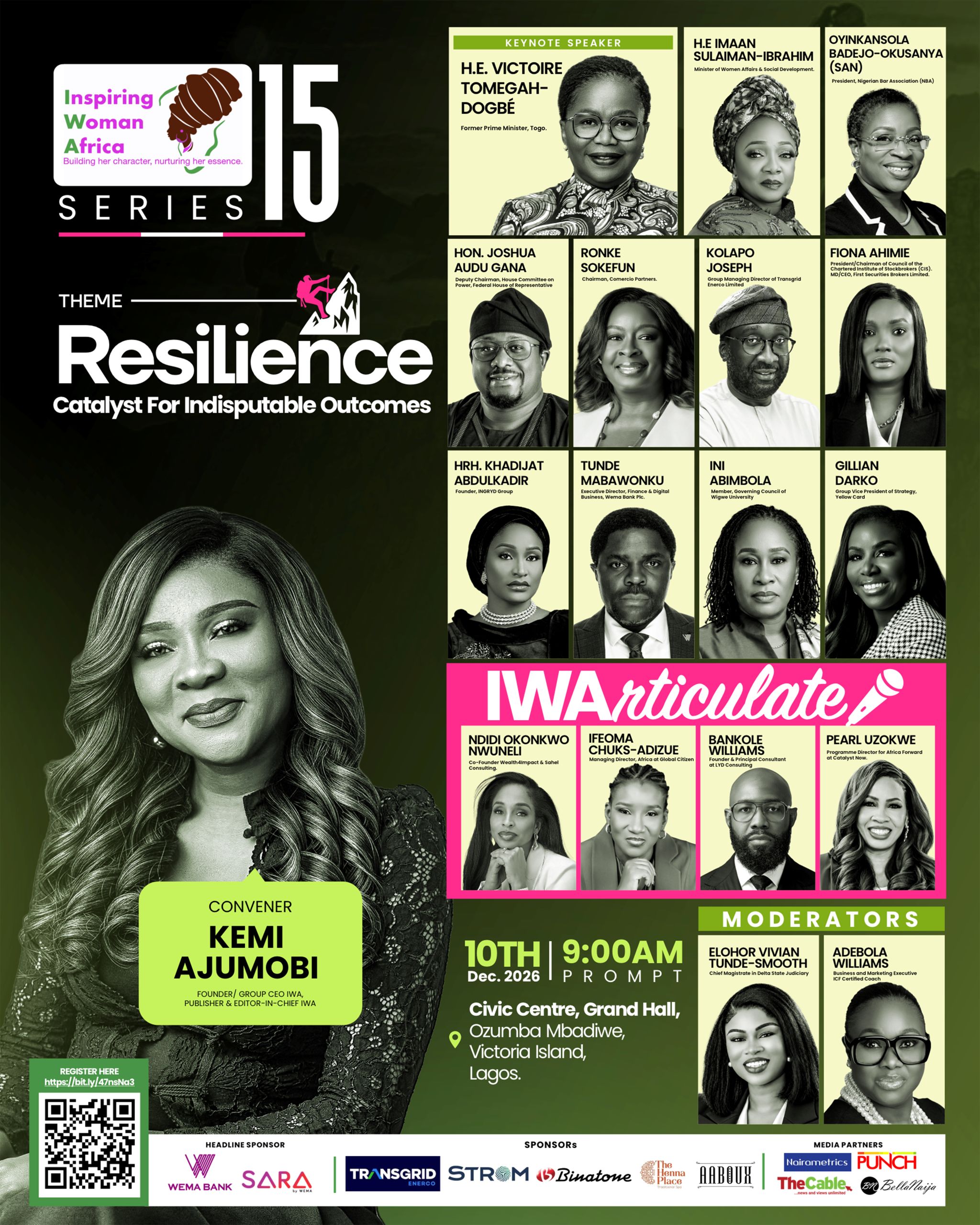
Click To Register
Latest Edition of IWA Magazine
October 20, 2026
Meet the Speakers of IWA Series 15 Conference
Latest Posts
-
 Oct 20, 2026 Hard Conversations: The Skill No One Puts on a CV
 -
 Oct 20, 2026 5 Africa Women Listed as 2026 Forbes Icons
 -
 Oct 20, 2026 You Are Wealthier Than You Think