 Kemi Ajumobi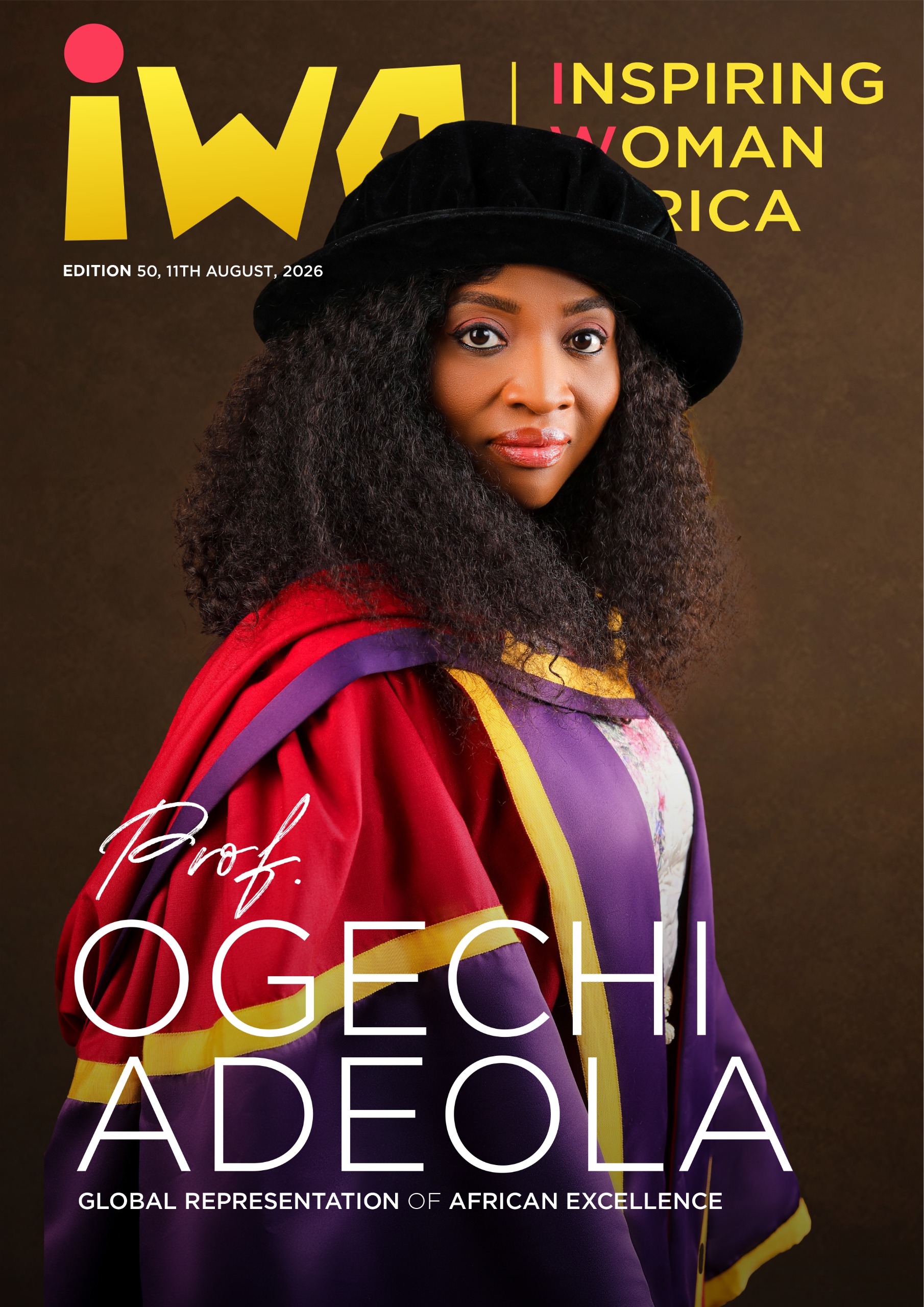
Professor Ogechi Adeola is an internationally recognised academic leader and marketing scholar, currently serving as a Deputy Vice-Chancellor at the University of Kigali, Rwanda, and Adjunct Professor at Torrens University, Australia. She was previously Professor (Full) of Marketing and Head of the Department of Operations, Marketing, and Information Systems at Lagos Business School, Pan-Atlantic University, Nigeria. She holds a Doctorate and Master’s degree in Business Administration from Alliance Manchester Business School, UK, as well as a Bachelor of Laws from the University of Nigeria and a Barrister-at-Law qualification from the Nigerian Law School.
Professor Adeola holds several high-level governance and advisory positions. She serves as an Independent Non-Executive Director at Cornerstone Insurance Plc, Nigeria; Non-Executive Director at IITA Business Incubation Platform (IITA-BIP); Trade Advisor, Nigerian-British Chamber of Commerce (NBCC); and as a member of the Business Administration Advisory Board at the University of the People, USA.
She also previously served on the Board of Directors at the University of Kigali prior to her appointment as Deputy Vice-Chancellor in January 2024. Before transitioning to academia, she built a 14-year career in Nigeria’s financial sector, beginning at Citibank Nigeria and advancing to senior management roles in other banks.
A prolific researcher, author, and educator, Professor Adeola’s interdisciplinary scholarship spans strategic marketing, digital marketing, tourism and hospitality, entrepreneurship, gender, sustainability, and emerging market studies, with a particular focus on Africa.
Her research has earned widespread international recognition. In the 2025 AD Scientific Index, she was ranked the No. 1 scientist in Nigeria in Marketing, No. 6 in Nigeria in Business and Management, and among Africa’s top six marketing scholars.
Elsevier’s SciVal also recognised her among Nigeria’s top 100 authors by scholarly output (2020–2023). Her research has received multiple Best Paper Awards at international conferences and the prestigious Emerald Literati Award for Outstanding Paper (2022).
She was also recognised among the world’s Top 2% Scientists in the Stanford–Elsevier Global Ranking (2025 edition). In 2026, following her appointment to the University of Kigali, she was ranked among Rwanda’s top 10 scientists across all disciplines and the country’s leading scholar in Business and Management by the AD Scientific Index.
Beyond academia, she is an international marketing consultant with experience across Africa, Asia, the UK, and the USA. She advises Afreximbank on the African Sub-Sovereign Governments Network (AfSNET) initiative and contributed to the Gordon Institute of Business Science’s 2022 Building Africa Report on women’s inclusion in the cement, concrete, and construction industries.
In 2022, she served as National Consultant for the International Labour Organisation’s project promoting women’s economic empowerment with focus on entrepreneurship in Nigeria. She is also the founder of the Digital Business Tutelage for Women Empowerment in Africa Initiative (DBTWEAi), a non-profit platform empowering young African women.
Professor Adeola’s contributions to women’s empowerment and sustainable development have earned global recognition. She is the recipient of the Female Achievers Recognition Award (2022), The Peak Performing Woman of the Year Award (2023, Executive Education), and the Most Influential Women Sustainability Award (2024, WASD, London).
In 2025, she was honoured as one of the 50 Most Influential Educators in Global Hospitality by the International Hospitality Institute (IHI).

Childhood memories and influence till date.
I often say that my life has been a colourful journey, and perhaps that is why my students affectionately nicknamed me “Prof Colours.” It began as a playful reference to my colourful outfits, but over time, it came to mean much more than that. I like to think it also reflected the diversity of my experiences, my enthusiasm for life, and my willingness to embrace new opportunities. Perhaps that is also why I have always loved the colours of the rainbow. To me, each colour is beautiful and unique, yet together they create something even more remarkable. They remind me of the richness of God’s creation, the beauty of diversity, and the hope that follows the storm. Looking back, I realise that every stage of my journey has added a new colour to my life and shaped the person I am today.
I was born in Enugu, in eastern Nigeria, as the fourth of eight children into a family where education, faith, integrity, and hard work were not merely values but a way of life. My mother, a teacher at Ekulu Primary School, nurtured our curiosity and encouraged us to ask questions, while my father, a university lecturer who later became a successful businessman, inspired us to pursue our passions with confidence and purpose. As the fourth girl, he had hoped for a son, but he never made his daughters feel there was anything beyond our reach. Instead, he raised us to believe that excellence knows no gender.
One of my earliest memories still makes me smile. When I was about eight years old, I wrote my first novel, a detective story called ‘Saving Her.’ My father’s faithful secretary patiently typed the manuscript on a Smith Corona typewriter while my father encouraged me every step of the way. The story was about a young girl who saved the world through her knowledge of espionage, probably inspired by the ‘Secret Seven’ and ‘Famous Five’ books that I read endlessly, much to my mother’s frustration because I often preferred reading to doing household chores. That little unpublished novel may never have reached the shelves of a bookshop, but it gave me something even more valuable. It gave me the confidence to believe that ideas mattered and that I, too, could contribute something meaningful to the world.
Another defining influence was my secondary school, the Federal Government Girls’ College, Owerri. Every Monday morning during assembly, our principal, Mrs G. G. Garrick, would challenge us with a simple but powerful statement: “Don’t go cap in hand, begging; get your meal ticket.” As a young girl, those words stayed with me. They taught me the importance of education, self-reliance, and personal responsibility. During those years, I also discovered my love for words and public expression. I became known around the school as the “School Poet,” writing and reciting poems on themes ranging from the War Against Indiscipline to the global campaign to Free Nelson Mandela. In hindsight, I realise those experiences were planting the seeds of a lifelong passion for storytelling, communication, and using ideas to inspire positive change. Even today, the echoes of Mrs Garrick’s voice still remind me that true empowerment comes from equipping ourselves with the knowledge and skills to live meaningfully and contribute to society.
I was also fortunate to encounter teachers who made learning an adventure. One I remember with particular affection was our young National Youth Service Corps music teacher, Mr Dave Egbuson, whom we mischievously nicknamed “The Caveman.” With his infectious enthusiasm, he transformed the classroom into a stage, composing songs inspired by popular themes such as James Bond 007’s ‘The Man with the Golden Gun’ and encouraging us to sing, dance, and laugh while we learned. He showed us that education could be joyful as well as meaningful. Looking back, I realise that great teachers do much more than deliver lessons; they awaken curiosity, ignite imagination, and inspire dreams. His enthusiasm left a lasting impression on me and continues to influence how I think about teaching today.
My parents also ensured that learning extended beyond the classroom. We participated in activities such as the NTA Junior Opinion programme and the Tortoise Club in Enugu, experiences that nurtured confidence, creativity, and communication skills from an early age. Those opportunities encouraged me to express myself, think independently, and engage with the world around me. Years later, while working in the corporate sector, I found another outlet for that passion through writing. I became a regular columnist for The Guardian on Saturday, where I wrote a full-page weekly series, ‘Naija Single Gals Club’, a fictional column that explored relationships, contemporary social issues, and everyday life with humour, insight, and storytelling. Looking back, I realise that writing has remained one of the constants throughout my life, from childhood stories and newspaper columns to children’s cartoons, fictions, academic books, scholarly publications, and policy papers.

Perhaps the greatest lesson my childhood gave me was the understanding that life does not always follow a straight path. I trained as a lawyer, built a rewarding career in banking, discovered an unexpected passion for marketing, and eventually found my calling in academia. Looking back, I can see that each chapter prepared me for the next.
My father passed away earlier this year at the remarkable age of ninety-five, and I miss him dearly. Yet his unwavering belief in me continues to inspire everything I do. My mother remains a constant source of strength and encouragement. Together, they taught me that success is never simply about personal achievement. It is about using our gifts to serve others, creating opportunities for those who come after us, and leaving every place better than we found it.
Today, by the grace of God, whether I am teaching, conducting research, providing university leadership, serving on corporate and editorial boards at home and abroad, mentoring the next generation of scholars, or writing books, I remain guided by the values that were planted during those early years. They taught me to dream boldly, work diligently, lead with humility, embrace change, and never stop learning.
Over the years, I have realised that writing has been the thread connecting every stage of my journey. From that little detective novel written at the age of eight, to newspaper columns, children’s books, fiction, scholarly publications, and policy papers, I have always believed that ideas have the power to inform, inspire, and transform lives. If my journey encourages another young girl to believe that her dreams are valid, then I know those childhood lessons have come full circle.
Being Deputy Vice-Chancellor and the responsibilities.
To me, a Deputy Vice-Chancellor is first and foremost an institution builder. My responsibility is to help build an environment where students thrive, academics flourish, research addresses society’s most pressing challenges, innovation generates meaningful impact, and partnerships create opportunities that extend well beyond the university.
My association with the University of Kigali actually began before my executive appointment. I had the privilege of serving on the University’s Governing Board for about a year, an experience that gave me valuable insight into its vision, governance, and strategic aspirations. When I joined the University in January 2024 as Deputy Vice-Chancellor, it was therefore more than taking on a new role; it was an opportunity to contribute more directly to an institution whose future I already believed in.
Since then, I have had the privilege of leading combined strategic portfolios as Deputy Vice-Chancellor, Academic Affairs and Research, Innovation and Enterprise. These responsibilities have reinforced my appreciation that teaching, research, and innovation are not separate functions but mutually reinforcing pillars of a great university. Excellent teaching inspires research. Research drives innovation. Innovation creates solutions that transform lives and contribute to national and continental development.
Today, the University of Kigali is home of study to more than 10,000 students from 34 nationalities, creating a vibrant multicultural academic community. Leading within such a diverse environment has been both a privilege and a constant reminder that universities are places where different perspectives, experiences, and cultures come together to generate new ideas, enrich learning, and prepare graduates for an increasingly interconnected world.

My current portfolio as Deputy Vice-Chancellor Research, Innovation and Enterprise is particularly exciting because it sits at the intersection of knowledge creation and societal transformation. I firmly believe that universities should not simply produce graduates and publications; they should produce solutions. Research should improve lives, inform public policy, strengthen businesses, stimulate innovation, and contribute meaningfully to sustainable development. That philosophy underpins much of my work.
One of the most rewarding aspects of my role is helping to create an environment in which others can succeed. Whether it is mentoring early-career academics, strengthening postgraduate education, supporting colleagues to secure competitive research grants, expanding international collaborations, promoting entrepreneurship, or helping researchers translate ideas into innovations with real societal impact, I derive immense satisfaction from seeing people and institutions grow together.
Leadership has also taught me that universities are ultimately about people. Buildings, policies, and technologies are important, but they achieve very little without committed individuals who share a common purpose. I therefore strive to lead through collaboration rather than hierarchy. I believe in listening carefully, encouraging diverse perspectives, empowering capable people, and creating an environment where excellence becomes a shared aspiration rather than an individual pursuit.
Having also had the privilege of serving as Acting Vice-Chancellor on several occasions has further reinforced my appreciation of institutional leadership. It has reminded me that leadership is not simply about making decisions; it is about stewardship, continuity, and ensuring that an institution remains focused on its mission while inspiring confidence among staff, students, partners, and other stakeholders.
As Africa seeks to strengthen its place within the global knowledge economy, I believe universities have a pivotal role to play. They must become centres of innovation, entrepreneurship, policy engagement, and societal transformation. They must generate knowledge that is globally respected while remaining deeply relevant to the communities they serve. Above all, they must equip graduates not only with qualifications, but with the character, skills, and mindset to lead positive change.
More importantly, I see leadership as an opportunity to serve. My aspiration is to help build institutions that will outlast individuals, develop people who will lead with integrity, and generate knowledge that transforms lives. If, through my work, I can contribute in some measure to strengthening higher education and advancing Africa’s development, then I believe I have fulfilled my purpose.

The day you were conferred professorship, share that experience with us and what it means to you.
Without question, it remains one of the happiest and most emotional days of my life. I remain deeply grateful to Lagos Business School and Pan-Atlantic University for providing an environment that challenged, nurtured, and supported me throughout my academic journey. Being conferred with a Professorship was a tremendous honour. Titles eventually become part of one’s biography. Moments like that remain in one’s heart forever. People often remember the title of Professor. And delivering my inaugural lecture shortly afterwards made the occasion even more impactful.
An inaugural lecture is much more than an academic tradition. It is an opportunity for a professor to reflect on a lifetime of scholarship while setting out a vision for the future. For me, it represented the culmination of years of study, sacrifice, perseverance, and an unwavering commitment to excellence. More importantly, it provided an opportunity to articulate the research agenda that has become the passion of my academic career: championing indigenous African knowledge systems, decolonising Africa’s business practices, and demonstrating that Africa possesses rich entrepreneurial traditions and management philosophies that deserve far greater recognition within global scholarship.
Yet, what made that day more unforgettable was seeing my father seated proudly in the front row. I remember my father’s smile.
By then, he was about ninety-two years old.
I had prayed earnestly that God would preserve his life so that he could attend because I wanted him to witness that milestone with me. Throughout my life, I had always wanted to make him proud.
There was another reason why his presence meant so much.
My father had once been an academic himself. He left the university as a Senior Lecturer to pursue a successful career in business, but he always cherished the dream of becoming a Professor. In many ways, my own academic journey became a tribute to that unfulfilled aspiration. I often say that while I earned the title, I carried his dream with me throughout the journey. My father passed away earlier this year at the remarkable age of ninety-five. Although I miss him deeply, I thank God that he lived to witness that moment and that I had the opportunity to tell him publicly how much his love, sacrifices, and unwavering belief in me had helped shape the woman I have become.
Standing before colleagues, students, family, and friends, I had the privilege of publicly acknowledging him and expressing my gratitude while he was there to hear it. Looking towards him and seeing his smile remains one of the defining moments of my life. In that instant, every late night, every challenge, every sacrifice, and every difficult decision became worthwhile.
Earlier, I had dedicated my edited book, ‘Indigenous African Enterprise: The Igbo Traditional Business School’ to my parents in appreciation of their unwavering love and support. However, seeing my father witness my inaugural lecture, hear me acknowledge him publicly, and understand the vision that would shape the next chapter of my academic career was perhaps the greatest gift I could ever have given him.
My inaugural lecture was titled “Decolonising Africa’s Business Practices: Pro-Indigenous Marketing Pathways to a Paradigm Shift.” It reflected a conviction that has guided much of my research: that Africa possesses distinctive cultural, entrepreneurial, and business traditions capable of contributing meaningfully to global knowledge and sustainable development. My hope was, and remains, to encourage greater confidence in African scholarship and inspire others to recognise that some of the continent’s greatest innovations are deeply rooted in its own history, cultures, and people.
I often describe myself as an African scholar living and working in Africa, with a deep commitment to projecting a balanced, authentic, and positive image of our continent through rigorous scholarship. I believe Africa’s story is best told by those who understand its history, cultures, institutions, aspirations, and lived realities. Inspired by Chinua Achebe’s timeless reminder that until the lions have their own historians, the history of the hunt will always glorify the hunter, my aspiration has been to contribute African perspectives that enrich global scholarship while celebrating the ingenuity, resilience, and possibilities that define our continent. My aspiration is simple: to help ensure that Africa is not only studied but also heard; not only represented but respected; and not only a consumer of knowledge but also a producer of ideas that enrich the world.
That day was also a celebration of my family. Behind every academic milestone are years of unseen sacrifices, encouragement, patience, and prayer. I remain profoundly grateful to my husband, my son, our wider family, and the many people who have supported me faithfully over the years. Their unwavering love, prayers, encouragement, and understanding have sustained me throughout this journey. Whatever I have been able to achieve has been made possible, in no small measure, by their steadfast support. Academic success is rarely an individual achievement; it is often a shared accomplishment.
Strengthening the link between teaching quality and research output
I have always believed that teaching and research are two sides of the same coin.
Research without teaching risks remaining confined to journals and conferences. Teaching without research risks becoming outdated.
The most effective universities create a continuous cycle where research informs teaching, and classroom discussions generate new research questions. Students benefit from exposure to emerging ideas rather than relying solely on established theories, while academics remain intellectually curious and engaged with contemporary challenges.
As a university leader, I encourage colleagues to integrate their research into the classroom and to pursue scholarship that addresses real societal needs. Publications are important, but they should not become an end in themselves. Research should influence policy, strengthen businesses, improve communities, and contribute meaningfully to sustainable development.
Overall, the quality of a university is reflected not only in the number of papers it publishes, but also in the quality of graduates it produces and the difference it makes to society.

Passion for apprenticeships and why
My passion for apprenticeships is really part of a much bigger passion: discovering, documenting, and elevating indigenous African knowledge systems.
As my academic career developed, I became increasingly interested in a fundamental question: What would management theory look like if it were developed from African realities rather than borrowed exclusively from Western contexts? That question gradually became one of the defining themes of my research and continues to shape my scholarly journey today.
For many years, I have deliberately searched for indigenous African business management theories and practices that have sustained enterprises for generations but have received relatively little attention within mainstream management scholarship. I became convinced that Africa possesses rich entrepreneurial knowledge that deserves to be researched rigorously, codified systematically, and shared confidently with the world.
One experience strengthened that conviction profoundly.
Several years ago, while visiting Dubai, I watched young Igbo entrepreneurs working tirelessly to build successful businesses. I remember feeling an overwhelming sense of pride. They were not waiting for opportunities to come to them. Through determination, resilience, discipline, and honest enterprise, they were creating opportunities for themselves and for others.
At that moment, I realised I was witnessing much more than commerce.
I was witnessing a centuries-old indigenous business school operating successfully thousands of miles away from home.
Among the Igbo people of southeastern Nigeria, this system is popularly known as Igba Boi. Far more than a traditional apprenticeship, it is a sophisticated enterprise development model built on mentorship, trust, experiential learning, discipline, succession planning, and ultimately economic empowerment. It is informal in structure, yet highly organised, disciplined, and remarkably effective. Young apprentices do not simply learn a trade; they learn leadership, customer relationships, negotiation, resilience, financial discipline, business ethics, and the values required to build sustainable enterprises. At the successful completion of the apprenticeship, many mentors provide financial and material support to enable apprentices to establish businesses of their own, creating a remarkable cycle of entrepreneurship, wealth creation, and social mobility.
Recognising the significance of this indigenous system, I introduced the concept of the Igbo Traditional Business School (I-TBS) through my edited Emerald Publishing volume, Indigenous African Enterprise: The Igbo Traditional Business School. I described it as a “School without Walls”— a sophisticated institution of lifelong entrepreneurial learning that exists outside the conventional classroom. It has no formal campus, library, or address, yet for generations it has successfully developed entrepreneurs through apprenticeship, mentorship, indigenous finance, entrepreneurial clusters, succession planning, family businesses, sales practices, conflict management, and talent development. My objective was not simply to document a cultural practice but to demonstrate that Africa possesses sustainable business models capable of contributing meaningfully to management theory, entrepreneurship, and enterprise development globally.
An interesting chapter in that journey came after the book’s publication. During a Lagos Business School CEO event, I happened to be seated beside Valentine Ozigbo. As we spoke, we discovered a shared passion for the Igbo apprenticeship system and its remarkable contribution to entrepreneurship and wealth creation. That conversation eventually evolved into our co-authored book, ‘Igba-Boi: Repositioning the Igbo Apprenticeship System’ through which we sought to make the model more accessible not only to academics but also to policymakers, business leaders, entrepreneurs, and the wider public.
Since then, I have deliberately worked to codify, legitimise, and elevate indigenous African enterprise models through books, scholarly publications, conference presentations, keynote addresses, policy engagement, and international collaborations. It has been particularly encouraging to witness the growing national and international interest in the Igbo apprenticeship system. This year, I had the privilege of contributing to a BBC feature examining the system’s remarkable role in entrepreneurship, wealth creation, and social mobility. For me, it was much more than a media appearance; it was another opportunity to bring indigenous African enterprise to a global audience and demonstrate that Africa’s knowledge systems have much to contribute to contemporary conversations on entrepreneurship, inclusive development, and sustainable business.
Importantly, the significance of Igba Boi extends far beyond apprenticeship itself.
It challenges the long-held assumption that innovation must always originate elsewhere. It reminds us that Africa has developed sophisticated systems of talent development, venture creation, succession planning, indigenous finance, and wealth transfer long before these concepts became fashionable in contemporary management literature.
My aspiration has never been simply to preserve indigenous knowledge. It has been to research it rigorously, codify it systematically, and position it confidently within global scholarship. Through the concepts of the Igbo Traditional Business School (I-TBS) and the Igba Boi apprenticeship model, I have sought to demonstrate that Africa is not merely a consumer of management knowledge; it is also a producer of sophisticated enterprise systems from which the world can learn.
I firmly believe that Africa has much to teach the world. Sometimes innovation is not about inventing something entirely new. Sometimes, it is about rediscovering the wisdom embedded within our own cultures, examining it with scholarly rigour, and presenting it confidently as part of global knowledge. That is the mission that continues to inspire my work, and one that I hope will contribute, in some small way, to building the Africa of our dreams.
What does enterprise development look like beyond incubation?
Many people assume that enterprise development ends once a start-up has completed an incubation programme. I see incubation as only the beginning of a much longer journey.
True enterprise development involves helping ideas evolve into sustainable businesses capable of creating jobs, generating wealth, solving societal problems, and contributing to national development.
That means supporting entrepreneurs through commercialisation, access to finance, market development, technology transfer, governance, partnerships, scaling strategies, and international market access. It also means creating ecosystems where universities, industry, government, investors, and communities work together to support innovation.
Universities have a particularly important role to play because they bring together knowledge, talent, research, and creativity. Our responsibility is not simply to produce graduates or publish research papers. It is to help transform ideas into enterprises that improve lives and contribute meaningfully to economic and social development.
For me, enterprise is ultimately about impact. Success is measured not only by the number of start-ups created, but by the value they generate for society.

As a Full Professor of Marketing, how has your marketing lens shaped your approach to innovation and enterprise?
Marketing has taught me one lesson above all else: innovation begins with understanding people.
Many organisations become fascinated by technology, forgetting that innovation succeeds only when it addresses genuine human needs. Technology is an enabler, but it should never become the starting point. People are.
Marketing encourages us to listen carefully, understand behaviour, anticipate changing expectations, and create solutions that deliver meaningful value. That perspective has shaped not only my research but also my leadership philosophy.
Whether we are designing new academic programmes, supporting entrepreneurs, strengthening research ecosystems, or building partnerships, the first question should always be: Whose problem are we trying to solve? In my classes, I often encourage students to begin with the five Ws and one H—Who? What? When? Where? Why? and How? I have found that asking the right questions is often the first step towards finding meaningful solutions.
My years in banking also reinforced an important lesson: people do not simply buy products or services; they invest in value, trust, and relationships. That lesson continues to shape how I approach leadership, innovation, and enterprise.
When institutions truly understand the people they serve, innovation becomes purposeful rather than accidental. For me, successful enterprise is not measured simply by financial returns but by its ability to create sustainable value, improve lives, and contribute to society. That is the kind of innovation Africa needs.
Business schools evolving to keep pace with changing industry and technology
Business schools must evolve from being transmitters of knowledge to becoming creators of solutions.
Today’s graduates require far more than technical competence. They need digital literacy, entrepreneurial thinking, ethical judgement, adaptability, creativity, emotional intelligence, and the ability to collaborate across disciplines and cultures.
Artificial intelligence, sustainability, climate change, demographic shifts, and rapid technological advancement are transforming the way organisations operate. Business schools must anticipate these changes rather than merely respond to them. Curricula should be dynamic, interdisciplinary, and developed in close partnership with industry to ensure that graduates possess the skills employers need today while remaining prepared for jobs that may not yet exist.
At the same time, African business schools must develop greater confidence in African scholarship and indigenous knowledge systems. We should continue learning from global best practice while also contributing ideas rooted in our own entrepreneurial traditions, institutions, and development experiences.
The future belongs to business schools that combine academic rigour with innovation, international relevance with local impact, and technological advancement with an unwavering commitment to developing ethical, purpose-driven leaders. Business schools should not simply prepare students for their first job; they should prepare them for careers that will evolve throughout their lives.
What did the Lagos Business School Sales Academy teach you that can be applied to university-business engagement in Rwanda and beyond?
Leading the Lagos Business School Sales Academy reinforced a lesson that has stayed with me throughout my career: people do business with people they trust.
Sales is often misunderstood as persuading people to buy products or services. In reality, it is about understanding people, building relationships, creating value, and earning trust over time. My years in banking and later at the Sales Academy taught me that successful engagement begins not with selling, but with listening.
The African business environment also offers important lessons. Across much of the continent, business is deeply relational. Decisions are influenced not only by price or product quality, but also by credibility, reputation, mutual respect, and long-term relationships. My research has consistently shown that African business practices are embedded in culture, community, reciprocity, negotiation, and trust. Understanding these realities enables us to build partnerships that are not only commercially successful but also socially sustainable.
Those lessons apply directly to higher education. Universities should not see industry simply as a source of internships, funding, or employment opportunities. They should be genuine strategic partners in knowledge creation, innovation, entrepreneurship, and national development. When universities listen carefully to the needs of industry and society, they are better positioned to design relevant curricula, undertake impactful research, commercialise innovation, and prepare graduates who can thrive in an ever-changing world.
One lesson I have carried with me throughout my career is that the strongest partnerships are never transactional; they are transformational. They are built on mutual respect, shared purpose, and consistently delivering value. Whether engaging with students, businesses, governments, development partners, or communities, I have found that listening is often more important than speaking.
For me, the Sales Academy reinforced a philosophy that continues to guide my work today: successful institutions, like successful businesses, create lasting value by understanding people, responding to their needs, and building relationships that stand the test of time. I believe that philosophy is fundamental to strengthening university-business engagement, not only in Rwanda, but across Africa.

Lesson learnt from cross-continental leadership that changed how you work till date
Perhaps the most important lesson is that effective leadership begins with listening before leading.
Having worked in both Nigeria and Rwanda, I have come to appreciate that every institution and every country has its own history, culture, priorities, and strengths. What works well in one environment may not necessarily work in another.
Cross-cultural leadership requires humility. It requires recognising that leadership is not about imposing one’s own ideas but about understanding context, building trust, and working collaboratively towards shared goals.
Living and working in Rwanda has broadened my appreciation of discipline, national vision, efficiency, and the remarkable possibilities that emerge when institutions align behind a common purpose. At the same time, my experiences in Nigeria continue to remind me of the resilience, creativity, entrepreneurial spirit, and immense human capital that define our people.
Rather than comparing the two countries, I see them as enriching one another. Every experience has made me a better listener, a more inclusive leader, and someone who appreciates the value of diversity in solving complex challenges.
Policy and educational themes that seem most urgent across Africa
Africa stands at a remarkable moment in its history. We have one of the youngest populations in the world, extraordinary entrepreneurial energy, abundant natural resources, and rapidly expanding digital connectivity. The question is whether we will transform these advantages into sustainable and inclusive development.
For me, five priorities stand out.
First, improving the quality and relevance of education so that graduates are equipped not only for today’s jobs but also for the jobs of tomorrow.
Second, strengthening research, innovation, and entrepreneurship so that African universities become creators of solutions rather than consumers of knowledge.
Third, embracing digital transformation and artificial intelligence while ensuring that technological advancement remains ethical, inclusive, and accessible. At the same time, we must integrate sustainability into our development agenda. Climate change, the circular economy, and the transition to Net Zero are no longer environmental issues alone; they are central to Africa’s future competitiveness.
Fourth, expanding entrepreneurship and enterprise development, particularly for women and young people, who represent Africa’s greatest opportunity for inclusive growth and prosperity.
Fifth, strengthening partnerships among governments, universities, industry, and civil society. No single sector can transform Africa on its own.
Above all, we must have greater confidence in ourselves. Africa possesses rich intellectual traditions, entrepreneurial models, and indigenous knowledge systems that deserve greater recognition alongside global best practices. We should build institutions that are globally competitive while remaining authentically rooted in Africa’s realities, values, and aspirations.
I remain optimistic about Africa’s future. If we invest in people, strengthen our institutions, embrace innovation, and have the confidence to develop and share African solutions with the world, I have no doubt that Africa’s greatest chapter is still ahead of us.
Translating complex research evidence into decisions that policymakers can act on
I believe this is one of the greatest responsibilities of modern academics.
Research has little value if it remains confined to academic journals. It should improve policies, strengthen institutions, inform business decisions, and ultimately improve people’s lives.
Unfortunately, there is often a disconnect between researchers and policymakers. Academics sometimes communicate in highly technical language, while policymakers often require concise, practical recommendations supported by credible evidence.
Bridging that gap requires intentional effort.
Researchers must learn to communicate more effectively with non-academic audiences through policy briefs, executive summaries, stakeholder engagement, and public scholarship.
At the same time, governments should increasingly recognise universities as strategic partners capable of providing evidence-based solutions to national challenges.
When research influences policy, society experiences the true value of scholarship. Knowledge changes nothing until it is translated into action.
What makes advisory work successful from your perspective: relationships, data, implementation capacity, or all of these?
I would say all of them are essential, but if I had to identify the most important, it would be implementation.
Relationships build trust.
Data provides evidence.
Strategy creates direction.
But implementation is what ultimately transforms ideas into measurable impact.
Throughout my career, whether serving on corporate boards, advising governments, supporting international organisations, or contributing to university leadership, I have learned that success depends not simply on producing good recommendations but on ensuring that those recommendations can actually be implemented within the realities of the institution.
Good advice should always be practical, evidence-based, context-sensitive, and capable of delivering sustainable outcomes. Yes, advice creates value only when it can be implemented.
Evaluating institutional performance when you are serving on a board or advisory role
I believe institutional performance should never be measured solely by financial indicators or league tables.
Strong institutions are built on sound governance, ethical leadership, financial sustainability, innovation, people development, stakeholder trust, and long-term societal impact.
When I evaluate an institution, I ask several questions.
Are we fulfilling our mission?
Are we creating value for those we serve?
Are our people developing and succeeding?
Are our systems sustainable?
Are we adapting to future challenges?
Numbers matter, but culture matters even more.
An institution with a strong culture of integrity, continuous improvement, collaboration, and accountability is usually well positioned for long-term success.
How universities can improve curriculum responsiveness to labour market needs
Curricula should never be static.
The world is changing far too quickly for universities to review programmes only once every several years.
Curriculum development should be an ongoing conversation involving employers, professional bodies, alumni, students, entrepreneurs, policymakers, and international partners.
Universities should place greater emphasis on experiential learning through internships, apprenticeships, consultancy projects, simulations, entrepreneurship, and industry-based research.
Equally important are transferable skills such as communication, teamwork, critical thinking, creativity, adaptability, ethical leadership, and digital literacy.
Above all, universities should prepare graduates not only for today’s jobs but also for careers that will continue evolving throughout their lives.

Reducing the gap between graduate outcomes and employer expectations
Reducing this gap begins long before graduation.
Universities must understand what employers need while also anticipating future trends.
Industry partnerships are therefore essential.
Students should graduate having experienced internships, practical projects, entrepreneurship, multidisciplinary teamwork, and opportunities to solve real organisational problems.
At the same time, employers increasingly value qualities that cannot always be measured by academic grades alone.
They seek graduates who can communicate effectively, think critically, collaborate with diverse teams, embrace change, solve problems creatively, and continue learning throughout their careers.
Universities therefore have a responsibility to develop both technical competence and character.
I also believe entrepreneurship should become an integral part of higher education. Not every graduate will seek employment; many will become employers themselves. Universities should prepare them for both possibilities.
Turning points in your journey from department leadership to Deputy Vice-Chancellor leadership
Looking back, I do not think there was a single turning point. Rather, every leadership experience prepared me for the next, each broadening my perspective and strengthening my capacity to serve.
One of the most formative experiences was serving as Head of the Department of Operations, Marketing and Information Systems at Lagos Business School, one of Africa’s leading and internationally accredited business schools. This broad academic portfolio taught me to think beyond my own discipline, build consensus across diverse teams, and appreciate how different academic functions come together to deliver institutional excellence. Around the same period, I also led the Lagos Business School Sales Academy, an institution-wide leadership role that deepened my understanding of executive education, industry engagement, and the importance of building enduring partnerships between universities and business. Shortly before joining the University of Kigali, I also had a brief stint as Chair of the Lagos Business School Seminar Committee for Executive Programmes, having previously served as a member for several years. Although brief, the experience further strengthened my appreciation of strategic coordination, collaboration, and academic excellence at the institutional level.
These experiences built on a fourteen-year career in the Nigerian banking industry, beginning with Citibank Nigeria and later assuming managerial and leadership responsibilities in other leading financial institutions. Banking provided a strong foundation in strategic thinking, customer-centricity, performance management, governance, risk management, stakeholder engagement, negotiation, and leading high-performing teams. Looking back, I now recognise that those years prepared me not only for academic leadership but also for the broader responsibilities of institutional governance and executive management.
Beyond these institutional responsibilities, I was privileged to serve in a range of governance and leadership roles. These include a decade of service as Associate Dean and now as a member of the Advisory Board of the University of the People, United States. I also serve on corporate boards, including Cornerstone Insurance Plc, contribute to academic and editorial boards, and serve as a Series Editor for Palgrave Macmillan, collaborating with scholars from across the globe to advance research and scholarly publishing. Collectively, these experiences have shaped my understanding of governance, strategy, innovation, quality assurance, institutional stewardship, and leadership across higher education, industry, and international scholarly publishing.
Another significant milestone came when I had the privilege of serving on the Governing Board of the University of Kigali before joining its executive leadership. Viewing the University first through the lens of governance and later through executive leadership gave me a unique appreciation of how strategy, governance, and implementation must work together to achieve institutional success.
My transition into Deputy Vice-Chancellor leadership further broadened that perspective. Serving across different portfolios has reinforced my belief that universities are among society’s most important institutions because they shape people, generate knowledge, drive innovation, and contribute to national development.
Overall, I have come to appreciate that my leadership journey has been cumulative. Each experience, from banking to business education, institutional governance, and university leadership, has equipped me with a different perspective and prepared me for the next stage of service. The greatest lesson has been that leadership is not about titles; it is about stewardship. Our responsibility is to leave institutions stronger than we found them and to create opportunities for others to succeed.
Advice to women and early-career academics aiming for leadership roles
My first piece of advice is simple: pursue excellence before you pursue titles.
Leadership is rarely about seeking the next position. It is about consistently doing good work, acting with integrity, and adding value wherever you are. Over time, people begin to trust your judgement and your ability to lead.
Secondly, never stop learning. The world is changing rapidly, and continuous learning is no longer optional. Invest in yourself, remain curious, embrace new technologies, and never assume that you have arrived.
I would also encourage women not to underestimate themselves. Too often, we wait until we feel completely ready before accepting new opportunities. My experience has taught me that growth often begins when we step outside our comfort zone. Believe in your abilities, prepare diligently, and do not wait for permission to make a meaningful contribution. Step forward with confidence and let your work speak for itself.
Equally important is the responsibility to lift others as you rise. None of us succeeds alone. I have been blessed with mentors, colleagues, family, and friends who believed in me, and I believe we honour them by investing in the next generation. Leadership is not about how many followers you have; it is about how many leaders you help to develop.
That conviction also extends beyond the university. Through my non-profit initiative, the Digital Business Tutelage for Women Empowerment in Africa Initiative (Empowering African Women), I have sought to create opportunities that empower women through skills development, entrepreneurship, mentorship, and digital inclusion. For me, leadership is ultimately about creating opportunities that enable others to realise their own potential.
Finally, remember that success is not measured only by the positions you hold, but by the lives you touch, the opportunities you create, and the institutions you help to strengthen. Titles may open doors, but character, humility, and service are what sustain meaningful leadership.
Above all, keep God at the centre of your journey. Work hard, remain humble, stay true to your values, and never stop believing in the purpose He has for your life. Sometimes the path may not be straightforward, but every experience prepares you for the next chapter. Looking back, I realise that my journey from law to banking, academia, and university leadership was not a series of disconnected experiences. It was preparation for the work I was ultimately called to do.
Throughout my journey, two scriptures have remained especially close to my heart. Psalm 18:29 reminds me that “by my God I can leap over a wall,” encouraging me to see obstacles not as barriers but as opportunities to grow. Equally, Psalm 3:3 has been a constant source of strength: “But You, O Lord, are a shield for me, my glory and the lifter up of my head.”

Habits or principles that keep you effective across teaching, research, governance, and consultancy
Everything I do begins with faith. I start each day with prayer and a clear sense of purpose, reminding myself that every opportunity is a gift from God and another chance to serve.
For many years, I had two simple reminders displayed in my office. One read, “Either you run the day, or the day runs you.” The other simply said, Carpe Diem—Seize the Day. They continue to remind me to approach each day intentionally rather than reactively.
I am also guided by the wisdom of Ecclesiastes 11, which encourages us to sow our seed in the morning and in the evening because we do not know which effort will prosper—or whether both will flourish. The same passage reminds us that if we spend all our time waiting for perfect conditions, we may never begin. That has shaped how I approach life and work. I believe in giving every worthwhile opportunity my very best, working diligently, embracing new challenges with a sense of adventure, and trusting God with the outcome.
Another principle I hold dearly is that my work should speak louder than my words. Whether I am teaching a class, conducting research, serving on a board, or undertaking a consultancy assignment, I strive to give my very best. Every lecture, publication, report, presentation, or recommendation that leaves my desk carries my name, and I want it to reflect excellence, integrity, and professionalism. While perfection may not always be attainable, excellence should always be the standard we pursue.
I also believe deeply in the power of collaboration and mentoring. There is a saying that no one can whistle a symphony; it takes an orchestra to play one. Some of my most rewarding work has been accomplished through collaboration with colleagues, students, industry partners, and institutions across different countries. Equally important is investing in people. I derive great satisfaction from mentoring younger academics and professionals, opening doors where I can, and celebrating the success of others. As Helen Keller wisely observed, “Alone we can do so little; together we can do so much.”
Finally, I never stop learning or reinventing myself. My journey from law to banking, academia, and university leadership has taught me that growth requires curiosity, adaptability, and the courage to embrace change. I believe the most important competition is not with anyone else but with the person I was yesterday. Every new experience is an opportunity to become a better version of myself.
At its heart, effectiveness is not about being busy; it is about being purposeful. If, at the end of each day, I have served well, created value, learned something new, helped someone else grow, and honoured God through my work, then I consider it a day well spent.
If you could redesign the system for research and innovation from scratch in Nigeria, what would you change first?
If I had to choose just one priority, it would be creating a stronger connection between research and national development.
Nigeria has extraordinarily talented academics and researchers. What we need is an ecosystem where research is adequately funded, interdisciplinary, industry-focused, and translated into innovation, policy, and enterprise.
Universities should not operate in isolation. They should work closely with government, industry, development partners, and communities to solve real problems.
I would strengthen doctoral education, improve research infrastructure, encourage international collaboration, and create more opportunities to commercialise research outputs.
Innovation thrives where ideas, investment, policy, and implementation come together.
In the final analysis, research should not simply increase publications; it should improve lives.
I would also encourage greater confidence in indigenous African knowledge systems. Africa has generated remarkable ideas for centuries. Our universities should preserve, study, modernise, and globalise these knowledge traditions rather than assuming innovation always comes from elsewhere.
What is different between lecturing in Nigeria and Rwanda?
Having had the privilege of teaching and providing academic leadership in both Nigeria and Rwanda has enriched me professionally and personally. Each country has shaped my perspective in different ways, and I remain deeply grateful for both experiences.
Nigeria has one of Africa’s largest and most dynamic higher education systems. It is characterised by remarkable intellectual energy, diversity of thought, resilience, and a strong entrepreneurial spirit. My years there taught me the importance of academic rigour, intellectual curiosity, adaptability, and the ability to innovate even in challenging circumstances.
Rwanda, on the other hand, has impressed me with its clarity of national vision, commitment to quality, and determination to position education as a catalyst for national transformation. I have been particularly inspired by the country’s emphasis on innovation, digital transformation, accountability, and building institutions that are forward-looking and globally competitive. There is a strong culture of implementation and continuous improvement, with a clear recognition that education is central to Rwanda’s long-term development aspirations.
Rather than comparing the two, I see them as complementary. Both countries have exceptionally talented students who are eager to learn, make meaningful contributions, and create positive change. Both are home to dedicated academics who are passionate about teaching, research, and developing the next generation of leaders. While the contexts may differ, the aspirations are remarkably similar.
Working in both countries has reinforced my belief that Nigeria and Rwanda have much to learn from one another. Nigeria’s scale, intellectual diversity, entrepreneurial energy, and research capacity complement Rwanda’s clarity of vision, commitment to quality, innovation, and institutional transformation. I believe there are tremendous opportunities for greater collaboration between our universities through joint research, faculty and student exchanges, postgraduate training, innovation partnerships, and the sharing of good practices.
More broadly, I believe the future of African higher education lies not in competition but in collaboration, knowledge sharing, and mutual learning. Our universities are stronger when they learn from one another, and our continent is stronger when its institutions work together to address shared challenges and seize shared opportunities.
I feel privileged to have been part of both journeys. They have broadened my perspective, strengthened my appreciation of Africa’s diversity, and reinforced my conviction that by building bridges across countries, institutions, and cultures, we can collectively contribute to Africa’s transformation.

If you had the opportunity to change one thing in Nigeria’s education system, what would it be?
If I could change one thing, it would be to place education at the very centre of national development.
Education should never be viewed merely as a social service. It is one of the most important investments any nation can make.
This means investing not only in infrastructure but also in teachers, researchers, innovation ecosystems, digital transformation, and strong university-industry partnerships.
We must also move beyond measuring educational success solely by enrollment figures or graduation rates. The real question should be: Are we producing graduates who can think critically, solve problems, create jobs, and contribute meaningfully to society?
Quality, relevance, and impact should become the defining principles of educational reform.
You recently received another major recognition. What does it mean to you?
To the glory of God and by His grace, I have been humbled to receive several recognitions over the years, most recently being ranked among the Top 10 Scientists in Rwanda and as the highest-ranked scholar in Business and Management in Rwanda in the AD Scientific Index 2026. Earlier recognitions include being ranked No. 1 Scientist in Nigeria (Marketing) and No. 6 in Nigeria (Business and Management) by the AD Scientific Index (2025), being listed among the Stanford–Elsevier Top 2% Most Influential Scientists in the World (2025), and being included in the Elsevier SciVal list of Nigeria’s Top 100 authors by scholarly output (2020–2023).
Every recognition is deeply humbling because it reminds me that others have found value in my work. Above all, it reminds me that every achievement is by the grace of God. As Scripture reminds us, “God resists the proud but gives grace to the humble.” That is a principle I try to live by. Recognition should never lead to pride; it should deepen our gratitude, humility, and commitment to serve.
At the same time, I have never viewed recognition as a destination. I see it as a responsibility. It reminds me that there is still more to contribute, more lives to touch, and more opportunities to create positive impact. Life is not a sprint; it is a relay. We build on the work of those who came before us, and we have a responsibility to prepare those who will come after us.
I also believe strongly in the importance of continuous reinvention. My journey from law to banking, academia, and university leadership has taught me that growth often requires the courage to embrace new opportunities. We should never become so comfortable with yesterday’s success that we stop preparing for tomorrow’s assignment. Every new season calls for fresh learning, renewed purpose, and a willingness to evolve.
Recognition also challenges me to keep evolving as a scholar. My research interests have expanded from marketing and entrepreneurship to include indigenous African enterprise, higher education, artificial intelligence, digital transformation, climate change, the circular economy, and Net Zero. I have always allowed society’s emerging challenges to shape my research agenda because scholarship should evolve alongside the needs of the communities it seeks to serve. While these may appear to be different fields, they are united by one central question: how can innovation, knowledge, and strong institutions help Africa build a more sustainable and prosperous future?
Ultimately, I hope every recognition serves a purpose beyond my own journey. If it encourages a young woman to believe that she belongs in leadership, inspires an early-career academic to persevere, or gives a young African the confidence to dream more boldly, then it has achieved something far more meaningful than personal accomplishment.
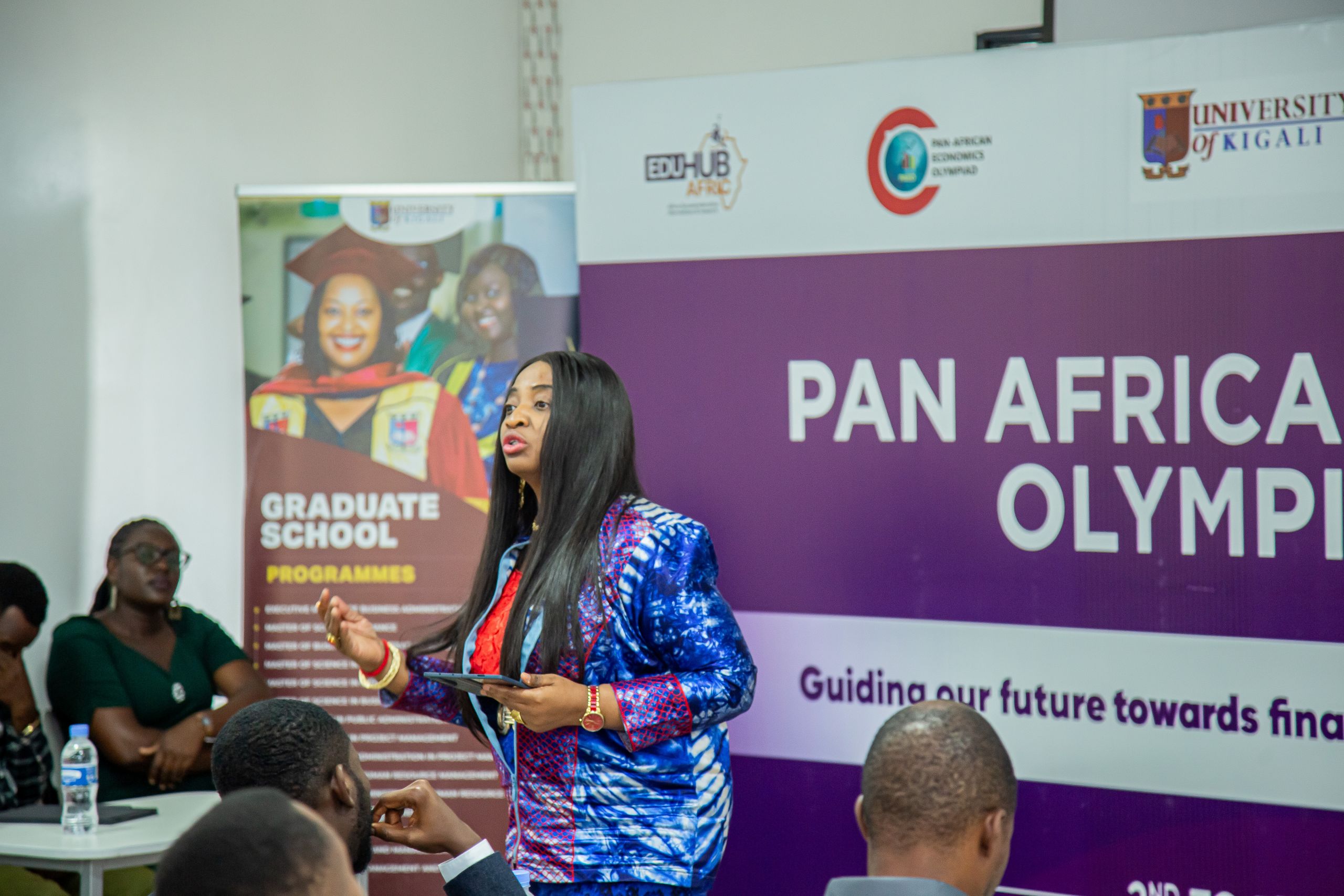
Being an author of children’s books, why the passion for that genre of writing?
Children are naturally curious. They ask questions, imagine possibilities, and see the world with remarkable openness.
I have always believed that the values we hope to see in society must be nurtured early. Children’s literature provides a unique opportunity to shape imagination, character, confidence, and a lifelong love of learning.
Writing for children is, in many ways, an investment in the future. Through stories, we can introduce values such as honesty, kindness, resilience, creativity, leadership, and respect for others in ways that remain with young readers throughout their lives.
I also believe African children deserve stories that reflect their own cultures, experiences, aspirations, and identities. Representation matters. When children see themselves positively reflected in literature, they develop confidence in who they are and what they can become.
If you stood before Nigeria’s top decision-makers and had one opportunity to speak about education, what would you say?
My message would be simple: treat education as national infrastructure.
Governments rightly invest in roads, railways, airports, energy, and digital infrastructure because they understand that these drive economic growth. I believe education deserves exactly the same strategic priority. A nation’s classrooms, laboratories, libraries, research centres, and universities are just as important as its physical infrastructure because they develop the human capital that designs, builds, and sustains everything else.
Education should therefore be viewed not as a recurrent expenditure but as a long-term national investment. Every investment in a teacher, a researcher, a university, or a young person strengthens a nation’s future competitiveness.
I would also encourage us to have greater confidence in ourselves. Africa has rich intellectual traditions, entrepreneurial models, and knowledge systems that deserve greater recognition. We should continue learning from global best practices, but we must also invest in developing and sharing our own ideas with the world.
Our traditional philosophies also have much to teach us. Among the Igbo is the saying “Onye Ahala Nwanne Ya,” meaning “Do not leave your brother or sister behind.” Across much of Africa, the philosophy of Ubuntu reminds us that “I am because we are.” Though expressed differently, both capture the same timeless truth: our progress is interconnected. No nation develops in isolation, and no society truly prospers when large segments of its population are left behind. Education is one of the most powerful ways of ensuring that everyone has the opportunity to contribute and succeed.