 Kemi Ajumobi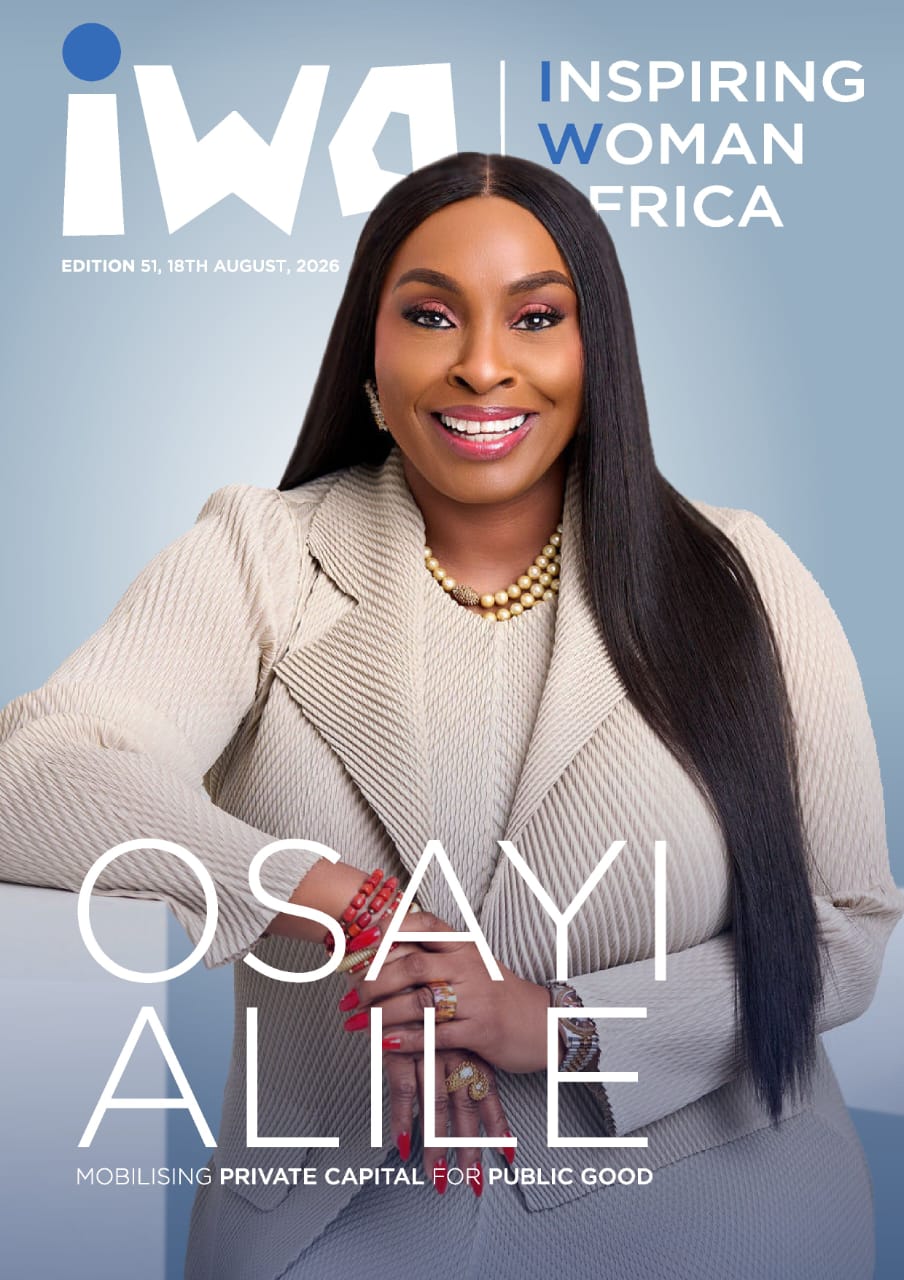
Osayi Alile is a distinguished leader in nonprofit governance, philanthropy, and social impact, with more than two decades of experience advancing economic and social development across Africa and globally. She is widely recognised for her strategic leadership, her ability to build cross-sector partnerships, and her commitment to designing sustainable solutions to complex societal challenges.
She currently serves as Chief Executive Officer of ACT Foundation, a leading grant-making nonprofit supporting organisations addressing critical issues across Africa, including health, entrepreneurship, leadership, and environmental sustainability. Under her leadership, the Foundation has achieved a 695% expansion in programme reach, significantly deepening its impact across the continent. She oversees a network of employees, volunteers, and partner organisations, and manages philanthropic initiatives.
In this role, Osayi provides visionary leadership for the Foundation’s strategy and partnerships, working closely with governments, corporate institutions, and community organisations to deliver high-impact programmes. Her work has supported initiatives addressing gender-based violence, empowering vulnerable farming households in Northern Nigeria, and improving climate resilience and access to clean water in underserved communities across Africa.
She also served as Co-Administrator of CACOVID, Nigeria’s private-sector coalition established to combat the COVID-19 pandemic. In this capacity, she helped mobilize resources and coordinate large-scale national interventions, including the distribution of protective equipment to frontline healthcare workers and the establishment of emergency response centers across the country.
Earlier in her career, she served as Executive Director of FATE Foundation, one of Nigeria’s leading entrepreneurship development organizations. There, she led strategic transformation efforts, expanded stakeholder partnerships, and strengthened programme evaluation and impact assessment systems, contributing to the growth of entrepreneurial training programs designed to reduce unemployment and support small business development.
Beyond her executive roles, Osayi is a respected voice in governance and development. She serves on multiple boards and advisory bodies, including Women in Management, Business and Public Policy (WIMBIZ), Presco Plc, Saro Oil Palm Limited, and Zapphaire Events, among others. She has also contributed to global policy and development conversations through roles with the World Economic Forum, Aspen Network of Development Entrepreneurs (ANDE), and the Lagos Chamber of Commerce and Industry.
Her leadership and impact have been recognised through numerous awards and fellowships locally and internationally.

Osayi holds a master’s degree in public administration from Rutgers University and a bachelor’s degree in Sociology from the University of Lagos. She has completed executive education programmes at leading institutions including Harvard Business School, Harvard Kennedy School, Yale University, IMD Switzerland, and Lagos Business School, with a focus on nonprofit leadership, public policy, and strategic governance.
A strategic thinker with an entrepreneurial mindset, Osayi Alile remains deeply committed to strengthening institutions, advancing inclusive economic growth, and building sustainable development ecosystems that empower individuals and communities across Africa.
Creating ACT Foundation’s strategy to drive the 695% expansion in programme reach
That growth did not happen by accident; it came from a deliberate shift in how we thought about scale. Early on, we made a decision to move away from working in isolation and instead build strong partnerships with local and regional nonprofits already embedded in the communities we wanted to reach. Rather than trying to do everything ourselves, we invested in strengthening the capacity of organisations already doing good work on the ground, in health, entrepreneurship, environment and leadership. That partnership model allowed us to extend our reach across the continent without losing the depth and quality of impact. We also became more intentional about data, using it to identify where the need was greatest and where our support could unlock the most value. The expansion rate reflects years of building trust with partners, refining our programme design based on evidence, and staying disciplined about our mission even as our footprint grew.
Accountability at ACT Foundation and governance practices that has improved foundation’s accountability and impact
Accountability has to be built into the culture of an organisation, not treated as a compliance exercise. For us, we must be ready to operate in honesty and fairness, even without any applause. We collaborate with organisations to drive change, and it is imperative that we stay true to what we set out to achieve. Practically, this means we have strong internal systems for monitoring and evaluating every programme we fund, so that we are measuring outcomes, not just activity. We also hold ourselves accountable to our partners and beneficiaries, not only to our board and donors. Regular reporting, transparent grant making processes, and a willingness to be honest when a programme is not working as intended have all strengthened trust in what we do. In a sector where credibility can be fragile, we have found that consistency, being the same organisation behind closed doors as we are in public, is what has allowed ACT Foundation to thrive.
You certainly receive a lot of proposals. How do you assess which grantees/projects to fund?
At ACT Foundation, our funding decisions are guided by a rigorous assessment of each nonprofit’s strategic fit, potential for impact and institutional strength. We begin by examining whether the organisation’s mission, values and proposed project align with our objectives and focus areas. We then assess its ability to deliver tangible, measurable outcomes, alongside its financial health and long-term sustainability. Leadership, governance and operational capacity are equally important, as they indicate whether the organisation can manage resources effectively and scale its work. Finally, we consider the organisation’s commitment to transparency and accountability, ensuring that it operates responsibly and can clearly demonstrate how funds are used and results are achieved.

Post grant sustainability for organisations chosen
We encourage post-grant sustainability by strengthening each organisation’s institutional capacity alongside funding its programmes. Early in ACT Foundation’s journey, we recognised that many organisations had deep community reach and strong ideas but lacked the systems needed to absorb funding, scale their impact and remain resilient beyond a grant cycle. That insight shifted our approach from simply financing good work to building the institutions responsible for delivering it.
We work closely with our grantees to strengthen governance, operations, crisis preparedness and donor-ready systems through accelerator programmes, our Knowledge Series and access to volunteer industry experts. These experts provide practical guidance and tools that help organisations diversify their support, maintain operational continuity and navigate growth or disruption. As a result, our partners are equipped to sustain and expand their impact long after our funding ends.
Critical partnerships for ACT and those instrumental to the organisation’s growth and progress
ACT Foundation views the world through the lens of possibility. We strive to build sustainable societies and empower millions across Africa by addressing these growing challenges and vulnerabilities. This vision, however, can only be achieved through collective action.
For too long, the nonprofit sector has operated in silos, focusing on individual missions without recognising the incredible synergies that collaboration can create. Partnerships allow us to combine resources, expertise, and reach, unlocking new possibilities. Imagine environmental organisations working with social justice groups to address the root causes of climate change, or educational nonprofits partnering with healthcare providers for holistic child well-being.
Partnerships are central to our growth because they expand our resources, expertise and reach. Over the past eight years, collaborations with more than 107 organisations across 12 African countries have helped us reach over four million beneficiaries. These nonprofit partners, industry experts and knowledge-sharing platforms, including ACTPod, have strengthened programme delivery, encouraged innovation and amplified our impact across Africa.

Choosing where to focus investment
First, we look at Resource Availability. We need to ensure we distribute the available funds in a sustainable method so we can support projects long-term.
Second, we prioritise Quality of Impact. We do not just look at the number of people reached; we look at the depth of the change. We ask: Will this project truly transform lives, or is it just a temporary fix?
Finally, we conduct a Partner Assessment. We weigh each organization’s record to see who can deliver the best outcomes. Our goal is to find the right balance which is reaching as many people as possible and maintaining the highest standard of work. This ensures that every money we invest in creates the greatest possible ripple effect in the community.
Sustaining factor for ACT and surviving through difficult times
The work nonprofits do requires reliable funding, and without it, impact simply stalls. One of the biggest challenges facing organisations today is the lack of funding sustainability. For too long, many nonprofits relied heavily on international aid and donor handouts without diversifying their income. Now that international support has reduced, many are left with very little to fall back on.
To build long-term resilience, nonprofits must take strategic action. First, organisations must diversify their funding source so they never depend on a single stream. Second, they must invest in impact storytelling to clearly communicate their value and attract strong partnerships. Finally, nonprofits must actively collaborate with other organisations to share resources and lower operational costs. By taking these steps, organisations can secure their future and continue driving meaningful change.
In empowering vulnerable farming households in Northern Nigeria, what strategies worked best to build resilience?
In empowering vulnerable farming households in Northern Nigeria, our most successful strategy was driving a market system development model that transforms subsistence farmers into profitable agribusiness leaders.
While at it, we focused on three key areas to build lasting resilience:
First, we strengthened local farmer cooperatives and expanded financial inclusion, giving farming households the structure and capital needed to grow sustainable businesses.
Second, we integrated climate smart agriculture and market driven systems. This ensured that farmers were not only equipped to handle environmental challenges, but were also directly connected to reliable, profitable markets for their produce.
Finally, we applied a gender transformative approach that intentionally prioritised women and youth. By placing them at the center of agribusiness and entrepreneurship, we helped families diversify their income, build true economic security, and lift their households out of extreme poverty.
What role should nonprofits play versus government and private sector in closing inclusion gaps?
Nonprofits are the connective tissue. Government sets policy and provides scale, the private sector brings capital and innovation, but nonprofits sit closest to the people and understand the texture of their needs. At ACT Foundation, our role is to strengthen the organisations doing that grassroots work, so that government policy and private sector investment actually land where they are needed most. When all three work in sync, inclusion stops being a talking point and becomes something measurable in people’s lives.

What’s a workplace outcome you’re most proud of?
Watching a small grantee organisation grow into an institution that other nonprofits look up to. That kind of transformation does not happen overnight. It takes years of consistent mentorship and honest feedback, and being able to say we walked with an organisation from an idea to a structure that now employs people, delivers programmes at scale and shapes policy conversations is something I carry with real pride. It reminds me that our job is beyond monetary funding, it is to build institutions that outlast any single partnership.
From FATE Foundation to ACT Foundation, what transferable leadership lessons did you take from transforming entrepreneurship development at FATE?
Early in my career, I learnt that entrepreneurship support only works when it is structured, not scattered. Training, access to finance, and mentorship have to work together, not in isolation. I carried that same discipline into ACT Foundation, building programmes that are intentional and measurable rather than reactive. The lesson was simple but profound: good intentions without good systems rarely produce lasting impact.
How did your view of partnerships evolve between FATE and ACT Foundation?
My view of partnerships has evolved significantly as my leadership journey expanded across different contexts.
Early in my career, partnerships were primarily about strategic resource mobilisation, aligning the right institutions and funders behind critical initiatives to get great ideas off the ground.
Over time, that foundation expanded into a deeper model of co-creation. Today, I view partnerships as a genuine sharing of vision, responsibility, and risk with the organisations we support. At ACT Foundation, we do not operate as distant funders. We walk alongside our grant partners to build their internal capacity, ensure long-term sustainability, and create impact that far outlives any single funding cycle.
What does transparency mean at ACT Foundation—internally and externally?
Transparency means operating with complete honesty, fairness, and open communication in everything we do, whether people are watching or not.
Internally, it means holding ourselves accountable, sharing clear data on our processes, and aligning our team around honest standards.
Externally, it means staying true to our mission with our partners, being open about our impact and resources, and building trust through authentic collaboration. Ultimately, transparency is how we ensure that every partnership drives genuine, measurable change.

Experiences that shaped your leadership style the most over the last 20+ years?
Growing up in a large family taught me early how to understand people and their differences, and it introduced me to a life shaped by giving. Professionally, transitioning across different organisations exposed me to different scales of impact, from working directly with young people, to building systems around entrepreneurs, to ultimately building institutions that support other institutions across borders.
Each stage stretched my thinking and reminded me that leadership is ultimately about people, not positions or titles. The context changed at every turn, but the conviction stayed the same: if you invest in people with intention and consistency, the impact takes care of itself.
For emerging leaders in nonprofit governance, what skill should they develop early?
Listening. Too many young leaders come in eager to prove themselves and end up designing solutions for problems they have not fully understood. The strongest nonprofit leaders I know are the ones who took time early in their careers to genuinely listen to the communities and organisations they serve. Beyond listening, I would add financial literacy. Nonprofit leaders who understand numbers, not just mission, are the ones who build organisations that survive beyond one generous donor or one good year.
ACT Foundation’s “next breakthrough” to deliver
It would be taking our proven impact measurement and storytelling model to an even deeper level across the continent.
At ACT Foundation, we already track, document, and communicate the work of our grantees with high standards of excellence. However, the broader non profit sector across Africa still struggles with undocumented impact, often relying on goodwill rather than solid evidence to make the case for funding.
Our next breakthrough is to lead the way in building a continent-wide culture of data backed storytelling. By continually elevating how our grantees measure and present their long-term results, we do not just prove the value of ACT Foundation investments. We strengthen the credibility and funding readiness of the entire African social sector.
One climate or water lesson you wish more organisations understood upfront.
Environmental work cannot be separate from community ownership. Programmes that plant trees or improve water access without involving the community in the design tend to fade once the funding ends. We have seen this across our project delivery. The projects that last are the ones where the community sees the intervention as theirs, not something delivered to them from outside. The lesson is to build local stewardship into the plan from day one, not as an afterthought once the ribbon has been cut.
Being someone passionate about women development and progress, how have you seen gender inclusion change outcomes in entrepreneurship, leadership and governance?
When women are given equal access to capital, training and governance seats, the outcomes are not just fairer, they are stronger. I saw this clearly during my years chairing WIMBIZ, and I continue to see it through ACT Foundation’s programmes. Organisations with women in leadership tend to build more resilient and community responsive strategies, because women often bring lived experience of the very gaps we are trying to close.

To that top female executive burdened with unending responsibilities, what do you have to say?
You do not have to carry it all at once, and you do not have to carry it alone. Give yourself permission to delegate, to rest and to ask for help. Build a team you trust, and then actually trust them. The work will still be there tomorrow, but you cannot pour into others from an empty place. Success that costs you your health or your peace is not success, it is a warning.