 Kemi Ajumobi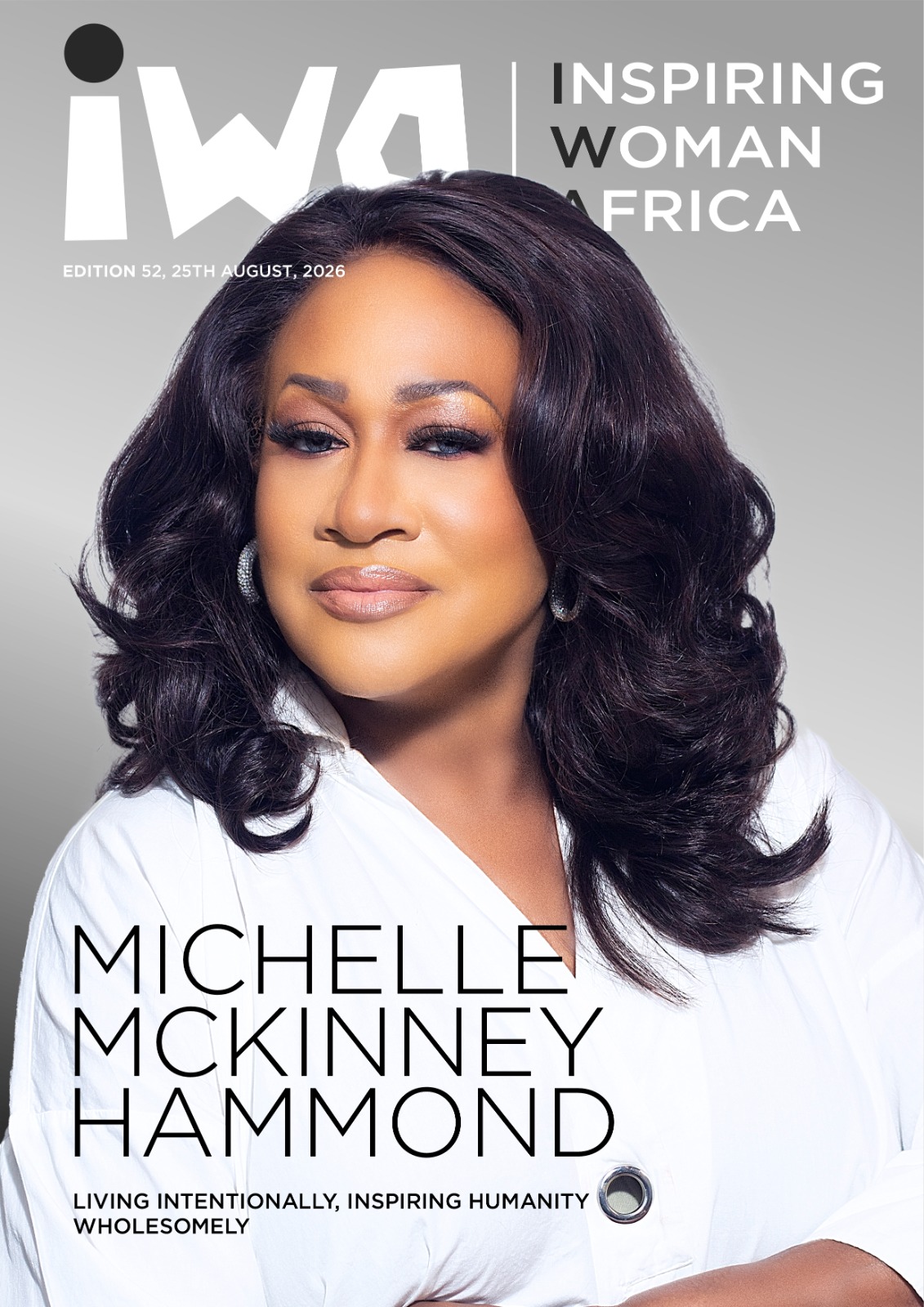
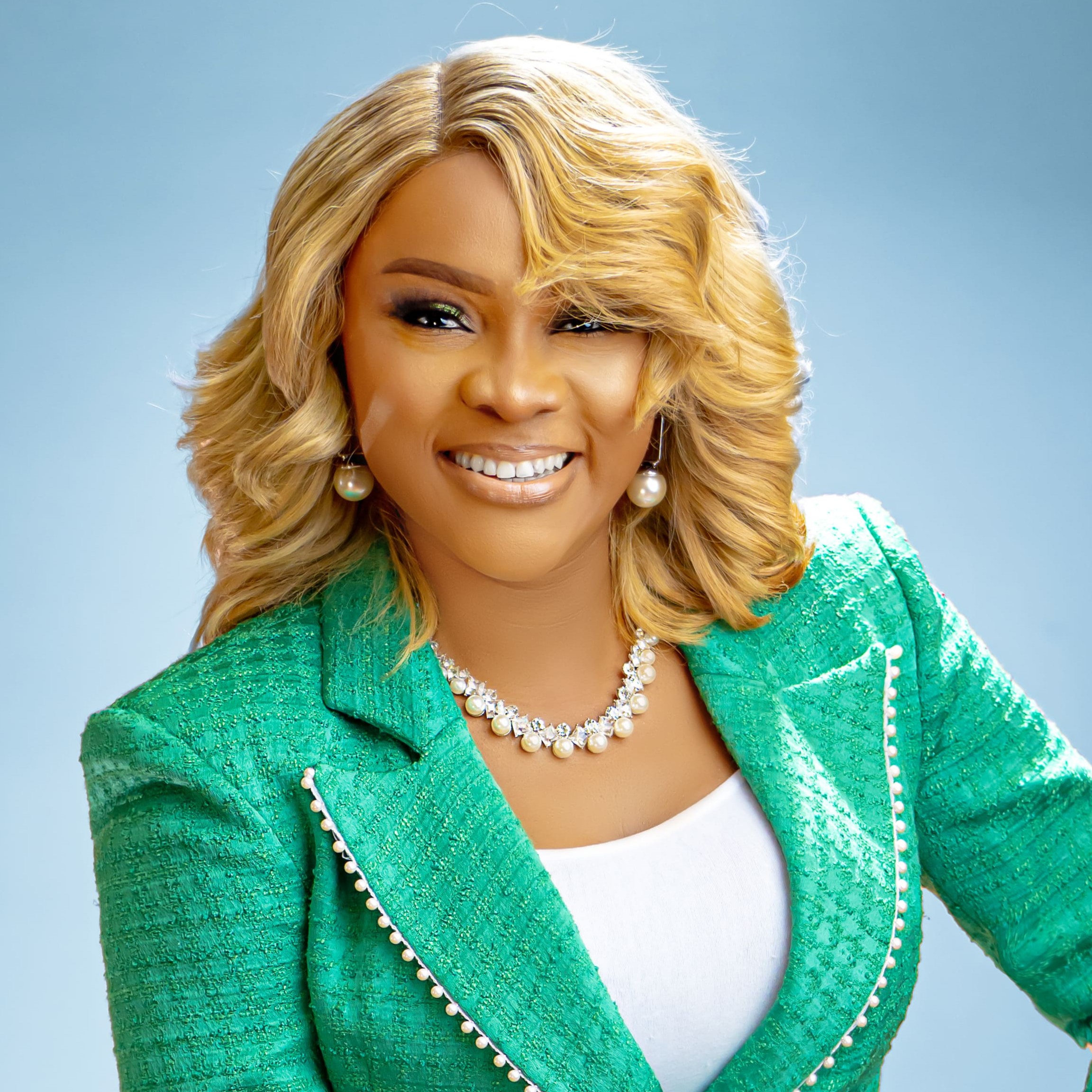
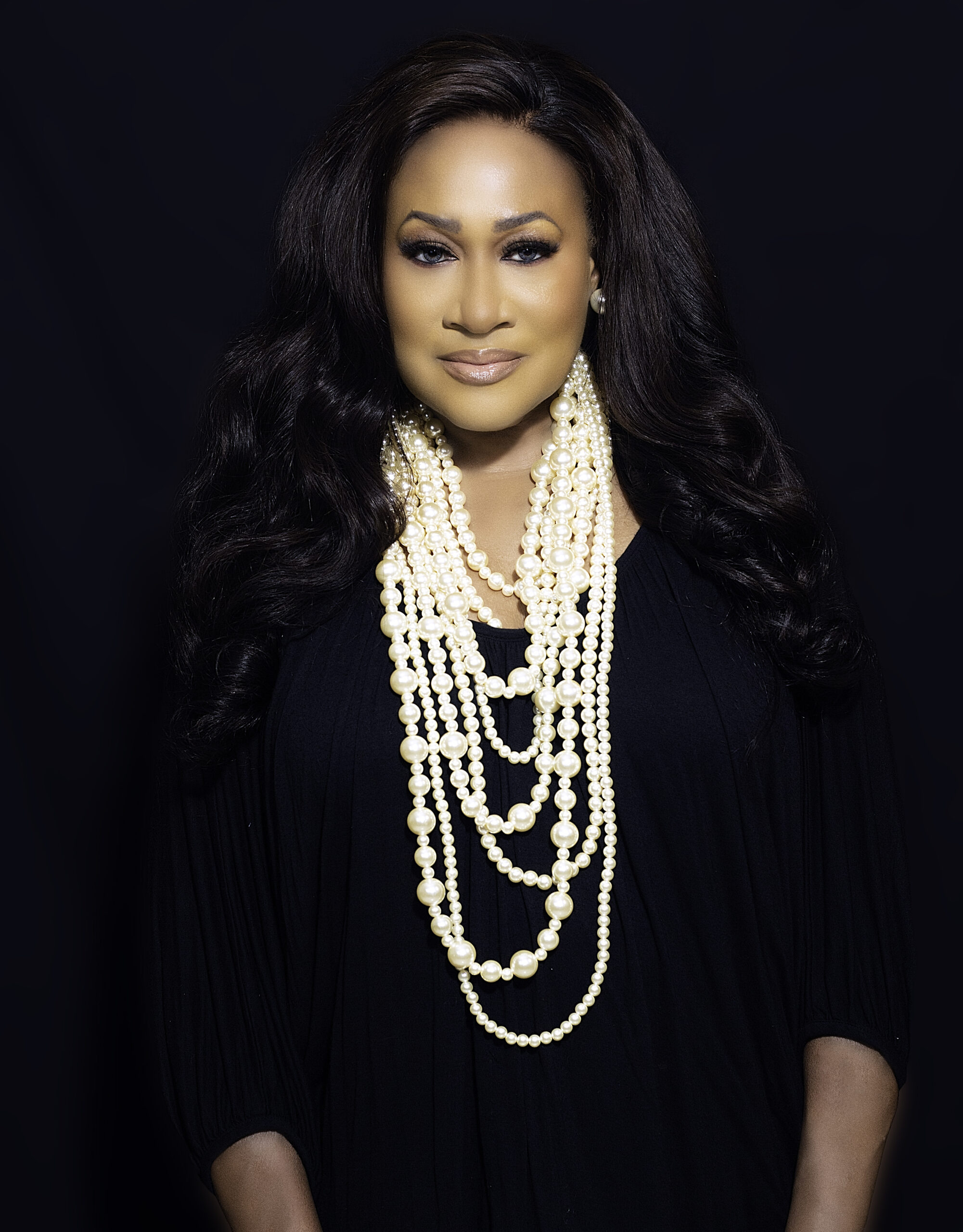
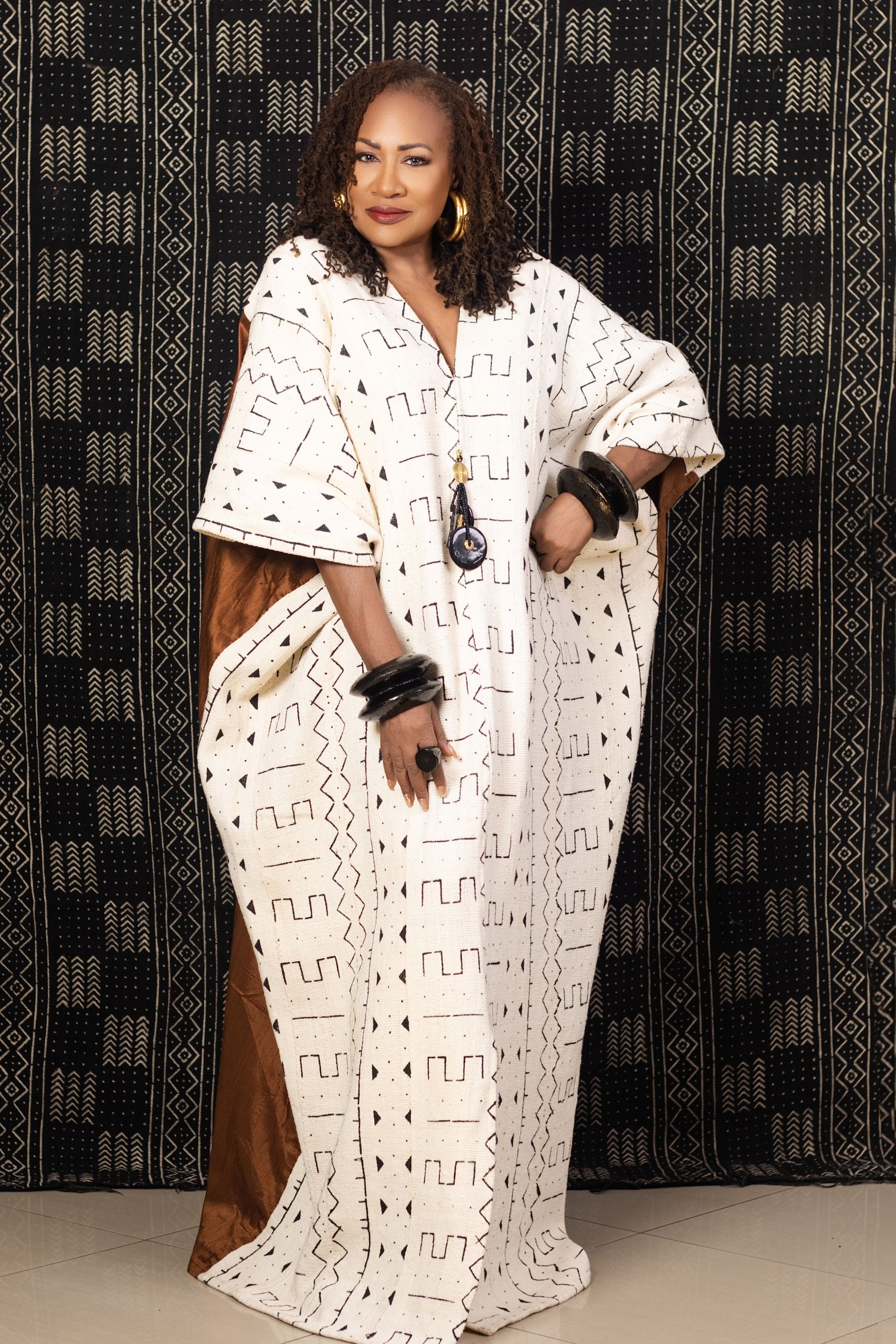
Michelle McKinney Hammond has spent decades inspiring women around the world to live with intention, embrace their worth and navigate life, love, faith and change with wisdom and authenticity.
A best-selling author of more than 40 books with over two million copies sold worldwide, Michelle has become one of the most recognizable and trusted voices in Christian lifestyle and relationship conversations. Her signature blend of faith, wit, candor and practical wisdom has allowed her to connect with generations of women across cultures and continents.
Long before reinvention became a cultural buzzword, Michelle was living it. Her journey has moved seamlessly across advertising, publishing, television, music, ministry, acting and film – each chapter revealing another dimension of a woman committed to using every gift entrusted to her.
As an international speaker, Michelle has graced influential platforms around the world, bringing her distinctive perspective on relationships, womanhood, spiritual growth, purpose and personal transformation to audiences of thousands. Her ability to speak honestly about the complexities of real life while remaining deeply rooted in faith has become one of the hallmarks of her work.
Her influence extends far beyond the written and spoken word. An Emmy Award-winning television cohost, actress, singer and songwriter with seven CDs to her credit, Michelle has also expanded into filmmaking as a writer and producer. After making West Africa her home in 2011, she continued building a body of work that bridges her American roots with her deep connection to Ghana and the African continent.
At the heart of Michelle’s work is a consistent message: your life can continue to evolve.
Whether she is writing about love, speaking about purpose, ministering through music, creating for television and film, or encouraging women to confidently embrace their next chapter, Michelle embodies the message she has shared throughout her career – the power of becoming.
Today, she continues to write, speak, create, mentor and minister internationally, inspiring women to go deeper, live more fully and recognize that change does not have to signal an ending. Sometimes, it is an invitation.
For Michelle McKinney Hammond, there is always another chapter to write.
Years the early influences began and impact till date
I was born in London to a mother from Barbados and a father from Ghana. I went to school in Barbados before moving to the States at the age of seven. It was a traumatic transition. The British school system was more advanced than the American system at the time, which resulted in my being advanced several grades and becoming the youngest in my class.
I was underweight, had a heavy West Indian accent, and those differences made me a target for bullying. I found solace in books. As I moved through secondary school and high school, I discovered new loves and new means of expression that brought me joy: music, theatre, and dance.
The artistic side of me emerged in high school and never left. On stage, I could become someone else—someone who didn’t struggle with the issues confronting me in everyday life. Later, I became the first Black lead in the Civic Opera Association of Muskegon and first runner-up in the Miss Muskegon Pageant.
I have to admit, I became a bit of an overachiever, performing for love and acceptance. But those experiences also made me want to become a champion for the underdog, the rejected, and the misunderstood. I wanted to empower people to feel good about themselves and believe they could achieve whatever they set their hearts on.
Years later, when I met Christ, that passion found an even greater purpose. I became passionate about sharing how an intimate relationship with Him can transform your life and empower you to become who He created you to be.
Long held belief you had to adjust, relearn, or unlearn
I had to adjust my attitude towards correction. I had to learn that correction wasn’t rejection.
For a long time, I felt the need to perform for love. Somewhere along the way, I had convinced myself that getting everything right guaranteed love and acceptance. Not true!
As the saying goes, “Never explain yourself to anyone. Those who love you don’t need it, and those who don’t won’t believe you anyway.”
I learnt to rejoice in my flaws and even allow them to reveal who was really in my corner. Most importantly, I learnt to embrace correction and confrontation as opportunities to be better and do better.
Season of life that most tested your faith and your self-trust
Right before I moved to Ghana, everything fell apart. I lost everything.
It led me to examine myself and get in God’s face on a whole other level. I never ask God, “Why?” I ask, “What?” But during that season, I had to admit that I questioned my skills, my gifts, my relevance, and even my walk with God.
Where had I gone wrong? What had I missed?
Eventually, I circled back to the question I knew to ask: “What are You doing, God?”
What are You trying to show me? What do You want me to do? How do You want to glorify Yourself in the midst of this mess?
Lots of questions.
Then God said, “Move to Ghana. When you obey, I will reveal My plan.”
The rest is history.
I learnt that God will allow things to dry up to make you move, pivot, or release something so He can fulfill His purpose in your life and position you to become a greater blessing to others.
When you understand that your life is bigger than you—that all roads and experiences ultimately point back to Him and what He planned from the beginning of time—you panic less, question less, and trust Him more.
Forget about trusting yourself. Trust Him.
When a woman says, “I’m waiting for clarity,” what do you think is most often underneath the waiting: fear, grief, avoidance, or faith?
Fear paralyses us. Grief can cause us to give up hope. Avoidance abdicates responsibility. And faith’s best friend is patience.
Waiting for clarity affects everyone differently depending on how you see God, how you see yourself, and what you’ve experienced.
I always say, when in doubt, do nothing. Wait for peace.
Sometimes the wait and the lack of direction are actually God’s pause sign, telling us to wait for His timing. The beautiful thing about waiting is that you can’t outwait God. He will make sure you arrive where you are supposed to be—on time.
Seeking wisdom when the answer isn’t “move on” or “stay,” but “learn how to love or do that thing differently”
Life can be like quicksand. The more you fight where you are, the deeper you sink. But when you acknowledge the reality of your situation and relax, the tension gives way to clarity. Solutions begin to emerge, and you are able to rise above the situation.
Wisdom reminds you that God is in control, and you are not.
Do you trust Him? Then release yourself into His care and get happy about not being in control! That is actually a good thing. Someone more powerful and capable than you—Someone who has good intentions toward you—is in control.
So instead of fighting the situation you’re in, learn the lessons. Those lessons will enrich you and equip you for your next.
Distinguishing between conviction and condemnation as a woman, especially when tired and heart-scarred
You can still breathe when you’re convicted.
Conviction is that pinprick, that check in your spirit that tells you something isn’t right and gives you an opportunity to self-correct.
Condemnation, on the other hand, sucks the life and breath out of you. It is paralysing. It leaves you without hope and fills your spirit with lies: You are worthless. There is no redemption for you. There is no way back to God.
Condemnation is meant to take life from you. Conviction is meant to give life to you through correction, calling you to pivot from where you were headed.
They feel very different.
Your work spans advertising, publishing, television, music, ministry, acting, and film. How do you manage it all without one area getting more attention than another?
Being sensitive to the season I’m in helps me know what deserves my attention.
The Word is true: God will direct your path. If something doesn’t feel organic, I tend not to pursue it. If it isn’t flowing, I pause and reconsider what I’m doing and whether it’s the right time.
That’s not to say everything God tells you to do is easy—on the contrary! But one of the confirmations that I’m on the right track is the level of peace I possess as I move forward. If I have peace, even when everything looks crazy, I proceed.
I’m determined to use every gift God gave me until I can’t. I recently added Fashion Design (MMH Collections) to my list!
I’ve found God to be the best time manager on the planet. When it’s time for me to do a particular thing, He makes the space and the time for it to happen. And if I can’t do something with excellence, I don’t do it. That also helps me sift and separate what I’m supposed to be doing in any given season.
If the story of your life were rewritten as a film script, what scenes would take the longest to shoot—and why?
I’ve been told I should make a movie about my life, but I can’t figure out where to begin. Too many stories!
Perhaps the longest scenes would be about my relationships and friendships. They have been lengthy and complex. I have very long-standing relationships in my life. We’ve been through a lot together and weathered so many storms that it would take time to unpack everything that has happened in both my platonic and romantic relationships.
And then there is my relationship with my father, whom I miraculously found after many years of separation. That story alone could probably be a movie.
Coming to Africa, what have you learnt about identity from crossing cultures, and what did it correct or expand in you?
I think my father had plotted and planned to get me to move to Ghana for a long time! I spent a lot of time with him there during the holidays, but I had a thriving ministry in the States.
That all came to a halt when he died and essentially dropped his entire life into my lap. After trying to divide my life between two countries, I sought God in a heap of exhaustion and very clearly felt directed to move to Ghana.
It took me three weeks to pack up everything—including my dogs—and move.
Fifteen years later, I’ve never looked back.
It wasn’t a huge cultural leap for me because I was already acclimated to Ghanaian culture. West Indian and West African sensibilities are very similar. I always say the boat from Ghana had to land in Barbados—the people, the food, the mindsets are remarkably similar.
What continues to strike me is living in a world where we are the majority and don’t have to apologise for being Black or feel hindered by it.
I remember attending a festival in Cape Coast and being overwhelmed by the beauty and majesty of the chiefs’ procession. I felt immense pride and humility at the same time, realising that I was part of a royal people who had remained intact in tradition and culture.
It was a stark contrast to my experience in the West.
Honouring culture without losing the values you hold dear
I treasure so much of the culture I’ve come to know and love. In many ways, I find it quite biblical: the honour we give to elders, family accountability, and the way we take care of one another.
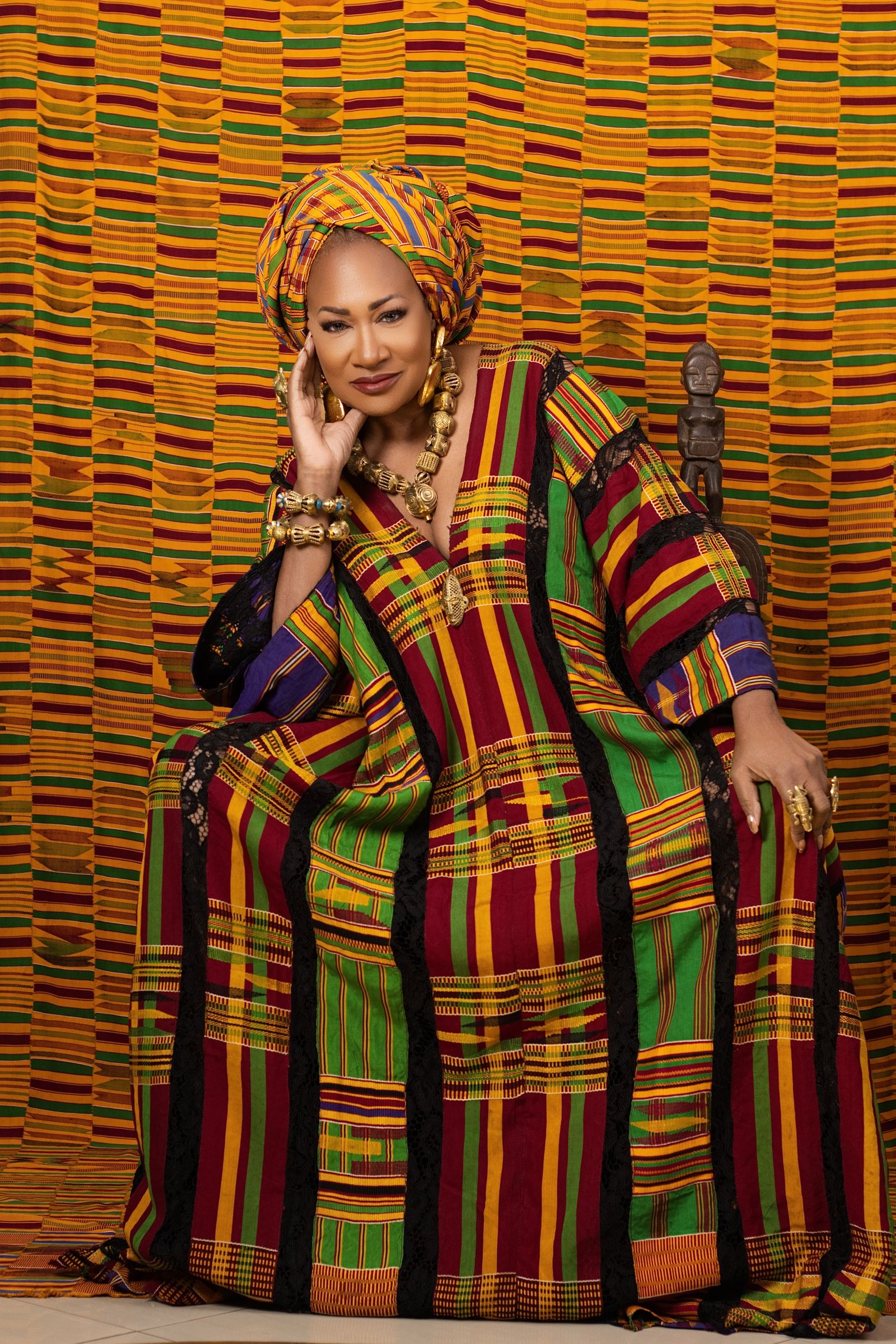
My identity itself crosses cultures. I am British, Ghanaian, West Indian, and American by citizenship. I also have Nigerian heritage—my grandmother was Nigerian, and Nigerian. I am Michelle Ayodele McKinney Hammond.
I am a Fanti from Cape Coast in Ghana’s Central Region and a Safohen—a warrior queen. My title is Safohen Nana Araba Hammond.
I embrace all of it because it makes me who I am. I am grounded in my identity. I definitely know who I am!
But some aspects of culture—African or otherwise—run counter to the culture of God’s Kingdom. That is where I draw the line.
God and His Word supersede culture. I won’t compromise the standards of God to win human approval.
What is the greatest lesson life has taught you?
Just when you think you’ve finally figured out life, you discover that you haven’t!
Walking with God is spontaneous, exciting, exhilarating, and scary all at the same time. Because when you open your hands and say, “Have Your way with my life,” you are in for the ride of a lifetime.
And it makes for an amazing testimony.
There is never a dull moment with God.
What’s a boundary that changed your life?
Learning to say no.
I also learnt not to allow anyone to drive my car but God. He gets the last say in my life.
That boundary has kept me from making a lot of mistakes and given me greater peace and stability.
Every good thing is not God. Just because something is good doesn’t mean it’s for me. Knowing that settles me.
I don’t have to be all things to all people. I am only called to those He has assigned me to.
That is liberating.
You’ve built a multi-decade body of work. What does success mean to you?
Success to me is making God smile and blessing people. My passion is to live a life that aligns with what God has given me to say and to be an example of His character to everyone I encounter.
If I can give someone a glimpse of God that transforms their thinking and their life, I’ve succeeded.
For me, success isn’t financial. It is about making eternal deposits into the lives of people.
As a producer, tell us about your works and where those projects stand today.
It’s been a three-phase journey.
I began behind the camera—writing, art directing, producing, and being a voice-over talent in the advertising world for the largest African American ad agency in America. Then I moved in front of the camera as an actor in several movies and television series in Ghana. Eventually, I began writing scripts, directing shorts, and finally writing and producing my first film, First Love, which will soon be released as a series of vertical shorts.
I’m also excited about bringing my novels to life through a series entitled Once Upon A Life.
These projects are all currently in development, and I’m excited about what’s ahead.
How important is it for women to know and embrace their worth?
When you know and embrace your worth, it frees you to recognise and celebrate the worth in others.
You become able to nurture and empower other people to become what God created them to be. I believe this is the lifelong assignment of everyone who knows God.
This is sisterhood at its best.
The power of every woman is her ability to empower others.
An empowered woman understands that life is not a competition. No one is a threat. Everyone has a part to play in the tapestry life is weaving.
We are individual threads, but when woven together, we create a beautiful picture.
Knowing and embracing our worth is critical to our health as women and to the contributions we make to society and the world.
As an international speaker who has done this for years, what have you learnt, and what advice would you give speakers and mentors?
You have to earn the right to speak into people’s lives.
Empathy has to be a major factor. Most people are looking for answers, so listen. Read the room. Hear the Spirit.
Don’t be married to what you planned to say. The message may need to change based on the needs of the people in front of you.
Whether I’m speaking in a secular or sacred environment, I don’t give my opinion. I give people the Word of God—whether through Scripture or biblical principle—because I believe it is the only sure solution to the things we face in life.
I also prefer the word discipleship to mentorship, because I think mentorship is often misused and misunderstood. Effective mentorship or discipleship can only happen when you really walk with someone.
If those who lived with and followed Jesus for three years didn’t understand everything He was saying, what can really be accomplished over lunch every now and then?
Mentorship only yields results when there is transparency, consistent accountability, and a willingness to receive correction. It requires a lot of time to build a relationship that consists of all of that.
What does growth look like when it’s private, slow, and uncelebrated?
The truth is, that’s often the only way real growth happens—privately, slowly, and without applause. When you can be your best when no one is looking, you have truly grown. The mountaintop is fabulous, but the valley is where the fruit grows. God will leave you there until you get over yourself. It hurts. It can feel unending. It can make you question yourself and everything you believe until every layer of self-determination is peeled away. But the process is actually designed to preserve you so that you can sustain and maintain everything He causes you to attain. God will often separate you before others celebrate you. He does some of His best work in the shadows and dark spaces of our lives so that when we finally shine, it is His light that others see. That takes the pressure off us to be brilliant. It is much easier to reflect His glory. We burn out because self-generated light isn’t sustainable. Once you understand the purpose, you can surrender to the process.
Winning the Emmy and what changed afterward
It was a wonderful acknowledgment of my work, and that is always affirming. But I come from the advertising world, where we always said, “You’re only as great as your last ad.” So, rather than making me feel that I had arrived, winning the Emmy challenged me to strive for the next thing. The standard was lifted.
To the female executive who is overwhelmed by deadlines, balancing work and life, and is on the verge of giving up, what do you want her to know?
Release yourself from the pressure to be everything to everyone all the time. It’s impossible—and that is good news! The only person who can accomplish that is God. So, thank God that He is God and you are not. At the end of the day, the tyranny of the urgent is a lie. What you don’t accomplish today will still be waiting for you tomorrow. Deal with life in small bites, and don’t beat yourself up. Sometimes, your inability to do something is by design because it creates room for someone else to rise. It allows someone else to grow. Make space for other people to do their part. Find delight in releasing control instead of fearing it. The truth is, you were never really in control anyway. The illusion of control drives us to place unrealistic expectations on ourselves, leading to frustration and low self-esteem. So let go. Do what you can do and leave the rest to God and others. Wealth is not merely the accumulation of achievements or acquisitions. True wealth is a life that is well-lived and sustainable. Examine what is robbing you of that. You would be amazed at how much we do simply because we believe it is expected of us. The only expectations you ultimately need to live up to are God’s. And believe me, we often require more of ourselves than He does.
Unforgettable Day
I will never forget the day I stood trembling in front of a preacher who told me two things: God loved me more than I would ever know, and He had a call on my life. Those two truths blew my mind and changed my life forever. Because of the circumstances in my life at the time, I felt totally unworthy. But suddenly, those words gave me hope and an incredible sense of purpose. I’ve spent my life ever since pursuing the fulfillment of what God saw in me.