 Chinyere Okorocha

We love success stories.
We celebrate the promotion, the appointment, the thriving business, the award, the corner office and the impressive career. What we rarely see are the disappointments, wrong turns, rejected applications, failed projects and missed opportunities that came before them.
Yet, scratch beneath the surface of almost every successful leader and you will find a collection of failures behind the success.
I certainly have mine.
Over the course of my career, there have been opportunities I wanted and did not get. There have been ideas that did not work as well as I imagined, professional disappointments that hurt, decisions I would make differently today, and moments when I questioned whether I was on the right path.
Looking back, however, I realise something important: some of my greatest career lessons came from the things that did not go according to plan.
Failure Is an Event, Not an Identity
One of the most dangerous things we can do is turn an unsuccessful experience into a statement about who we are.
You applied for the promotion and did not get it, so you decide you are not leadership material.
You started a business and it struggled, so you conclude that you are not entrepreneurial.
You made a poor decision and suddenly you begin questioning your competence.
But there is a huge difference between saying “I failed at this” and saying “I am a failure.”
The first describes an event. The second creates an identity.
Successful people learn to separate the two.
Women Can Be Particularly Afraid to Fail
Many professional women have been conditioned to believe that we must be exceptionally prepared before putting ourselves forward. We want to get it right. We worry about being judged when we don’t.
The result is that sometimes we play too safely.
We don’t apply until we meet every requirement. We hesitate to pursue the bigger role. We postpone launching the idea until everything is perfect.
But leadership requires risk, and risk carries the possibility of failure.
If you are determined never to fail, you may inadvertently build a career in which you never truly stretch yourself.
Some Failures Are Actually Redirections
There is another lesson experience has taught me: not everything that feels like failure is failure.
Sometimes the door that refuses to open forces you to discover another door you would never have considered.
A role you don’t get may push you towards a different specialisation. A business idea that doesn’t work may reveal what the market actually needs. Being overlooked for an opportunity may force you to become more visible, intentional and strategic about your career.
At the time, these experiences can be painful. In retrospect, some become turning points.
That is why I have learnt not to judge the entire story from one disappointing chapter.
Don’t Waste a Good Failure
Failure becomes valuable only when we learn from it.
When something goes wrong, after the initial disappointment, ask yourself:
What happened? Be truthful. Not every failure is someone else’s fault.
What was within my control? Perhaps you were underprepared, ignored warning signs, chose the wrong people, failed to communicate or simply made a bad call.
What was outside my control? Sometimes you can do everything right and still not get the outcome you wanted.
What will I do differently next time? This is where failure becomes wisdom.
There is little benefit in repeatedly experiencing the same setback because we refuse to examine our own contribution to it.
Fail Forward
The most successful leaders I know are not people who have avoided failure. They are people who have developed the capacity to recover from it.
They regroup.
They learn.
They adjust.
And then they try again — usually with greater wisdom.
That resilience becomes increasingly important as your career grows because the stakes become higher. Leadership means making decisions without always having perfect information. Some will be right. Others will not.
The goal, therefore, cannot be perfection. The goal must be growth.
Your Failure File Belongs Beside Your Success File
We are encouraged to keep records of our achievements — promotions, qualifications, awards and milestones. Perhaps we should also keep a mental record of the failures that shaped us.
The job you didn’t get.
The opportunity you lost.
The project that went wrong.
The idea nobody supported.
The mistake you never repeated.
They are part of your leadership education too.
So, when you next encounter someone whose career looks effortlessly successful, remember that you are probably looking at the polished front page, not the entire manuscript.
And when you experience your own setback, don’t be too quick to conclude that your journey has gone off course.
Sometimes failure isn’t the opposite of success. It is one of the rungs on the ladder towards it.
Keep climbing.
About Author
Chinyere Okorocha
With over three decades of experience as a trailblazer in the legal profession, Chinyere Okorocha has established herself as a leading voice in law, leadership, and career growth for women. As a partner in one of the most prestigious law firms in the country, she has not only navigated the complexities of a competitive industry but has consistently broken barriers to become a sought-after leader, mentor, and advocate for women in the workplace. A devoted wife and proud mother of three, her career development platform, Heels & Ladders, is dedicated to mentoring and guiding women who aspire to redefine success, achieve career mastery, and lead with purpose.
The IWA Series 15 Conference is Here
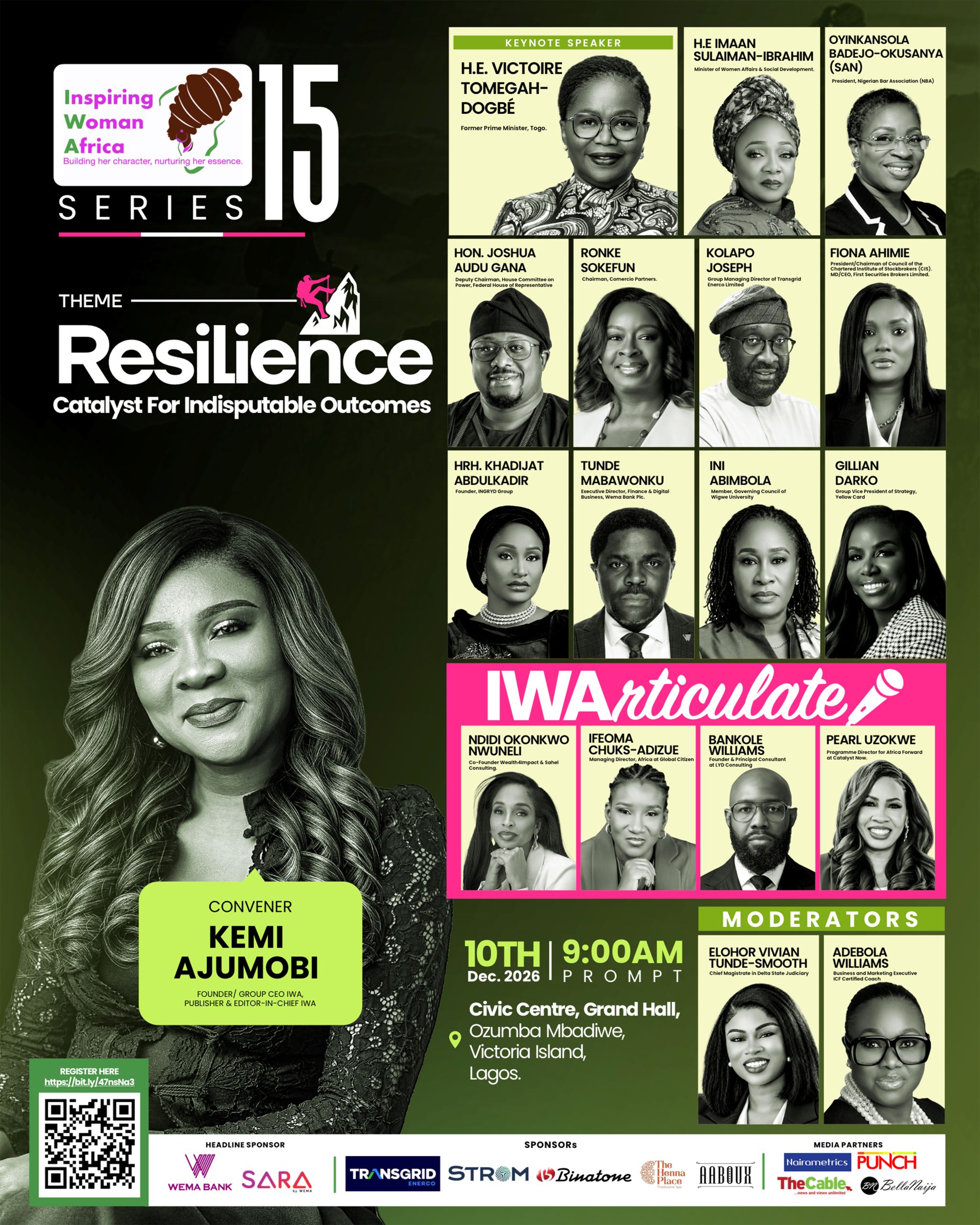
Click To Register
Latest Edition of IWA Magazine
November 10, 2026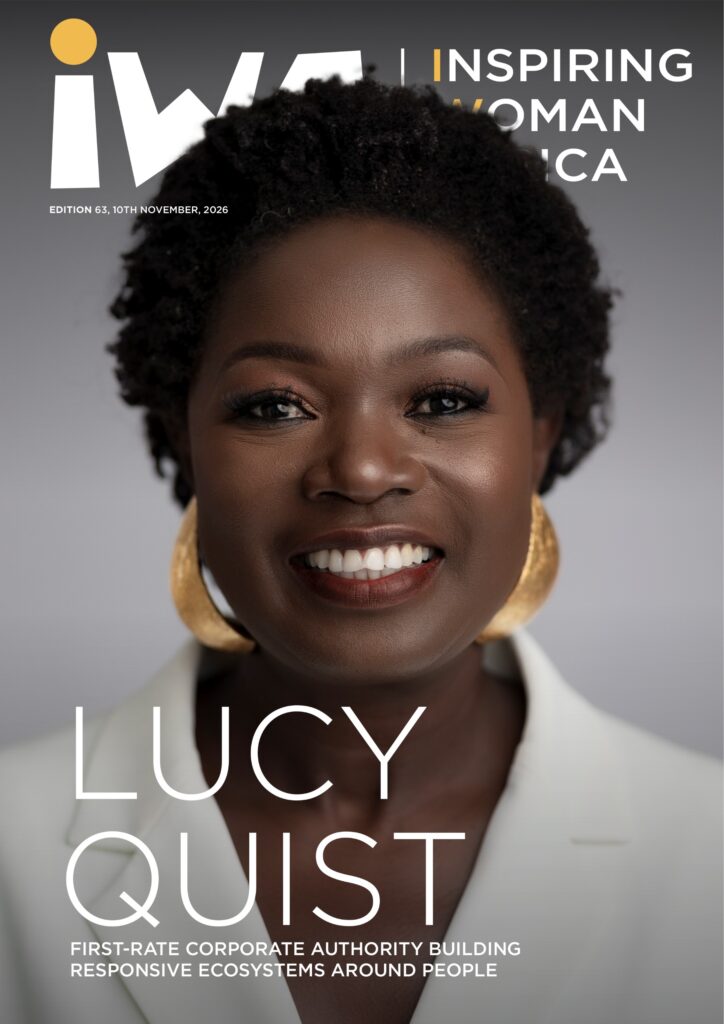
LUCY QUIST, First-rate Corporate Authority Building Responsive Ecosystems Around People
Latest Posts
-
 Nov 10, 2026 Earning More and Getting Poorer