 Kemi Ajumobi
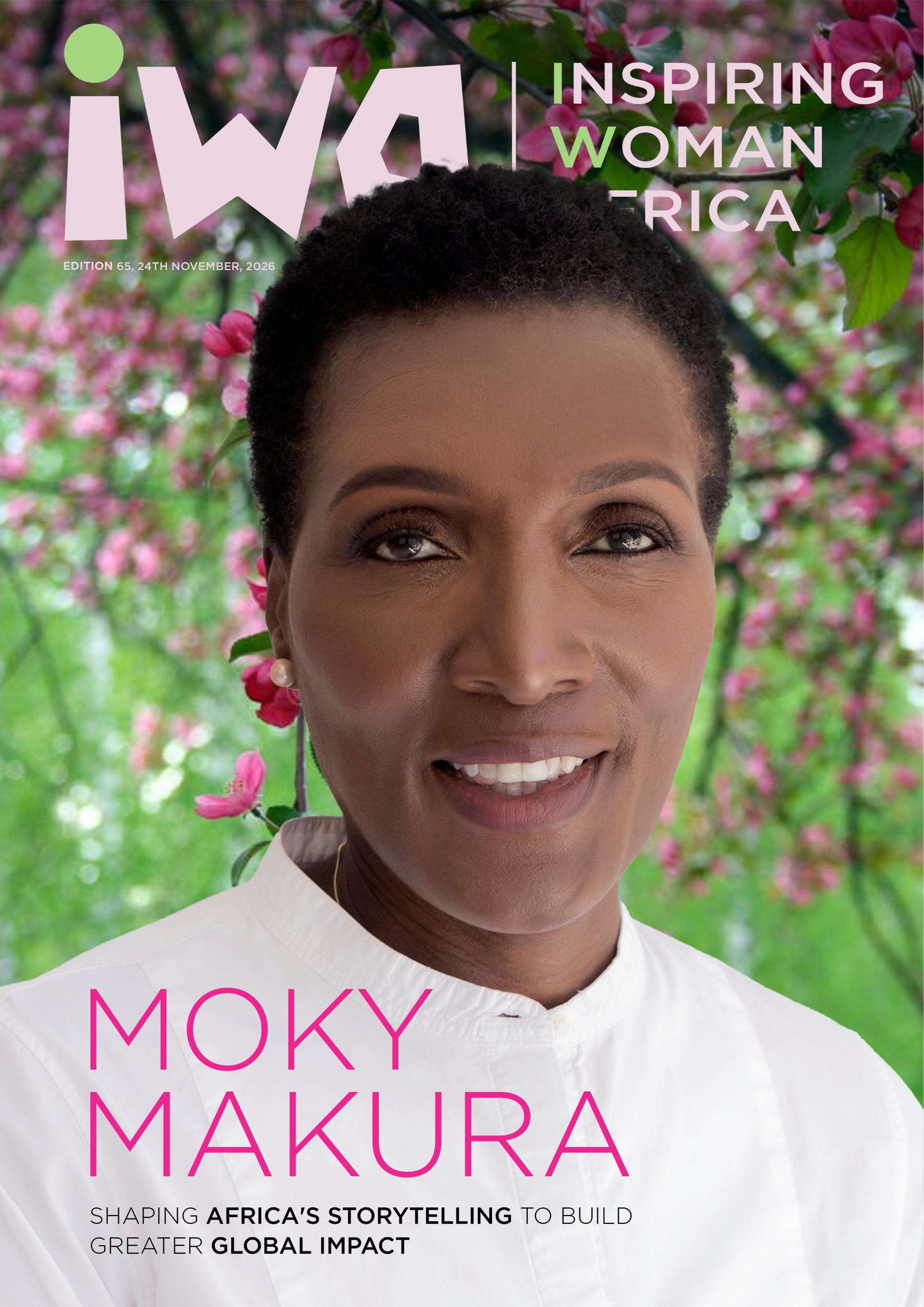
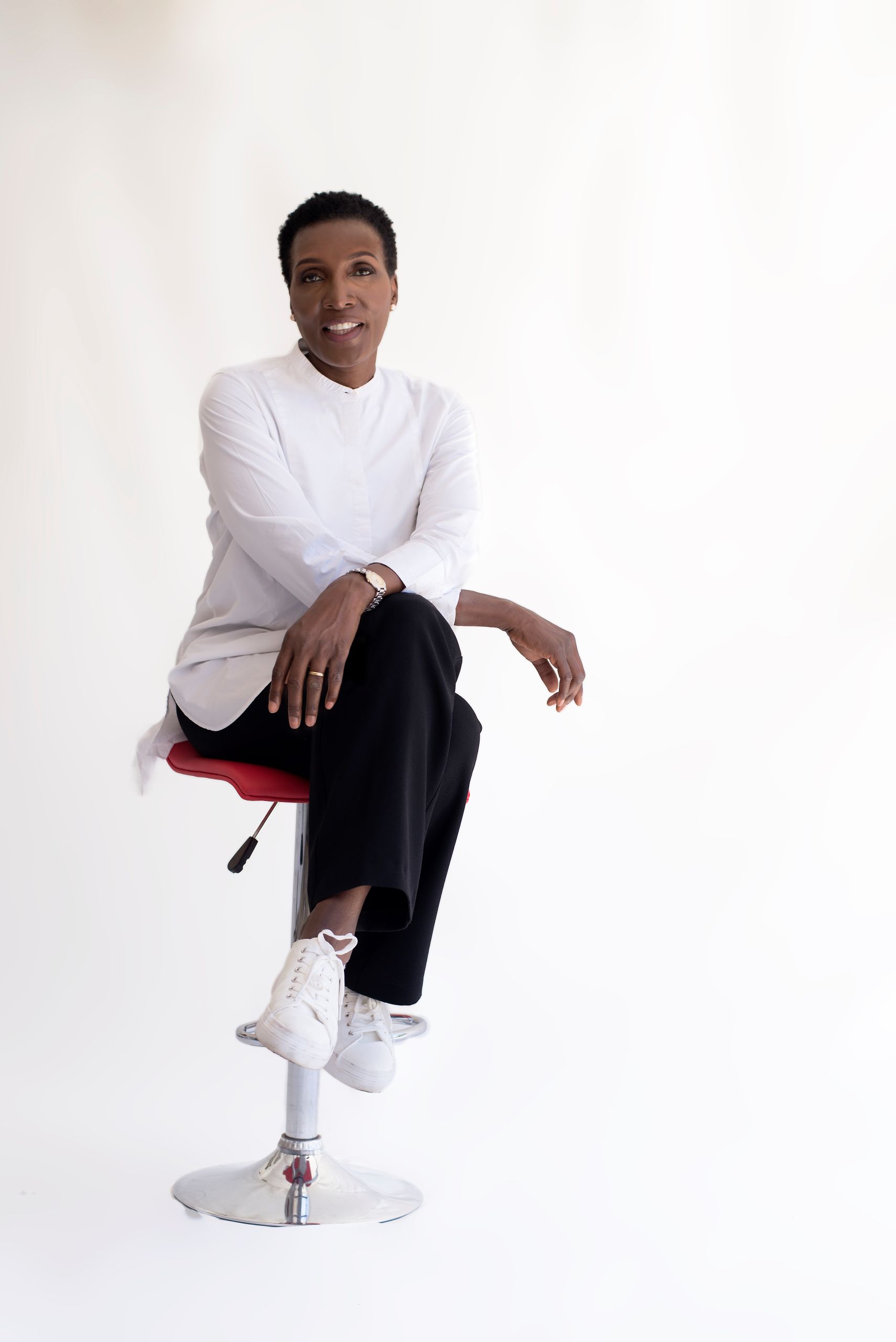
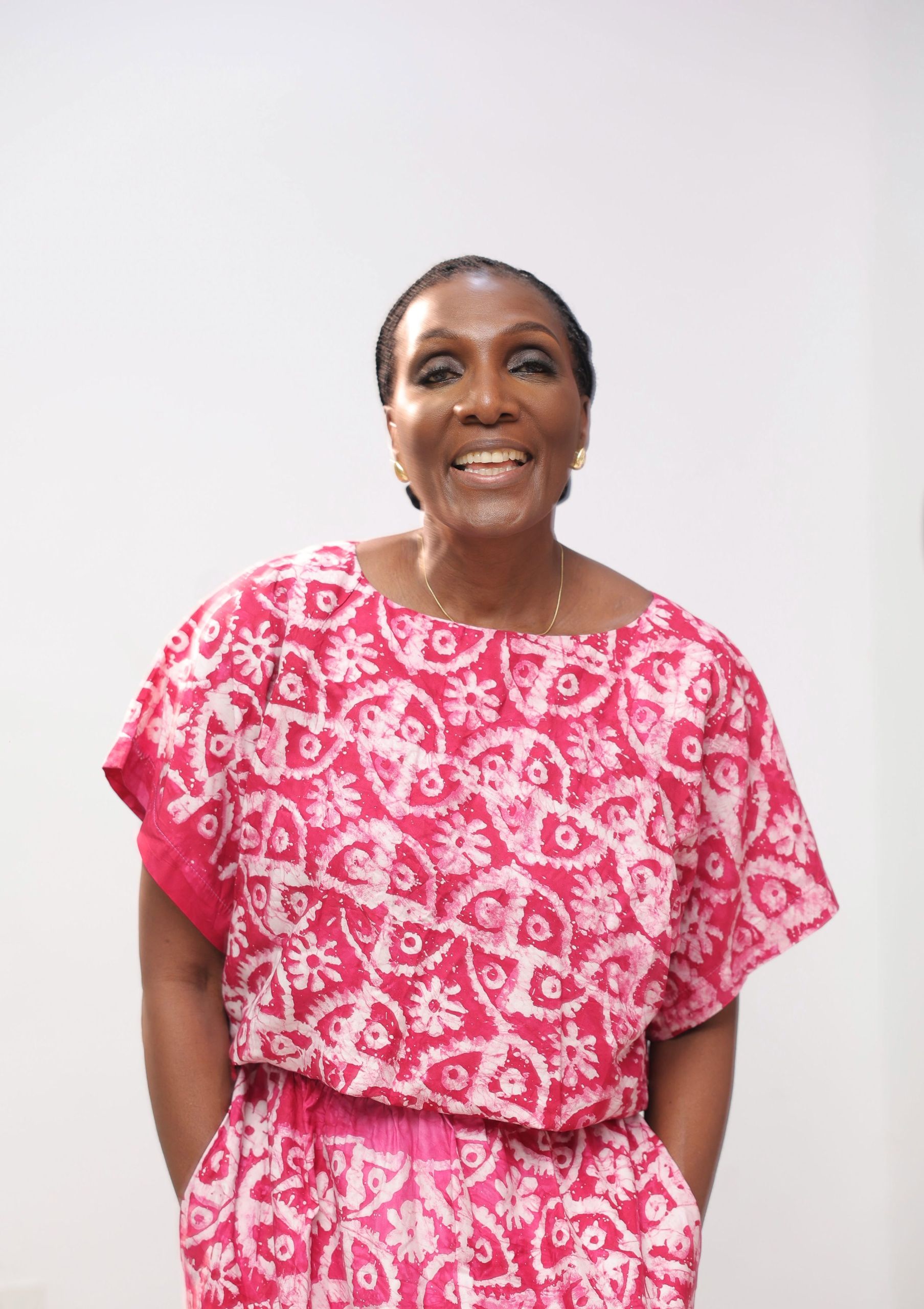
Moky Makura is a leading voice in the movement to shape how the world sees Africa – and how Africa sees itself. She is a storyteller and a narrative strategist, and currently serves as Executive Director of Africa No Filter, an advocacy organisation dedicated to reshaping how the world sees Africa – and how Africa sees itself.
Moky has worked as a TV anchor, actor, producer, author and publisher. She is the author of Africa’s Greatest Entrepreneurs, she created Nollybooks, a popular mass-market fiction series adapted into films for the South African broadcaster; e.tv. Moky was the African anchor for Carte Blanche, one of South Africa’s most respected news shows, and starred in the hit series Jacob’s Cross.
She previously served as Head of Communications for Africa at the Gates Foundation, and led communications at the Tony Elumelu Foundation. Today, she speaks globally about narrative, the creative industries, media, development and the power of storytelling to influence perception, investment, and policy across Africa.
If Africa No Filter had to rewrite one persistent global data point with a story instead of statistics, what would you choose—and what narrative twist would change how people interpret it?
I’d show people what I see: Africa as the world’s greatest untapped opportunity.
I don’t think this is about a twist, but telling stories of the people and builders who are creating something. People like Mustapha Abubakar Gajibo in Maiduguri, in northern Nigeria. He started out converting petrol tricycles to electric. Today, his company designs and builds electric vehicles, about 200 of them a month.
We have countless Mustapha’s across the continent, the problem is visibility, people don’t hear stories like these…to think we are still a continent of risk that needs to be rescued.
What’s the most harmless-sounding phrase the world uses about Africa that actually functions like a trapdoor—and how would you replace it with a more truthful alternative?
“Untapped potential”, especially when it comes right after “the youngest continent”. Both sound optimistic. But “youngest continent” can make it sound as though having millions of young people automatically creates prosperity. It doesn’t. That depends on whether they can get a good education, find decent work and access the capital they need to build businesses. And when we call their potential “untapped”, I always want to ask, “Untapped by whom?” Because young Africans are already building businesses, creating jobs and solving problems in their communities. A lot of that work just goes unseen.
Instead, I’d be specific. I’d show you a founder who has customers and wants to hire her next five people, and I’d ask her what’s holding her back. It might be the cost of a loan, or the difficulty of getting her products into a neighbouring market. That’s a much more honest story.
When you train people to tell better African stories, do you start by fixing content—or by retraining their instinct for what counts as truth?
We start with instinct. If you’ve grown up seeing Africa make headlines mainly for poverty or crisis, those are the stories you learn to recognise as important. So, the first shift is to believe that progress, opportunity and innovation are already part of the African story too, and to get curious about where that’s happening across the continent and who’s making it happen.
Then comes crafting the stories. We use storytelling workshops and learning opportunities to help creators find an angle that reflects what’s happening on the ground, bring in the voices of the people closest to the story and give audiences the context to understand it. We also offer grants, project support and opportunities to reach wider audiences. That gives creators the means to tell the full story, including the progress and innovation that so often go unreported.
If perception is an investment thesis, what is the interest rate on African stories right now—and what policy or creative intervention would lower the risk?
Right now, it’s far too high. Africa is paying a massive, unwarranted “prejudice premium”, and it’s costing us billions – US$4.2bn every year in inflated interest payments.
To bring that premium down, I’d invest in African-led reporting that gives us a fuller picture of what’s happening between the elections and the crises. Through #NotWaiting, we’re encouraging storytellers to show what people are already building and how they’re solving problems in their own communities.
What’s one narrative pattern you see being repeated across African media (by both insiders and outsiders) that unintentionally limits global imagination—and how do you break the pattern without losing audiences?
The pattern I see repeated over and over, by international outlets and by our own African newsrooms, is making “brokenness” the hero of the story, whether it’s poverty, conflict, corruption or poor leadership.
I saw it again the other day: yet another reference to Sudan as “war-torn”. Sudan is at war, and the conflict is devastating. But when “war-torn” becomes the shorthand every time, an entire country gets defined by one moment in its history.
Breaking that pattern doesn’t mean pretending bad things don’t happen. Rather it is about not portraying Africans as passive victims waiting to be saved, and showing what people are doing for themselves
In your view, what’s the difference between “showing Africa” and “changing Africa’s meaning”—and what does the second require that the first doesn’t?
It’s the difference between a single snapshot and what people already believe about us.
Anyone can show Africa. A glossy photo of the Nairobi skyline, a one-off feel-good story. That’s visibility. But the world still treats those moments as rare exceptions, because the underlying meaning of Africa hasn’t shifted. It’s still a continent defined by poverty, poor leadership, conflict, corruption and disease. Changing that meaning is about replacing a story of what we lack with one of progress, opportunity and innovation.
If you could design a content audit for global newsrooms, what would you measure that they currently don’t—so bias becomes visible in metrics, not opinions?
I’d go beyond counting stories about Africa or looking at who gets a byline. I’d measure the patterns across a quarter of coverage.
First, thematic balance: what share of your Africa coverage goes to poverty, disease, conflict and corruption, and how much to innovation, culture, business and everyday life?
Second, comparative sentiment. Editors will tell you they’re just reporting the facts. So compare the tone of your election coverage in African countries with your coverage of elections in countries with similar risk profiles. When we did that, 88% of the articles about Kenya during its election period were negative. For Malaysia, it was 48%.
Finally, I’d audit the agency and sourcing. Who is solving the problem in your story? I’d track how often local voices are quoted as authoritative analysts rather than just emotional eyewitnesses to tragedy, and how often the hero of the story is an external aid agency rather than a local innovator.
What story have Africans themselves been telling about Africa for so long that it has started to cancel possibility—and what counter-story should replace it?
It’s the story that the person who can change things is always somewhere else, outside the continent. We’ve all grown up hearing about the American dream. So we look abroad for the funding, the expertise, sometimes even the recognition that tells us an idea is worth taking seriously. And when we repeat that story often enough, a young person with a good idea can start to believe that the first thing they need to do is leave, or wait for someone from outside to back them.
The counter-story is that we’re already building the things we keep talking about. That’s the African dream, and there are many people who are already living it. We just don’t share that story.
What is the most counterintuitive thing you’ve learnt about why audiences share stories—especially when those stories challenge stereotypes?
You might think challenging stereotypes is about shouting louder at the rest of the world to prove that Africa isn’t broken. But audiences don’t share stories to be lectured. And the most counterintuitive thing? Our biggest hurdle isn’t even foreign audiences. It’s us. We’ve internalised the single story so deeply that we share it about each other without even realising it.
People actually share a story that breaks the stereotype when they can see themselves in it. Even in a tough story, when you put real people at the centre, people like you and me, that’s what makes someone pass it on.
If storytelling can influence investment, what are the narrative signals that make funders think Africa is investable—without turning complexity into propaganda?
First, make African agency the protagonist. Yes, talk about the power cuts and the supply chain bottlenecks. Investors aren’t naive. But don’t stop at the problem. Show the local engineers, the fintech founders and the policymakers who are building profitable, scalable businesses because they know how to solve those exact bottlenecks. Problem-solving is an investable signal. Victimhood is not.
Second, normalise commercial logic. We have plenty of billionaires who will happily write a philanthropic cheque for an African clinic, but won’t put a cent of commercial equity into an African business. Why? Because the stories they consume frame Africa only around need and resilience, never around margin, scale and consumer demand. But Nigeria alone has Flutterwave, OPay, Moniepoint and Interswitch, each of them valued at more than a billion dollars. Investors aren’t putting billions into African fintech out of charity. We need more everyday business journalism that covers the deals, the exits and the trade between African countries.
How would you advise a young filmmaker who has a powerful story but fears it will be edited into cliché by distributors—what do they protect in the first draft?
Protect your point of view. Ask yourself why you wanted to tell this story in the first place, and what you can see in it that someone coming to it from the outside might miss. That’s the Africa you know. Make that clear in the first draft, because it will help you decide which changes make the film stronger and which take it away from the story you set out to tell.
When development messaging goes wrong, is it usually an issue of facts, framing, or emotional pacing—and which one is most fixable?
It’s almost always framing. But framing is also the easiest thing to fix.
Development organisations rarely get the facts wrong. The challenges are real.
So where it goes wrong is the lens we put over the facts. And once you choose a “saviour” frame, your emotional pacing goes wrong too: you end up leaning on guilt, pity and urgency.
That’s why framing is the most fixable. You don’t have to change the facts on the ground to tell a better story. You just have to change the frame. Take the same facts and ask different questions. Who has the agency here? Where is the local innovation? Are we centring the people living this reality as the experts, or just as victims waiting for a handout?
What would Africa No Filter publish as a manifesto titled: “Stop Saying This, Start Showing This”—and what are your top three “stop” lines?
We’ve already done this. It’s our online dictionary, ‘How to Speak About Africa Today’, and it calls on all of us to be more specific.
Instead of saying what I want people to stop doing, I’d rather focus on what I want people to start doing, which is using words that describe us better. Words that speak to who we are today.
For example, be specific. Don’t say “Africa is” or “Africa needs”, as if a whole continent were one country. Say the place you actually mean. If you mean Sudan, say Sudan. If you mean three countries, name the three countries.
We want the dictionary to be open source, and I encourage people to start adding to it. If there’s a word or phrase you’re tired of hearing, send it to us and tell us what you’d say instead.
If you could rewrite the narrative arc of one major African news story that dominated headlines for months, what ending would you insist on—and why?
If I could rewrite the ending of the global aid-cut story that has dominated the headlines, I would refuse to let it end with the idea that Africa is doomed because Washington and Europe closed their chequebooks. Yes, the cuts are sudden and drastic, and people are feeling them. But we have been telling a story of dependency for 60 years, and it hasn’t worked in our favour.
So instead of reporting only on the funding cuts, I’d insist that the story follows the African entrepreneurs, community leaders and governments who didn’t sit around waiting to be saved. The ones launching social enterprises, mobilising domestic capital and funding their own health systems. And the governments making the unglamorous decisions that rarely make headlines: Benin keeping more of its cashews to process at home, Namibia doing the same with its lithium, Zambia removing fees from state education.
In your experience, what’s more dangerous: silence about African achievement, or a type of visibility that makes achievement look like an exception rather than excellence?
I worry more about the kind of visibility that makes excellence look like an exception. You can give an African entrepreneur a full-page feature and still write the story as though the most remarkable thing about their success is where they come from. The reader applauds them and goes away with the same low expectations they came in with.
Look at Aliko Dangote. He’s been all over the global media for the refinery he built in Nigeria. And he is exceptional, in his wealth and the scale of his ambition. But he’s not exceptional in spirit. There are thousands of smaller Dangotes on this continent, people who see a gap and build something to fill it, and most of them will never make a headline.
How do you keep storytelling from becoming performative—especially when international institutions are eager to partner while keeping control of the narrative?
You start by being honest about where the power sits. Who gets to tell the story, and who gets the final say? Africa No Filter was set up with support from major international philanthropies, and our own experience shows what trust can look like in practice.
We try to extend that same trust to the African creatives we support. Give people the resources to do the work and the room to follow the story where it leads. A good test of any partnership is whether a storyteller can tell a story the funder didn’t expect and still have the support to get it out into the world.
We also think about who we’re telling the story for. When we create for African audiences first, we have to ask whether the people closest to the story would recognise their lives in it.
What’s the hidden protagonist in most global Africa coverage—and what would you replace it with so the story becomes about people, not themes?
Often, it’s the outsider whose arrival starts the clock. We’ve been telling stories that way for a long time. Think about how often European explorers are credited with “discovering” places that people here had known and named for generations. Even the names Lake Victoria and Victoria Falls tell you whose version of the story travelled.
You see the same habit in coverage today. The donor arrives, the expert arrives, the correspondent arrives, and suddenly there’s a story. When you start there, it’s easy to make the intervention the main event and miss what people were already doing.
I’d start the clock earlier, with someone who already had something at stake. Follow the entrepreneur, the mother or the community organiser who was making decisions long before the cameras arrived and will still be there after they leave. What had they already tried? What changed when help came? What’s still theirs to figure out? You can tell the whole story of a crisis or an intervention through the people who actually have to live with what happens next.