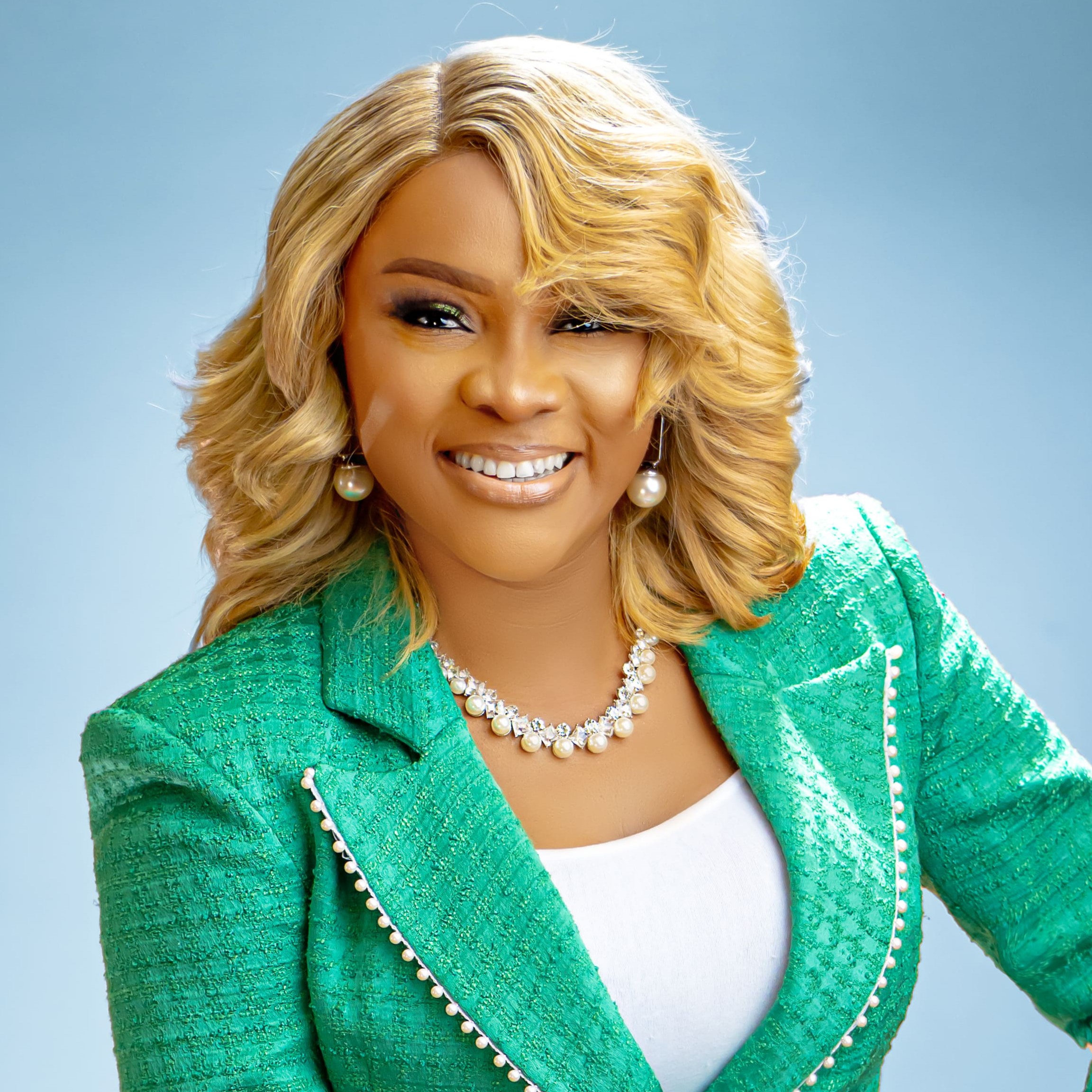
 Kemi Ajumobi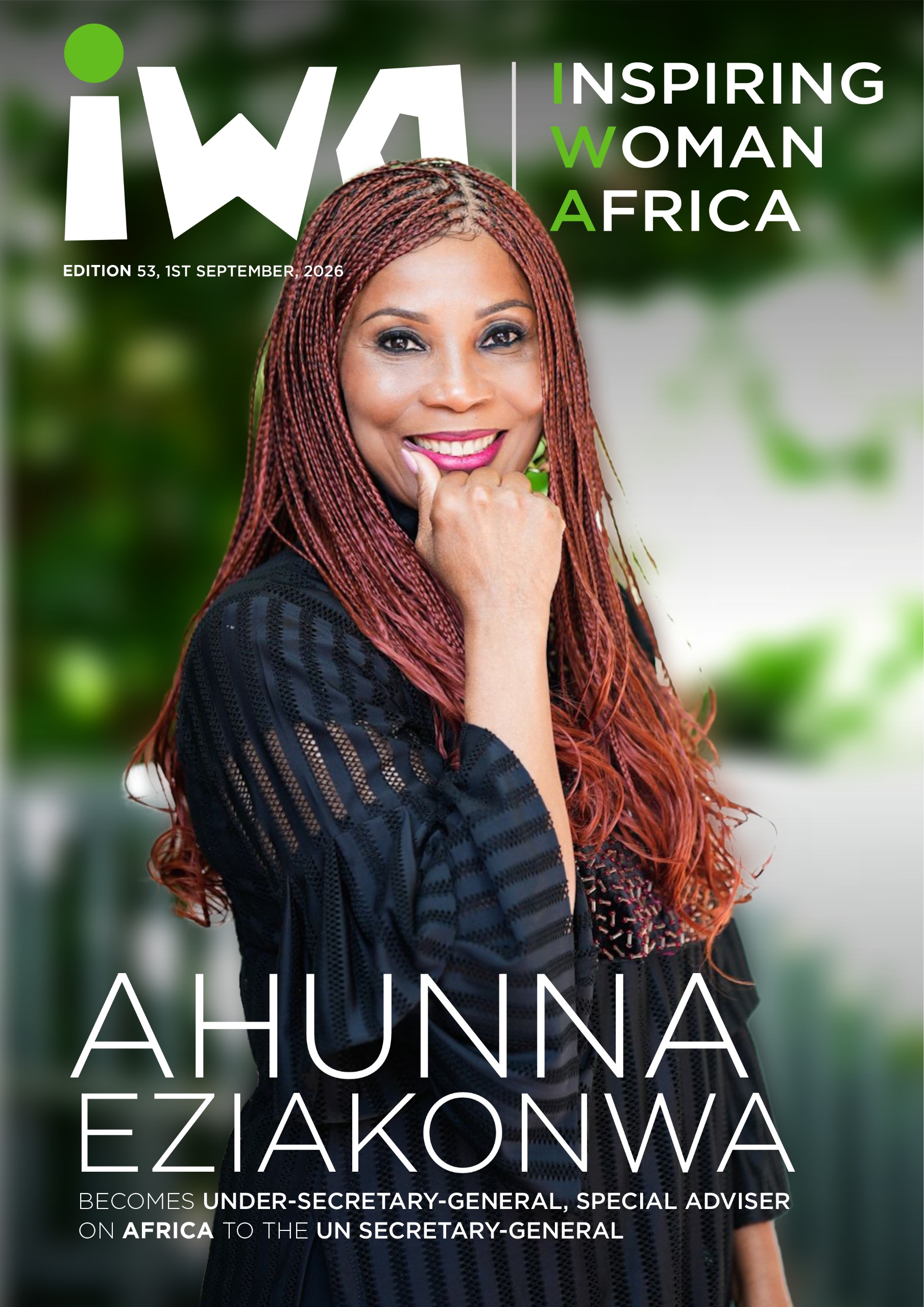
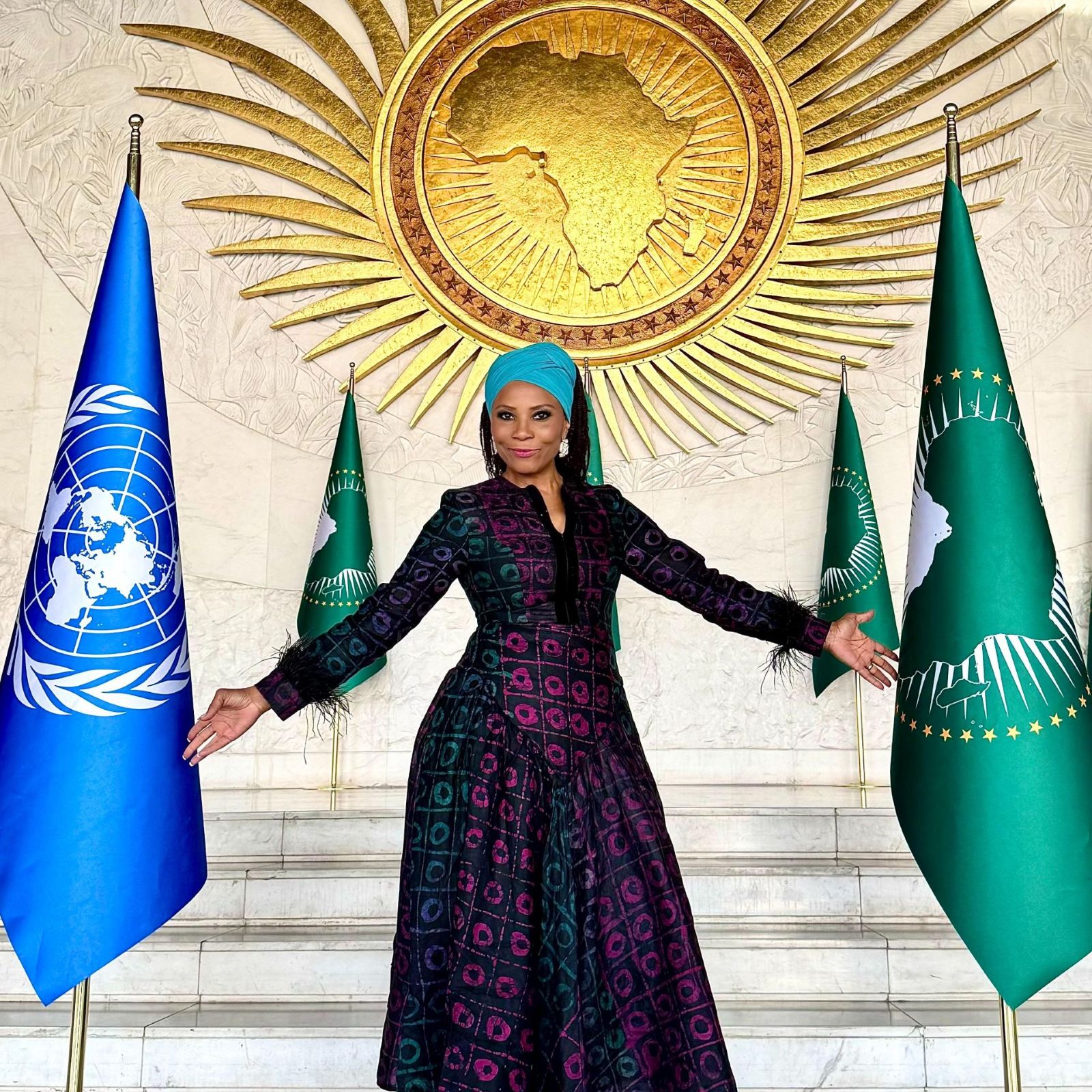
Ahunna Eziakonwa is the current Under-Secretary-General and Special Adviser on Africa to the United Nations Secretary-General.
Appointed by United Nations Secretary‑General António Guterres in June 2026, Eziakonwa of Nigeria began her tenure of office on 1 August 2026.
Eziakonwa brings nearly three decades of United Nations (UN) leadership to her new role. In her previous role as UN Assistant Secretary General, Assistant Administrator and Director, Regional Bureau for Africa, United Nations Development Programme (UNDP), she oversaw the organization’s support to 46 African countries in pursuing Agenda 2030 and the Sustainable Development Goals, as well as the African Union’s Agenda 2063. Since 2018, she has helped shape UNDP’s strategic approach to economic and political development across the continent.
Eziakonwa’s experience spans the full breadth of UN work in Africa. She has served as UN Resident Coordinator, Humanitarian Coordinator and UNDP Resident Representative in three countries – Ethiopia, Uganda and Lesotho – where she coordinated humanitarian action, development strategy and political engagement. As Chief of the Africa Section at the UN Office for the Coordination of Humanitarian Affairs (UNOCHA) in New York, she managed humanitarian operations across 15 African countries and held senior posts in Liberia and Sierra Leone during critical periods in those nations.
At UN Headquarters, she contributed to peacekeeping and political analysis and strategic communications pertaining to UN engagement in Africa, working with the UN Departments of Peacekeeping Operations, Political Affairs and Public Information. Prior to joining the UN, she held positions in several African civil society organisations.
Eziakonwa holds a Master’s degree in International Affairs with a focus on African economic and political development from Columbia University, New York, USA, and a Bachelor of Arts in Pedagogy, English and Literary Studies from the University of Benin, Nigeria. In addition to her native Igbo and English, she speaks fluent Yoruba and has a working knowledge of French.
Formative years and how you have been inspired till date
I often say that my life’s first lessons did not come from a classroom. They came from living through uncertainty. I grew up in Nigeria during the Biafra conflict. My family was displaced, and for a period of my childhood, I lived as a refugee. People often focus on the hardship of that experience, but what stayed with me most was the resilience of ordinary people. I saw families supporting one another even when they had almost nothing. I saw communities sharing scarce resources. I saw people choosing hope when circumstances gave them every reason not to. Those early experiences taught me that human beings are far stronger than we sometimes realise.
My parents also taught me the transformative power of education. I know from personal experience that education can alter the trajectory of a life. It gave me confidence, broadened my horizons, and opened doors that conflict and displacement might otherwise have closed. I would not be where I am today without parents who believed deeply in the power of learning and who encouraged me to dream beyond the circumstances of the moment.
Those experiences shaped how I view development. I do not see people as recipients of assistance. I see them as agents of change. Whether I have worked in humanitarian settings, development contexts or political environments, I have consistently found that solutions already exist within communities. People know their realities. They understand their challenges. More often than not, they know the answers as well.
That belief continues to guide me today. It is why I have devoted much of my career to creating opportunities for women, young people and communities whose voices are not always heard. My role has never been to speak for people. It has been to help create the conditions in which they can fully realise their own potential.
Taking up this new role and your responsibilities
This appointment comes at a very important moment, not only for me professionally, but for Africa more broadly. We are living through a period of profound geopolitical, economic and technological change. Africa is no longer simply responding to global shifts; increasingly, it is helping shape them. Whether we are talking about demographics, critical minerals, clean energy, artificial intelligence, trade or innovation, the future conversations of the world will increasingly involve Africa.
The continent is home to the world’s youngest population, extraordinary innovation, immense natural wealth and growing global influence. At the same time, it continues to face complex challenges ranging from insecurity and climate shocks to debt pressures and development financing constraints.
This appointment is therefore both a privilege and a responsibility. As Special Adviser to the Secretary-General on Africa, my role is to help ensure that Africa’s priorities, perspectives and solutions are reflected within the United Nations system and in broader international discussions. It means helping strengthen coordination, supporting preventive diplomacy, advancing peace and security efforts, and promoting development pathways that are rooted in African realities and aspirations.
Most importantly, it means helping ensure that Africa is not simply reacting to global events but actively helping shape them.
For me, this role comes at a time when conversations about Africa are changing. Increasingly, we are talking less about what Africa lacks and more about what Africa contributes. We are talking about innovation, entrepreneurship, energy transitions, digital transformation and regional integration. We are increasingly speaking about African solutions to African and global challenges. That is a conversation I am excited to help advance.
In 46 African countries pushing Agenda 2030 with Agenda 2063 alignment, what did you learn about where implementation usually fails first: data, incentives, political will, or institutional capacity, and how will you intervene differently now as Special Adviser?
After working with countries across Africa for many years, I have learnt that implementation rarely fails because countries lack vision. The continent is not short of strategies. It is not short of plans. It is certainly not short of ambition. Across Africa, governments have embraced both Agenda 2063 and Agenda 2030 and have integrated them into national planning frameworks. The challenge is not aspiration. The challenge is execution.
If I had to identify one area where implementation most frequently struggles, it would be institutional capacity and coordination. Too often, excellent policies are developed but implementation becomes fragmented across ministries, agencies and partners. Financing may not align with priorities. Responsibilities may not be clearly defined. Data may exist but not be used effectively in decision-making. Momentum is then lost between ambition and action.
I have also come to appreciate how much development outcomes are influenced by financing systems. Countries cannot implement what they cannot finance. The cost of capital, the availability of investment and the effectiveness of institutions all matter enormously. This is why discussions around domestic resource mobilisation, innovative financing and stronger institutions are so important.
As Special Adviser, I want to focus more on implementation ecosystems than implementation plans. Africa does not need another framework. It needs stronger institutions, more effective coordination and financing systems capable of turning ideas into impact. It also needs stronger African voices helping shape global conversations rather than simply responding to them.
UN leadership in Africa often gets asked to coordinate across fractured ecosystems. What is your personal rule for deciding when coordination is strategy versus when it becomes delay?
My rule is simple. Coordination is valuable only when it improves decisions and accelerates delivery. Too often, organisations mistake process for progress. Coordination meetings can become ends in themselves. But people do not benefit from meetings. They benefit from outcomes.
The questions I always ask are: What decision are we making? What obstacle are we removing? What action will happen as a result?
If coordination clarifies responsibilities, strengthens accountability and improves outcomes, then it is strategic. If it merely prolongs discussions without moving things forward, then it risks becoming delay.
In today’s world, many challenges are too complex for any single institution to solve alone. Coordination remains essential. But good coordination should make implementation faster, not slower.
You’ve worked simultaneously on economic and political development. What’s your most convincing example of economics creating politics, or vice versa?
Jobs. I have seen repeatedly that economics and politics are inseparable. When young people can find meaningful opportunities, build livelihoods and believe that effort can lead to progress, institutions gain legitimacy. Trust grows. Stability improves. Politics becomes more constructive.
Conversely, when large numbers of people feel excluded from economic opportunity, frustration often manifests itself politically. Economic grievances can become social grievances. Social grievances can become political tensions.
This is particularly important in Africa because of our demographics. Every year, millions of young Africans enter the labour market. The question is not whether they have ambition. Everywhere I travel, I meet talented young people ready to build, create and innovate. The real question is whether systems provide them with pathways to succeed.
That is why economic inclusion is not simply a development issue. It is a governance issue. It is a peacebuilding issue. It is a security issue.
In your experience across Resident Coordinator, Humanitarian Coordinator, and UNDP roles, what is the single best early-warning indicator that a humanitarian situation will transition into: a longer-term governance or development crisis?
The erosion of trust. For me, the most important indicator is not always what appears in the data first. It is what happens to trust. I have seen situations where food insecurity worsens, where displacement increases, or where climatic shocks intensify. Those are important warning signs. But what often determines whether a humanitarian crisis becomes a prolonged governance or development crisis is whether people still trust that institutions can respond fairly and effectively.
When citizens lose confidence in public institutions, grievances begin to accumulate. Communities become more polarised. Misinformation spreads more easily. Social tensions become harder to manage. At that point, a crisis that might initially have been humanitarian can gradually become political, economic and institutional.
I learnt this repeatedly across different contexts. Whether it was conflict, drought, displacement or economic shocks, the countries that were most resilient were not necessarily those with the most resources. They were often the countries where institutions maintained legitimacy and where communities continued to believe that solutions could be found through dialogue and collective action.
This is why I believe prevention is ultimately about trust-building. It is about ensuring that institutions remain responsive, transparent and accountable. It is about maintaining the social contract between citizens and the state.
Once that trust begins to erode, recovery becomes much harder, much longer and much more expensive.
Conversely, where trust remains strong, even severe shocks can become opportunities to build back stronger and more resilient systems.
In many ways, trust is not simply a governance outcome, it is one of the most valuable forms of resilience a country can possess.
UNOCHA experience includes managing humanitarian operations across 15 countries. When you advise on Africa at the Secretariat level, what do you wish Member States understood?
I wish more people understood that humanitarian assistance alone cannot solve humanitarian crises. Emergency interventions save lives and remain essential. But sustainable solutions require us to address the root causes of vulnerability.
Whether we are discussing conflict, displacement, food insecurity or climate shocks, the answers rarely lie solely within the humanitarian space. They lie in governance, economic opportunity, social cohesion, public services and resilience.
One of the most important lessons I have learnt is that humanitarian, development and peace efforts must be pursued together. We often call this the nexus approach, but ultimately it is simply common sense. Communities do not experience these challenges separately. Neither should we address them separately.
Peacekeeping and political analysis are often treated as separate tracks. What’s your approach to making sure protection outcomes, political incentives and communication strategy reinforce each other instead of competing?
People experience their realities as a whole. They do not separate politics from security, or security from communication. Protection outcomes improve when political incentives are understood. Political agreements become more sustainable when communities feel protected. Communication strengthens trust, legitimacy and accountability. My approach has always been to view these dimensions as interconnected rather than competing priorities.
When they reinforce one another, solutions become more sustainable. When they are pursued separately, opportunities are often missed.
Most importantly, people must remain at the centre of decision-making. Protection, politics and communication should all serve the same ultimate objective: creating conditions in which people can live in dignity, security and hope.
After the appointment in June 2026 and taking office in August, what is your first deliberate priority?
My first priority is listening and building relationships. Throughout my career, I have learnt that meaningful progress is built on trust, partnerships and a shared understanding of priorities. Before setting a course of action, I want to engage with governments, regional institutions, the African Union, Regional Economic Communities, young people, women leaders, civil society and our international partners. Africa is incredibly diverse. Different countries face different realities, opportunities and challenges. Listening is therefore not simply a courtesy. It is a strategic necessity.
I also want to focus early on strengthening connections between institutions that often work towards the same objectives but do not always work closely enough together. The challenges Africa faces today, whether related to peace and security, climate change, economic transformation or demographic change, cut across traditional institutional boundaries.
No single institution can address these issues alone. Success depends on partnerships and collective action.
My experience has taught me that some of the most important breakthroughs occur when people who may not traditionally work together sit around the same table with a shared purpose. Building those bridges will be one of my key priorities.
Above all, I want to understand where the greatest opportunities exist to support African-led solutions. Africa has no shortage of ideas, talent or ambition. My role is not to define the continent’s priorities but to help amplify them and support the conditions that allow them to succeed.
In managing humanitarian action, development strategy and political engagement across Ethiopia, Uganda and Lesotho, which context taught you the most about humility in UN planning and what did it change?
Each country taught me something different, but perhaps the most enduring lesson I learnt is that people are not waiting for outsiders to solve their problems. Whether I was working in Ethiopia, Uganda, Lesotho or elsewhere, I repeatedly saw communities finding solutions long before development partners arrived. I saw local leaders mediating tensions, women supporting economic recovery, young people creating opportunities where none seemed to exist, and communities organizing themselves in remarkably resilient ways.
That experience fundamentally changed how I think about development and international support.
Early in one’s career, it is easy to believe that expertise is the most important contribution we bring. Over time, you realise that listening may be even more important. The most sustainable solutions are rarely imported. They are built by people who understand their realities, their institutions, their history and their aspirations.
Ethiopia reinforced this lesson strongly for me. It showed me the power of national ownership and the importance of ensuring that countries remain firmly in the driver’s seat of their development journey. International partners can support, convene and accompany, but lasting change ultimately belongs to the people and institutions of a country.
Humility in development comes from recognising that our role is often not to bring solutions, but to help create the conditions in which existing solutions can flourish. That lesson has stayed with me throughout my career and continues to shape how I approach leadership today.
Agenda 2030 and Agenda 2063 are aligned on paper. In practice, what would you treat as the highest-leverage reform to close that gap?
If I had to choose one reform, it would be strengthening the way development is financed. The problem today is not a shortage of strategies. Africa has strong visions, strong ambitions and increasingly strong institutions. The problem is often that implementation is underfunded or financed in ways that are not sustainable.
We need much stronger domestic resource mobilisation. We need to unlock the enormous pools of African capital that exist within pension funds, insurance funds and domestic financial systems. We need financing mechanisms that support productive investment, infrastructure, innovation and job creation.
We also need to address the cost of capital facing African countries. When countries pay significantly more to access finance than their fundamentals justify, development becomes unnecessarily expensive. Schools are delayed. Infrastructure is postponed. Opportunities are lost.
Agenda 2030 and Agenda 2063 are not separated by vision. They are often separated by implementation capacity and financing. Closing that gap requires stronger institutions and better financing systems.
In crisis moments, misinformation can polarise communities quickly. If you could choose one capability the UN must strengthen across Africa, what would you pick and why?
I would choose trust-building. Many people would expect me to say technology, early warning systems or communication platforms. Those tools are undoubtedly important. However, trust remains the foundation upon which all effective communication rests.
Information travels fast. Misinformation often travels faster. The question is not simply whether information reaches people. The question is whether they believe it.
Communities that trust institutions are more resilient during crises. They are more likely to cooperate, less vulnerable to manipulation and better able to navigate uncertainty.
Trust cannot be built during a crisis. It must be built continuously through transparency, inclusion, accountability and genuine engagement.
In many ways, trust is one of the most important forms of resilience a society can possess.
What does success look like for your office in one year: fewer crises, improved resilience, better political solutions, or measurable development delivery, and how will you prove it?
Success will not be measured by the number of meetings we hold or the number of reports we produce. Success will be measured by whether people are better served because of the work we do.
If, one year from now, countries are better able to prevent tensions from becoming crises, that would be success.
If governments feel better equipped to address complex challenges and deliver for their citizens, that would be success.
If more women and young people can access opportunities, participate in decision-making and contribute to economic transformation, that would be success.
If stronger partnerships emerge between African institutions, Member States and the international community, that would be success.
And if Africa’s voice carries greater weight in the decisions that affect its future, that would be success.
The reality is that progress is rarely captured by a single indicator. Success is often reflected in stronger institutions, greater resilience, deeper trust and better opportunities for people.
But if I had to summarise it in one sentence, I would say this: success is helping create conditions where African countries are better able to shape their own futures with confidence, resilience and agency.
How important is it to have more women in top positions, how can we have more and what do women need to do too?
It is absolutely critical. Women represent half of humanity. No society can achieve its full potential while excluding half of its talent, leadership and creativity. The conversation, however, should not begin with representation alone. It should begin with opportunity.
Too many women continue to face barriers in education, finance, technology, political participation and leadership. Those barriers are not only unfair; they are economically costly. When women succeed, economies grow, institutions perform better and communities become stronger. As I often say, if Africa underinvests in women, Africa underinvests in itself.
We need more women in leadership because diverse leadership produces better decisions. We also need stronger mentorship networks, greater investment in girls’ education, and more deliberate pathways into leadership positions.
At the same time, women must continue believing in their own capacity. They should not wait for permission to lead. They should seize opportunities, push doors open, build networks and support one another.
One of the principles I have always believed in is simple: lift as you climb. Every woman who reaches a position of leadership has a responsibility to create opportunities for the next generation.
What is the greatest lesson life has taught you?
That adversity is not destiny. Life does not always unfold according to plan. There will be setbacks, disappointments and moments of uncertainty.
But if my own journey has taught me anything, it is that circumstances do not define our future. The child who experiences conflict is not destined to remain defined by conflict. The young person who lacks opportunities today is not destined to lack opportunities forever.
I have seen remarkable examples of resilience throughout my life. I have seen individuals overcome extraordinary odds. I have seen communities rebuild after devastating crises. I have seen countries recover from periods of conflict and emerge stronger.
Hope is not naïve optimism. Hope is a decision to believe that change is possible.
That is perhaps the greatest lesson life has taught me.
Concluding Words
For many years, the dominant narrative about Africa focused on what Africa lacked. Today, I believe the more important question is what Africa can offer.
When I travel across the continent, I do not see a continent waiting to be rescued. I see innovators building solutions. I see entrepreneurs creating jobs. I see women transforming communities. I see young people challenging old assumptions and creating entirely new possibilities. Everywhere I go, I encounter talent, creativity and determination.
Yes, Africa faces significant challenges. Climate change, conflict, debt pressures, inequality and geopolitical uncertainty are real. But Africa also possesses extraordinary strengths: the world’s youngest population, abundant natural resources, growing technological capabilities, dynamic entrepreneurs and remarkable resilience.
The future will be shaped by those who can transform ideas into solutions, opportunity into prosperity and innovation into impact. Africa is increasingly demonstrating that ability every day.
I believe we are entering a new chapter.
Not a chapter defined by dependency.
Not a chapter defined by limitations.
Not a chapter defined by what others think Africa should become.
But a chapter defined by African leadership, African innovation, African institutions, African capital and African solutions.
I believe, it is Africa’s time, on Africa’s terms.