 Kemi Ajumobi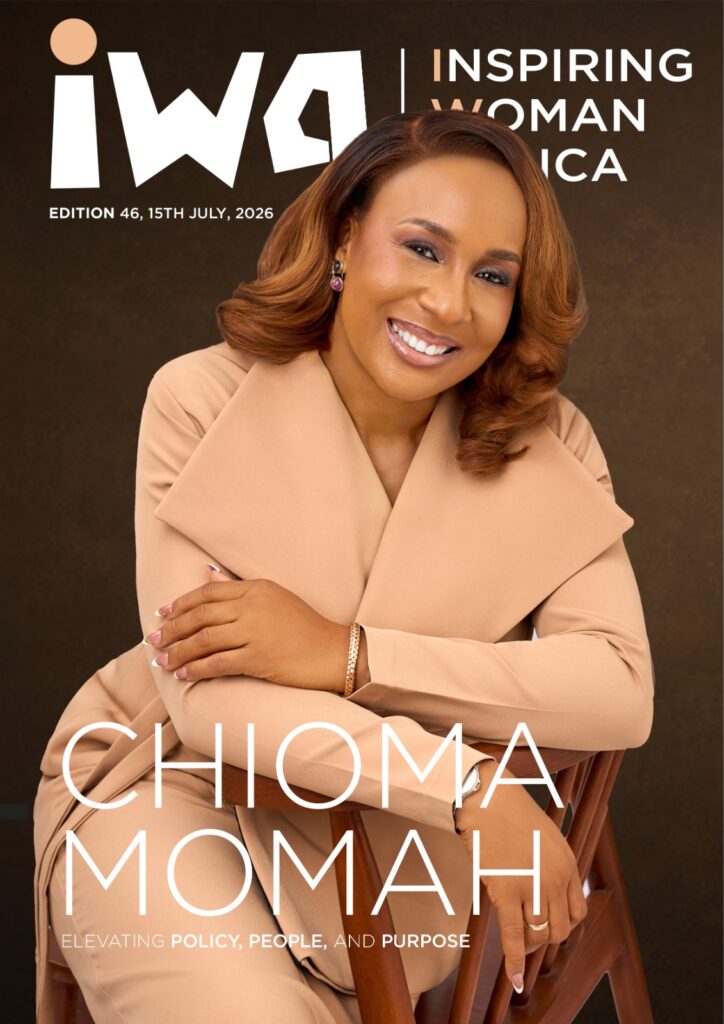
Chioma Momah is a public policy and corporate affairs executive, leadership coach, author, and speaker with over two decades of experience spanning the public and private sectors.
She currently serves as Head of Policy & Public Affairs at Guinness Nigeria Plc, where she leads stakeholder engagement, regulatory advocacy, and government relations, helping shape conversations at the intersection of business, policy, and sustainable development. Prior to this, she held leadership roles across several public sector institutions, giving her a rare perspective on how government and business can work together to create lasting impact.
Beyond the boardroom, Chioma is passionate about helping people thrive. Through her coaching and mentoring work, she equips professionals, particularly women and emerging leaders, to lead with confidence, communicate with influence, and build meaningful careers without losing themselves in the process.
She is also an accomplished author whose books reflect her passion for leadership, family, and intentional living. Her latest book, “The Not Perfect Parent”, is a practical and heartfelt guide that encourages parents to let go of perfection and embrace the everyday journey of raising confident, resilient children with purpose and grace.
A sought-after speaker and moderator, Chioma speaks on leadership, public policy, women’s advancement, parenting, personal development, and purpose-driven living. Her ability to combine strategic insight with authentic storytelling has made her a trusted voice across corporate, government, educational, and faith-based platforms.
Whether she is influencing policy, coaching leaders, writing books, or speaking to audiences, Chioma is driven by one mission: to help people and institutions grow with intention, lead with impact, and leave a legacy that matters.
Childhood experience and influence till date
I had what I can only describe as an idyllic childhood. I grew up in Lagos as one of six children to two amazing parents who were both public servants. Our home was filled with love, laughter and lots of affection. We were hugged, encouraged and given the freedom to simply enjoy being children. One of my favourite memories is walking from one end of Ikoyi to another with my younger sister without a care in the world. We were also part of a very close extended family, so every Christmas we travelled to the East to spend time with our grandparents, cousins, aunties and uncles. Those annual gatherings remain some of my happiest memories.
I often joke that I was like Peter Pan because I genuinely did not want to grow up. Looking back, that upbringing probably made me a little naïve in my early years because I assumed everyone treated people with the same kindness I experienced growing up. But it also shaped one of my greatest strengths. It taught me to treat people with dignity, empathy and respect, and that has influenced how I lead, how I coach and how I build relationships today.
What are your responsibilities at Guinness Nigeria Plc and how do you carry them out?
As Head of Policy and Public Affairs, a significant part of my role is stakeholder engagement. I build and maintain strong relationships with government, regulators, industry associations and other key stakeholders to support an enabling environment for our business to operate responsibly, ethically and in compliance with applicable laws and regulations.
My role also involves monitoring policy and regulatory developments, assessing how they may impact the business and working collaboratively across the organisation to ensure we are prepared, informed and able to respond appropriately.
I work closely with colleagues across different functions because effective public affairs cannot happen in isolation. It requires collaboration, trust and a clear understanding of both the business and the external environment.
Everything we do is grounded in integrity, proactive engagement and evidence based advocacy. For me, the goal is to build trusted relationships over time so that we can contribute constructively to policy discussions while supporting the long term success and sustainability of the business.
Aligning strategic business objectives with public policy goals
I do not believe business success and public policy should compete with each other. Businesses create jobs, contribute taxes and stimulate economic growth, while governments have the responsibility of protecting the public interest.
The goal is to find solutions that achieve both. That requires dialogue, evidence based policymaking and mutual respect. When government and business understand each other’s perspectives, we create policies that benefit society while allowing businesses to remain sustainable and profitable, which is a win-win. That is where long term impact comes from.

Misconceptions about regulatory advocacy you want to clarify
Probably the biggest misconception is that advocacy is about lobbying through unethical means. People hear government relations or public affairs and immediately think of brown envelopes. That could not be further from my experience.
I work for a company with extremely high ethical standards. Everything we do is based on transparency, evidence and constructive engagement. We provide data, participate in policy consultations and work collaboratively through industry associations.
Advocacy is not about influencing decisions improperly, it is about building trust over time, presenting credible evidence and becoming a respected voice in policy conversations.
One policy reform that can unlock sustainable impact for Nigeria and what may be holding it back for now?
If I had to choose one, it would be meaningful public service reform. Strong institutions are built by capable people, and the public service sits at the heart of policy development and implementation. The quality of our institutions influences the quality of the policies they produce and how effectively those policies are executed.
If we can continue to build a civil service that attracts and develops the right talent, embraces technology, rewards performance and strengthens accountability, we will unlock progress across every sector, from education and healthcare to infrastructure and economic development.
I also believe our policies must be fit for purpose and consistently implemented. Nigeria has many good policies, but implementation and continuity are often where we struggle. Strong institutions, supported by capable public servants, can help bridge that gap and deliver sustainable impact.
Most important mindset shift you encourage among women to sustain both influence and personal wellbeing
“Woman you are absolutely amazing, but you are not superhuman.”
Too many women spend their lives trying to prove they can do everything. My encouragement is simple. Stop trying to prove yourself. Rest is not laziness. Self care is not selfish.
Looking after yourself allows you to keep showing up for the people who matter most. You can only pour from a cup that is full.
In challenging situations, how do you restore calm? Where do you tap into and how do you progress from there?
Music helps me restore calm. I especially enjoy worship music because it shifts my focus from the problem to gratitude. Artists like Kaestrings and Victor Thompson help me reconnect with what really matters. I also intentionally create quiet space. Sometimes, I simply stay indoors with no agenda. Other times, I book a massage or spend a few hours at a spa. Those moments of stillness help me reset emotionally, think clearly and return with fresh perspective.
I have learnt that not every problem is solved by doing more. Sometimes, it is solved by being far from the maddening crowd and becoming still.
How do you balance ambition with intentional living?
I still set very ambitious goals, but I have learnt to count the cost. Whenever an opportunity comes my way, I ask myself, “What will this require of me?”
Sometimes, it means late nights. Sometimes, it means travelling and spending time away from home. Those sacrifices are part of leadership.
But I also know there comes a point where you have to ask yourself, “At what cost?” If my ambition consistently comes at the expense of my health, my faith or my family, then I need to pause and reassess.
Success is important, but not if I lose the people and the values that make the success worthwhile.
Tell us about your latest book and why you chose to write it. Where can it be purchased?
I have written nine books, and each reflects a different season of my life. I started by writing children’s books through my Lana series because I wanted to make learning engaging and fun for young readers. I later wrote the Wisdom from Women series to encourage young people through stories and life lessons.
My latest book, The Not Perfect Parent, grew out of years of speaking, coaching and counselling parents. Parenting is one of the areas I am deeply passionate about, and I spend a lot of time speaking and engaging with parents.
One thing I have realised is that because people see you speaking about parenting, they sometimes assume you have it all figured out. Nothing could be further from the truth. I am still learning.
Parenting is a lifelong journey of learning, unlearning and relearning. Every stage, from newborns to toddlers, teenagers, young adults and even becoming grandparents, brings new lessons.
I wrote the book to remind parents that there is no perfection in parenting. My hope is that parents will see the book as a companion that encourages them to become more intentional rather than more perfect.
The book is available on Amazon, Selar and selected bookstores in Nigeria.
As a mother and author of ‘The Not Perfect Parent’ how do you guide parents to cultivate resilience and purpose without succumbing to perfectionism?
The first thing I tell parents is that there is no perfection in parenting. Once we accept that, we stop trying to perform and start becoming more intentional.
The second thing I encourage is resilience. We all want to protect our children, but life is not always easy. Our responsibility is not to remove every obstacle from their path. It is to prepare them to navigate those obstacles with confidence, character and resilience.
Whether we are there or not, we want to raise children who can stand, recover from setbacks and continue moving forward with purpose.
That desire to support parents also inspired me to create The Butterfly Project, where I work with women, especially working mothers, to help them thrive in every area of life without carrying the burden of perfection.
How has your writing shaped your approach to leadership and policy, and what audiences do you most hope to reach with your books?
Writing has made me a better leader because it has taught me to observe, reflect and communicate clearly.
While many people know me as an author, I also write regularly on LinkedIn, Instagram and other social media platforms.
I love telling stories. Stories about leadership. Stories about parenting. Stories about work. Stories about success and failure. Stories about everyday life.
Stories allow people to see the human side of leadership. One thing I care deeply about is authenticity. Too often, especially as women, we are taught to minimise ourselves, hide our gifts or downplay our strengths because we do not want to appear proud.
I believe we should embrace who we are. We should not be afraid to use our voice, our gifts and our experiences. When we lead authentically, we give others permission to do the same.
Whether I am writing a book, a LinkedIn article or a social media post, my hope is always that someone will read it, see themselves in the story and leave encouraged to become the best version of themselves.
If you could imprint one lasting policy or leadership principle on the next generation, what would it be and why?
Authenticity! When you know who you are and you are comfortable with who you are, you do not spend your life trying to be someone else.
Authentic leaders make better decisions because they lead from their values instead of appearances.
When people know they can trust your words because they match your actions, that is where real leadership begins.
Personal story or experience that shaped your leadership approach, and how do you translate that into guidance for others?
One experience that has stayed with me happened early in my career.
Around 2010, over 200 microfinance banks were closed, and staff across my organisation were mobilised to support the exercise. Although I was not in the operations department, I volunteered wholeheartedly because I saw it as an opportunity to learn.
Looking back, I am so glad I did because throughout the rest of my time in that organisation, I never had another opportunity quite like it.
It taught me a lesson I have carried throughout my career. Never assume an opportunity will come again. Raise your hand. Volunteer. Say yes to learning. Step outside your comfort zone because sometimes the opportunity you postpone today never returns.
I will also throw in a second lesson-. People are always watching.
They are watching how you treat people, how you respond under pressure, whether you keep your word and whether your actions match your values.
Leadership is not built only in the big moments, it is built in the ordinary moments that people remember long after you have forgotten them.
Day never to be forgotten and why?
The day I became a mother. Holding my first child completely changed my perspective. It gave me a deeper understanding of love, responsibility and legacy. It also reshaped my priorities and influenced many of the decisions I have made ever since, both personally and professionally.
What are you grateful for as you recently celebrated another birthday
I am grateful for so much! Grateful for life. Grateful for my family, both immediate and extended. Grateful for a career that has allowed me to make a meaningful contribution in both the public and private sectors. Grateful for the privilege of coaching, mentoring and speaking into the lives of so many incredible people. Grateful for my health, and grateful for being blessed with things money can and cannot buy.
Most of all, I am grateful for the people I meet every day. Every conversation, every opportunity and every relationship reminds me that God blesses you through people.
Final words
If there is one thing I would like people to remember, it is this. Be intentional. Be authentic. Keep growing. And wherever you find yourself, leave people and places better than you met them.