 Wola Joseph-Condotti
Nobody tells you that the hardest part is not knowing what is right.
Usually you know. Most of the time it is obvious within about four seconds of hearing the proposal. The hard part is knowing what is right, and then quietly doing the arithmetic on what it is going to cost you this quarter.
That is the real dilemma. Not confusion. Cost.
Because the market has a compass too, and honestly, it is a very good one for what it measures. It points toward speed, margin, growth, and the deal that closes before the window shuts. It is not evil. It is just pointing at something else. And every so often, your compass and its compass part ways.
That moment is lonely in a way that is genuinely hard to explain to anybody who has not sat in it.
The Decisions That Cost Something
I am not talking about the dramatic ones here. Fraud, theft, obvious corruption. Those are easy, actually. Anybody with a conscience turns those down without breaking a sweat. I mean the ordinary ones.
The number that could be presented one way, technically defensible, or another way, plainly honest. The vendor, where everybody in the room knows how they won that contract, and nobody wants to be the one to say it out loud. The staff decision that is legally fine and quietly unjust. The commitment you made back in January that has become expensive by August, and honestly, no one would blame you for renegotiating it.
None of these will ever make the papers. And every single one of them is a decision.
The uncomfortable part is that doing the right thing in these moments does not usually give you a heroic story to tell later. It gives you a slightly worse quarter. And nobody claps.
The Quiet Kind of Witness
There is a version of faith at work that I have never been comfortable with. The performative version. Scripture in the email signature. Prayer wheeled out as a management technique. A certain vocabulary put on for effect.
That has never sat right with me. Partly because I lead people of many faiths and none, and my convictions are not a burden I get to hand to them.
But there is another version. Much quieter. It looks like being the same person in the boardroom as you are in the back office. It looks like your word still meaning something twelve months later. It looks like the junior colleague who works out, slowly, over time, that you will not humiliate anybody in a meeting, ever, and that this is not a mood you happen to be in. It is a rule.
People read that. They read it far more accurately than they read anything you say about yourself.
Excellence is the witness. Delivering well. Treating people well. Telling the truth when it costs you something. That preaches without preaching, and it holds up in rooms where words would fall flat.
What It Actually Costs
Let us be honest about the price, though, because pretending there is none is both dishonest and unhelpful.
You will lose some things. A deal here and there. A relationship with someone who decided you were inflexible. Occasionally a reputation, among a certain kind of person, for being difficult.
And you will sometimes stand alone in a room where everybody else has quietly nodded along, and you will lie awake afterwards wondering whether you were being principled or just stubborn. That doubt is real. It does not fully go away, and I am not sure it is meant to.
But here is what I have found. The account balances over a much longer horizon than a single quarter. The people who could not use you eventually stop calling, which is fine. But the people who need somebody they can genuinely trust with something serious? They call. And they keep calling, for years.
That is not a promise of prosperity. It is just what I have watched happen.
A Word From Scripture
Three young men in Daniel 3 refused to bow to the king’s statue. The threat was a furnace, and it was not a metaphor. What has always struck me is not their confidence. It is one sentence, tucked into the middle of their answer.
They said God was able to deliver them. And then they said this: “But if not, be it known unto thee, O king, that we will not serve thy gods.”
But if not. They did not know how it was going to end. They made the decision anyway, without any guarantee it would work out well for them.
That is the posture. Not certainty that conviction will be rewarded. Just clarity about what you will and will not do, held firmly before you have any idea how the story ends.
Final Thoughts
If your compass and the market’s compass have never once disagreed, wait. They will. And when they finally do, you will not need more information. You will already know. What you will need is the willingness to accept that being right and being rewarded do not always turn up on the same day, or even in the same quarter.
Make the decision anyway.
Not loudly. Not with a speech. Just quietly, consistently, in a way people tend to notice long before they ever mention it to you.
Because in the end, the market will value your results.
But the people around you will remember what you refused to trade.
About Author
Wola Joseph-Condotti
Wola Joseph-Condotti is the CEO, Eko Power Limited. She is a Harvard-trained lawyer and passionate advocate for faith-driven leadership, gender equity, and energy transition in Africa. She writes from the intersection of power, purpose, and personal growth.
The IWA Series 15 Conference is Here
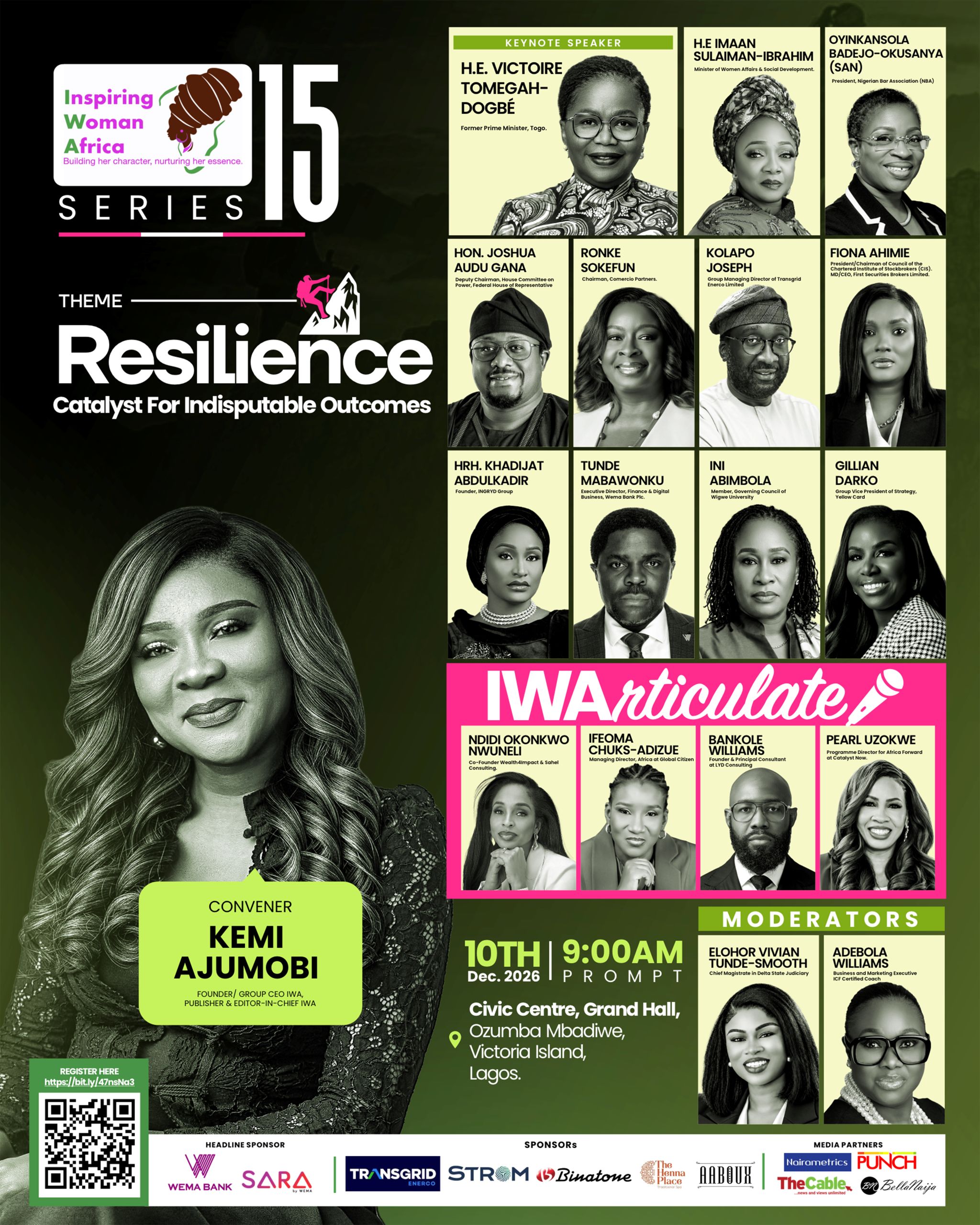
Click To Register
Latest Edition of IWA Magazine
October 20, 2026
Meet the Speakers of IWA Series 15 Conference
Latest Posts
-
 Oct 20, 2026 Hard Conversations: The Skill No One Puts on a CV
 -
 Oct 20, 2026 5 Africa Women Listed as 2026 Forbes Icons
 -
 Oct 20, 2026 You Are Wealthier Than You Think