 Kemi Ajumobi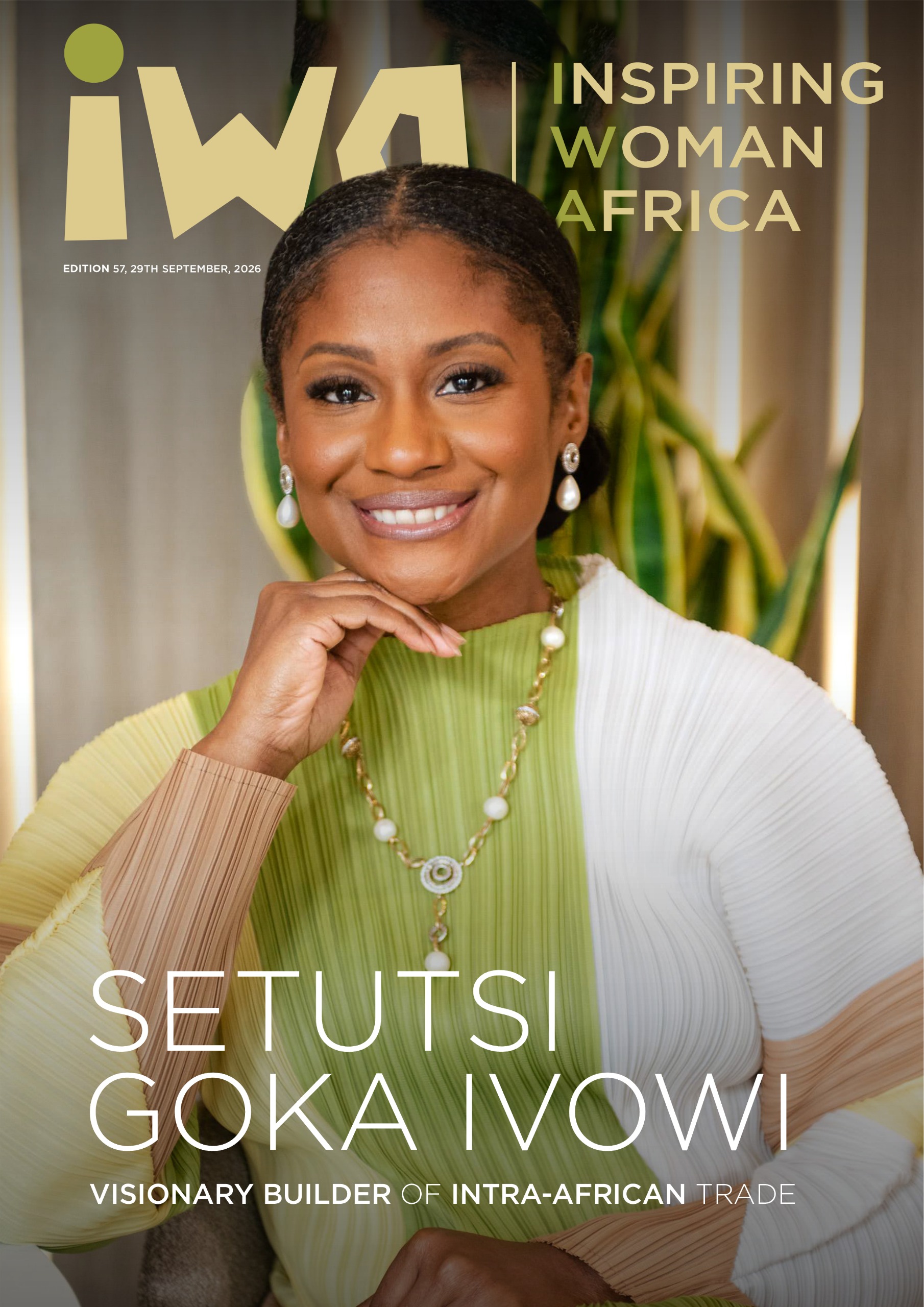
Setutsi Goka Ivowi (Tucci) is a Managing Partner with Global Village Consortium, the Secretary- General of the AfCFTA Association of Commodities Exchanges (A-ACX), and the recent past Chief Executive Officer and founding member of the Ghana Commodity Exchange (GCX). She played a key role in building the Exchange from the ground up, steering it to profitability within the targeted five-year period. Tucci is an experienced business leader with over 20 years of expertise in marketing, strategy, and general business management across the UK, Southeast Asia, and Sub-Saharan Africa. Her career spans both private and public sectors, where she has led teams across multiple markets in various senior roles—including Business Unit Director, Marketing Communications Director, and Managing Director at one of the world’s leading food and beverage companies. She was the first female and first Ghanaian to be appointed as Business Executive Officer (Executive Director) at Nestlé Central & West Africa Ltd, where she managed business operations across 22 countries during her 15-year tenure. A Chartered Marketer and Fellow of the Chartered Institute of Marketing (CIM UK), she is a contributor to the Harvard Business Review and Catalyst Magazine, where she writes on leadership, marketing, communications, and intra-African trade. Her academic background includes a BA in Politics and French from the University of Sussex (UK), a Political Science degree from Sciences Po, Aix-en-Provence (France), an MBA from Warwick Business School (UK), and Executive Education in Leadership from the London Business School. In addition to her executive and advisory work, Tucci serves on several boards including Unilever Ghana PLC, Enterprise Trustees Ltd., and is a member of the Advisory Board of the Heritage Management Organisaton. She is also the founder of Forty Lives, a Ghana-based mental health advocacy organisation. Her contributions to business and leadership have been recognised through numerous honours.

Journey to adulthood
That journey for me was one of love and support from my parents. They encouraged us to develop our talents and be confident in who we were. They showed us what it looks like to care about people, to be kind to people, and to respect everyone.
This encouragement to develop ourselves and grow in skill and talent is something which has become a lifelong value for me. The compassion I have and my desire to pour into others are, in many ways, a small reflection of what I have seen them model in their own lives.
Global Village Consortium, your responsibilities and goals
What excites me about Global Village Consortium is the idea behind the name itself: no significant challenge (developmental, organisational, institutional) is solved by one body acting alone. We have a heavy focus on Africa, which has extraordinary talent, capital, ideas and opportunities, but they are often fragmented. The real opportunity is in connecting those pieces deliberately. My role is strategic – helping to think through positioning, partnerships, growth and how the consortium can translate good ideas into sustainable solutions and measurable impact.
My desire is for Global Village Consortium to become a platform that brings together the right people, ideas, businesses and institutions to solve meaningful problems at scale. I would like its success to be measured not simply by the number of projects it undertakes, but by what changes because it exists: businesses strengthened, opportunities created, institutions improved and lives positively affected.
As Secretary-General of A-ACX, how do you turn member exchanges’ interests into collective action?
The first responsibility is listening, because our member exchanges operate in different markets, at different stages of maturity and within different regulatory environments. Collective action cannot mean pretending those differences do not exist.
Part of my role is to find the intersection; the challenges we cannot solve efficiently as individual exchanges but can tackle together.
That may mean advocating for enabling regulation, developing interoperable standards, sharing technology and knowledge, building cross-border trading relationships or creating a stronger collective voice in AfCFTA conversations.
I see A-ACX as an important piece of Africa’s future market infrastructure. Ultimately, we should make it easier for a commodity produced in one African country to find a credible, transparent and efficient market in another.
The ambition is much bigger than connecting exchanges. It is about connecting African markets.
Hardest part of earning legitimacy with market actors – brokers, aggregators, regulators, farmers, or institutional buyers?
The hardest part is that legitimacy cannot be declared; it has to be earned.
Every participant comes to a market with a different definition of value and a different history of disappointment. A farmer may ask, “Will I actually get a better and more reliable market?” A buyer asks, “Can I trust the quality and delivery?” A regulator is thinking about integrity and systemic risk. A broker or aggregator may wonder whether the exchange is enabling them or displacing them.
So, the challenge is not merely designing a technically sound exchange. It is demonstrating, repeatedly, that participation leaves people better off.
And that takes time. One successful transaction builds more legitimacy than fifty presentations. Markets believe what they experience. Consistency, transparency, settlement discipline and keeping promises are ultimately what convert an institution from something people have heard about into something they trust.
If you had to choose one metric that best captures whether an exchange is actually improving real economic outcomes – not just trading volume – what would it be?
If I had to choose only one, I would look at the sustained improvement in producers’ realised income from participating in the formal market.
Trading volume tells me that transactions are occurring. It does not necessarily tell me that livelihoods are improving.
I would want to know whether a farmer who participates in the exchange is receiving better price discovery, experiencing fewer post-harvest losses, accessing markets more consistently and ultimately retaining more value from what he or she produces.
An exchange should not exist simply to make commodities move. It should make markets work better. If the people producing the underlying value remain chronically poor while volumes rise, then we should be asking ourselves some difficult questions.
Which part of intra-African trade do you think is most “mispriced” today – risk, information, logistics, trust, or financing – and how should exchanges shift incentives to correct that?
I would choose trust, because trust influences the price of almost everything else.
When I do not trust your quality, your documentation, your ability to deliver or your willingness to honour the transaction, I protect myself. I demand more collateral. I charge a higher premium. I hold more inventory. I insist on advance payment. Suddenly what appears to be a financing or logistics problem is partly a trust problem.
Commodity exchanges can help convert trust from something personal into something institutional.
Standardised contracts, grading systems, certified warehouses, reliable market data, transparent price discovery and enforceable settlement mechanisms reduce the number of things counterparties simply have to “take your word for.”
That is particularly important for intra-African trade. We need to move from “I trade with you because I know you” to “I can trade with you because the system works.”
What is one of the greatest lessons life has taught you?
That very little in life is permanent. Not success, not failure, not applause and certainly not difficulty.
So I have learnt to hold success with humility and adversity with perspective.
Some chapters teach you through achievement; others teach you through disappointment. Both are useful. Sometimes the thing you thought was happening to you turns out, with time, to have been preparing you for something else.
And perhaps most importantly, I have learnt that who walks the journey with you matters enormously. Relationships, family, friendship, faith, mentors and people who can tell you the truth are invaluable.
Titles eventually change. What remains is who you became, whom you helped and what you contributed while you had the opportunity.
You’ve led operations across 22 countries – what is your definition of performance and what lessons have you learnt that summarise your experiences and impact in the 22 countries?
Performance, for me, is sustainable results delivered through people.
Numbers matter. Market share matters. Revenue, profitability, efficiency and growth all matter. But if fantastic results disappear the moment the leader leaves, or if they were achieved by exhausting the organisation, I would question how successful that leadership really was.
Working across 22 countries taught me three things.
First, context matters. Africa is not one market. What succeeds in Lagos may require substantial adaptation in Abidjan, Accra, Dakar or Kinshasa.
Second, standards can be global while execution must often be local. Strong organisations know which principles are non-negotiable and where teams need freedom to adapt.
Third, that diversity is a winning ingredient. When you bring together a variety of minds with all they represent (upbringing, culture, experiences), and let them all be involved in creating ideas, providing solutions and building the businesses, you can achieve extraordinary performance.
When you managed at Nestlé Central & West Africa, how did you translate “brand discipline” into “business discipline” across multiple markets with different appetites for risk?
Brand discipline is important: creativity works best when you are very clear about what the brand stands for and what therefore, must never be compromised. With standards defined, execution can take many different faces. The same applies to business.
Across multiple markets, I separated principles from practices. Principles – consumer trust, product quality, financial discipline, ethics, brand standards and accountability – were non-negotiable. Practices could differ according to market realities.
That distinction gave teams room to innovate without creating organisational chaos.
You don’t want 22 countries behaving identically. You want 22 countries pursuing the same strategic intent intelligently within their own context.
What do you do differently when a team’s problem is not capability, but belief?
You stop teaching and start restoring confidence.
I would first understand what damaged the belief. Was it repeated failure? Leadership behaviour? An unrealistic target? Lack of recognition? Fear? Organisational politics?
Then I would create opportunities for credible wins—not artificial wins, but meaningful progress that allows the team to see itself differently.
And leaders have to lend teams their belief for a while. People watch what you tolerate, what you celebrate, how you respond to mistakes and whether you remain confident under pressure.
What is an important leadership skill?
Listening. Not listening in order to respond, but listening in order to understand.
Additionally, when leaders become more senior, one of the greatest risks is that people increasingly tell them what they think they want to hear. So the ability to create an environment where people can challenge you, bring bad news early and offer perspectives different from yours becomes enormously important.
Listening also does something else: it gives you access to intelligence you cannot possibly possess yourself.
Leadership is not proving that you are the smartest person in the room. It is creating the conditions in which the intelligence of the room can be tapped into.
One “design failure” that quietly harms well-being in fast-growing markets – and how would you redesign it?
Technology was supposed to give us flexibility. Instead, for many people, it has removed the boundary between work and life. It has created an always-on culture. Messages arrive at midnight. Weekends become extensions of the working week. People expect instant responses to messages.
I would redesign work around specific deliverables and outcomes rather than constant visibility and permanent accessibility. That also involves fewer unnecessary meetings, protected periods for focused work and explicit norms around after-hours communication.
Rest should not be treated as the reward you receive after you have exhausted yourself.
From a business perspective, tired people don’t simply feel worse. They make worse decisions.
If you could implement one internal policy today across organisations and institutions to reduce burnout and decision-error, what would it be, and what resistance would you expect?
I would introduce protected decision time. I would deliberately protect periods in the working week when people with significant decision responsibility cannot be routinely booked into meetings. That time should be available for thinking, analysis, preparation and difficult decisions.
The resistance would be immediate: “We are too busy.” “Our culture doesn’t work that way.” “Clients need us.”
But being busy and being effective are not synonymous.
When the cost of a poor executive decision can run into millions of dollars or affect thousands of employees, clients, customers or investors, thinking is not downtime.
Thinking is a critical part of the job.
Tell us about Forty Lives and its impact so far.
Forty Lives is an NGO I established to provide advocacy for people with mental health conditions and promote good mental health for all. I realise that I started it from a childhood passion for supporting people who were neurodivergent and misunderstood, people who were bullied, and those whom society had given up on, such as prisoners. I invited my sister, equally passionate about mental health, to be a co-founder, knowing that our combined strengths would take our efforts further.
It grew from a conviction that mental well-being deserves the same seriousness with which we discuss physical health, particularly in societies where people can still find it difficult to say, “I am struggling and I need help.”
The name itself speaks to the value of life and to the importance of community. Our work has been about creating awareness, providing support and, importantly, helping to remove some of the stigma around mental-health conversations.
Where I started this with a specific group in mind, now I also care more broadly about the well-being of professionals. I started to look for signs in my team when one of them started falling apart. Success can sometimes become its own mask. People assume that because somebody appears happy or even accomplished, they cannot also be struggling.
Impact, therefore, is not only in programmes or numbers reached. It is also in the conversations that become possible, the person who seeks help earlier and the family, workplace or community that learns to respond with greater understanding.
If Forty Lives makes it easier for even one person to choose support instead of silence, that matters.

You have shared your plans to launch a book. What is it about?
It is centred around a framework I developed called SMARTER Leadership. It is a set of principles designed to guide established and aspiring leaders through uncertainty, make difficult decisions, transform setbacks into opportunities for growth, and ultimately to command the kind of respect most commonly associated with some of the world’s greatest leaders.
Drawn from my personal experiences alongside insights from accomplished leaders, the book offers actionable lessons to help navigate complexity, build resilient teams, and balance courage with empathy.
The principles I espouse in the SMARTER Leadership Framework are important in leadership because leadership is ultimately about people.
You can have the best strategy, the strongest technical expertise and a brilliant business plan, but if you cannot communicate, build trust, manage conflict, listen, influence and empathise, it becomes very difficult to bring people with you.
As leaders become more senior, their technical expertise often gets them to the table, but their ability to relate to people determines how effectively they lead once they get there.
And when you are trying to build and scale an institution, this becomes even more important. You are no longer just managing tasks; you are shaping culture, aligning people, navigating different personalities and creating an environment where others can perform at their best.
That is why the principles I outline, some of which are referred to as ‘soft skills,’ are so important. They are often the hardest skills to master, but some of the most consequential in leadership.
Technical skills may get you into leadership. SMARTER Leadership determines how far your leadership can take you.
Advice for top female executives going through difficult moments at work?
First, do not make a difficult season your identity.
A bad quarter, a difficult boss, an organisational conflict, a missed opportunity, or even losing a role, does not erase everything you have built or everything you are capable of becoming.
Second, resist the pressure to suffer elegantly and silently. Senior women in particular can feel that admitting difficulty will be interpreted as weakness. Find your people. You need a small circle of individuals who do not need your title, are not impressed by your résumé and can tell you the truth with love.
Third, separate the problem from yourself. Ask: What can I control? What can I learn? What needs confronting? What needs accepting? And what do I need to walk away from?
Protect your health. Protect your reputation. Continue investing in your competence. And never allow one organisation’s assessment of you to become your assessment of yourself.
Sometimes resilience means staying and fighting. Sometimes courage means leaving. Wisdom is knowing which moment you are in.
And throughout it all, remember that leadership is not the absence of difficult moments. Most often, difficult moments are where leadership is formed.