 Sola Adesakin
We have all been there. You trusted someone, or something. Maybe it was a friend who swore the investment was solid. Maybe it was a platform that promised 40% returns in three months and had the testimonials to prove it. Maybe it was the stock market, which is at least honest about being unpredictable. However it happened, the money is gone, and now you are sitting with the specific kind of shame that comes from losing what you worked hard to build.
The first thing to say is this: losing money does not make you stupid. It makes you human. Some of the most financially sophisticated people in the world have been caught in schemes designed by people whose only real skill was deception. The Ponzi scheme, named after Charles Ponzi who ran his in the 1920s, has been repackaged and relaunched in every era since, and it keeps working because it exploits hope, which is not a character flaw. It is part of being alive.
What matters now is what you do next.
Give yourself a short window to feel it. Not months, but a few days of honest acknowledgment. Pretending it does not hurt delays the processing and tends to lead to reckless recovery attempts, which is how people double their losses. Sit with it, then move.
Get completely clear on the actual number. Many people in this situation avoid knowing the precise damage because the precision makes it more real. It is more real either way. Knowing the number gives you something to work with. Not knowing it just gives the loss more power than it deserves.
Do not try to recover the loss quickly. This is the most important thing I can say in this column today. The urgency to make it back fast is what sends people straight into the next bad decision. High-risk recovery plays almost always make things worse. The money is gone. Your only job now is to rebuild steadily, not to recoup in a hurry.
Rebuild from your income, not from new speculation. Go back to basics. What are you earning? What are your essential expenses? What can you consistently set aside each month in something boring and regulated: a treasury bill, a money market fund, a pension top-up? Boring is good right now. Boring is what rebuilds.
Protect yourself going forward with a simple rule: if you do not fully understand how a return is generated, you do not put your money there. Not a partial understanding. Full understanding. Where does the money come from? How is the return funded? Who regulates this platform or scheme? These questions sound simple but most of us stop asking them when the return sounds attractive enough.
Finally, talk about it. Not to broadcast your loss, but because silence around financial mistakes is what keeps the next generation vulnerable to the same things. When you share your experience, even privately with people close to you, you reduce stigma and increase collective awareness. Your loss can become someone else’s prevention.
The financial setback is not the end of the story. It is a chapter. And the chapters that come after it, when written carefully, tend to be the most instructive ones of your life.
About Author
Sola Adesakin
Sola Adesakin is a highly respected wealth coach and chartered accountant with over two decades of transformative impact in the finance industry. As the visionary founder of Smart Stewards Financial Advisory Limited and Smart Stewards Advisory LLC, she has revolutionized the financial wellbeing of countless individuals and businesses across 40 countries. Her methodical approach to ‘make-manage-multiply’ money principles has elevated many from financial stress to prosperity, and mediocrity to exceptional achievement.
The IWA Series 15 Conference is Here
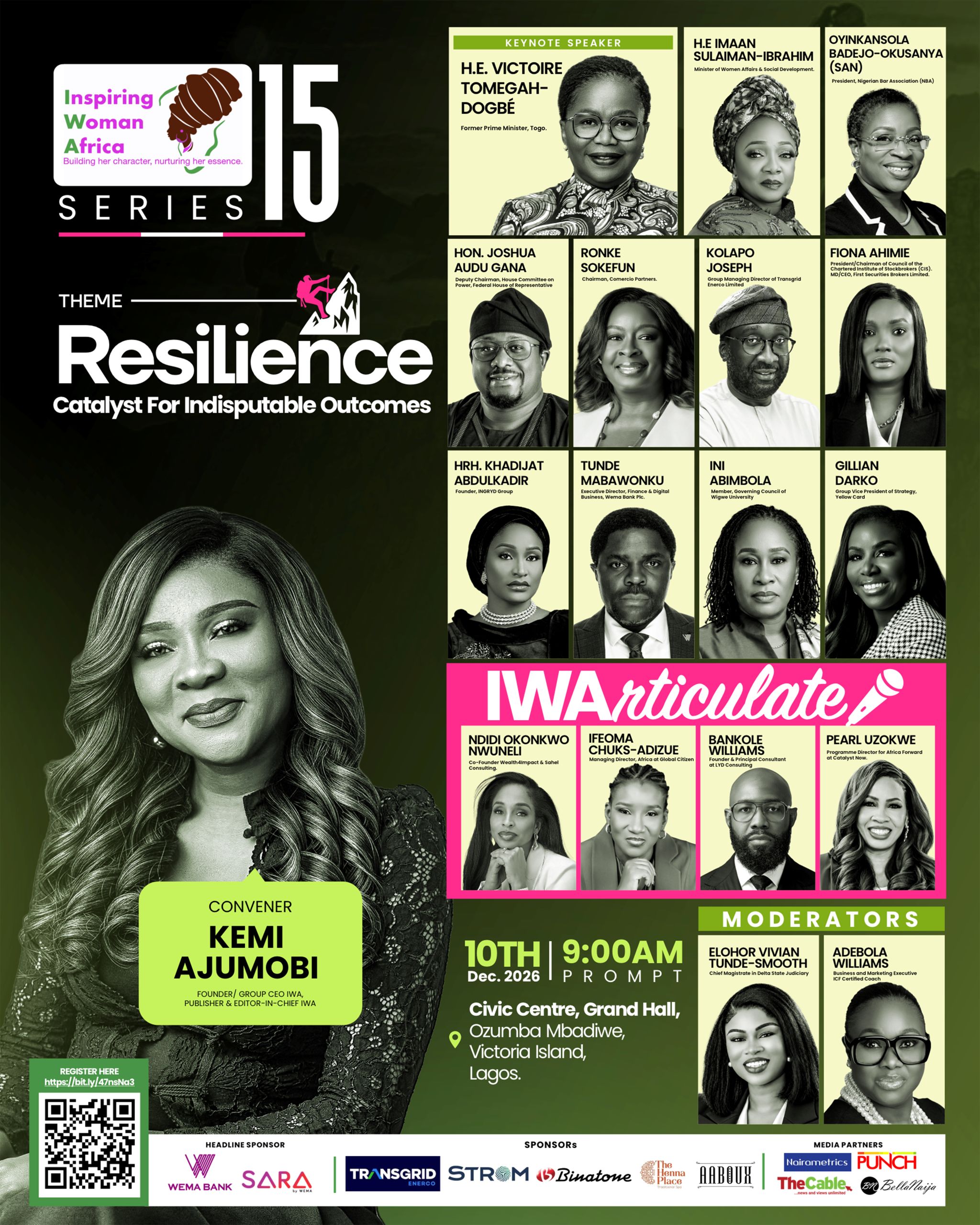
Click To Register
Latest Edition of IWA Magazine
October 20, 2026
Meet the Speakers of IWA Series 15 Conference
Latest Posts
-
 Oct 20, 2026 Hard Conversations: The Skill No One Puts on a CV
 -
 Oct 20, 2026 5 Africa Women Listed as 2026 Forbes Icons
 -
 Oct 20, 2026 You Are Wealthier Than You Think