 Wola Joseph-Condotti
There is a kind of leadership burden of running a company inside a sector that is, honestly broken.
You inherit ambitious targets. You put together a competent team. You write a credible strategy. And then you spend most of your week fighting problems you did not create, cannot fully fix, and will still somehow be blamed for when they land on the evening news.
If you have led anything in Nigerian power, oil and gas, aviation, healthcare, education, or most of the infrastructure-heavy sectors on this continent, you already know what I am describing. The grid collapses, and your customers lose light. Gas supply falters, and generation drops. A tariff order is delayed, and your revenue assumptions shift overnight. A policy changes at the federal level, and the three-year plan you agonised over becomes a one-year plan by Friday.
You did not cause any of it. But you will answer for all of it.
The Honest Conversation We Keep Avoiding
In leadership books, we are constantly told to focus on what we can control. It is good advice, and I have given it myself. But it is also incomplete.
Because in sectors with deep structural problems, the truth is that most of what determines your company’s outcomes is genuinely not within your control. The infrastructure you depend on. The regulators you answer to. The upstream suppliers you cannot replace. The macroeconomic conditions you cannot steer. All of these shape your reality far more than your strategy ever will.
And pretending otherwise sets you, and everyone reporting to you, up for a quiet kind of despair. The despair of working very hard, very well, and still falling short of targets that were never realistic to begin with.
So the first honest act of leadership in a broken sector is this. You have to name the system for what it is. Not as an excuse. As a starting point.
The 30 Percent That Belongs to You
Once you have named the system, the next discipline is to figure out which part of the outcome actually belongs to you.
In sectors like ours, that part may only be about 30 percent. Sometimes less. But that 30 percent is sacred, because it is where your leadership actually shows up.
It shows up in the quality of your team. In the integrity of your processes. In the discipline of your governance. In how quickly your call centre picks up. In how clearly you communicate bad news. In how you treat staff when the cameras are off. In the standards you refuse to lower, even when nobody would notice if you did.
The 70 percent will write the headlines. The 30 percent will write your legacy.
The Trap Inside That Discipline
There is a trap that comes with all of this, and it is worth naming.
It is the trap of perfecting the controllable while going completely silent on the rest.
Some leaders, when they realise the system is broken, retreat entirely into what they can manage. They polish internal processes obsessively. They run beautiful staff engagement programmes. They produce flawless board packs. And they go very quiet on the bigger conversation.
That is not leadership. That is hiding behind excellence.
The leader of a company in a broken sector has a second responsibility, and honestly, it is the harder one. You have to speak honestly about the system, even when speaking is inconvenient. You have to engage policymakers. Show up in reform conversations. Lend your platform to solutions that go beyond your company. And sometimes, you have to say the thing others in your seat will not say, because they are too afraid of losing access.
You cannot fix the system on your own. But you cannot afford to be silent inside it either.
Holding the Tension
The hardest part of this kind of role is the emotional discipline of holding two truths at the same time.
The first truth: I am responsible for what happens in my company.
The second truth: I am not all-powerful. There are forces well beyond my reach.
A leader who only holds the first truth will burn out under impossible standards. A leader who only holds the second becomes passive, blaming the system for everything and building nothing.
Mature leadership in a broken sector lives right in the space between those two truths. You own what is yours. You name what is not. And you refuse to let either truth cancel out the other.
A Word From Scripture
The prophet Nehemiah understood this tension well.
He arrived in Jerusalem to find the walls broken, the people scattered, and the systems collapsed. He had not caused any of it. But he did not sit around lamenting the system endlessly, and he did not retreat into only the small things he alone could manage.
He did three things at once. He rebuilt what he could, brick by brick. He confronted the systemic actors, the nobles and officials quietly corroding the city from within. And he prayed. Constantly. “O God, strengthen my hands.” (Nehemiah 6:9)
He held the tension between personal action, structural confrontation, and quiet dependence on God. And in 52 days, the wall stood.
Final Thoughts
If you are leading in a broken sector, there will be days when the weight of the system feels heavier than the weight of the role itself.
On those days, hear this, you are not asked to fix everything. You are asked to be faithful with what is actually yours.
Do your 30 percent exceptionally. Speak honestly about the 70. Refuse the comfort of denial and the comfort of despair, because both of them are just different ways of giving up.
And know that the leaders who eventually change broken industries are rarely the ones who waited for the system to fix itself.
They are the ones who built well inside imperfect walls, and used their voice to call for better.
That, in the end, is what stewardship looks like when the sector is bigger than you.
About Author
Wola Joseph-Condotti
Wola Joseph-Condotti is the CEO, Eko Power Limited. She is a Harvard-trained lawyer and passionate advocate for faith-driven leadership, gender equity, and energy transition in Africa. She writes from the intersection of power, purpose, and personal growth.
Latest Edition of IWA Magazine
September 22, 2026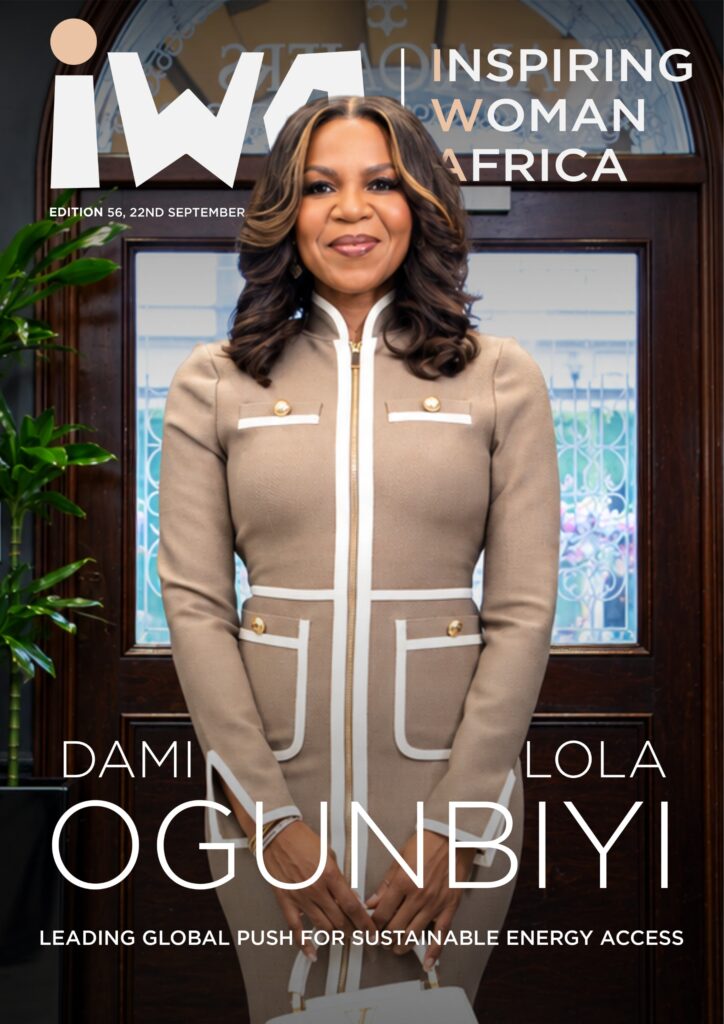
Damilola Ogunbiyi, Leading Global Push For Sustainable Energy Access
Latest Posts
-
 Sep 22, 2026 Stop Measuring Your Life With Someone Else’s Ruler