 Kemi Ajumobi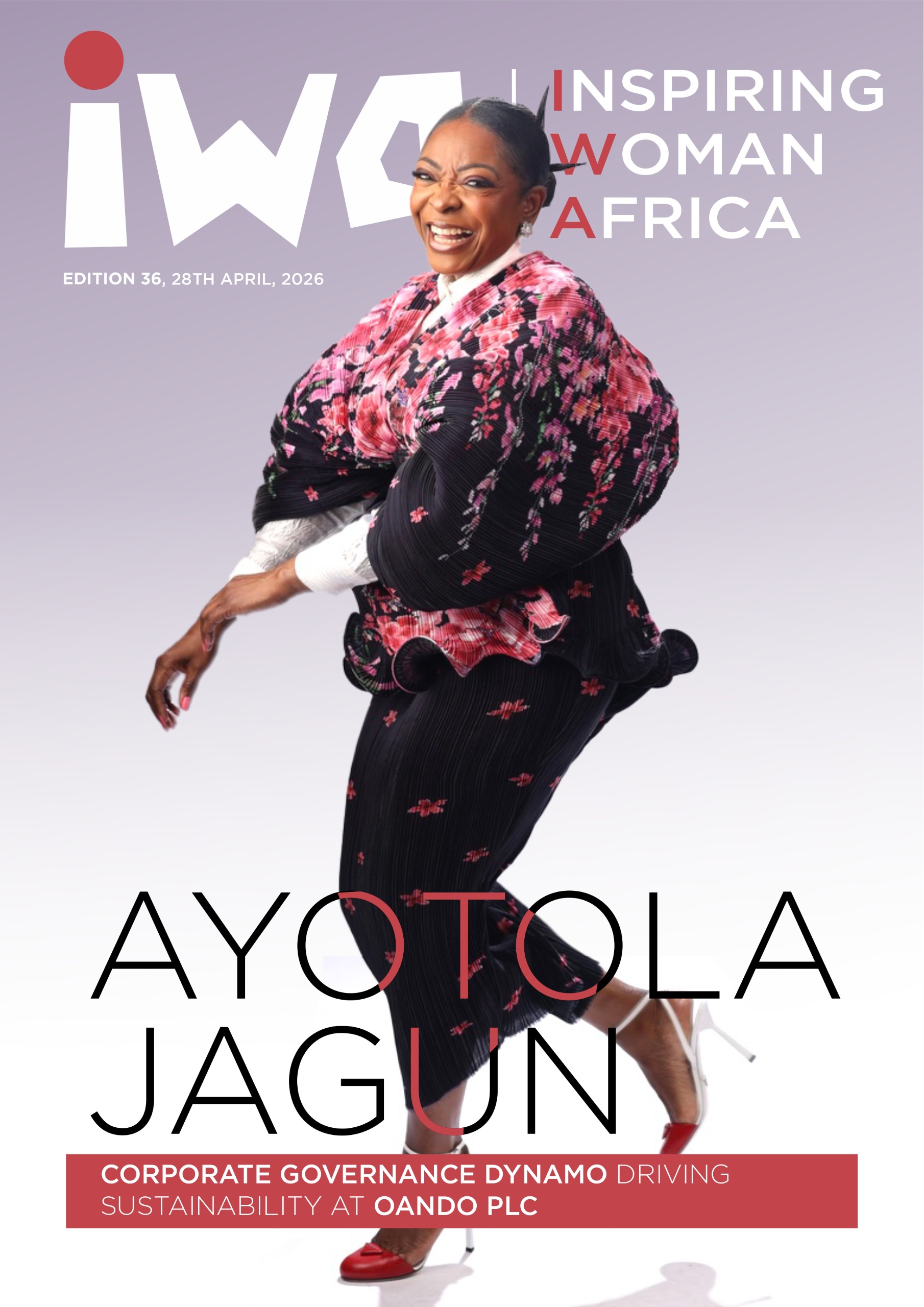
Ayotola Jagun is an Executive Director and the Chief Corporate Services and Sustainability Officer at Oando PLC, where she has overall responsibility for Risk Management, Strategic Procurement, and Sustainability across Oando PLC and its operating subsidiaries.
Prior to this, she served as Chief Compliance Officer and Company Secretary of Oando PLC for over 14 years, leading the development and implementation of comprehensive governance, ethics, and compliance frameworks across the Group’s diverse international operations.
An accomplished and dual-qualified lawyer (Nigeria and England & Wales), Ayotola brings over three decades of experience in Corporate Law, Compliance, Risk Management, and Corporate Governance, spanning several jurisdictions including the United Kingdom, Bermuda, and Nigeria. She has held senior legal and governance positions in leading organisations.
She holds an M.Sc. degree in Corporate Governance & Business Ethics from the University of London. She received her Global Competent Boards Designation (GCB.D) and Certification in Sustainability in 2023. She is also a Certified Ethics Officer, and holds other global certifications in Ethics and Compliance.
Ayotola is a Fellow of the Chartered Governance Institute (UK) and the Chartered Institute of Directors (Nigeria). She serves as a Trustee of several charities, including The Mirabel Centre (Nigeria’s first Sexual Assault Referral Centre), and is Chairman of both profit and non-profit organisations, such as the Scrap Art Foundation, an initiative dedicated to promoting sustainability, environmental conservation, and artistic innovation, Indie Finance, a financial services company, and Garden of Life Farms, a family owned Agro-business.
She was a Director of the United Nations Global Compact Network Nigeria for many years until her resignation in July 2025. In addition, Ayotola was appointed by the Federal Ministry of Trade and Investment of Nigeria as Co-Chair of the Technical Working Group for the development of a Code of Corporate Governance for the Not-for-Profit sector. Together with the Financial Reporting Council of Nigeria, the Convention on Business Integrity and the UN Global Compact Network Nigeria, she also co-led the development of the Corporate Governance Guidelines for MSMEs in Nigeria, an initiative that was funded by the Mc Arthur Foundation.
Ayotola has participated in several international collective action initiatives and working groups on Business integrity, Transformational Governance, Peace, Justice and Strong Institutions, Anti-Corruption, etc., where she contributed to shaping governance standards that enhance transparency and accountability in the private sector.
She is currently Vice-Chair, Africa of the International Chamber of Commerce Global Commission on Business Integrity.
A passionate advocate for good governance, sustainability, and ethical leadership, Ayotola speaks regularly at local and international conferences on corporate governance, sustainability, and anti-corruption, and facilitates executive training programmes for directors and governance professionals on behalf of the Chartered Institute of Directors, the Institute of Chartered Secretaries and Administrators, Nigeria, and other organisations.
Outside of her professional commitments, Ayotola is a social justice advocate, cyclist, art lover, and solo traveller.

Formative years and influences till date
My parents brought us up to believe in the value of hard work and integrity. In a household of girls, we had no housekeeper growing up, and did all the household chores in addition to being expected to achieve the best grades. They believed that hard work would make you stand before Kings. Honesty was also a value that my parents instilled in us. We dared not come home with a pen or pencil that was not ours, not even in error. Coupled with that, my parents insisted we went to the Baptist Church down the road from where we lived, even though they were Anglicans, so we had a solid Christian upbringing that was based on the Word of God. That has definitely shaped who I am today. Uncompromising in what I believe to be truth according to the Word of God and unafraid of hard work. By the Grace and Favour of God, these principles have taken me to palaces and places of influence globally and across various sectors.
Transitioning from Chief Compliance Officer to Chief Corporate Services and Sustainability Officer at Oando PLC
My professional journey has seen me transition from legal practice, to corporate governance, to compliance and risk management, to sustainability across various sectors (professional practice, FMCG, Finance, Oil and Gas). The transition has not been difficult, as I had in my former role taken on the lead responsibility for risk management and had taken a lead role in developing the Group’s ESG Strategy. Having performed the role of Company Secretary for 14 years, which involved supporting the Board on all aspects relating to the governance of Oando, and working in an environment with a strong entrepreneurial culture, it was essential to know the business in-depth and develop a commercial approach to problem solving. This has helped me to settle well in the new role and to apply my governance and compliance skills to identify and drive process improvements and optimise performance across the units I now have responsibility for in my new role.
Challenges implementing governance or compliance frameworks and how to overcome it
I will focus on two key challenges in implementing governance or compliance frameworks globally: culture and weak/inconsistent enforcement. Culture is multifaceted and starts with the tone from the top, which sets the extent to which governance and compliance are taken seriously by the entire organisation. In addition, managers and employees hold the erroneous view that these frameworks, with their policies and processes, add additional steps to existing workflows and slows down the business. This causes them to resist compliance and push back in adopting governance frameworks that actually add certainty and clarity to their roles and tasks. To overcome this, it is important to promote ethical leadership from the top down and embed compliance into performance reviews and KPIs. Compliant behaviour must be recognised and rewarded to reinforce the culture of compliance within the organisation.
A good governance and compliance framework will have effective reporting mechanisms for escalating breaches both within and outside the organisation in the form of mandatory regulatory reports and whistleblower hotlines. The extent to which regulators are able to effectively audit and respond to complaints that indicate the existence of weak governance and compliance structures, the better the standard of corporate governance in the country. Consistent enforcement of standards remains essential.
Integrating risk management with sustainability initiatives in your current role
I have responsibility for both sustainability and risk management. One of the benefits of this is that it allows me to map sustainability issues to key enterprise risks. As an oil and gas exploration and production company, our carbon-intensive operations can create a number of risks including: regulatory risk, environmental risk, and reputational risk, etc., but it also creates opportunities for decarbonisation and various abatement strategies within the company.
Using materiality and risk assessments, we can also better determine which sustainability issues matter most to our key stakeholders and align these with our risk framework and business priorities.
Also, we have been able to identify key risk indicators tied to our sustainability goals and can more optimally align controls, with investments, and strategy decisions that reduce risk and advance sustainability goals.
Most pressing sustainability challenges facing the oil and gas industry today, and how companies can address them
The most important pressing sustainability issues are:
- Greenhouse gas emissions from gas flaring, methane leaks, and operational emissions.
- Host community and license to operate issues.
- Energy transition risk.
- Skills, local capability, and long-term sector resilience.
The Petroleum Industry Act, coupled with other legislation such as the NOGICD Act and industry regulations, has fundamentally restructured Nigeria’s oil and gas sector to mitigate sustainability risks by fostering environmental accountability, social stability, and economic resilience. The PIA introduces strict environmental, social, and governance (ESG) standards, while the NOGICD Act enhances long-term social and economic sustainability through local capacity building.
Companies are actively responding to the requirements of the law through gas flare down and gas commercialisation initiatives to reduce/avoid penalties and take advantage of such decarbonisation initiatives.
The PIA also mandates companies (“settlors”) to contribute 3% of their annual operating expenditure to a Host Community Development Trust (HCDT) aimed at funding local infrastructure and socio-economic projects. This transforms corporate social responsibility from voluntary acts into mandatory obligations. By establishing a formal framework for community development, the PIA aims to foster peaceful co-existence and reduce pipeline vandalism, a major sustainability risk.
Energy transition risk for Nigerian oil and gas companies is less about the immediate decline of oil and more about whether they can remain competitive in a multi-energy future. The right response is to shift from a single-commodity mindset to a portfolio strategy: optimise hydrocarbons for efficiency and lower emissions, aggressively scale gas as a transition fuel for domestic and export markets, and build adjacencies in renewables, carbon solutions, and energy services. This reframing moves the conversation from compliance to long-term value creation, anchored in capital allocation decisions that deliberately invest in future relevance.
The most critical and underappreciated risk is capability. Without intentional action, companies risk creating stranded talent rather than just stranded assets. Organisations must reskill existing technical and commercial teams, build cross-disciplinary (“T-shaped”) leadership, and partner with academia and global players to develop expertise in climate finance, carbon management, integrated energy systems, and digital operations. At the same time, local content must evolve beyond compliance under the Nigerian Content Development and Monitoring Board (NCDMB) framework into true industrial capability; deepening participation across engineering, technology, and emerging energy value chains so Nigerian companies can compete globally, not just participate locally.
Finally, resilience must be embedded at both the company and sector levels through governance, capital strategy, and coordination. Energy transition considerations should sit squarely within enterprise risk management, board oversight, and executive incentives, with clear stress-testing of future demand, carbon exposure, and supply chain risks. Access to capital will increasingly favour lower-cost, lower-emission assets and credible transition plans, making ESG and risk functions commercially central. At a broader level, Nigeria’s long-term resilience depends on coordinated action around gas-led industrialisation, infrastructure development, regulatory stability, and regional energy positioning; ensuring the sector evolves as an integrated energy system rather than a declining oil industry.
In summary, this is not fundamentally about the decline of oil. It is about whether we can evolve fast enough to remain competitive in a multi-energy future. The real risks are capability gaps, capital access constraints, and a narrow definition of local content. Our response must therefore be deliberate: build a diversified energy portfolio anchored on gas, invest aggressively in skills and local industrial capability, and embed transition thinking into our governance and capital allocation decisions. Ultimately, resilience will not come from resisting the transition, but from shaping our place within it.

In your experience, how has the perception of corporate governance and compliance evolved in Nigeria over the past few decades?
If I look at it over the arc of my career in governance, risk and compliance, the shift in Nigeria has been quite profound: from governance as formality to governance as a driver of value, risk resilience, and reputation.
In the earlier years, corporate governance and compliance were largely viewed as box-ticking exercises; necessary for regulatory filings, board structures, and listing requirements, but rarely central to how businesses were actually run. Compliance sat on the margins, often under legal, and was activated mainly in response to breaches or regulatory pressure. Over time, a combination of market crises, governance failures, and increased regulatory scrutiny began to change that perception. Institutions like the Securities and Exchange Commission Nigeria and the Financial Reporting Council of Nigeria, alongside evolving codes of corporate governance, pushed companies toward greater accountability, transparency, and board effectiveness. Governance started to move from “structure” to behaviour and oversight.
What is particularly notable in the last decade is the transition from governance as a protective mechanism to governance as a strategic enabler. Boards and executive teams increasingly recognise that strong governance frameworks influence access to capital, investor confidence, and long-term sustainability. Compliance has expanded beyond regulatory adherence into areas like ethics, culture, ESG, and enterprise risk management, reflecting both global expectations and local realities. The rise of sustainability reporting, stakeholder capitalism, and integrated risk thinking has elevated the role of governance professionals from technical advisers to strategic partners; a shift I have clearly embodied in my own journey.
That said, the evolution is still uneven. While leading organisations now embed governance into decision-making and performance, others continue to treat it as a cost centre or reputational shield. The next phase for Nigeria is to close this gap by deepening board accountability, ensuring consistent enforcement, and advancing governance maturity across the real economy (including private and mid-sized firms). This is the era of “transformational governance”. The real test is whether governance can consistently shape behaviour, not just policies, so that integrity, transparency, and long-term thinking become how business is done, not just how it is described.
Envisioning the role of ethics and compliance changing in the corporate world in the face of emerging technologies and global regulations
Ethics and compliance are no longer functions that sit at the end of the process to check and correct; they are increasingly becoming part of how organisations think, design, and execute. As technology, particularly AI and data-driven systems, become embedded in decision-making, the role of compliance is shifting upstream. It is about shaping outcomes from the outset, ensuring that issues such as bias, transparency, and accountability are considered at the point of design, not after the fact. This requires a different kind of capability: one that blends legal and regulatory expertise with a working understanding of technology, data, and business strategy.
AI governance, in particular, is emerging as a defining area of focus. The question is no longer whether organisations are using AI, but whether they understand and can stand over the decisions it makes. That brings governance squarely into the conversation: who is accountable, how decisions are explained, and what controls exist to ensure that systems behave as intended over time. Frameworks such as the EU Artificial Intelligence Act and the Nigeria Data Protection Act are important signals, but the real work lies in embedding clear internal standards, independent oversight, and continuous monitoring into the organisation’s operating model. This is where compliance moves beyond policy into active stewardship of organisational integrity.
At the same time, we cannot ignore the growing influence of geopolitical risk. We are operating in a world where regulation is fragmenting, alliances are shifting, and issues such as sanctions, data localisation, and supply chain dependencies are becoming everyday considerations. For ethics and compliance functions, this means expanding the lens; integrating geopolitical awareness into risk management and decision-making. Ultimately, the organisations that will thrive are those that recognise that compliance is not a constraint, but an enabler; one that allows them to navigate complexity with confidence, maintain trust across jurisdictions, and build resilience in an increasingly uncertain global environment.
Impact of the Corporate Governance Guidelines for MSMEs in Nigeria that you co-led with the Financial Reporting Council, what outcomes do you hope to see?
The concept note for this initiative was borne out of a conversation I had with Mrs. Olajobi Makinwa, who was then Chief Intergovernmental Relations and Africa, with the United Nations Global Compact. Our discussions centered around the importance of developing and equipping the next generation of ethical, well-governed and well-run entities for future economic growth across the continent of Africa.
Reflecting on the journey, the most immediate impact of the MSME Corporate Governance Guidelines has been a shift in mindset. For a long time, governance in Nigeria was seen as something designed for listed companies and large corporations. Working with the Financial Reporting Council of Nigeria to develop these Guidelines helped to reposition governance as accessible, practical, and relevant to smaller businesses; something that supports growth rather than constrains it. We have begun to see increased awareness, more structured conversations around roles, accountability, and basic controls, and a growing recognition that governance is not a luxury, but a foundation for sustainability and credibility.
What is particularly encouraging is how the guidelines are starting to influence behaviour at an operational level. MSMEs are beginning to formalise decision-making, separate ownership from management where possible, and adopt more disciplined financial and reporting practices. There is also a subtle but important shift in how these businesses engage with their key stakeholders (banks, investors, and partners) who are increasingly looking for signs of governance maturity before committing capital or entering into long-term relationships. In that sense, the guidelines are helping to bridge the trust gap that has historically limited access to finance and scale for many Nigerian enterprises.
Looking ahead, the real success will be measured not just by adoption, but by depth of implementation and ecosystem alignment. I would like to see governance become embedded in the DNA of MSMEs from the outset; supported by regulators, financiers, and advisory institutions so that it is reinforced, not optional. Over time, this should translate into stronger, more resilient businesses, improved survival rates, and a pipeline of companies that can scale into mid-sized and large enterprises with sound governance already in place. Ultimately, the goal is to contribute to a business environment where integrity, transparency, and accountability are standard practice at every level of the economy, not just at the top.
As Vice-Chair of the International Chamber of Commerce Global Business Integrity Commission, what does this mean to you, and what initiatives are you most excited about?
The International Chamber of Commerce (ICC) is one of the few platforms where business norms become global standards; quietly shaping how trade is done, how disputes are resolved, and how integrity is defined across jurisdictions.
Sitting as Vice-Chair for Africa on the ICC Global Commission on Business Integrity places me at the intersection of policy influence, private sector leadership, and global norm-setting. It is not just a title; it is a lever. What it means for me goes beyond representation. It is a natural extension of the work that I have already been doing: translating governance, compliance, and ESG from “requirements” into strategic enablers. But now, the canvas is broader. I have the opportunity to contribute to how integrity is defined for African business in the global system.
At a personal level, it is about influence with intention. Having spent years building credibility in governance and compliance, often in environments where integrity had to be defended, not assumed, this role allows me to shift the attention from defense to design.
At an institutional level, it strengthens our ability to connect member companies across Africa to global standards in a pragmatic, not performative way. Understanding the realities of operating in Africa: regulatory fragmentation, capital constraints, geopolitical exposure, this role gives us the opportunity to voice these constraints and to credibly align global frameworks with operational reality.
It is also about narrative. Africa is often positioned as a “compliance high risk” in global discourse. This role gives me the opportunity to help reframe that: to position African businesses as co-creators of integrity standards, not just recipients of them.
In terms of initiatives, there are a few areas that I feel are important at this time of our Integrity and Governance journey.
One is the localisation of global integrity frameworks. Many international standards (anti-corruption, ESG disclosures, due diligence expectations) are developed in contexts that assume a level of institutional maturity that doesn’t always translate cleanly into African markets. There is real value in shaping guidance that is both globally credible and locally workable. Not diluted, but intelligently adapted.
Another is the intersection of integrity and the energy transition. Given Africa’s emerging energy systems and the need to ensure that Africa has the capacity and freedom it requires to generate the energy it needs for its development, this is a space where integrity risks are evolving faster than frameworks. From carbon markets and climate finance to local content and community trust, there is a need to ensure that the transition does not become a new frontier for opacity or inequity. I believe we can promote initiatives that embed integrity early, not retrofit it later.
A third area is SMEs and inclusive growth. Large corporates tend to have the structures to comply; smaller businesses often don’t, yet they are the backbone of African economies. Driving simplified, scalable integrity frameworks for SMEs, building on work already done in Nigeria, could be transformative. It shifts integrity from a barrier to entry to a tool for growth.
Then there is AI and digital governance. The integrity risks here are subtle but profound: algorithmic bias, opaque decision-making, data governance gaps. Africa has the opportunity to engage early rather than react late. Bringing an African perspective into global AI governance conversations is both necessary and timely.
And finally, there is something less technical but just as important: building a community of practice. Integrity can be isolating work, often carried by compliance teams without enough executive ownership. Creating platforms, through the ICC’s vast network, where African business leaders can openly share challenges, failures, and innovations in integrity could shift culture in a way that policies alone cannot.
What I am most excited about is the chance to move integrity from being a control function to being a strategic asset; at scale, across borders, and with Africa not at the margins, but at the table. The real opportunity here is not just to participate in global conversations, but to subtly reshape them.
You have an extensive background in law and governance across various jurisdictions. How have these diverse experiences shaped your approach to leadership?
If I were to distill it, I would say my experience across different legal and governance systems has shaped me to lead from principle rather than prescription. This has helped me build the capacity to operate with integrity in the messy middle where ambiguity exists, and there is no level playing field.
Working across jurisdictions teaches you very quickly that rules are not always consistent, and in some cases, not always sufficient. So I’ve learned to anchor my decisions in what is fundamentally right and defensible, not just what is technically compliant. That has helped me stay steady, particularly in complex or ambiguous environments.
It has also strengthened my judgment. Exposure to different systems gives you pattern recognition; you begin to see what works, what doesn’t, and where risks tend to emerge. So I tend to think a step ahead, not just about the decision in front of me, but its wider and long-term implications.
I would also say it has shaped how I lead people. Navigating different regulatory and cultural contexts has taught me that alignment is rarely achieved by authority alone. It requires influence, clarity, and consistency. I’m very intentional about building trust and bringing people along, especially on governance and integrity issues that can sometimes feel abstract or at worst judgmental.
Ultimately, it has moved me from focusing on compliance as a function to seeing governance as a system. My role as a leader is not just to ensure the rules and processes are followed, but to help build frameworks that are resilient, adaptable, and trusted; wherever they are applied.

Tell us more about your hobbies and how it positively influences you. Also, tell us why executives must always find time to enjoy their hobbies
If I’m honest, my hobbies are not separate from my leadership; they are part of what sustains it.
Cycling, for me, is about endurance and clarity. There’s something about the rhythm of it that forces you to slow your mind down while still moving forward. It’s where I process, where I think through complex issues without the noise. It has taught me patience and consistency; both of which are essential in governance work where outcomes are rarely immediate. I also love the challenge of pushing myself to go further than I thought I had the energy and strength to do. Above all are the relationships that I have formed by being part of a club, Cycology, and the camaraderie that we enjoy when we come together.
Social dancing brings a completely different energy. It’s about presence, connection, and responsiveness. You have to be fully in the moment, attuned to your dancing partner, and as a woman willing to adapt and be led. Leadership, at its best, is relational, not transactional.
Art collecting feeds my appreciation for perspective and legacy. Art tells stories: of culture, of history, of identity. It reminds me that the decisions we make today sit within a much broader narrative. It has deepened my ability to think long-term and to value nuance, which is critical when dealing with governance and sustainability issues. My role as Chair of the Scrap Art Foundation, inaugurated by Dotun Popoola, also allows me to bring in concepts of good governance into art administration.
Gardening and farming ground me in a very real way. They teach you that growth takes time, that not everything is within your control, and that the right conditions matter just as much as the effort you put in. It’s a powerful reminder that leadership is not about forcing outcomes, but about creating environments where things can thrive.
And I think that’s why hobbies matter so much, particularly for executives. Leadership can be all-consuming, and if you’re not careful, it narrows your perspective. Hobbies create space; they restore you, but they also expand how you think. They build different muscles: creativity, patience, empathy, and resilience.
More importantly, they keep you human. And I’ve found that the best leaders are not those who are constantly “on,” but those who are able to step away, recalibrate, and return with clarity and balance.
So for me, making time for these things is not indulgent; it’s essential. It’s what allows me to lead with energy, perspective, and a sense of wholeness.
What personal experiences have significantly influenced your passion for social justice advocacy?
Growing up in the Church, and later developing a personal relationship with Jesus Christ, has been foundational to my commitment to social justice. For me, faith has never been only about the promise of eternal life or the benefits we receive; it is equally about the life we are called to live.
I have always believed that being a Christian means being intentional about showing up as the salt of the earth and the light of the world. And that, by its very nature, requires us to stand for something. It calls us to speak up for the oppressed, the downtrodden, and the marginalised; but more importantly, to move beyond words into action.
So my passion for social justice is not separate from my faith; it flows directly from it. It is grounded in a sense of responsibility to not only believe, but to live out those beliefs in ways that bring tangible change.
What day remains unforgettable to you and why?
The day I became a mother remains the most profound and unforgettable moment of my life. Something shifted within me in a way I had never quite experienced before. It wasn’t only the awareness that I was now responsible for another human being, although that in itself is life-altering; it was deeper than that.
It was a quiet but unmistakable sense of alignment. A feeling that I had stepped into a dimension of purpose that was both deeply personal and yet larger than me. Motherhood awakened a new depth of love, but also a new level of clarity, strength, and intentionality. It reshaped how I see responsibility: not as a burden, but as a privilege and a calling.
In many ways, it grounded me. It sharpened my priorities, softened my edges, and expanded my capacity; for patience, for sacrifice, and for joy. It gave me a different lens through which to view my life, one that is anchored in building generational legacy, in stewardship, and in the kind of impact that outlives you.
So while becoming a mother brought with it a profound sense of responsibility, it also brought fulfillment; a deep, quiet knowing that I had stepped into something I was always meant to be.
Concluding Words
What I have come to understand over time is that leadership is a constant act of becoming. It asks you to keep growing, to stay open, and to hold your ground on what matters; even as the landscape shifts around you. For me, it has been about aligning what I believe with how I show up, consistently and with intention.
What platforms like Inspiring Woman Africa remind us of is that none of us is on this journey alone. There is a powerful collective of African women who are building, leading, creating, and quietly reshaping the narrative of our continent in their own unique ways. There is strength in that community, and even more in the stories we choose to share.
As women, particularly on this continent, we carry both responsibility and opportunity. Responsibility to challenge systems that limit, and opportunity to shape new ones that are more inclusive, more just, and more reflective of who we are and what we can become.
For me, the journey continues to be one of growth, service, and contribution. And if there is one thing I would leave with anyone reading this, it is this: never underestimate the power of your voice, your values, and your willingness to act. Change does not always start loudly, but it always starts somewhere.
And more often than not, it starts with us.